Friends !!! We are going to space !!!
« The companies are also reportedly in talks to try to build orbital data centers — a major component of SpaceX’s future plans. »
Le monde qui a enfanté @ylecun n’est pas celui d’Albert Einstein. Einstein n’avait pas la revue par les pairs ni la National Science Foundation et ses mécanismes de financement bureaucratiques.
Dans la première moitié du XXᵉ siècle et jusqu’à la fin des années 1960, la plupart des percées fondamentales sont venues d’environnements relativement autonomes, souvent des laboratoires industriels ou de chercheurs individuels :
- Relativité restreinte (Albert Einstein, 1905) : rédigée alors qu’il était simple employé au bureau des brevets à Berne.
- Mécanique quantique : développée presque entièrement par des chercheurs individuels ou de très petites équipes dans des universités européennes modestes. Planck (1900), Einstein (1905 et 1917, alors au bureau des brevets), Bohr (1913), Heisenberg (1925), Schrödinger (1926) et Dirac (1928). Pas de gros financements d’État ni de comités de pairs centralisés.
Transistor (John Bardeen, Walter Brattain et William Shockley aux Bell Labs, 1947).
- Circuit intégré (Jack Kilby chez Texas Instruments en 1958 ; Robert Noyce chez Fairchild Semiconductor en 1959).
- Laser (Theodore Maiman chez Hughes Research Laboratories, mai 1960). Son principe fondamental remonte à l’article d’Einstein sur l’émission stimulée de la lumière publié en 1917.
L’informatique moderne suit exactement la même dynamique. Alan Turing pose les bases théoriques des ordinateurs universels en 1936 alors qu’il est chercheur à Cambridge (travail individuel). Claude Shannon établit les fondements mathématiques de l’information aux Bell Labs en 1948. Les ordinateurs deviennent réellement pratiques grâce au transistor inventé aux Bell Labs en 1947, puis au circuit intégré développé dans des entreprises privées à la fin des années 1950. Même Unix, qui influencera profondément toute l’informatique moderne, est créé aux Bell Labs à la toute fin des années 1960 par Ken Thompson et Dennis Ritchie.
À compter des années 1970, l’Occident a émulé le modèle soviétique de planification centralisée et de bureaucratie scientifique (revue par les pairs généralisée, panels de financement, cycles de subventions). Une longue stagnation dans les percées fondamentales a suivi.
En ce sens, @elonmusk s’inscrit dans une longue tradition d’ingénieurs visionnaires qui ont osé l’impossible et transformé le monde malgré les sceptiques. Les frères Wright ont conquis les airs quand tout le monde affirmait que c’était impossible. James Watt a rendu la machine à vapeur efficace et a lancé la Révolution industrielle. Les pionniers du moteur à combustion interne, de Lenoir à Benz et Daimler, ont changé la mobilité pour toujours. Comme eux, Musk ne se contente pas de rêver : il construit, itère et livre.
LeCun se limite au modèle linéaire de l’innovation : la recherche fondamentale, bien financée par l’État et les agences, produirait mécaniquement le progrès technologique. C’est un modèle simpliste et indéfendable, construit à compter des années 50 pour justifier le financement public massif, et largement démenti par l’histoire.
https://t.co/ewhZ1u1oyX
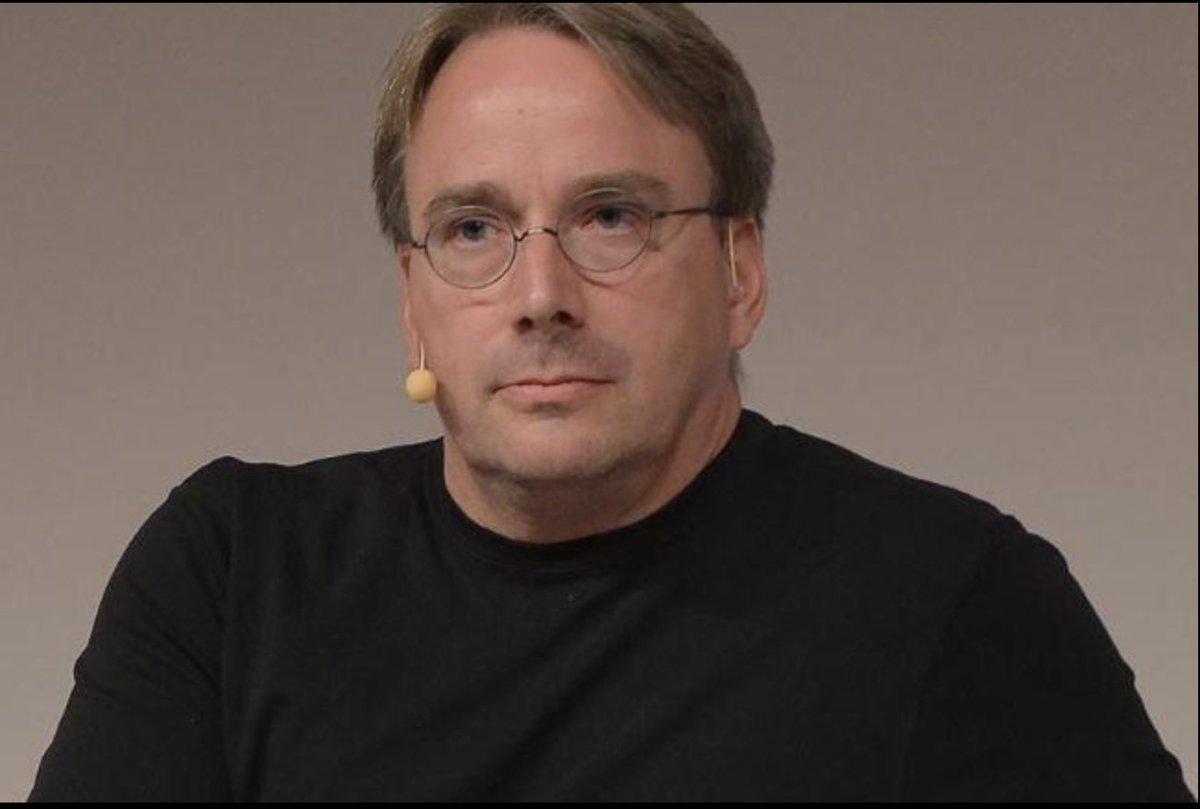
The creator of Linux just publicly called out the AI hype. Word for word.
Linus Torvalds took the stage at Open Source Summit 2026 and said this:
"When I see people saying 99% of our code is written by AI, I literally get angry. Because those same people — I can pretty much guarantee — 100% of their code is written by compilers. But they never say that."
He is not anti AI. The Linux kernel saw a 20% jump in submissions this release because of AI tools. He uses it. He gets it.
His point is something most people are too afraid to say.
AI is a productivity tool exactly like compilers were. Compilers boosted programming by 1000x. AI adds another 10x on top. Enormous. But nobody says "the compiler wrote my code." So why are we saying AI wrote it?
He also flagged something nobody is talking about.
AI is flooding small open source projects with drive-by bug reports. Someone runs a prompt, files a report and disappears when asked for a patch. Maintainers with one or two people are drowning trying to keep up.
"Sometimes AI reports a bug and when you ask for more information the person has done that drive-by and does not even answer your question. That is the real burnout issue."
And his final warning was the sharpest of all.
"People who do not understand the complexity of systems will prompt systems and write processes that will fail."
The AI hype crowd is very loud right now.
Linus has been building real systems for 35 years. When he talks, engineers listen.
Full interview here:
https://t.co/LmXJtvKc4O
“This is the first time ever that I can remember that technology costs the same as people”
Technology / compute and computers used to cost a LOT more than people up to the 1960s. Utilizing machines 100% was thus extremely important back then - hence eg the time sharing model
I can’t sleep at night because my mind races with all the cool shit I could be building. AI has turned my workdays into 24 hour grind sessions. I code until I literally collapse from exhaustion 7 days a week.
I've got an agent in a loop optimizing a renderer with the goal to minimize frame times (and tests to measure). It got times down from 88ms to 2ms and allocations down from ~150K to 500. Sounds good, right? Wrong. This is exactly why agent psychosis is a big fucking problem.
As an experiment, I rewrote the Ghostty core render state in Go, with access to identically laid out data structures as Ghostty and the exact same validation tests. I made a purposely naive renderer (simple, correct, but slow). 88ms per frame with 150,000 allocations (horrendous, lol)!
I then kickstarted a Ralph loop to bring the frame times down. I told it it can't modify input data structures or the public API or tests (they're correct), but it can do anything else it wants. It got to work.
It has worked for about 4 hours. I've spent around $350 on this experiment so far. The results?
88ms => 1.5ms
150K allocs => ~500 allocs
Incredible right? Nope.
My hand-written renderer I ported has frame times (same benchmark) of ~20us (0.020ms) and 0 allocations in the update path.
This is the problem with psychosis and lacking systems understanding. If you don't understand the system, you're going to accept that this is an incredible result. If you understand the system, you'll see better solutions immediately and can do roughly 75x better on throughput.
The people who blindly trust agent output are in the former camp. They're sheeple, overdrinking from a fountain of mediocrity.
Standard disclaimer: I use AI all the time. I like AI. The point I'm making is to not blindly accept results. Think. Analyze. Learn.
"... The proof came from a new general-purpose reasoning model, rather than from a system trained specifically for mathematics ..."
https://t.co/0caY18dQRw
Bitter lesson!
The reason agents are so good at Linux is that all 40 million lines of kernel code was part of the pre training. Along with every other open source dependency. This really does make every obscure error message shallow, and the system completely malleable.
"I don't think we appreciate how big of a change [low fertility] is. I'm going to make a crazy forecast. Let's suppose Thailand keeps its current fertility rate of 0.8 ... for 200 years. Thailand right now has 63 million people. At the end of 200 years, it will be around two million people."
"I'm sorry. Two million?"
"Two million. How do you wind down a society of 63 million people into two million?"
https://t.co/UDl4YgJUye