@BillAckman Hi Bill, Hope Lucy continues to improve
Do you know that Ayurveda medicine has treatments for the brain?
I took care of 2 aging parents and learned about many health protocols as a result. Happy to share resources and protocols that could help Lucy and your family.
Meet the 55-year-old man who looks decades younger.
Harvard Genetics Professor, David Sinclair.
The world’s leading anti-aging authority.
Here are his controversial secrets to look younger & extend your life:
1/ Exercise until you’re out of breath
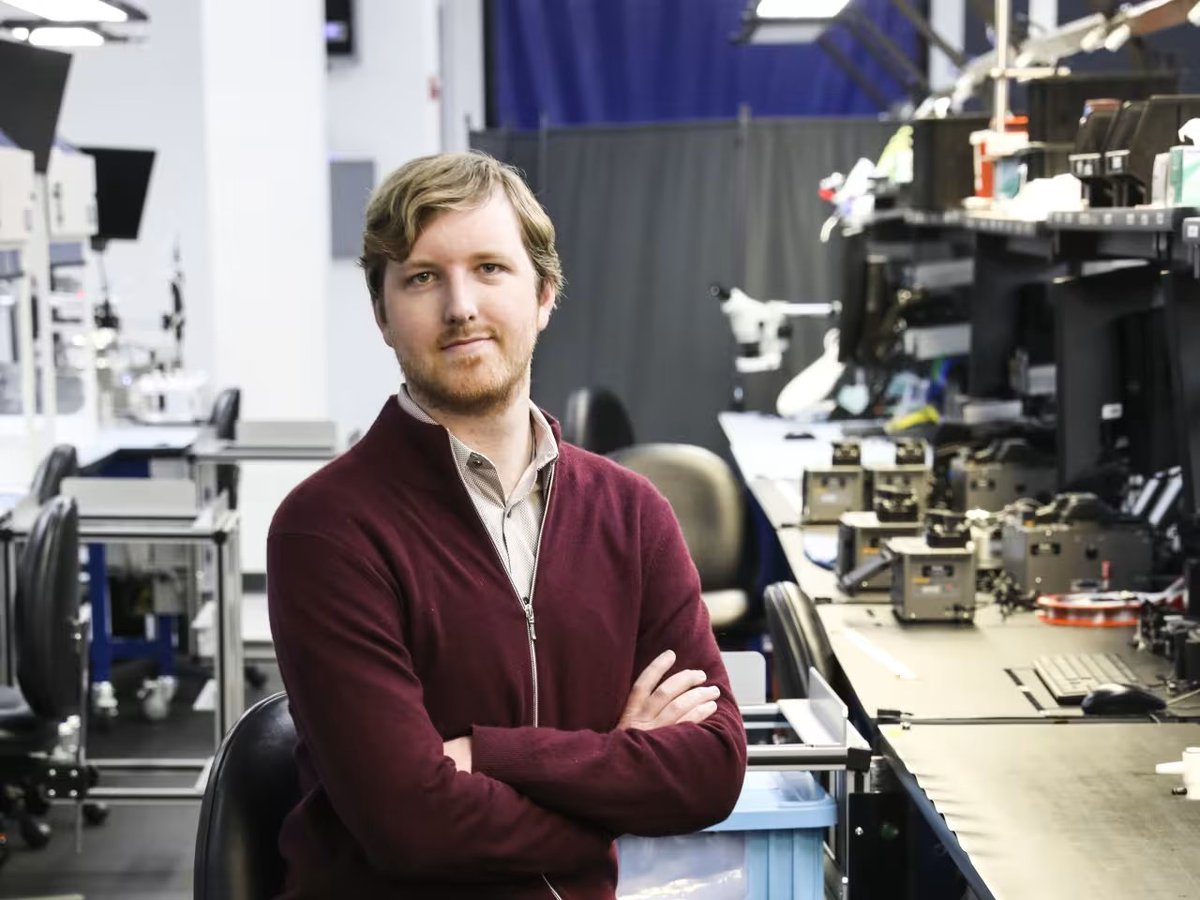
At 25, he became the world's youngest self-made BILLIONAIRE.
Not through apps, crypto, or social media.
But by solving the ONE problem Ford, Volvo, and BMW couldn't crack.
Here's why the entire industry is fighting over his game-changing invention:
This man destroyed wokeism:
Balaji Srinivasan.
He was the CTO of Coinbase, partner at a16z, friend of Naval & is worth $150M+
He's been on fire lately on X.
Here is Balaji's updated philosophy:
We all know BlackBerry fell to Apple. But that’s not the full story.
Behind their rapid rise, there was a fatal flaw. A single decision that sparked the collapse.
And here’s the shocking truth—BlackBerry could have saved themselves. But didn’t.
Here's why:
Peter Thiel on pivoting and PayPal’s early failure
“When we started PayPal, the initial product was an infrared-beaming device on Palm Pilots for sending money. It was voted one of the 10 worst business ideas in 1999. And 1999 was a year when there were many bad ideas in technology… But the team was good… It’s not like you only get one chance. You get many chances so long as you keep trying. If you get hung up on failure, and if you think you don’t have another chance, that’s when you really don’t.”
One lesser-known fact about the PayPal pivot is that the idea didn’t come from the cofounders, Peter Thiel and Max Levchin.
It came from David Sacks who was fresh out of Stanford Law School and a one year stint at McKinsey. Sacks was the one who finally persuaded a reluctant Levchin that beaming money between Palm Pilots was a bad idea. Instead, he argued, they should focus on sending money via email.
A talented team and getting multiple shots on goal turned out to be the difference between startup failure and a $1.5 billion exit to eBay.
Video source: @CBSNews (2012)
Ok I get it now. 😅 Transcendental meditation is by far the best form of meditation. I’ve practiced Vipassana, MBSR, mindfulness, zen and while they’ve all been valuable, none have come close to the impact I’ve felt from TM.
Within the first few days alone, I immediately felt a massive difference. I’ve woken up happier & had seemingly endless energy.
The best way I can explain what I think is happening is that the process is metabolizing latent stress that would normally lurk in the background & steal my energy. It frees up my nervous system to operate cleanly.
This man can predict the future.
He foresaw the rise of EVERY social media & invested early in Facebook, Snapchat, Twitter & Ethereum.
And he just said, “Attention is the new oil”.
Gary Vee’s 5 wild predictions on the future of wealth creation (& why you should care):
When I was younger, I was praised a lot for my intelligence. I was always in the ‘nerd classes’. Got a perfect score on 2/3 sections of the SAT. Stellar grades without really trying. Ner ner
Everyone in my life made me feel like that was very important.
It’s where I got a lot of my self worth from & I felt like I needed to show other people how smart I was for them to like me too.
As I got older, I realized nobody actually gives a shit about how smart you are. If anything, it’s offputting to a lot of people.
With few exceptions, you’ll be more successful just getting along with folks & helping them be more successful. Not by trying to show how much you know or how valuable you are.
Let them be right. Let them come up with the idea. Let them take the credit. Keep your cards hidden.
Knowing when to play dumb is far more valuable than being able to sound smart.
Underrated signs of a high performer:
• They hate small talk.
• Are not okay with wasting your time.
• Do what they say they’re going to do.
• Do it with urgency.
• Are obsessed, not just interested.
What am I missing?
Was chatting with a well-known founder yesterday about the "founder mode" discussion.
We were both wondering if people would misinterpret it, and undervalue the importance of hiring great leaders. Steve Jobs, the canonical example of "founder mode", was also gifted at identifying stellar leaders, without whom no great organization gets built. (And we're lucky to have many at Stripe.)
To the extent that there's an ostensible tension here (founder-mode micromanagement vs the classic view that one should focus on enablement), this founder pointed out that the lens of domain-specific judgment helps reconcile the dichotomy.
• You need to have excellent judgment in your problem area.
• You need to recognize the importance of good judgment as a phenomenon.
• You need to demand it in others.
He argued that many companies and founders fail at (2) and (3). That is, individuals can be effective "people managers", or have strong resumes, or whatever, but just not be deep enough in their domains to be right on the substantive merits of questions within their purview (and unable to recursively detect/insist on that correctness in others, or to elevate and prize it when they see people who do it well).
In this conception of things, leaders in "founder mode" naturally enable others when those others have great judgment in their areas.
Interestingly, this HBR piece describes how Apple differs from the mainstream by doing exactly this: "Its fundamental belief is that those with the most expertise and experience in a domain should have decision rights for that domain. [...] Apple is not a company where general managers oversee managers; rather, it is a company where experts lead experts." https://t.co/KRzcwP8F9r. It's clear from discussions with leaders at SpaceX and Tesla that @elonmusk's companies do this as well.
So, anyway, I wonder if some substantial part of "founder mode" hinges on "building an org around good judgment".
[Many obligatory disclaimers apply to this tweet: no single attribute is enough to make for a good leader, no single framework is fully explanatory, etc., but the margins of this tweet are too small to contain them.]