Just open-sourced ForgeLattice — my independent research library for Post-Quantum Cryptography in Go.
Clean implementations of:
• ML-KEM (Kyber)
• ML-DSA (Dilithium)
• SHA-3 / Keccak
Fully validated against NIST KAT vectors.
https://t.co/fOpSDNP2P3
#golang#cryptography
Tired of teaching electronics with breadboards? Watch as Voltera designers print a voltage regulator to teach the tradeoffs in electrical efficiency between linear and switching regulators, heat dissipation, and simple circuit design.
Video Credit: @voltera_io#electronics #printedelectronics #engineering #technology
Ubuntu 26.04 LTS, codenamed #ResoluteRaccoon, is now available to download. 🦝
Resolute Raccoon builds on the resilience-focused improvements introduced in interim releases, with TPM-backed full-disk encryption, improved support for application permission prompting, Livepatch updates for Arm-based servers, and Rust-based utilities for enhanced memory safety.
This release also brings native support for industry-leading AI/ML toolkits like NVIDIA CUDA and AMD ROCm, making Ubuntu 26.04 LTS the ideal platform for AI development and production workloads.
Install now: https://t.co/cFiFaKOJgd
Learn more about the release: https://t.co/4WLeYt9UCC
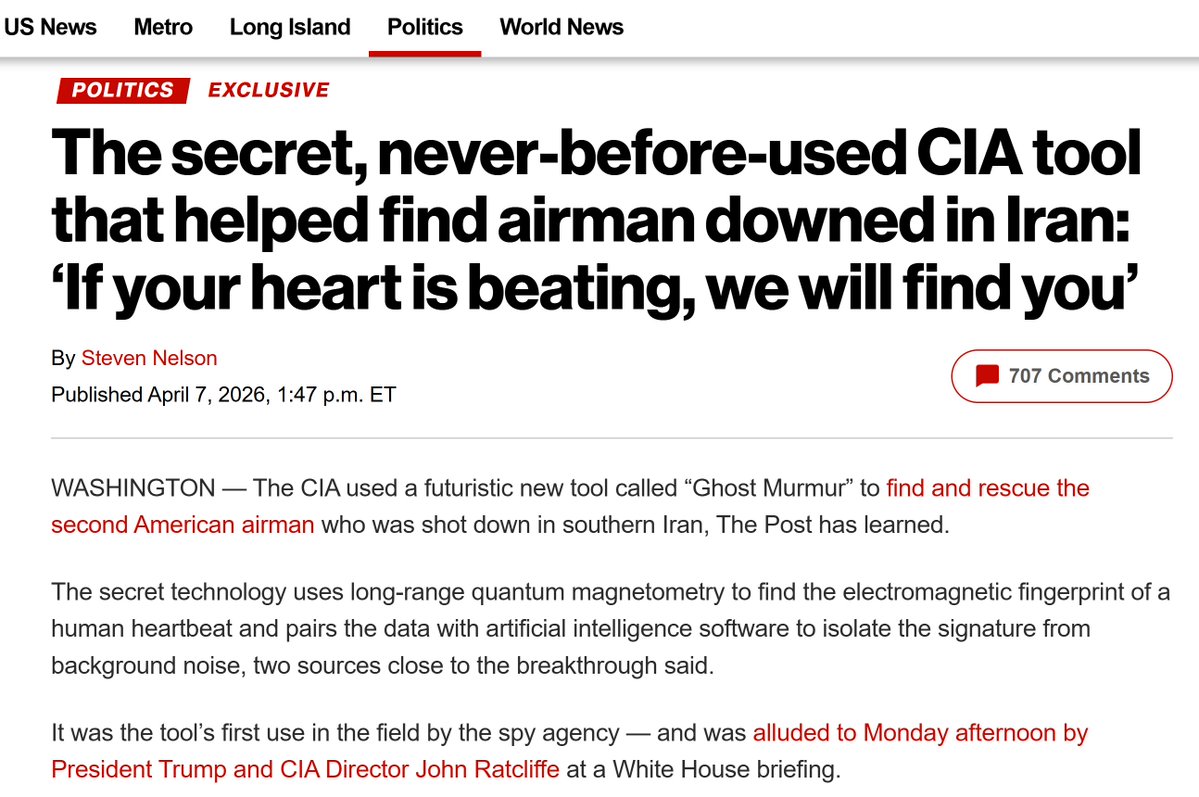
Yes, you can use quantum physics to measure magnetic fields very precisely, but no, you cannot do this over miles of distance, that's insane. That said, infrared radiation is also electromagnetic of course and everything is quantum anyway. Yours sincerely, Quantum Sabine.
Saw some people panicking or asking about quantum computing's impact on crypto.
At a high level, all crypto has to do is to upgrade to Quantum-Resistant (Post-Quantum) Algorithms. So, no need to panic. 😂
In practice, there are some execution considerations. It's hard to organize upgrades in a decentralized world. There will likely be many debates on which algorithm(s) to use, resulting in some forks.
And some dead project may not upgrade at all. Might be a good to cleanse out those projects anyway.
New code may introduce other bugs or security issues in the short term.
People who self custody will have to migrate their coins to new wallets.
This brings to the question of Satoshi's bitcoins. If those coins move, then it means he/she is still around, which is interesting to know. If they don't move (in a certain period of time), it might be better to lock (or effectively burn) those addresses so that they don't go to the first hacker who cracks it. There is also the difficulty of identifying all his addresses, and not confuse with some old hodlers. Anyway, it's a different topic for later.
Fundamentally:
It's always easier to encrypt than decrypt.
More computing power is always good.
Crypto will stay, post quantum.
🚨 Google has sounded the quantum alarm 🚨
Today, they released groundbreaking progress towards breaking crypto using a quantum computer.
TLDR - Existing cryptography is dead. Mempool attacks are real. We must migrate to post-quantum now.
Thread 🧵
Fully homomorphic #encryption allows you to get information without revealing your personal data, but it’s currently a slow, intensive process. But @Intel’s new Heracles chip speeds up FHE computing 5,000-fold compared to a CPU. https://t.co/NDGY7uolXZ
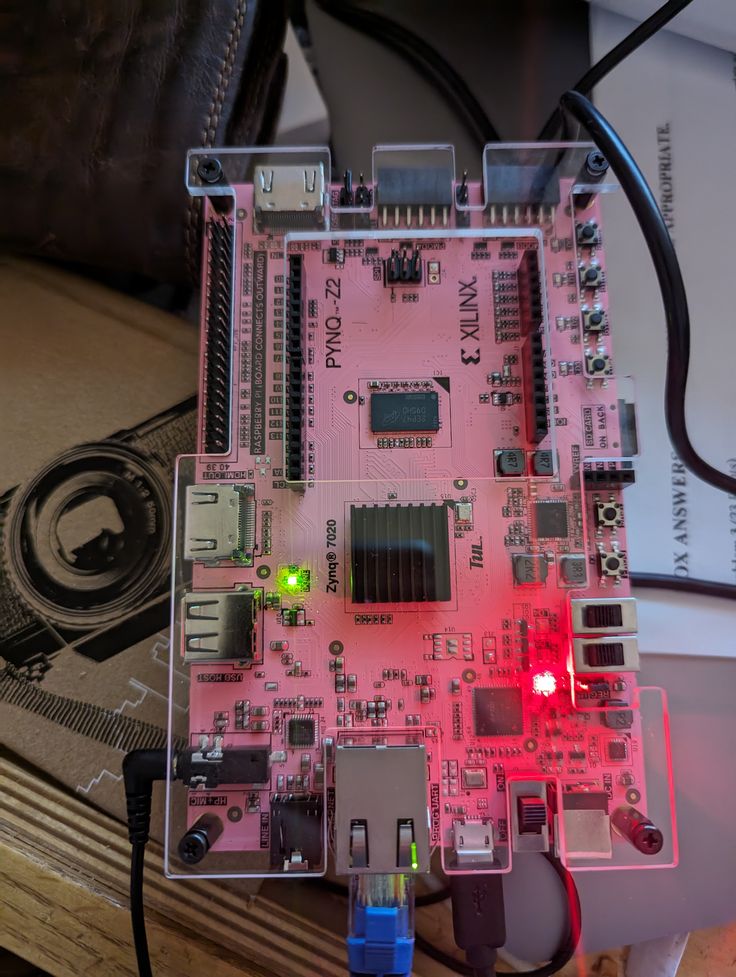
how to get started in FPGA
most people start wrong.
they buy a board
open vivado
and immediately get overwhelmed.
fpga is not programming.
it’s hardware design.
you are literally describing circuits.
start like this →
1. understand digital logic
learn:
• logic gates
• flip flops
• combinational vs sequential logic
• finite state machines
• timing
without this, nothing will make sense.
2. learn a hardware description language
pick one:
• verilog
• vhdl
verilog is simpler for beginners.
you are not writing software.
you are describing how hardware should be wired.
3. learn simulation first
before touching hardware.
tools:
• verilator
• modelsim
• iverilog
write simple modules and simulate them.
example progression:
• led blinker
• counter
• uart transmitter
• simple cpu
4. then buy a cheap fpga board
good starter boards:
• basys 3
• icebreaker fpga
• tang nano 9k
don’t start with expensive xilinx boards.
5. learn the full flow
hdl → synthesis → place & route → bitstream → hardware
this pipeline is the core skill.
6. study real designs
read open source projects:
• risc-v cores
• gpu experiments
• network accelerators
reverse engineer them.
7. combine fpga with software the real power appears when fpga works with:
• embedded cpu
• robotics
• signal processing
• high speed compute
fpga sits between software and silicon.
once you understand that layer,
you start thinking like a hardware architect.
Google @chrome sharing their plan for post-quantum certificates. They're not going for large drop-in post-quantum signatures, but rather go the extra mile to get efficient post-quantum authentication using Merkle Tree Certificates.
Researchers from the Basque Quantum Initiative, @NIST, and @IBM create one of the largest, most sophisticated demonstrations of a time crystal on an IBM Quantum Heron processor: https://t.co/brqsawRx7g
Full paper published in @Nature Communication here: https://t.co/RWv7UzEPL3
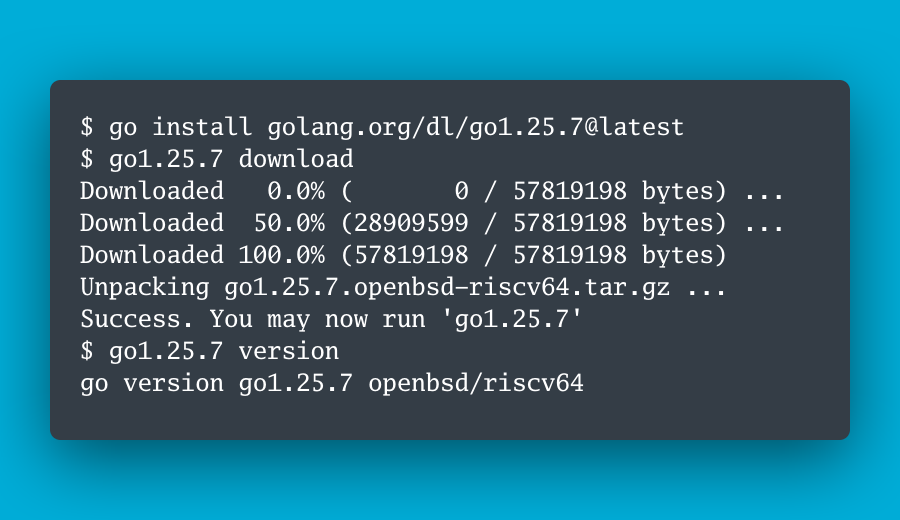
🎉 Go 1.25.7 and 1.24.13 are released!
🔐 Security: Includes a security fix for cmd/cgo (CVE-2025-61732) and an update for crypto/tls (CVE-2025-68121).
🗣 Announcement: https://t.co/gn4BwmFBh4
📦 Download: https://t.co/cZRQix5aeM
#golang
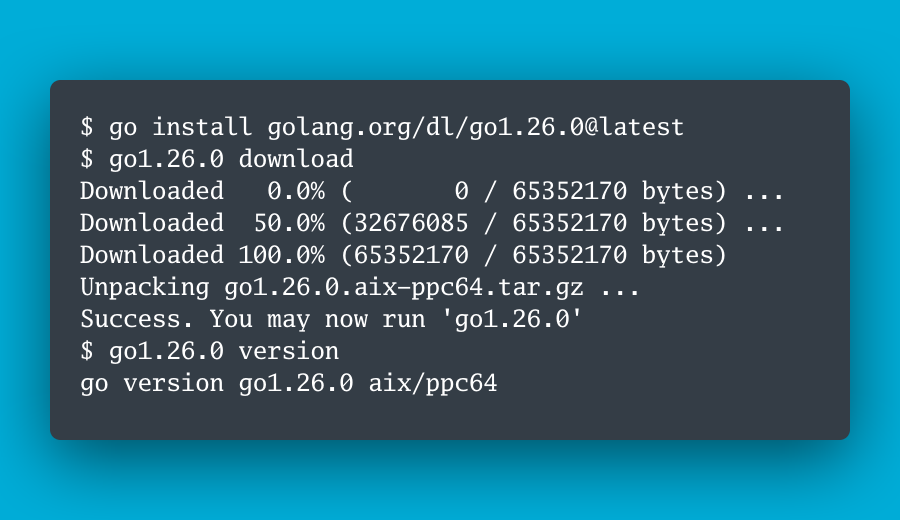
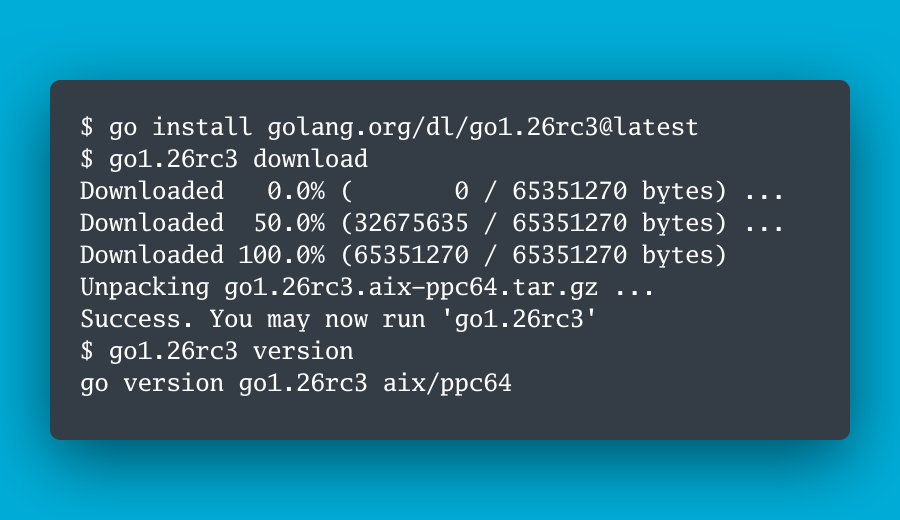
🥳 Go 1.26 Release Candidate 3 is released!
🔐 Security: Includes an update for crypto/tls (CVE-2025-68121).
🏃♂️ Run it in dev! Run it in prod! File bugs! https://t.co/Ul1xGhvlkf
📢 Announcement: https://t.co/WTZSMY1fay
⬇️ Download: https://t.co/NoKrW5T8JG
#golang