The 2024 #NobelPrize laureates in chemistry Demis Hassabis and John Jumper successfully utilised artificial intelligence to predict the structure of almost all known proteins.
What groundbreaking discoveries will be recognised with a Nobel Prize this year? The announcements will begin in just a few days. Learn more: https://t.co/RCKc2r3asL
🚨 Cancer dormancy and metastasis.
Dormant disseminated cancer cells can evade immune surveillance and reactivate years later, driving metastatic relapse.
Understanding dormancy biology may enable biomarkers and therapies that prevent recurrence before metastases develop.
📖 @NatureRevCancer
DOI 👉🏻 https://t.co/qkjbkhfZsc
#CánCare #oncology #metastasis #cancerdormancy
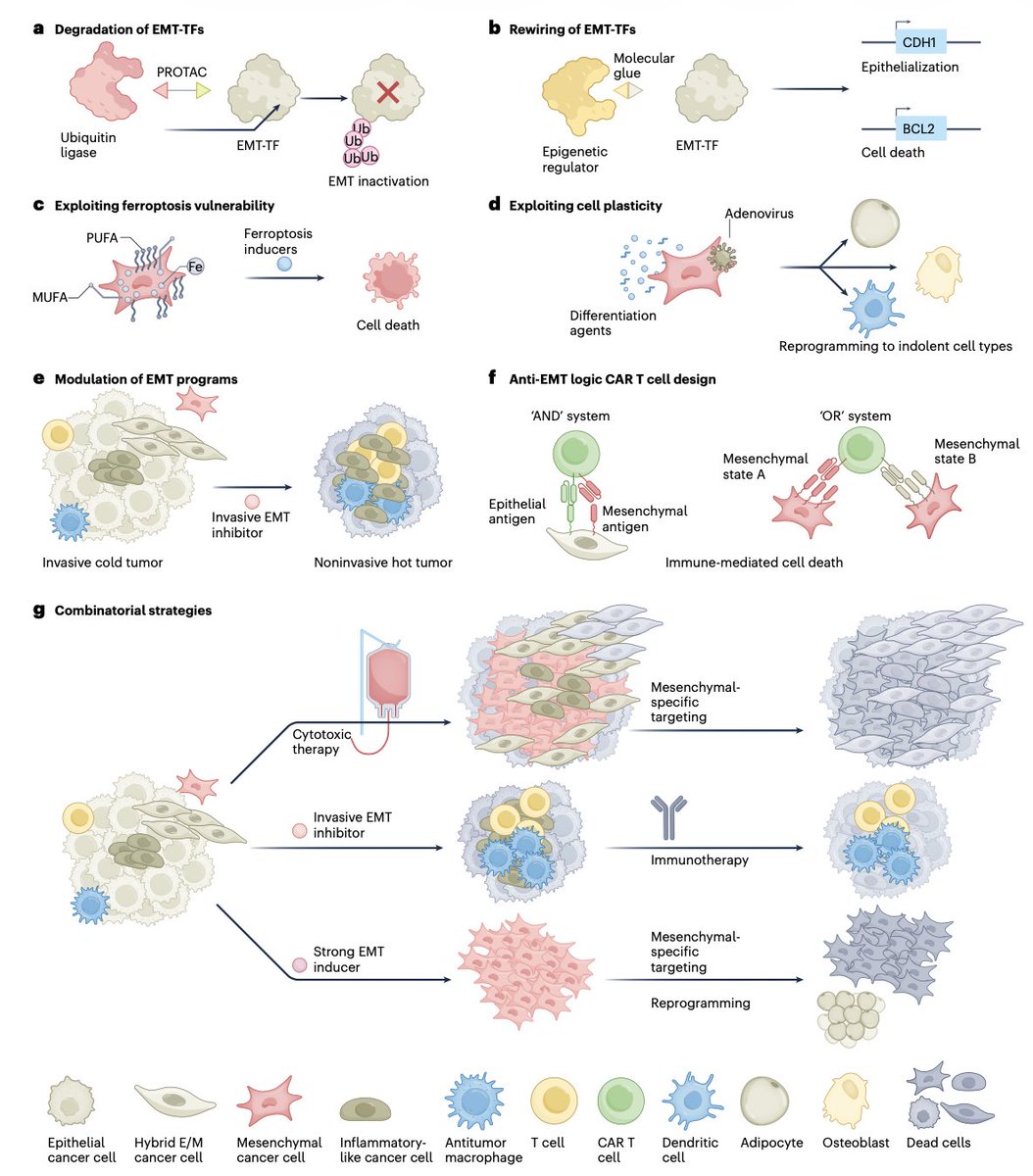
🚨 EMT and tumor plasticity.
EMT is a dynamic continuum of cellular states that drives invasion, metastasis, immune evasion, and therapeutic resistance.
Understanding EMT heterogeneity may reveal new opportunities to target tumor plasticity.
📖 @NatureCancer
DOI 👉🏻 https://t.co/zRkYtntajM
#CánCare #EMT #tumorplasticity #precisiononcology
Excited to share our new study @ScienceMagazine by the fantastic Raphael Mattiuz and @jboumelha@SinaiImmunol showing how DC build and sustain tertiary lymphoid structures in cancer. A major step toward enhancing anti-tumor immunity (1/2) https://t.co/H8awCDz0HM
Representación esquemática del espectro de la tuberculosis (TB), que abarca desde la eliminación espontánea, la infección latente por Mycobacterium tuberculosis, la TB incipiente, la TB subclínica y la enfermedad activa:
Clin Microbiol Rev 2026:e0019425.
Proteins aren’t just something you eat; they’re the actual machinery that keeps you alive.
Once you see how many layers of structure a protein has to go through just to work, it makes sense why biology is as precise (and fragile) as it is.
At the top, you’ve got the basics: long chains of amino acids that start folding the moment they’re made. But it’s the details that matter:
α-helices: Tight spirals held together by hydrogen bonds. One wrong amino acid, and the whole helix can fall apart.
β-sheets: Flat, layered structures that can be incredibly strong, or incredibly dangerous if they misfold (prions are the best example).
Loops and turns: These short segments look unimportant, but they often decide what a protein can actually bind to.
Domains: Bigger “modules” inside proteins. Each one has a job.Binding DNA, grabbing metals, recognizing signals, folding other proteins.
Motifs: Repeated little patterns (like zinc fingers or beta hairpins) that show up everywhere in nature because they just work.
And then there’s the tertiary structure, the full 3-D fold. This is where hydrophobic pockets, ionic bonds, hydrogen bonds, and disulfide bridges lock everything into place. If any of these forces weaken, the protein stops doing its job.
And here is why it matters
A single amino acid change can break a protein.
Heat can unravel one.
Mutations can twist one into a shape that does the wrong thing.
And nearly every disease you can name involves proteins misfolding, malfunctioning, or being produced at the wrong time.
When you zoom out, proteins really are the “architecture” of biology: part structure, part machinery, part communication system
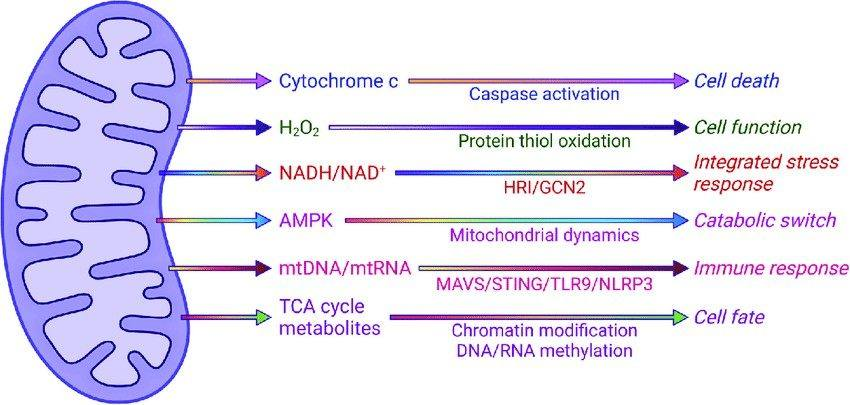
🔋 Mitochondria run their core power system using bacterial-style DNA.
🧬 But they need your nuclear DNA for support, repair, and growth.
Think of it like a battery with its own mini-engine; it sparks on its own, but the car (your cell) builds and maintains it.
Mitochondria are semi-independent, powered by ancient bacterial genes, guided by your human ones.
Where vitamins and minerals are stored in the body
Vitamins and minerals use different storage strategies. Some are stockpiled in organs and tissues, while others are used immediately and must be replenished often. Storage pattern explains why some deficiencies appear quickly and why a few nutrients can accumulate to toxic levels if overconsumed.
1️⃣ Water-soluble vitamins (B-complex, vitamin C)
Mostly circulate in blood and are not stored in large amounts. Excess is lost in urine, so steady intake matters. Vitamin B12 is the notable exception and is stored in the liver for years.
🟢 Example: a few weeks with little vitamin C can cause fatigue and gum irritation, while low B12 may not show up for months because liver stores buffer intake.
🟢 Example: intense sweating or diuretics can raise B-vitamin needs since these dissolve and leave with fluids.
2️⃣ Fat-soluble vitamins (A, D, E, K)
Absorbed with dietary fat and stored in liver, adipose tissue, and to a lesser extent skin. Deficiency develops slowly, and excess intake can accumulate.
🟢 Example: vitamin D stored in liver and fat can help maintain status through winter when sunlight is low.
🟢 Example: chronic high vitamin A intake from supplements can build up in the liver and cause headaches or skin peeling.
3️⃣ Major minerals (calcium, magnesium, phosphorus, potassium, sodium, chloride, sulfur)
Stored mainly in bone, muscle, and extracellular fluids. They maintain structure and electrical balance.
🟢 Example: about 99 percent of calcium is stored in bone; low dietary calcium draws from bone reserves over time, weakening bone density.
🟢 Example: magnesium is stored in bone and muscle; heavy sweating or stress can deplete it and trigger muscle cramps or irregular heartbeat.
🟢 Example: sodium and chloride are held in extracellular fluids; high salt intake increases extracellular volume and can raise blood pressure in salt-sensitive people.
4️⃣ Trace minerals (iron, zinc, copper, selenium, iodine, manganese, chromium, molybdenum, fluoride)
Required in small amounts with specific storage sites.
🟢 Example: iron is stored as ferritin in liver, spleen, and bone marrow; low ferritin reduces red blood cell production and causes fatigue.
🟢 Example: iodine concentrates in the thyroid gland to make thyroid hormones; low iodine intake slows metabolism and can enlarge the thyroid.
🟢 Example: zinc is distributed in skin, pancreas, and brain; low zinc impairs wound healing and blunts taste and smell.
5️⃣ Choline and other water-soluble nutrients
Choline is stored in the liver and incorporated into phospholipids and acetylcholine.
🟢 Example: inadequate choline raises risk for fatty liver and can affect memory because the body cannot synthesize enough to cover needs in many people.
Water-soluble vitamins are used quickly and need regular intake. Fat-soluble vitamins and many minerals can be stored for longer periods, which delays deficiency but increases the risk of buildup with excessive supplementation. The liver, bone, muscle, fat, and thyroid serve as the body’s nutrient vaults, releasing or storing what the brain and tissues need in real time.
Crazy example of Chinese biotech cycle times:
I'm reading a new bioRxiv preprint from a Chinese research team about a new circular RNA modality. It's about a cool idea to embed aptamers into circular RNAs. The circularity confers stability and the aptamers confer targeting. So it can be delivered "carrier free," i.e. no LNP or other delivery vector.
I fire up a Future House Precedent Search AI agent to see if there is related literature. It seems pretty novel. (If you know about literature or companies around this type of approach, let me know!)
I'm still reading as the agent runs, and get to "In a first-in-human (FIH) clinical trial, ..." Based on safety studies in rats and results in a mouse disease model, they immediately escalated to a nine person study in healthy volunteers. They collected ~500k cells worth of *human* single-cell transcriptomic data to profile the immune response.
This is the new bar on the global stage for biotech R&D. While we are attempting to cut funding and destroy our own global advantage in RNA vaccine technology, China is dramatically compressing the cycle times between new ideas and direct human observations.
Worth thinking hard about.
Oncolytic viruses have the unique ability to selectively replicate within (and to destroy) cancer cells, offering a promising approach in cancer treatment.
A new Review summarises clinical progress, remaining challenges, & future research directions: https://t.co/EZUknzv4Ye
Mitochondria move thru the body.
Free mitochondria can be exported by brown fat cells into the bloodstream. From there, they transit to cells with damaged mtDNA, where they are imported and rescue mitochondrial function.
The implications for cancer therapies are profound.
https://t.co/GbHIBdSj45