Years ago we released a DEX aggregator report. Enso independently had similar findings.
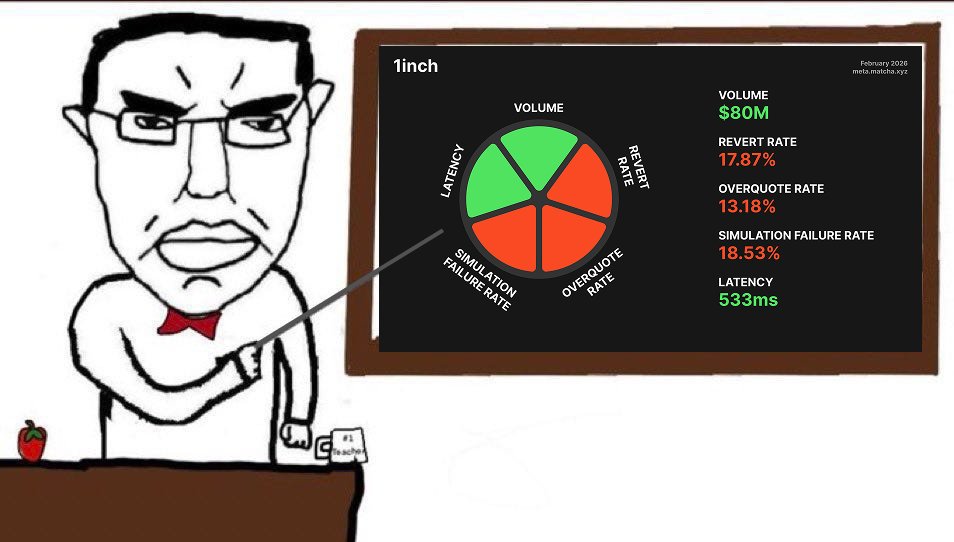
Other aggregators show misleading prices and have done so for years.
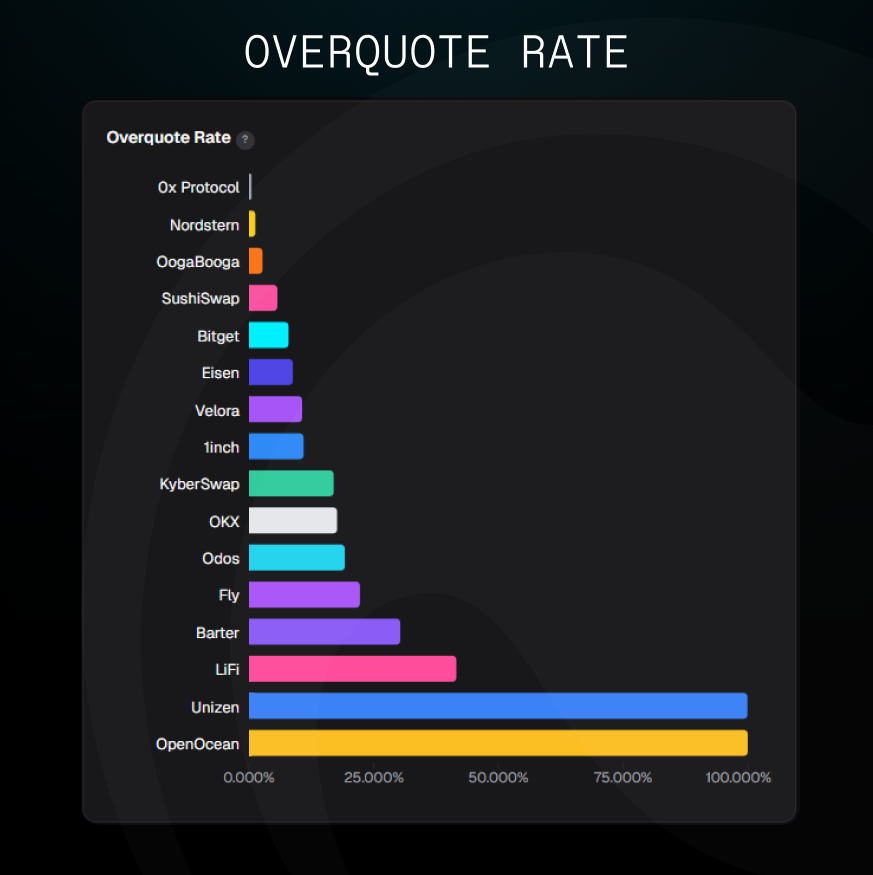
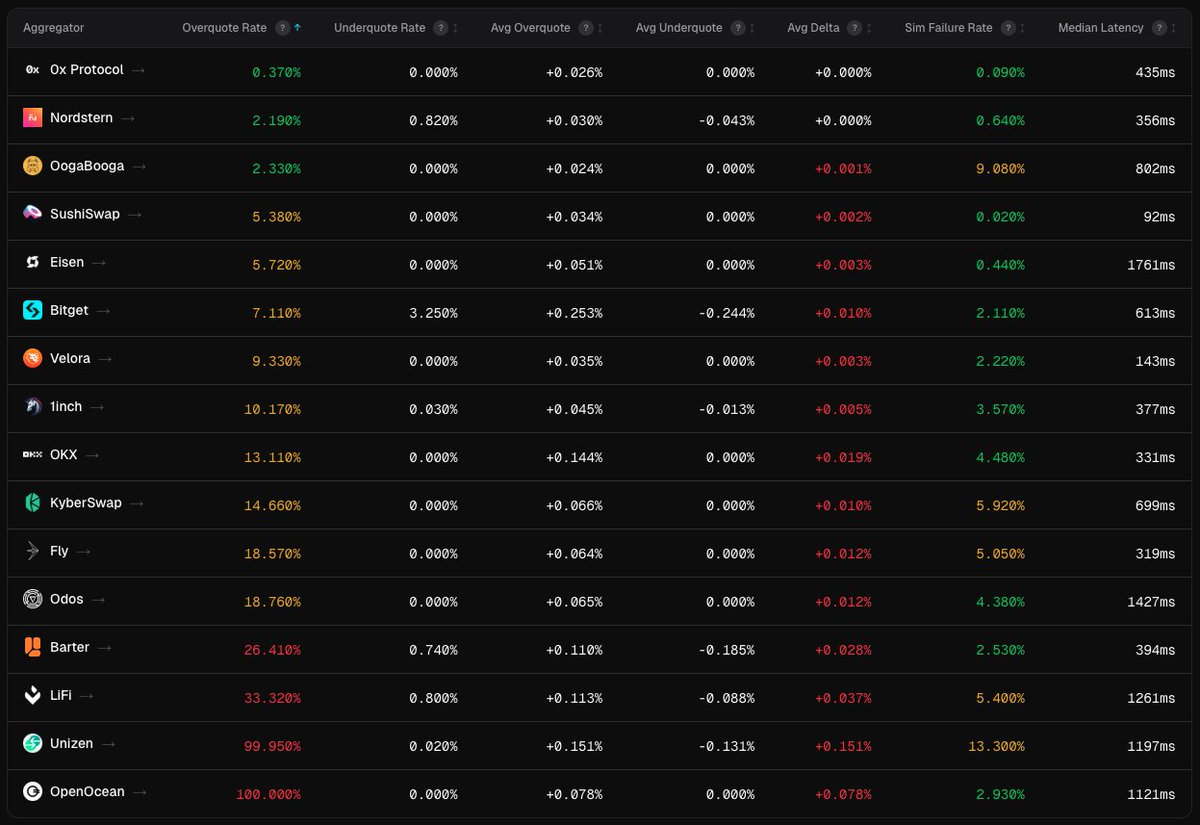
Overquote rate last 7d
A quote of $1,000 out that delivers $995 is an overquote. The user gets less than promised.
Best:
🔸 @0xProject: 0.50%
🔸 @nordstern_fi: 1.26%
🔸 OogaBooga: 2.72%
Worst:
🔸 @lifiprotocol: 41.57%
🔸 @unizen_io : 99.94%
🔸 @OpenOceanGlobal: 100.00%
it's odd that anthropic has shared a smart contract exploitation eval (they are aware of the risks), but they didn't share mythos with any of the auditors or companies in the space (they want your money stolen).
Introducing the Enso Shield Dashboard, showing honest swap rates across DeFi.
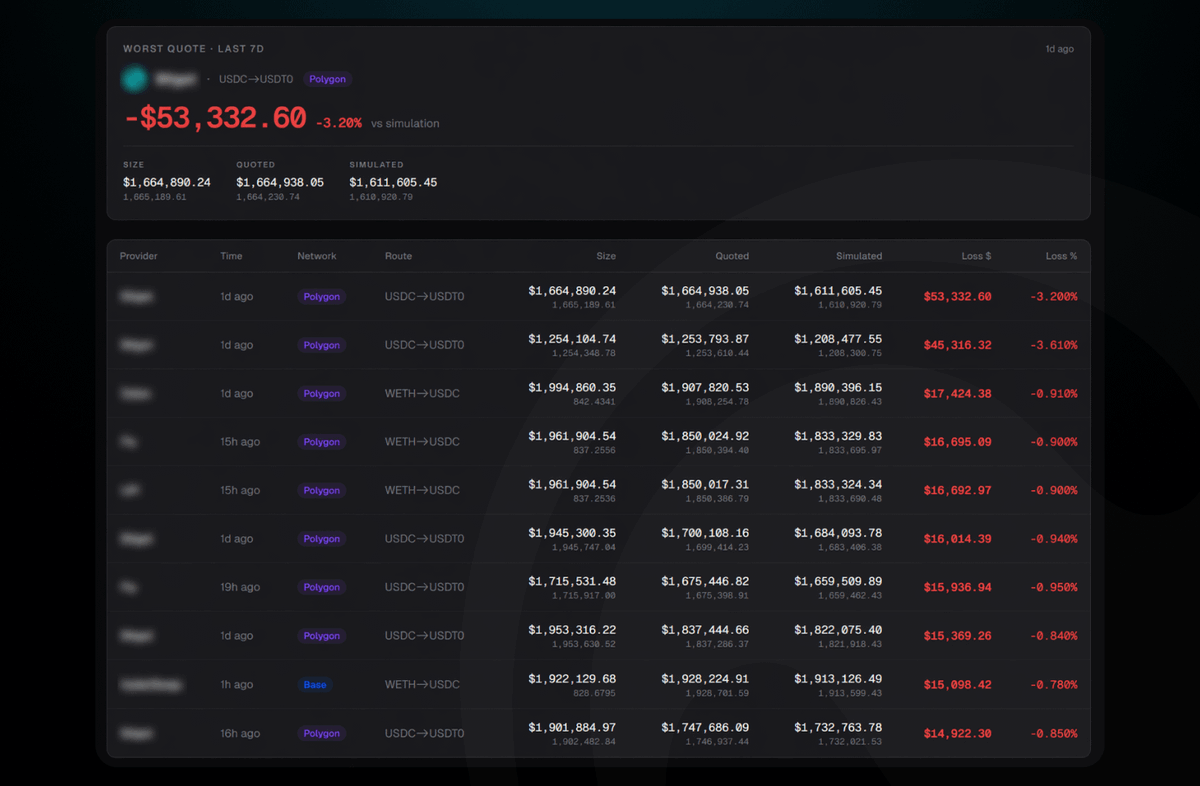
Overquotes add up to millions every day.
In the last week, one user could have lost up to $53,332 on a single swap.
https://t.co/I4jG6GDj1K
Lots of people are dunking on the Circle proposal to shift Aave rates, and I have, inevitably, been asked my opinion. I’ll share it here publicly.
Gordon’s proposal is not incorrect directionally. He correctly diagnoses that the market is not clearing, and provides a pretty standard solution that would fit into half the textbooks on my bookshelf.
Where I disagree with him are on his rate (in)sensitivity assumptions. Going straight to 40% seems destined to force liquidations. In the current market, contagion risk is already high, so cascades would need to be mitigated.
I don’t know if Aave can throttle the liquidation throughput like the old Maker vaults could, but that would be a way to do that. It’s an open question whether this would be a good idea. I’m open to considering it, but am not convinced at this time.
Gordon doesn’t say that the goal is repayment or liquidation, though. He believes this is a way to finance attracting supply, which I agree WOULD be the best way to unstick the market for the moment.
However, the rate can’t just be the usual mechanics. For starters, anyone who has been in DeFi knows that juicy rates get diluted quickly in a floating rate lending protocol. Given the high probability of at least some loss, why would a lender put their stables to work even for a temporary (maybe a week?) 40% rate?
Imagine you had $100m, and you saw this 40% deposit rate on Aave. Knowing there is more than $1b of impaired collateral in the system, are you going to risk your clients’ money for $109k/day? You’d need a week and a half just to break even on a 1% loss to your deposited funds.
Except this is a floating rate. Once danger has passed, the rates drop down. And if they stay elevated it’s likely because the situation hasn’t gotten better. The calculus COULD be different if it was 40% for 6 months or a year. But you’re really just getting outsized rates for a few days in the best case scenario, and it is rising or realized risk that would let you keep earning that rate.
This is at its heart a risk that is unmeasured, and so you can’t know what is the correct rate to price it at. You can’t tell if this is picking up nickels in front of a steam roller or the trade of the century.
So I think depositors are the most rate insensitive group at the moment, and due to a very wide range of possible outcomes at the intersection of distressed collateral assets, ultimate recovery rates on those assets, timeline to realize that recovery, secondary damage that has created bad debt, and governance risk around things like implementation of Umbrella or the funds seized by Arbitrum.
Basically everyone is standing around keeping rsETH marked to some imaginary number because we don’t have enough guidance from Kelp (and possibly L0 and now Arbitrum) for Aave to know how to begin liquidations and realize losses without accidentally taking on someone else’s loss because they were too pessimistic in valuing the impaired collateral.
I do think at this point, Aave would be better off making an “ok” plan and acting today than waiting for a “good” plan that requires information from Kelp/L0/Arbitrum/law enforcement that may not be available for some time.
at https://t.co/Gjci1KRtu0 our overquote rate from Velora is 1.2%, on much bigger volume.
if we see any aggregator metric get worse suspiciously – we DM them instantly and find the solution fast. together.
idk why you need to throw shit at your partners
.@0xProject is emerging as the primary liquidity routing layer for USD stablecoin trades on @0xPolygon
In Q4 2025, it already processed 53% of stablecoin DEX aggregator volume
By Q1 2026, that share expanded to 66%, continuing to outpace all other aggregators combined on @0xPolygon
Source: @AlliumLabs
My neighbor told me North Korea keeps draining his wallets so I asked how much crypto he still had left and he said he just keeps depositing more into new protocols afterwards so I said it sounds like he’s just funnelling money to Kim Jong Un and then his daughter started crying.
@hasufl "aggregators compete on quote price, solvers don't quote - they commit". This is misleading right? Solvers don't commit to what users see as a quote. If they did, negative slippage could never occur.
Cowswap is a great product. It doesn't need to play these games
🚨 SECURITY UPDATE
We have identified an exploit related to SwapNet.
Matcha Meta and 0x contracts remain secure.
A small subset of Matcha Meta users who disabled our default One-Time Approval setting and granted direct approvals to SwapNet contracts were affected.
👉 If you disabled "One-Time Approval," revoke permissions for
'0x616000e384Ef1C2B52f5f3A88D57a3B64F23757e' immediately via @revokecash.
Full post-mortem 👇
https://t.co/9qGnr1xhqe
Read this from Peter and realized that it's time for me to also speak up.
NGL, I’ve started questioning my loyalty toward Ethereum. I did not come into crypto because of Bitcoin but because of Ethereum. I also have a lot of gratitude toward @VitalikButerin — someone I looked up to as an ideal for how things should be built in this world. Though I/we never got any direct support from the EF or the Ethereum CT community — in fact, the reverse. But I have always felt moral loyalty towards Ethereum even if costs me billions of dollars in Polygon's valuation perhaps.
The Ethereum community as a whole has been a shit show for quite some time. Why does it feel like every other week, someone with major contributions to Ethereum has to publicly question what they’re even doing here? Just go your own way already.
At best, I get trolled by well-meaning friends like @akshaybd for not declaring Polygon an L1 and walking away from this circus. Not many remember that Akshay himself was equally inclined toward Polygon in the beginning before he took his talents and helped build the Solana empire into what it is today. He got disgusted by the socialistic behavior of the Ethereum community — trolling projects like Polygon that were contributing immensely — all because of some arbitrary “technical definition.”
At worst, people have started questioning my fiduciary and moral duty toward Polygon. It’s widely believed that if Polygon ever decided to call itself an L1, it would probably be valued 2–5× higher than it is today. Like think about it, Hedera Hashgraph an L1 is valued higher than Polygon, Arbitrum, Optimism and Scroll combined.
To make things even worse, the Ethereum community ensures Polygon is never considered an L2 and is never included in the markets' percieved Ethereum Beta. They don’t seem to understand that Polygon PoS effectively hinged on Ethereum, while Katana, XLayer, and dozens of other chains in Polygon's ecosystem are true L2s. Heck, a prominent Polygon Stakeholder literally scolded me just today because I can’t get Polygon on GrowthPie, which refuses to list the Polygon chain.
When Polymarket wins big, it’s “Ethereum,” but Polygon itself is not Ethereum. Mind-boggling.
Anyway — I’m also a stubborn, hard-ass soul. I’m going to give this a final push that might just revive the entire L2 narrative. Just bear with me for a few more weeks.
But the Ethereum community needs to take a hard look at itself — and ask why, every day, contributors to Ethereum, even major ones like @peter_szilagyi, are forced to question or even regret their allegiance to Ethereum.
My only (remaining) defense to myself is that Ethereum is a democracy — and in any democracy, people on all sides end up disgruntled. But it’s still the only system that truly works in the long run. 🤞
@z0r0zzz Gives room to undercut and capture some flow, especially on mainnet.
But you’ll find most integrators aren’t very capable of comparing gas adjusted swaps.
And other aggregators misrepresent their gas in their APIs (0x gives accurate gas in 99.9% of cases)
@z0r0zzz You’d likely see
AllowanceHolder -> ParaswapRouter -> UniswapV4PoolManager if the user chose the Paraswap quote
Or
AllowanceHolder -> UniswapV4PoolManager if they chose 0x quote.
@z0r0zzz Yeah it’s an option on Matcha Meta so you only interact (allowance) with a single contract, even if you use other aggregators.
Matcha Meta uses the 0x AllowanceHolder contract.