A imprensa está chegando hoje no mesmo ponto em que Amilcar Brunazzo e Pedro Resende estavam no ano de 2002: A indiferença do TSE.
Recomendo a leitura e a guarda desses PDFs.
Livro Burla Eletrônica de 2002: https://t.co/99OOPQubo2
Relatório oficial da Auditoria de 2014: https://t.co/17OZY6tm0m
Relatório da Unicamp: https://t.co/qkwciG5OLA
ALive: Leonardo Dias, analista de dados, afirma ter identificado 11.535 identificadores eleitorais com registros repetidos. Um título de eleitor teria aparecido em 10 seções de votação diferentes em São Paulo, caso que, segundo ele, exige esclarecimentos do TSE.
Before he was president, Trump bought an estate in West Palm Beach, Florida. He put up a 50-foot flag pole and flew a U.S. flag on it. The City Council told him that he could only have a 30-foot pole but he refused to take it down. They told him they would fine him $1,000 a day until he took it down. He said fine, that's chump change. When the fine reached $120,000 he went to the city council and made a deal. He would lower the flag to a 30-foot pole if he could donate the $120,000 (write off/help veterans) to the Veterans Affairs, to which they agreed. He took the 50-foot pole down and had a landscape company come in and build a 20-foot hill where the pole was and put up a 30-foot pole. That's why we love the guy.
THE CEO OF NVIDIA WAS ASKED WHICH COLLEGE DEGREE IS AI PROOF. HIS ANSWER: "IT WON'T MATTER."
He didn't sugarcoat it.
Parents everywhere are pushing their kids toward the "safe" major.
Jensen Huang says there isn't one.
What matters is how well you use AI inside whatever you choose.
He's said it before, even more bluntly:
"If you're not using AI, you're going to lose your job to somebody who uses AI."
Not a robot.
Not a chatbot.
A PERSON who learned AI before you did.
So pick the field you love.
Then learn how AI makes you dangerous in it.
Here are 14 free places to start, sorted by field:
ANYONE
1. Anthropic AI Fluency, the basics of working with AI
https://t.co/VAC50EMdCs
2. Elements of AI, the free course 1M+ people have taken
https://t.co/vqKLwmzIMC
3. Generative AI for Everyone by Andrew Ng
https://t.co/EpEoEcpUiN
4. OpenAI Academy, free lessons and live workshops
https://t.co/ECOpVl9rLW
STUDENTS AND TEACHERS
5. Anthropic AI Fluency for Students and for Educators
https://t.co/VAC50EMdCs
6. Harvard CS50 AI, the full course, free
https://t.co/an7bCuWdY7
LAW
7. Generative AI for Legal Services
https://t.co/W6jq4ykx94
8. Open University courses on AI in legal advice
https://t.co/e8usO9O4tA
MEDICINE
9. Stanford's AI in Healthcare
https://t.co/9fwPfE2oyN
BUSINESS AND FINANCE
10. Wharton's AI for Business
https://t.co/9L0pRZ5qR2
MARKETING
11. HubSpot Academy AI for Marketers
https://t.co/DGSOSM2FT1
DESIGN AND CREATIVE
12. Anthropic AI Fluency for Creative Work
https://t.co/PtBOZz1mIg
ENGINEERING AND DATA
13. Google's Machine Learning Crash Course
https://t.co/Wd1xgdfdUE
14. Kaggle Learn, hands on in your browser
https://t.co/GWTzb7d1dF
Total cost: $0.
Here's my take.
The "AI proof degree" is a myth sold to scared parents.
A nurse who uses AI beats a nurse who doesn't.
A lawyer who uses AI beats a lawyer who doesn't.
An engineer who uses AI beats an engineer who doesn't.
The degree was never the protection.
The skill is.
Send this to a parent stressing about their kid's major.
SOMEONE LEAKED THE PROMPT THAT GETS CLAUDE TO BUILD YOUR FIRST TEAM OF AI AGENTS IN A WEEK, EVEN IF YOU'VE NEVER WRITTEN A LINE OF CODE
No coding. Just paste. One prompt handles all of it:
Time needed: 2 minutes
Actions: copy and paste into Claude Fable 5.2
Most people use AI at 5% of what it can really do, treating it like a chat when it could be doing their work for them. Here's the first step to changing that:
It starts by interviewing you with 5 sharp questions about what you do, what you're trying to achieve and the first task you want gone.
It chooses what to hand off first by comparing research, leads, support, inbox, content and admin, and starts with whatever saves you the most hours this month.
It designs your team of 3 to 5 agents, each with one job and a ready-to-paste prompt, plus a team lead who is the only one you ever talk to.
It checks every result with review points and a list of the ways the team is most likely to break, and nothing gets sent, published, deleted or paid for without your yes.
It needs zero code, just a 7-day plan with one clear task per day and a "START HERE FIRST" section with the one thing to do today.
Before, this meant hiring someone or spending weeks on automations. Now it's one prompt.
Save it before everyone starts using it.
O Ancapsu-- mais conhecido como gordão Ucrânia 🇺🇦-- fez um vídeo passando pano pro TSE, dizendo que os nomes duplicados de Mesários no dia da eleição é apenas "errinho" de digitação da justiça eleitoral. Kkkkkkkkkkkkk
Para quem não sabe, o Ancapsu defende o TSE porque já prestou serviços para o tribunal. É por isso que ele defende tanto o nosso maravilhoso sistema eleitoral. 🤣
Conocí a un tipo que gana 1.2 millones de dólares al año solo escribiendo prompts.
Le pregunté cuál era su truco.
Me mandó un curso de Anthropic de solo 2 horas.
Lo terminé anoche... y a la mitad me quedé congelado
Me di cuenta de que llevo meses usando Claude mal. Y me encargué de subtitularlo al español e inglés.
No es que lo use poco. Es que lo estaba usando como el 95% de la gente.
Si usas Claude aunque sea de vez en cuando,
guarda este tweet ahora.
En serio. Te va a cambiar la forma en que hablas con la IA.
O EXTRAORDINÁRIO MILAGRE DA VIDA HUMANA
Uma impressionante animação científica em 3D mostra como começa a fascinante jornada da vida humana.
Entre milhões de espermatozoides, poucos conseguem chegar até o óvulo. Após a fecundação, inicia-se um extraordinário processo de multiplicação celular, seguido pela implantação do embrião na parede do útero.
🔹 3ª e 4ª semanas após a fecundação: começa a formação do sistema nervoso, do cérebro e do coração primitivo, que inicia suas primeiras contrações.
🔹 5ª semana: desenvolvem-se as estruturas iniciais dos olhos, do sistema digestivo e dos membros.
🔹 6ª semana: os traços da face começam a ganhar forma, incluindo as estruturas do nariz.
🔹 7ª semana: os dedos das mãos começam a se definir e os membros tornam-se mais desenvolvidos.
🔹 8ª semana: as estruturas básicas dos principais órgãos já estão estabelecidas, embora ainda precisem crescer e amadurecer.
A partir da 9ª semana após a fecundação, inicia-se o período fetal, marcado pelo crescimento e amadurecimento dos órgãos até o nascimento.
Uma jornada extraordinária, repleta de transformações, que revela a complexidade e a beleza da vida humana.
Assim começou a história de cada um de nós. Uma verdadeira obra-prima da criação de Deus. 🙏
Já temos as provas que as Eleições brasileiras foram fraudadas pelo uso de um software que deu a Lula os Votos brancos e Nulo foi equivalente a 8% a mais do que os votos de Flávio Bolsonaro.
As provas devem ser encaminhadas a Donald Trump @realDonaldTrump e Marco Rúbio @SecRubio
Vamos aguardar os próximos capítulos!
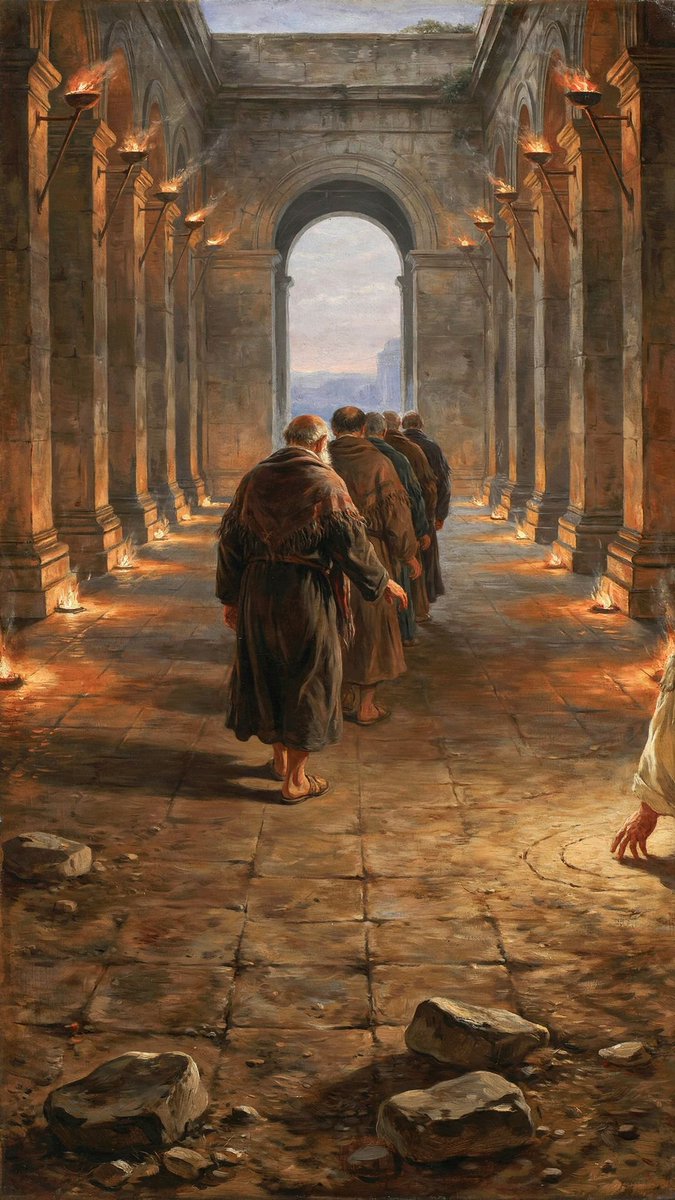
Jesus wrote one thing in His entire life that we know of.
He wrote it in the dirt.
John 8. Early morning in the temple courts. He has sat down to teach, and a crowd has gathered around Him.
Then the scribes and Pharisees push through, dragging a woman. They stand her in the middle of everyone.
John 8:4. Master, this woman was taken in adultery, in the very act.
In the very act.
Stop there. Read the law they're about to quote.
Leviticus 20:10. The adulterer and the adulteress shall surely be put to death.
Both of them.
You can't catch a woman in the very act of adultery alone. They had the man. They let him walk.
This was never about the law. John tells you plainly. John 8:6. This they said, tempting him, that they might have to accuse him.
It was a trap. Say Stone her, and the teacher who eats with sinners becomes an executioner, and He's defied Rome, which kept the power of death for itself. Say Let her go, and He's broken the law of Moses in front of the whole temple.
The woman is just the bait.
Now watch what He does.
John 8:6. But Jesus stooped down, and with his finger wrote on the ground.
He doesn't argue. He doesn't look at them. He bends down and writes in the dust with His finger.
They keep pressing Him. So He stands up and says one sentence.
John 8:7. He that is without sin among you, let him first cast a stone at her.
And then He bends down and writes again.
Every sermon you've heard asks the same question. What did He write?
John doesn't say. But the Bible has been quietly answering for a long time.
Start with the finger.
Exodus 31:18. Two tables of testimony, tables of stone, written with the finger of God.
The law these men were quoting was written by the finger of God. Now the same finger is writing again. Not in stone this time. In the ground.
Now go back one day. The chapter break hides it.
John 7:37. In the last day, that great day of the feast, Jesus stood and cried, saying, If any man thirst, let him come unto me, and drink.
Verse 38. Out of his belly shall flow rivers of living water.
Yesterday, in this same temple, He called Himself the source of living water.
Now read Jeremiah 17:13.
O LORD, the hope of Israel, all that forsake thee shall be ashamed, and they that depart from me shall be written in the earth, because they have forsaken the LORD, the fountain of living waters.
Look at what's packed into that one verse.
The fountain of living waters. He claimed it yesterday.
Written in the earth. He's doing it right now.
They that depart from me. Watch what happens next.
John 8:9. And they which heard it, being convicted by their own conscience, went out one by one, beginning at the eldest, even unto the last.
One by one.
The ones who'd forsaken the fountain of living water, written in the dirt, walking away.
Beginning at the eldest.
Not the youngest. The old men went first. They'd lived the longest. They had the longest list. They knew exactly what He could write.
And notice He doesn't watch them go. He's bent down, writing. He doesn't stare anyone down. He lets every man leave without having to meet His eyes.
Then it's quiet.
Augustine put it in five words. Relicti sunt duo, misera et misericordia. Two were left: misery and mercy.
Just Him and her. The stones on the ground where they dropped them.
Here's the part that should stop you.
There was one person in that courtyard who was actually without sin. One man who met His own condition. One who had the right to throw the first stone.
He's the one who didn't.
John 8:10–11. Woman, where are those thine accusers? Hath no man condemned thee? She said, No man, Lord. And Jesus said unto her, Neither do I condemn thee: go, and sin no more.
Neither do I condemn you.
That's the order. Not sin no more, and then I won't condemn you. He took the condemnation off first. Then He gave her the command.
Go. And sin no more.
Mercy didn't make the sin smaller. It made her free to leave it.
Now you.
Some of you are standing in the middle of the courtyard.
Everyone knows. Or you're sure they will. Dragged out into the light, the thing you did with your name on it. You're waiting for the first stone. You've been waiting for years.
Look up. They're gone. Every accuser walked out of that courtyard. And the only one left with the right to condemn you is the one bent down in the dirt, saying. Neither do I.
And some of you have a stone in your hand.
You know exactly who deserves it. Their sin is real. You're not even wrong about it.
Read the verse again. He that is without sin among you.
Put it down. Start with the eldest; start with what you know about yourself.
He's still writing.
Make sure your name isn't the one written in the dust.
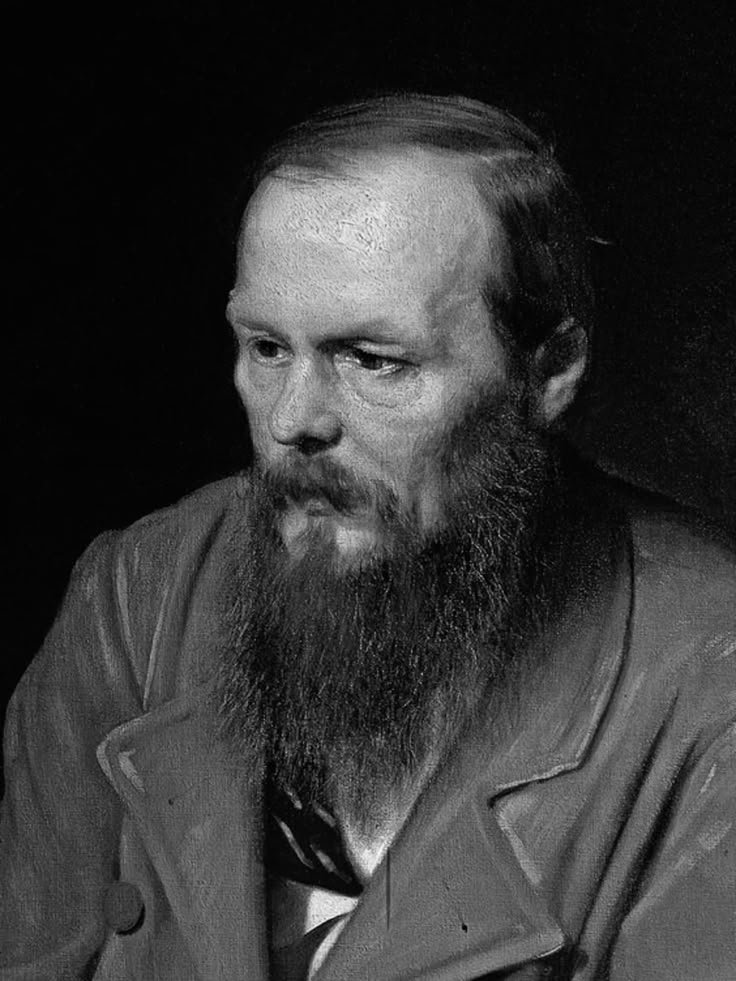
Dostoevsky was 28 when they stood him in front of a firing squad. Blindfolded. Hands tied. He could hear the rifles being loaded.
At the last second, a messenger on horseback arrived. The Tsar had commuted the sentence. The entire execution was staged. Psychological torture designed to break him.
It worked. He had a seizure on the spot.
They sent him to a labor camp in Siberia for four years. Freezing. Starving. Sleeping on wooden planks next to murderers. His epilepsy got worse. He had no paper. No pen. Nothing.
When he got out, he was broke. His first wife died. His brother died. He inherited his brother’s debts. He was so desperate for money that he signed a contract with a publisher that would have given away the rights to everything he’d ever write if he missed the deadline.
He wrote The Gambler in 26 days to make it. Dictated it to a 20-year-old stenographer named Anna. Married her three months later.
Then the real work started. Crime and Punishment. The Idiot. Demons. The Brothers Karamazov. The greatest novels in the history of the Russian language. Maybe any language.
The man who stood blindfolded before the firing squad, who convulsed on the ground while soldiers watched, who slept next to killers in Siberia for four years, who was buried in debt and grief.
That man wrote: "Every minute can be an eternity of happiness."
He earned the right to say it.
It's never over. Never give up, friend.
Bem tô eu.
Desisti de Salvador há várias décadas. Fui uma vez, vi, senti, percebi, e nunca mais voltei.
Não, não sou vidente, apenas captei os sinais. Estavam todos lá. Não viu quem não quis.
Jensen Huang keeps repeating one line for a reason:
"You're not going to lose your job to an AI, but you're going to lose your job to someone who uses AI."
The divide isn't humans vs. AI. It's people who learn to use it vs. people who wait.
Je pense que la majorité des adultes sont en mode mort. Pas physiquement. Mentalement. La grande majorité des adultes sont des enfants qui ont été broyés cognitivement.
Alex Karp l'a compris mieux que personne. Le patron de Palantir, cofondateur de la boîte avec Peter Thiel, docteur en philosophie passé par Francfort, et dyslexique. Fin 2025, une vidéo de lui incapable de tenir en place sur une chaise pendant une interview devient virale. Au lieu de s'excuser, il lance une Neurodivergent Fellowship, payée jusqu'à 200 000 dollars par an, dont il fait passer lui-même les derniers entretiens. Son message : les neurodivergents, comme lui, façonneront de manière disproportionnée l'avenir de l'Amérique. Et il va plus loin : à l'ère de l'IA, selon lui, seules deux catégories de gens n'ont rien à craindre. Ceux qui ont un vrai savoir-faire manuel. Et ceux qui pensent différemment.
Ce qui m'intéresse, c'est que sa définition déborde largement du cadre médical. Pour Karp, être neurodivergent, c'est d'abord penser hors des rails. Et quand on regarde ça sous cet angle, une évidence apparaît : on naît tous comme ça.
Observe un enfant entre 0 et 7 ans. Il connecte tout. Les nuages avec les dinosaures, la lune avec son goûter, la mort avec la couleur des feuilles. Il pose des questions sans arrêt, des pourquoi en cascade, jusqu'à ce que l'adulte en face n'ait plus de réponse. Il n'a pas peur de se tromper. Il ne sait même pas qu'il existe une « bonne » réponse. Son cerveau fonctionne naturellement en mode divergent : il explore, il relie, il invente. Un enfant de 5 ans, c'est un chercheur à plein temps.
Et puis il entre à l'école. Et pendant quinze ans, on va méthodiquement lui apprendre l'inverse.
Comment ? En transformant un cerveau divergent en cerveau convergent. À partir de là, une question n'a plus qu'une seule réponse, et cette réponse, quelqu'un la connaît déjà. Ton travail n'est plus d'explorer, c'est de la retrouver. On apprend par cœur, on recrache, on est noté. L'erreur est soulignée en rouge. La question hors sujet fait rire la classe. L'enfant qui relie deux matières « s'éparpille ». Celui qui ne tient pas en place « perturbe ». Et le cerveau, qui est une machine à apprendre ce qui le protège, finit par comprendre la leçon la plus profonde du système : penser est risqué, se conformer est sûr.
Ce modèle a été conçu au XIXe siècle pour une époque industrielle qui avait besoin de gens standardisés, ponctuels et interchangeables. Il a parfaitement rempli sa mission. Il produit des adultes qui ont la bonne réponse et plus aucune question. Des adultes en mode mort.
J'ai la conviction profonde que c'est anti-naturel. Que la nature humaine, c'est d'être divergent. Que la curiosité, l'obsession, le besoin de tout relier ne sont pas des anomalies à corriger, mais notre état d'origine. Et que ceux qu'on appelle aujourd'hui neurodivergents sont souvent simplement ceux que le système n'a pas réussi à broyer complètement. Le dyslexique qui n'arrivait pas à jouer le jeu et a dû inventer le sien. L'enfant qui ne tenait pas en place et qu'on n'a jamais réussi à faire asseoir. Celui qui a raté les cases et qui, du coup, a gardé intacte la partie de lui qui pense. Karp le dit lui-même : sa dyslexie l'a forcé à penser librement.
Et voilà le retournement que presque personne n'a vu venir. L'école nous a entraînés pendant quinze ans à faire exactement ce que l'IA fait aujourd'hui mieux que nous : trouver la bonne réponse. La convergence est devenue gratuite. Une machine la produit en une seconde. Ce qui redevient rare, et donc précieux, c'est précisément ce qu'on nous a appris à éteindre : poser la question que personne ne pose, relier ce qui n'a pas de lien, voir ce qui n'existe pas encore.
Alors si on t'a dit toute ta vie que tu étais bizarre, ce n'est peut-être pas toi le problème. Tu es peut-être juste l'un des rares qu'on n'a pas fini d'éteindre.