Galera, ontem dei uma Talk no canal da @devfullcycle sobre “Programação Reativa com WebFlux” na prática e com boa profundidade, pra quem se interessar: https://t.co/gFkIzmBC6I
cc: @sseraphini
Understanding system design helps you build better apps, even when vibe coding.
Better architecture decisions. Better AI prompts. Fewer surprises when your app grows.
So I built an interactive app to learn system design visually.
https://t.co/O0Rz621CcI
Anthropic's agent team beat a single agent by 90%. Cursor's built a browser in a week. Other big labs are moving the same way.
This is how they work, and how you can run one today. https://t.co/ZryIeBcIFa
Revolut shared the postmortem of their global cards outage of 5 hours. Some interesting (alarming?) notes:
1. They had no monitoring on database nodes going down (!!)
2. Across 3 regions, they ran 5 nodes, with #1. So a single node going down meant no zonal resillience (cont'd)
Em meio aos debates sobre a devolução do dinheiro do triplex à OAS, há quem, com a arrogância e a hipocrisia costumeiras, tenha afirmado que a condenação do Presidente Lula foi anulada por "motivos formais". Diante desse delírio, que só se explica por alheamento da realidade ou por intenções vis, é necessário restabelecer a verdade.
A sentença do caso triplex não foi anulada por meros detalhes processuais. Sergio Moro foi declarado suspeito diante de provas robustas de que, em conluio com o então coordenador da força-tarefa, Deltan Dallagnol, manipulou o sistema de Justiça para alijar o atual Presidente da República da disputa eleitoral de 2018.
Mensagens obtidas na Operação Spoofing revelaram que o ex-juiz combinou atos processuais com o coordenador da Lava Jato, antecipava suas decisões aos membros da força-tarefa, indicou testemunhas para a acusação, interferiu até na escalação dos procuradores que interrogariam o Presidente Lula e dava broncas em Dallagnol como um técnico de futebol que orienta o seu time da beira do campo.
Fez das conduções coercitivas um espetáculo, mandou grampear os advogados de defesa, divulgou ilegalmente conversas telefônicas e levantou o sigilo da delação de Palocci a poucos dias do primeiro turno das eleições presidenciais de 2018. Tudo isso foi coroado com sua nomeação como Ministro da Justiça, quando deixou a magistratura para se juntar ao governo que ajudara a eleger.
Em face de tanta desfaçatez, até mesmo um estudante de direito compreenderia que os tais "motivos formais" revelam, na verdade, um teatro processual com finalidades político-eleitorais. É preciso ter tudo isso bem claro, até para que não se volte a permitir que a Justiça seja sequestrada por projetos de poder ou ambições pessoais de quem quer que seja. Não houve anulação por meros detalhes processuais. O que houve foi uma fraude que, até hoje, envergonha o Judiciário brasileiro.
Meu primeiro paper na @GoogleDeepMind
Colocamos dezenas de agentes do Gemini 4 Carbon para trabalhar nas equações diferenciais de dispositivos de fusão nuclear. Foram descobertas novas soluções exatas, incluindo uma que se sabia existir desde 1970, mas ninguém tinha encontrado.
SRE has changed a lot in 10 years. We're kicking off a special 2-part series with the minds behind "Site Reliability Engineering, 2nd Edition"! 📖
Tune into Part 1 (Season 7, Episode 5) now! 🎧
https://t.co/nkzVrTfQG0 https://t.co/5Y4PByGiHm
Um pacote de ajuste fiscal que ataca saúde, educação e direitos sociais. Dialogado com ninguém! Um pacote feito para agradar o “mercado”. Não foi esse programa que ganhou nas urnas! Vá pressionar seu deputado/a e senador/a.
Não aceitaremos nenhum ataque aos nossos direitos!
If you're building with agents, or thinking about software factories, don't miss this new post from Matthew Goldberg about the new AWS Emulator: https://t.co/uqYSGl30VN
There are two very cool things here.
Agente rodando 4 noites seguidas sem progresso útil.
Mesmo agente, com spec + ambiente de teste: 2 horas.
O novo post do @Werner sobre o AWS Emulator resume bem: o trabalho do engenheiro passa a ser desenhar specs, testes e guardrails. Não digitar código.
https://t.co/SH6u05sCl6
I gave a talk recently about lessons learned running a Software Factory. Here are the best parts:
1. What is a software factory? => "A system of agents that build software, with humans occasionally in the loop. It's a higher layer of abstraction, where your engineering craft gets poured into agents instructions and infrastructure, as opposed to into software code."
2. They're made of: on-demand agents (the familiar), scheduled agents (underutilized by many), the correct instructions (skills, rules), and the correct environment (cloud, infra, connectors).
3. Good motivations to make a software factory: (1) you want to do less tedious work, less mindless nudging of agents, (2) you want to eliminate slop, (3) you want to increase trust in how your agents can build software.
4. Poor motivations: to automate everything as soon as possible, to just "vibe", to stop looking at code.
5. A software factory is simply programming, but now at a higher layer of abstraction. Instead of debugging stack traces, you'll be debugging (really!) agent runs, their reasoning, and tool calls. Instructions in natural language are code. Agent misbehavior is a bug, and your responsibility to fix.
6. If you think that is not programming, it's not the first time the industry has said so! When Assembly came out, John von Neumann disliked it, because machine code was the real deal. When PASCAL came out, it was not considered "real programming", FORTRAN was. And for many years, JavaScript was not considered a real programming language.
8. Invest in code reviews by *first* analyzing and introspecting what do *you* do when you're reviewing a PR, then teach agents to review like you do. Don't just send a dozen different LLMs to search for whatever. Make a list of the things you care about, then teach an agent to look for those during review. Make it systematic and invest in the reports it makes.
9. I've learned that I trust bot reviews now more than my own review, because they're *objective*, *systematic*, and *auditable*. Whereas my own human review is subjective, ad hoc and opaque (weeks from now, I won't know what my thought processes were when I approved some PR).
10. You should WRITE and READ English, not source code (except occasionally). Just like 4 years ago you AUTHORED JavaScript and REVIEWED JavaScript, without going down into the bytecode, you should remain in the same layer of abstraction. Authoring in a higher layer of abstraction but reviewing in a lower layer is bound to create a bottleneck in reviews, because the lower layers are inevitably more verbose. This means you should invest in a reporting process by which your agents abide when describing PRs.
11. A software factory makes it feasible to do things that were previously not, such as regularly deleting dead code, updating dependencies, eliminating patterns of tech debt.
12. Lesson: NARROW your agents with guardrails (rules, linting) and especially to FAIL CLOSED. Give instructions to your agents such that they should not be allowed to significantly deviate from the narrow direction you gave them. Agents should not try to hack around the constraints. You should give them a pristine and correct environment in which they operate. When they lack that environment, it's a bug and agents should fail, you should fix the environment.
13. Lesson: Premature automation is the root of all evil. Software factories give a lot of power, and you must put effort into pointing them in the right direction before you scale up automation. Focus on getting agents to behave correctly in a correct environment, with well constrained goals per agent, then scale it up little by little, monitor, and monitor. Excessive speed can make you crash into a million obstacles, sometimes with consequences.
I built an AI software factory that runs entirely on Kubernetes.
Open an issue or a PR, or comment on one, and a GitHub webhook hits Tekton. Tekton pulls the context and starts a Claude Code agent in a pipeline. The agent talks to a vLLM model running in the same cluster.
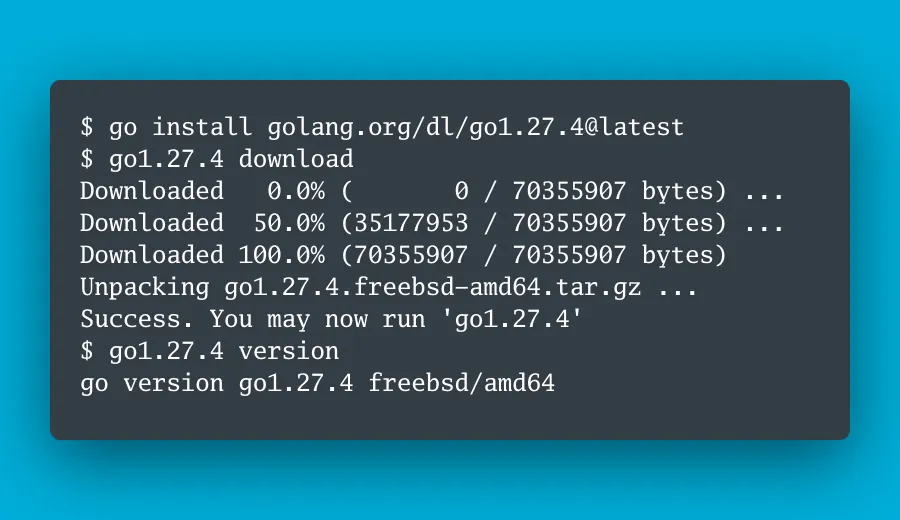
🎊 Go 1.27.4 and 1.26.11 are released!
🔏 Security: Includes 12 security fixes to the standard library and the toolchain.
🔈 Announcement: https://t.co/fw7P126a3v
⬇️ Download: https://t.co/rSrQRa62k7
#golang
Apple is working on a new app called Harbor
Harbor turns your Mac into a private AI inference server. Run open-weight models locally on Apple silicon—your data never leaves your hardware, and nothing reaches the cloud. Connect multiple Mac computers over Thunderbolt 5 to pool unified memory, enabling large models and higher concurrency that a single computer can handle alone.
Set up in minutes, not hours Harbor automatically detects your devices over Thunderbolt 5 to form a cluster. Plug in, start, and you’re running—no manual configuration, no command line, no infrastructure expertise required.
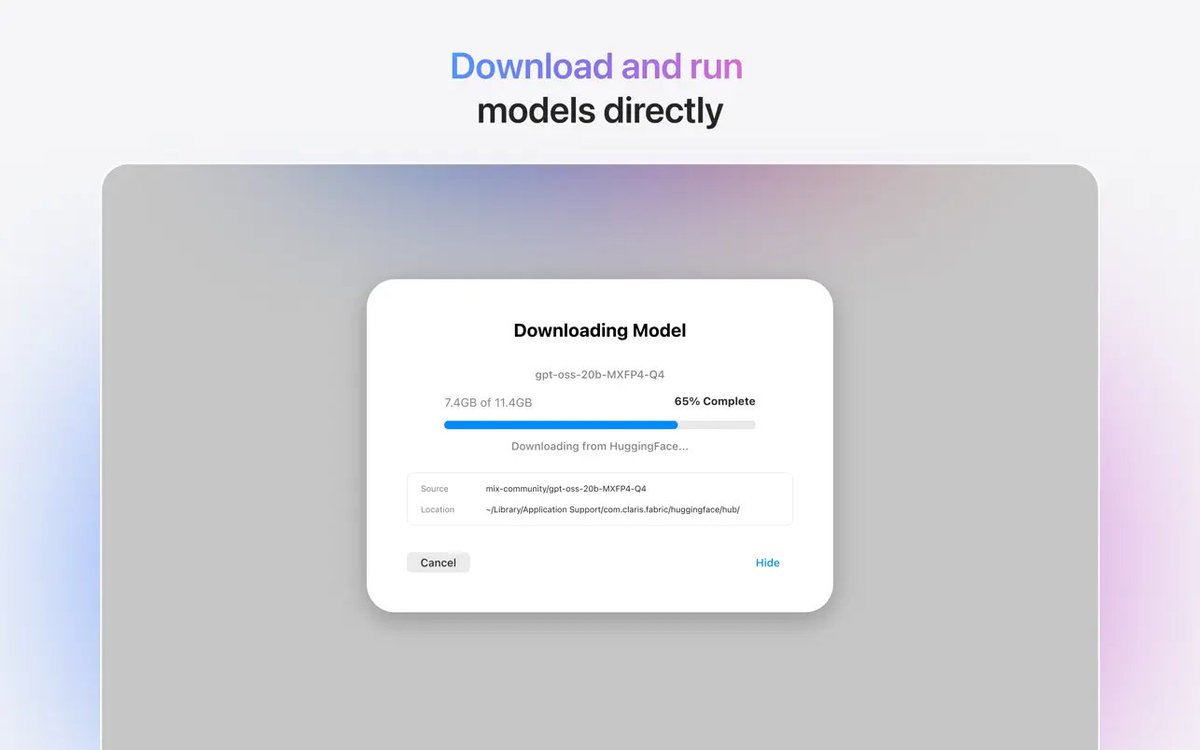
Download and run models directly Browse, download, and load open-weight models from within the app. Harbor handles model management so you can focus on the work, not the setup.
Cluster for scale Connect two or more Thunderbolt 5-capable Mac computers and Harbor pools their unified memory into a single inference resource. Run models that exceed any single computer’s capacity, or serve more concurrent requests across your cluster.
Harbor is currently in a private preview under the Claris brand.
More than ever it'll be important to get your business as lean as possible I think
Moving from expensive PaaS platforms to your own VPS is usually 100x to 1000x cheaper:
Vultr VPS is $2.50/month
AWS Lightsail VPS is $3.50/mo
DigitalOcean VPS starts at $4/month
Linode VPS starts at $5/month
Hetzner VPS starts at $7/month
Yes that's an entire server you can host your sites on!
Add free Tailscale + free Cloudflare Tunnel + close all firewall ports and you're safe too!