Your messages. Your Bitcoin. Together, at last.
Radar brings private messaging and self-custodial Bitcoin Lightning together in one seamless experience, and because it's built on Signal's incredible network - the people you already talk to come with you.
I'm imagining the bears who think that Bitcoin is so weak that if you buy 4% of it and talk a lot, you can destroy the whole network.
It's not even a person, but a group. Bought 4%.
Like, somehow the key weakness of Bitcoin is that if someone buys 4% of it, everything fails.
Bayes’ theorem is probably the single most important thing any rational person can learn.
So many of our debates and disagreements that we shout about are because we don’t understand Bayes’ theorem or how human rationality often works.
Bayes’ theorem is named after the 18th-century Thomas Bayes, and essentially it’s a formula that asks: when you are presented with all of the evidence for something, how much should you believe it?
Bayes’ theorem teaches us that our beliefs are not fixed; they are probabilities. Our beliefs change as we weigh new evidence against our assumptions, or our priors. In other words, we all carry certain ideas about how the world works, and new evidence can challenge them.
For example, somebody might believe that smoking is safe, that stress causes mouth ulcers, or that human activity is unrelated to climate change. These are their priors, their starting points. They can be formed by our culture, our biases, or even incomplete information.
Now imagine a new study comes along that challenges one of your priors. A single study might not carry enough weight to overturn your existing beliefs. But as studies accumulate, eventually the scales may tip. At some point, your prior will become less and less plausible.
Bayes’ theorem argues that being rational is not about black and white. It’s not even about true or false. It’s about what is most reasonable based on the best available evidence. But for this to work, we need to be presented with as much high-quality data as possible. Without evidence—without belief-forming data—we are left only with our priors and biases. And those aren’t all that rational.
Those same auditors also claimed Silicon Valley Bank was fine right before they ran into the reality of mark to market risk when holding US Treasuries.
@LynAldenContact@RealJimChanos@dampedspring In $MSTR’s case there is also a replacement premium to consider as well. If one were to try to acquire 600,000 btc, what premium to the spot price would that cost?
@RealJimChanos@dampedspring Both.
Attaching multi-year non-callable debt to bitcoin offers a product that corps can do, but investors and most funds cannot do, so they pay a premium for it.
From there, that premium is a measure of unmet or saturated demand for the product, depending on market conditions.
Lyn Alden gave one of the clearest breakdowns of why the U.S. is on an unstoppable fiscal path—and why Bitcoin matters more than ever because of it.
@LynAldenContact walks through the numbers behind the federal deficit, interest expenses, Social Security, and the structural changes that happened post-2008. The short version? We’re in a new era. One where the government can’t slow down even if it wanted to.
The debt is compounding. The interest expense is rising. The trust funds are running dry. And the political will to do anything about it doesn’t exist.
Her phrase: “Nothing stops this train.” Not because of ideology, but because of math—and human nature.
This isn’t hyperinflation doom-talk. It’s a sober look at what happens when a system built on ever-growing debt reaches its limits—and why Bitcoin, with its fixed supply and transparent rules, is the opposite of that system.
Highly recommend watching this one all the way through.
Bitcoin should be the only crypto in the Strategic Reserve, or at worst ~90% of it.
Will need some transparency into how XRP, SOL and ADA were chosen, and who will directly benefit from those being purchased with taxpayer dollars.
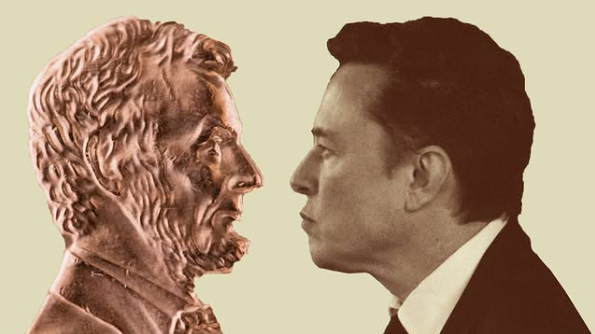
My $0.03. Trump ordered the Treasury to stop minting new pennies b/c they cost more to make than they’re worth. DOGE said each one-cent coin costs more than 3c to make, costing US taxpayers over $179 mm in 2023.