We made a proof of concept RCS messaging app. It already has end-to-end encryption with MLS compatible with Google Messages and iOS, typing indicators, delivery/read receipts, reactions and media/file sharing. We'll use what was learned to integrate RCS into our Messaging app.
Google is sabotaging their OEM partners by making a growing number of features and updates exclusive to Pixels. At the same time, Google is trying to convince OEM partners not to support GrapheneOS or even bootloader unlocking. They're also trying to harm GrapheneOS directly.
A man had his Coinbase account shut down after sending Bitcoin to buy antibiotics online. That experience pushed him to build a crypto wallet that now has over 2 MILLION users, without raising venture capital or launching its own token.
> Vikrant Sharma had been interested in technology and business long before getting into crypto.
> He started buying and mining Bitcoin in 2013, when very few people were using it for everyday payments.
> In 2015, he tried buying antibiotics from a darknet marketplace using Bitcoin sent directly from his Coinbase account.
> Coinbase shut down his account after the transaction.
> That experience made him realize how transparent Bitcoin transactions were and how much control centralized exchanges had over people's money.
> He later discovered Monero, a cryptocurrency designed with transaction privacy at its core.
> But there was one problem.
> He couldn't find a good Monero wallet for his iPhone.
> So he decided to build one for himself.
> His developer encouraged him to release it publicly, and in 2018, Cake Wallet launched as an open-source Monero wallet for iOS.
> What started as a personal solution gradually grew into something much bigger.
> The team expanded support to Bitcoin, Litecoin, Zcash and other cryptocurrencies, while continuing to focus on privacy and self-custody.
> Cake Wallet grew to over 2 MILLION users without taking venture capital funding.
> Today, it continues to develop privacy-focused tools, including Bitcoin Silent Payments, hardware wallet support and Lightning payments.
Vik went from having his exchange account shut down over a Bitcoin transaction to building a wallet that gives MILLIONS of people more control over their money.
Imagine if he'd never made that transaction.
The EU is banning monero:native Personally, that’s the biggest green flag a privacy coin could get.
Under the new rules every regulated exchange has to drop privacy coins by 2027. Loads already have. About 73 dumped Monero last year. You’d think that kills it. No exchanges, price collapses. Exact opposite. It went up 120%.
A ban only hits the middlemen. Exchanges, custodians, companies that have to follow the rules. Your wallet, person to person, the decentralised swaps, the chain itself, none of that cares what the EU says. No off switch. No headquarters to raid.
They’re not banning it because it’s useless. They’re banning it because it works. That’s the green flag
📱⛔ Aujourd'hui le chiffrement fait débat de plus en plus, il est déjà coupé là où l’État a décidé qu’une conversation privée était un problème...
> Signal tient partout sauf Chine et Iran, où il ne passe plus. Russie et Myanmar l’ont sorti du réseau.
> Telegram et WhatsApp suivent le même chemin : Chine, Iran, Russie (WhatsApp retiré du DNS en février 2026), Myanmar, Turkménistan.
> Tor est chassé en Chine, Iran, Russie, Biélorussie, Turkménistan.
> Les VPN privacy (Proton, Mullvad) sont filtrés aux mêmes endroits, plus le Pakistan depuis fin 2025. Au Myanmar, s’en servir est devenu un délit !
> Tuta est bloqué en Russie depuis 2020.
GrapheneOS n’est sur aucune liste d’interdiction. Le projet n’affaiblit rien, et personne n’a encore osé le bannir par son nom
Corée du Nord : pas de débat. Pas d’internet public !!
Ailleurs, le discours change mais le geste reste...
Comme évoqué dernièrement au Canada, Signal dit qu’il partira plutôt que de trouer le protocole pour le C-22
En Europe, on n’interdit pas encore l’outil on lui demande de scanner, de bloquer, ou de justifier... c'est encore plus sournois !
Bref… la privacy n’est pas "menacée"... Elle est déjà territoriale. Soit le protocole est le même partout, soit le pays n’est plus servi pour les projets les plus honnêtes.
🇨🇦📱 Signal n'a pas l'intention"discuter" avec le Canada... Si Ottawa exige les clés, Signal ferme !
En ce début octobre, Udbhav Tiwari le vice-président de Signal l’a définitivement confirmé à des sénateurs
Le projet C-22 Lawful Access Act peut :
> Ordonner les clés de chiffrement
> Forcer la collecte de métadonnées au-delà du minimum
> Les stocker 6 mois
> Exiger une version plus faible du produit
Signal dit que ça casse l’app et c'est évident
Le choix est simple selon Tiwari :
> Servir le Canada avec le même chiffrement que partout
> Ou une version trouée
Ils prennent la première... Et s’il faut couper le pays, ils coupent !
Ce n’est pas une menace pour un coup de com... C’est le modèle, point
Pas de backdoor locale
Pas de Signal canadien
Soit le protocole tient
Soit Signal n’est plus là
Bref... Le chiffrement ne se négocie pas par pays. Il se casse, ou il reste et les acteurs des alternatives fiables comme @signalapp et @GrapheneOS n'hésitent pas à partir des pays réclamants des backdoor... Soutien et Merci pour votre travail 👏
Roads used to suck. Then Google Maps happened.
Trains still suck.
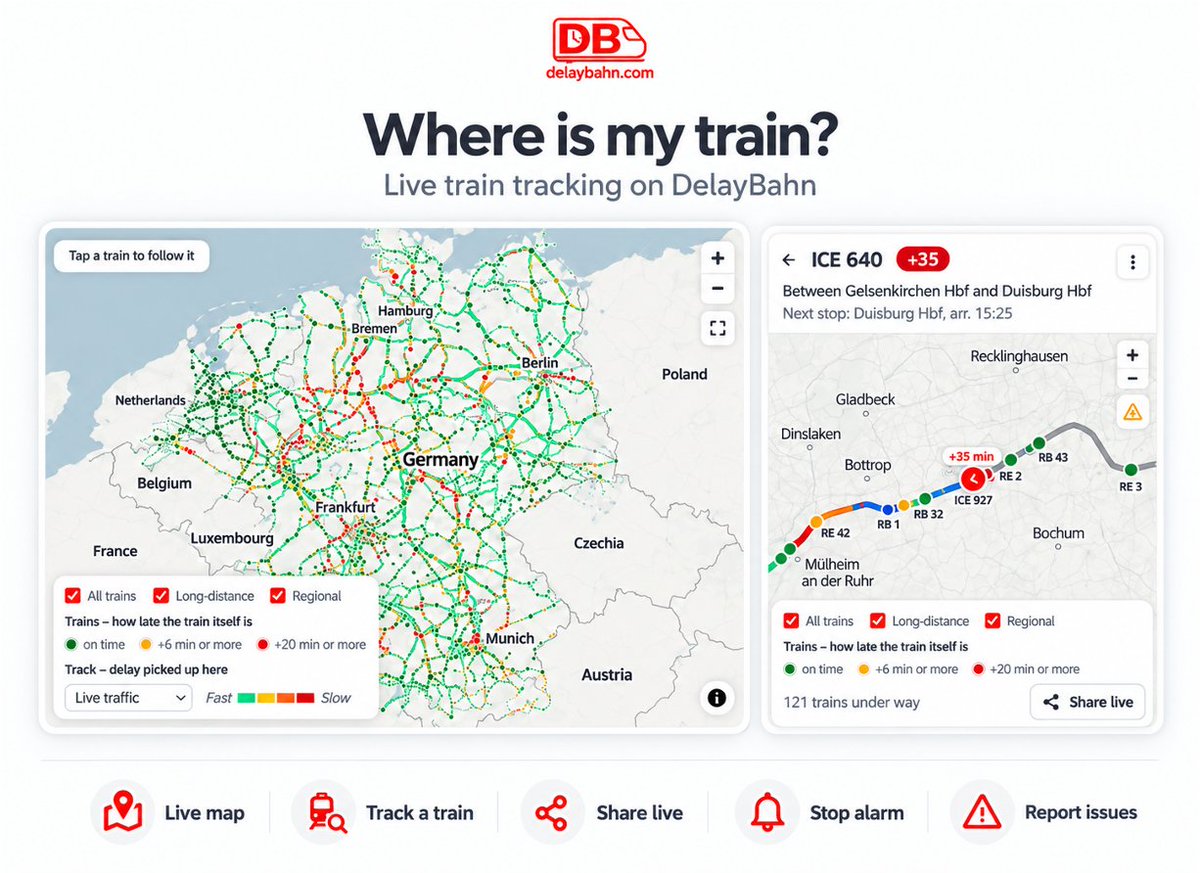
So I built Google Maps for trains. 🚆
Introducing “Where is my train?” on DelayBahn
🗺️ Live trains + traffic
📍 Live train tracking
👥 Share your journey
⏰ Arrival alarms
⚠️ Report issues to help others
Try it → https://t.co/RDlcbAl9wU
Neun Monate lang habe ich der Glücksspielbehörde in Curaçao live bei der Arbeit zugeschaut. Ohne dass die Mitarbeiter davon wussten. Ich konnte sehen, wem illegale Online-Casinos gehören, wer sie finanziert und was die Behörde über ihre Geschäfte wusste.
https://t.co/kIanNsvr2a
Le CERN va migrer environ 2 200 ordinateurs de contrôle de ses accélérateurs vers Debian 13.
Pas parce que le matériel est obsolète.
Mais parce que les nouvelles exigences de RHEL auraient rendu une grande partie de ce matériel incompatible, avec un renouvellement estimé à 5,4 millions de CHF.
Plutôt que de remplacer du matériel parfaitement fonctionnel, le CERN change d’OS.
C’est aussi ça, la souveraineté numérique : garder le contrôle et faire durer son matériel.
Et si le logiciel libre était aussi un outil contre l’obsolescence ?
https://t.co/ByGh57AaKS
#Linux #Debian #OpenSource #SouverainetéNumérique