β-arrestin directly activates Src through two interaction interfaces, revealing how it can function as active signaling hub, not just GPCR desensitizers.
Great collaboration between the Lefkowitz lab at Duke and des Georges lab @NYUPainResearch.
https://t.co/OpmVPnouLg
The next frontier in protein design will not be defined by structure alone, but by the capacity to engineer motion as a first-class principle of function. This is because dynamics is where the real biology lives.
Foundational work by Karplus, Levitt & Warshel made clear that chemistry cannot be understood without motion, mechanism, and scale. Gō, Brooks & others showed that proteins possess characteristic collective motions - low-frequency normal modes that capture how whole molecules bend, breathe, and fluctuate. Frauenfelder then sharpened the picture further: proteins are not static objects occupying a single minimum, but dynamic ensembles traversing rugged energy landscapes.
And yet the modern AI revolution in protein science has been, above all, a revolution in structure. In our new paper in Matter, @_Bo_Ni and I ask a different question: not what structure will this sequence adopt? but what sequence will realize a prescribed pattern of motion?
VibeGen inverts the conventional design paradigm. Rather than treating dynamics as a consequence to be analyzed after the fact, it makes dynamics the design objective from the outset. Using a language diffusion model with two cooperating agents - a designer that proposes sequences and a predictor that critiques them against the target motion profile - the system converges on de novo proteins with tailored vibrational behavior.
One of the most intriguing results is a form of functional degeneracy - distinct sequences and distinct folds can satisfy the same target dynamical specification. For a given functional pattern of motion, evolution may have sampled only a small region of the physically realizable design space. The space of viable molecular mechanics may be far larger than the repertoire biology happened to discover.
We have made "vibe" into a cultural metaphor - something intuitive, affective, subjective. But at the molecular scale, vibe is not metaphor: It is physics. For a protein, the vibe is the pattern of motion itself; the fluctuations, resonances, and collective displacements that determine what the molecule can do.
Delighted to share our study on promiscuous chemokine-engagement by the Duffy antigen receptor, modulation by tyrosine sulfation, and impact of Fya/Fyb polymorphism!
Molecular basis of promiscuous chemokine-engagement by the Duffy antigen receptor https://t.co/R6btV1NxPH
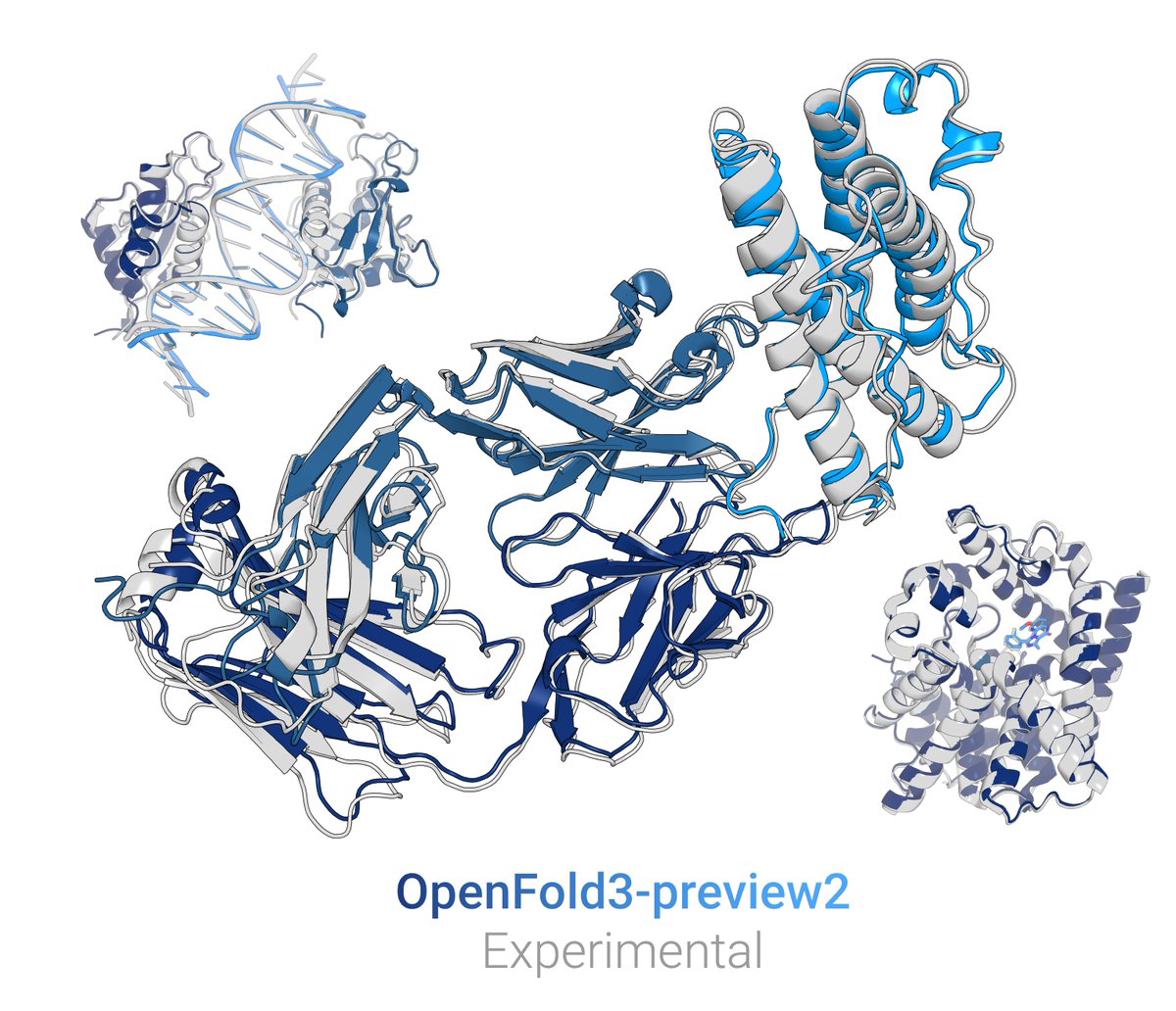
New OpenFold3 preview out! (OF3p2)
It closes the gap to AlphaFold3 for most modalities.
Most critically, we're releasing everything, including training sets & configs, making OF3p2 the only current AF3-based model that is functionally trainable & reproducible from scratch🧵1/9
I am Open-Sourcing PyMolAI!
Meet PyMolAI, an AI agent that can talk to your protein structures.
Built on top of PyMOL, PyMolAI lets you interact with your structures in plain language. Whether you're:
- Analyzing protein structures
- Aligning complexes
- Creating publication-ready figures
- Or running design workflows
PyMolAI interprets your request, executes the necessary PyMOL commands, and manages the workflow for you.
It integrates with @OpenBioAI APIs, giving you access to tools like Boltz, ProteinMPNN, and BoltzGen — directly from your PyMOL session.
It has local chat history with session syncing, so you can pick up exactly where you left off.
Our new paper on leveraging ML to characterize the fitness landscape of two proteins binding through evolution, wrt geometry, epistasis, etc. The super hard work of Hanlun Jiang, Stephan Allenspach and @jamesbowden_ on our end. https://t.co/qtrURlRYyM
On the cover of Science Signaling! Work in the Ye lab, led by Naijiang Liu and Xiaojie Shi, shows that blocking epidermal growth factor receptor signaling reduces oral cancer pain AND boosts opioid efficacy. https://t.co/CoDJqgkS1y
Connecting the Dots: Deep Learning-Based Automated Model Building Methods in Cryo-EM
1. This review provides a comprehensive overview of deep learning methods for automated model building in cryo-electron microscopy (cryo-EM), highlighting significant advancements in structural biology. It categorizes tools based on their ability to model primary, secondary, tertiary, and quaternary structures of biomolecules.
2. The article discusses how deep learning has revolutionized cryo-EM by addressing challenges in low-resolution map interpretation and high-resolution model building, offering faster and more accurate solutions compared to traditional methods.
3. A key innovation is the integration of deep learning with existing cryo-EM workflows, enabling de novo model building directly from density maps without relying on homologous templates. This is particularly impactful for novel biomolecular structures.
4. The review emphasizes the importance of multi-modal approaches that combine grid-structured data (like 3D density maps) with graph-structured data (representing biomolecular interactions) to capture hierarchical organization in biomolecules.
5. It also highlights emerging directions, such as the development of tools for modeling small molecules bound to biomacromolecules and the potential for in-situ structural biology using cryo-electron tomography.
6. The article provides detailed tables and figures summarizing the neural network architectures, training datasets, and availability of these tools, making it a valuable resource for researchers in the field.
📜Paper: https://t.co/mZPG469pRS
#CryoEM #DeepLearning #StructuralBiology #Bioinformatics
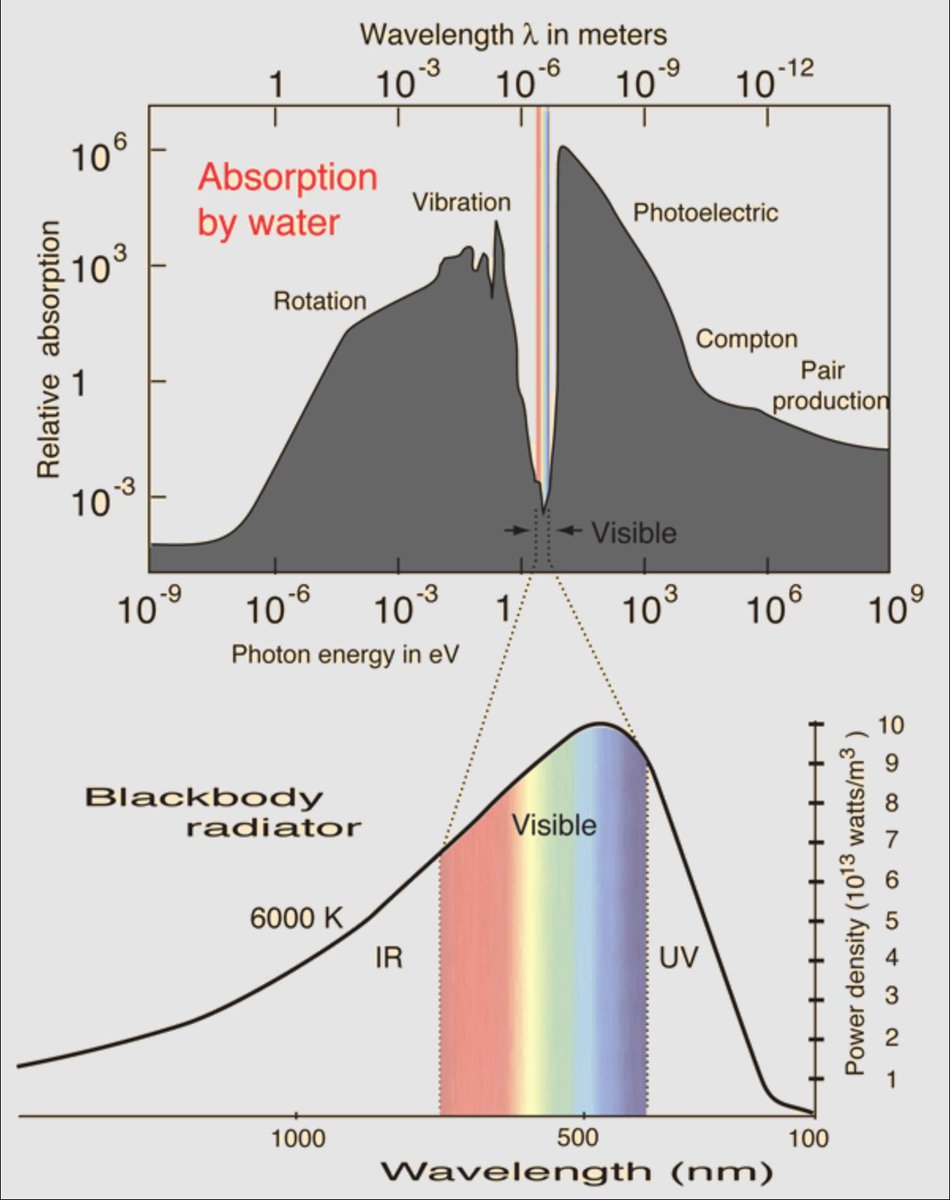
'water is transparent only within a very narrow band of the electromagnetic spectrum,
so living organisms evolved sensitivity to that band, and that's what we now call "visible light". '
(found via HN)
30 Essays to Make You Love Biology
Day 1. "I should have loved biology" by James Somers.
"It was only in college, when I read Douglas Hofstadter’s Gödel, Escher, Bach, that I came to understand cells as recursively self-modifying programs."
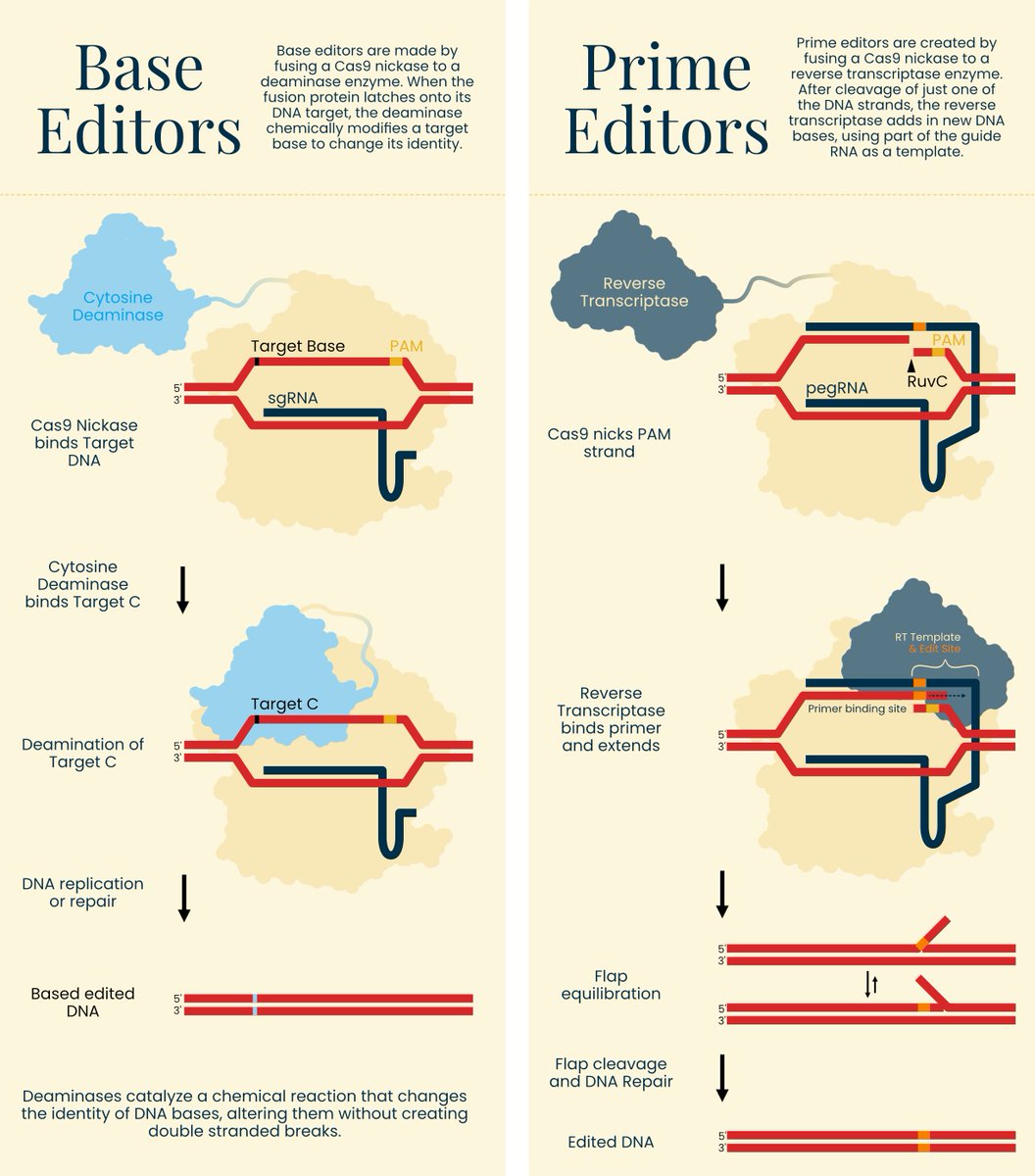
We've been working on this resource for months: A VISUAL GUIDE TO GENOME EDITORS.
Learn how tools like Cas9, Cas13, prime editors, and Bridge editors work - with diagrams!
We hope this becomes a valuable resource for the biology community and students.
I wrote an essay about the types of writing that I don't think AIs can easily replace.
Thank you very much to @RuxandraTeslo, @owl_posting, @eryney_ok and others for speaking to me for this one.
TL;DR: Double down on original reporting, missing context, and deep reflections.
Discovery of a new class of natural antibiotics with a new mode of action to address antimicrobial resistance, a major unmet need @McMasterU@Nature
https://t.co/AuCVO7QhSb
I am very happy to announce that we solved the in-virus #cryoEM structure of the #HIV matrix protein. The structure helped us to resolve a long mystery in HIV biology. A🧵1/5
Read more in @Nature : https://t.co/rVDC5LomAn 🧪
Petition to Reverse the NIH Indirect Cost Cap (NOT-OD-25-068) - Sign the Petition!
The U.S. is the global leader in biomedical research, but these funding caps will dismantle decades of progress, weakening our scientific infrastructure.
https://t.co/AG6TqcJkkT via @Change
A landmark day for pain research! The FDA approved suzetrigine, a NaV1.8 blocker representing the first new class of pain drugs to be approved in over 20 years. https://t.co/FBdnHObOED #painresearch#suzetrigine#paintherapeutics@MargolisLabNYU