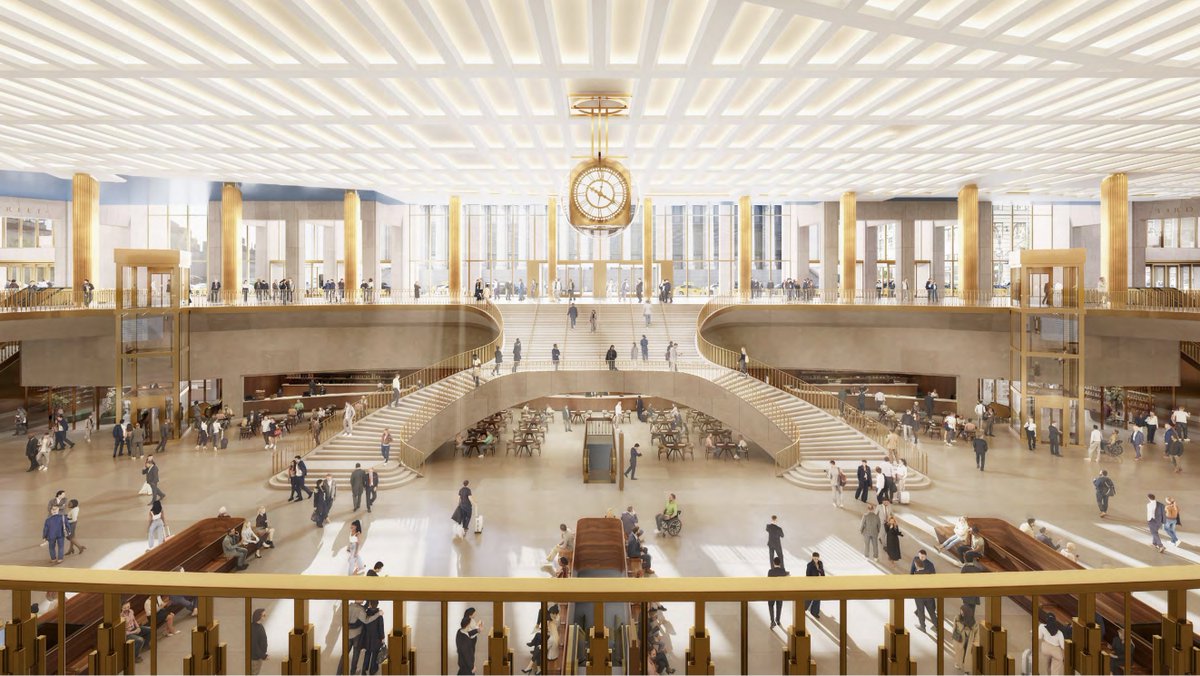
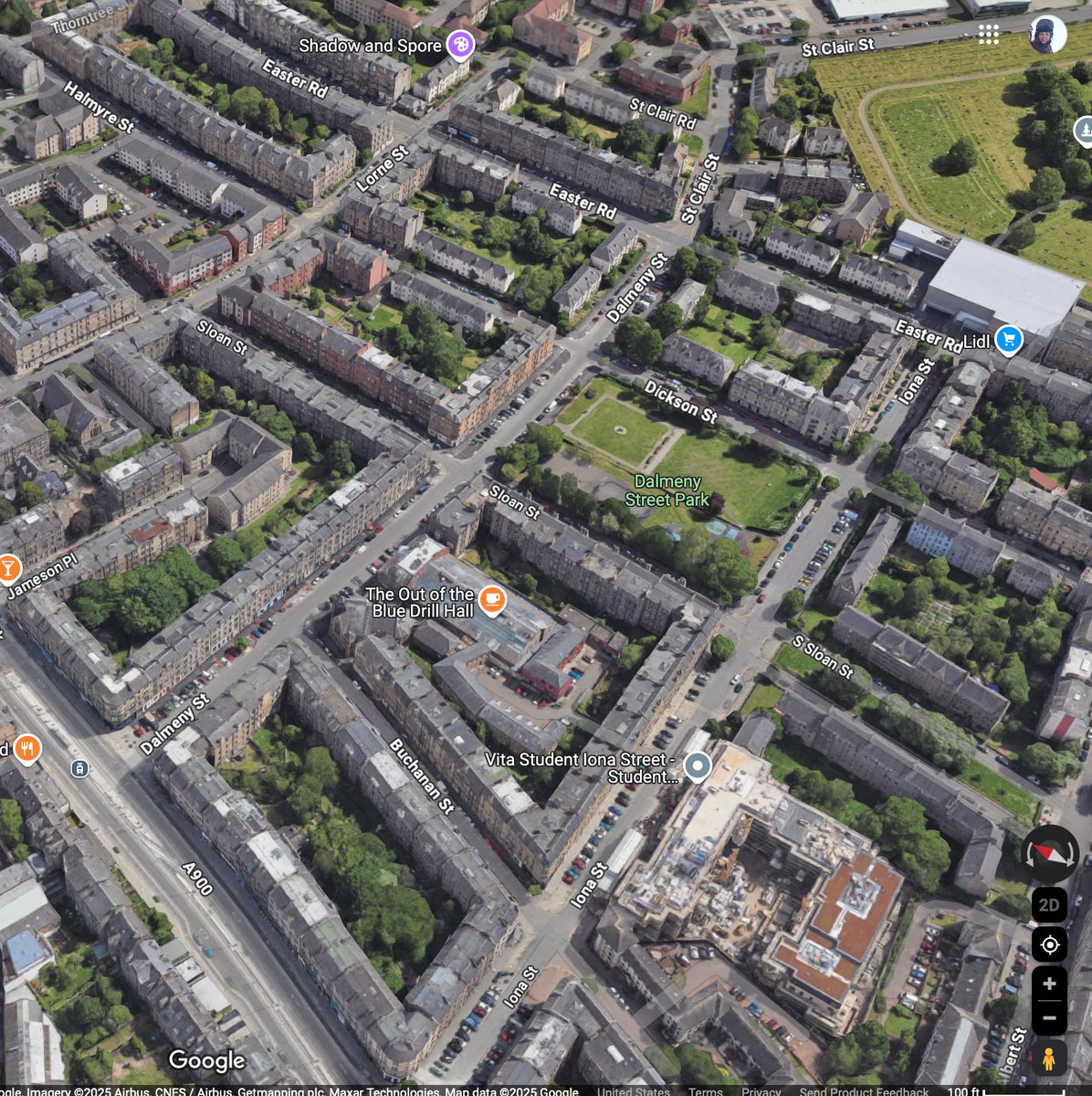
Everyone knows about “The Projects” but the Middle-Class developments of the same era seem to have completely disappeared from our collective imagination.
Co-op city, Stuy Town, and Chicago’s Marina all attempted to create a city-in-a-city for average people rather than the poor
No urban revival without stair reform.
Great cities need middle housing -- ie MANY small multifamily buildings that allow many households to share expensive urban land. But those homes still have to be good enough that a wide range of households want to live in the. Not just twenty somethings.
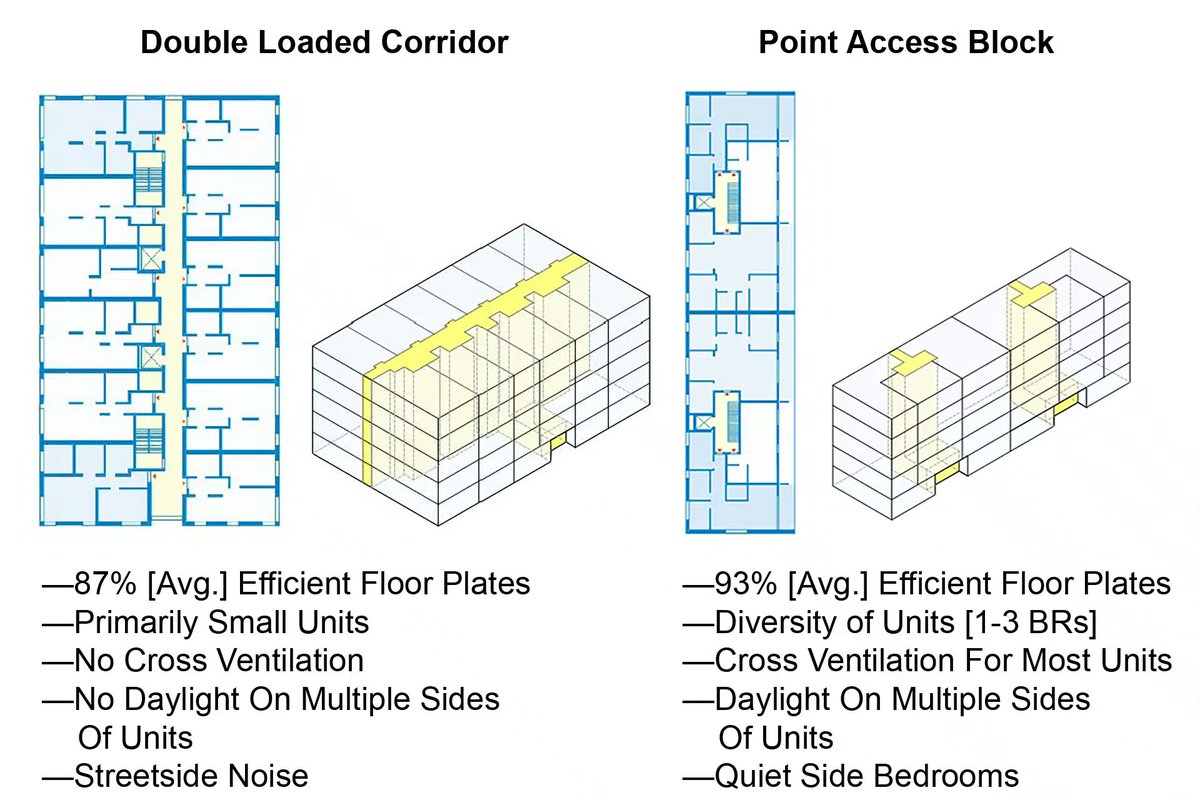
Current egress rules have made multifamily housing ESPECIALLY awful in the US because they push developers to double-loaded corridor layouts: long, hotel-like hallways with apartments lined up on both sides. These buildings are extremely expensive to build and not great at creating "life-cycle" housing.
Families often want a home with a “front” and a “back”: one side connected to the street and the life of the neighborhood, and another quieter side facing a courtyard, garden, yard, or shared green space. They want cross-ventilation, daylight from more than one direction, a place for children to play, and some sense of threshold between public and private life. Double-loaded corridor buildings make that impossible, because units are facing either the back or the front.
The more home-like form of multifamily is enabled by single-stair reform, sometimes called “smart stair” reform and closely related to the point-access block. instead of accessing units from a long corridor, apartments are arranged around a central stair. This allows smaller buildings, shallower floorplates, more dual-aspect units (they don't all need to be, but some of them should be), better light and air, and a much closer relationship between the home, the street, and the yard.
Single-stair reform is a keystone reform for rebuilding family-friendly urban neighborhoods. It will make it significantly easier to build the fine-grained, middle housing neighborhoods that everyone wants but no one builds anymore (because we made it illegal)
I love this article and there's a clear lesson here for NYC as well.
For 12 years as mayor here, I was unapologetically pro-housing growth. At times I faced pushback from NIMBYs, whom we overruled. I brushed off plenty of trolls on social media accusing me of prioritizing developers. I absorbed political pressure from the building trades when I refused to force projects into their deals. But I held the line and was elected 3 times bc the noisy ppl aren’t the majority.
I was YIMBY before that was even a term.
This article is proof that a housing-first agenda and the discipline to discard the noise is the most effective path to affordability. Period. Full stop.
The hard truth is that it takes a decade : first getting capital comfortable enough to trust an administration, then getting them to invest, sourcing deals, navigating entitlements, and finally breaking ground. But if you commit and stay the course, it works.
https://t.co/Xw6CU350fw
Holy shit: two of the idiotic building code regulations that have bedeviled NYC for decades— mandatory metal piping and too-larger elevators— are marked for reform! I can’t believe this might actually happen!
My supposedly “very WOKE, liberal” urban planning philosophy is literally a modernization of an urban design tradition that runs from Ancient Rome to Renaissance Italy, Enlightenment-era Scotland, Industrial Europe, and pre-war Queens.
Been living in New York City for around five years now.
Yes, it’s expensive, taxes are high, and there are some interesting characters walking around. Those are some of the costs.
Here’s what we get:
Access to the best restaurants in America, no matter what type of food you’re in the mood for.
Everything our family needs is just a short walk away.
You constantly get to see friends in person, as they’re always passing through.
Some of the best public and private schools in America.
The network you build here, just by going about your day-to-day life, is incredible. You run into some of the most interesting people doing the most amazing things at the highest level.
Access to the best doctors in the world.
The career opportunities here are immense, no matter what you do.
Central Park – my go-to spot – never gets old.
If you’re a shopper, there’s nowhere better in America.
If you’re an entrepreneur, this city forces you to think bigger on a daily basis.
Broadway, sports, concerts, comedy – the highest level of entertainment, right in your backyard.
The subway. Yes, the subway – and yes, millions of normal people take it every day – gets you around this place like a time machine.
It’s a wonderful place to raise kids. Every kids' activity you can think of is just blocks away. Our son loves the Natural History Museum, and endless playdates are available either in our building or within a three-minute walk.
Maybe all those folks who can afford to live anywhere in the world but choose to raise their families here aren’t so crazy after all.
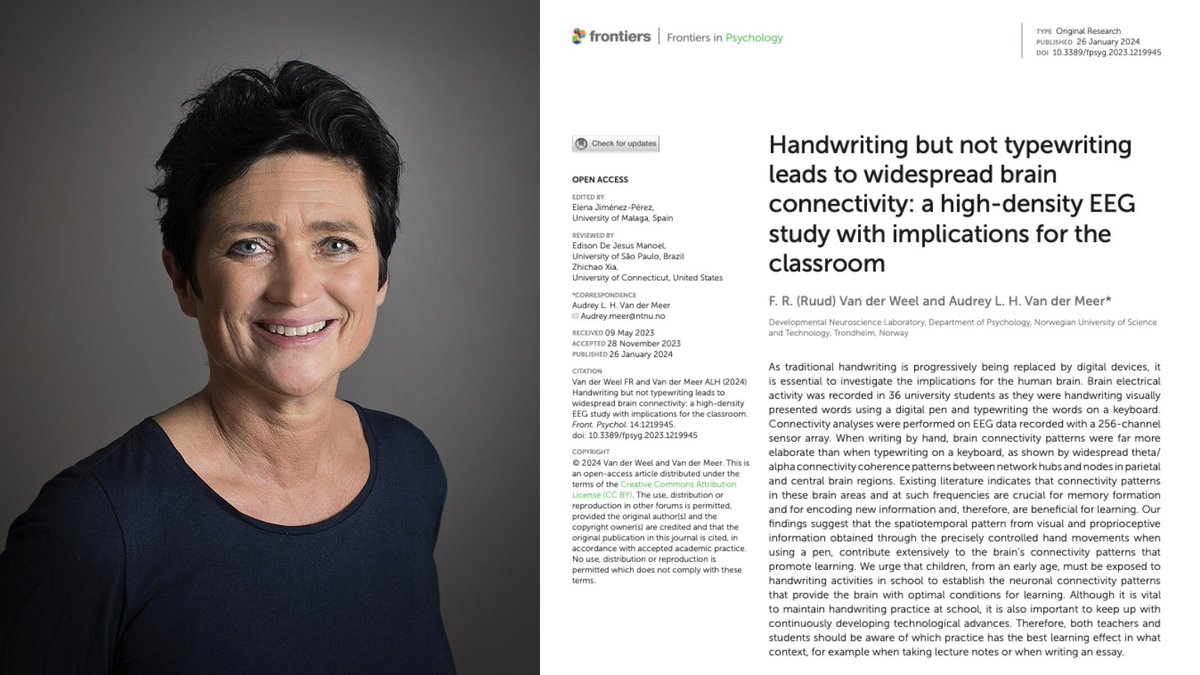
A Norwegian neuroscientist spent 20 years proving that the act of writing by hand changes the human brain in ways typing physically cannot, and almost nobody outside her field has read the paper.
Her name is Audrey van der Meer.
She runs a brain research lab in Trondheim, and the paper that closed the argument was published in 2024 in a journal called Frontiers in Psychology. The finding is brutal enough that it should have changed every classroom on Earth.
The experiment was simple. She recruited 36 university students and put each one in a cap with 256 sensors pressed against their scalp to record brain activity. Words flashed on a screen one at a time.
Sometimes the students wrote the word by hand on a touchscreen using a digital pen, and sometimes they typed the same word on a keyboard. Every neural response was recorded for the full five seconds the word stayed on screen.
Then her team looked at the part of the data most researchers had ignored for years, which is how different parts of the brain were communicating with each other during the task.
When the students wrote by hand, the brain lit up everywhere at once.
The regions responsible for memory, sensory integration, and the encoding of new information were all firing together in a coordinated pattern that spread across the entire cortex. The whole network was awake and connected.
When the same students typed the same word, that pattern collapsed almost completely.
Most of the brain went quiet, and the connections between regions that had been alive seconds earlier were nowhere to be found on the EEG.
Same word, same brain, same person, and two completely different neurological events.
The reason turned out to be something nobody had really paid attention to before her work. Writing by hand is not one motion but a sequence of thousands of tiny micro-movements coordinated with your eyes in real time, where each letter is a different shape that requires the brain to solve a slightly different spatial problem.
Your fingers, wrist, vision, and the parts of your brain that track position in space are all working together to produce one letter, then the next, then the next.
Typing throws all of that away. Every key on a keyboard requires the exact same finger motion regardless of which letter you are pressing, which means the brain has almost nothing to integrate and almost no problem to solve.
Van der Meer said it plainly in her interviews.
Pressing the same key with the same finger over and over does not stimulate the brain in any meaningful way, and she pointed out something that should scare every parent who handed their kid an iPad.
Children who learn to read and write on tablets often cannot tell letters like b and d apart, because they have never physically felt with their bodies what it takes to actually produce those letters on a page.
A decade before her, two researchers at Princeton ran the same fight using a completely different method and ended up at the same answer. Pam Mueller and Daniel Oppenheimer tested 327 students across three experiments, where half took notes on laptops with the internet disabled and half took notes by hand, before testing everyone on what they actually understood from the lectures they had watched.
The handwriting group won by a wide margin on every question that required real understanding rather than surface recall.
The reason was hiding in the transcripts of what the two groups had actually written down.
The laptop students typed almost word for word, capturing more total content but processing almost none of it as they went, while the handwriting students physically could not write fast enough to transcribe a lecture in real time, which forced them to listen carefully, decide what actually mattered, and put it in their own words on the page.
That single act of choosing what to keep was the learning itself, and the keyboard had quietly skipped the choosing and skipped the learning along with it.
Two studies. Two countries. Same answer.
Handwriting makes the brain work. Typing lets it coast.
Every note you have ever typed instead of written went into your brain through a thinner pipe. Every meeting, every book highlight, every idea you captured on your phone instead of on paper was processed at half depth.
You did not forget those things because your memory is bad. You forgot them because typing never woke the part of the brain that would have made them stick.
The fix is the thing your grandmother already knew.
Pick up a pen. Write the thing down. The slower road is the faster one.
This morning I entered a convo on X about aesthetics in our neighborhoods - architecture versus trees, concrete versus vegetation.
And it got me thinking about Los Angeles.
For a city obsessed with its image, we do a terrible job designing beautiful streets. Take Hollywood: we literally replaced a palm tree with another palm tree. (!) Palm trees are ridiculous. They give almost no shade, barely help air quality, and don’t create real habitat. We lost an opportunity to use an empty tree well for a good tree.
(If you really want palm trees, go to Beverly Hills.) Here in L.A., we should be investing in real canopy and real comfort.
I think a lot about Paris when I say this. I spent a couple of years there, and the city has basically said: no more cement parks. They’re tearing out concrete and bringing back soil, trees, and vegetation and it completely changes how the city feels.
That is what we should be doing here.
One of my top priorities is rewilding this district—through public‑private partnerships, better street design, and a commitment to living streets instead of concrete heat islands. Right now, too much of our city feels like a cement park.
It doesn’t have to.
Spencer Pratt: I will empower architects and builders to make LA beautiful again.
“ We're going have LA so beautiful.
No more of these high-density, SB-79, prison-like structures. We need to bring Art Deco back.
All the architects that moved out of here because it was so hard to build, takes eight years, they're going to be moving back, because we're going to speed up building. It's not going to take eight years.
I talked to an architect today, one of the most famous architects in the world. He has a crew of 12 architects, they already did all these designs for these buildings and nobody listened to them. They met with Newsom, they met with Bass. Of course I'm like, “Let's do it, send me over the decks.”
And then the YIMBY people, they can have all their bike lanes going through the sky, through tunnels.
“We need LA to be the most beautiful architecture in the world.”
@friedberg@spencerpratt
---------------------------------------
Thanks to our partner https://t.co/HFpRpqmoAQ for making this possible
Most advertisers have never heard of the platform with an $11B annual run rate in ad spend.
https://t.co/HFpRpqmoAQ by AppLovin — 1B+ daily active users, full-screen video ads watched for a median of 35 seconds, and businesses are profitably spending hundreds of thousands of dollars a day on it.
Advertiser access is in closed beta. The window is open at https://t.co/GDPKNzglN6
@AxonAdsManager
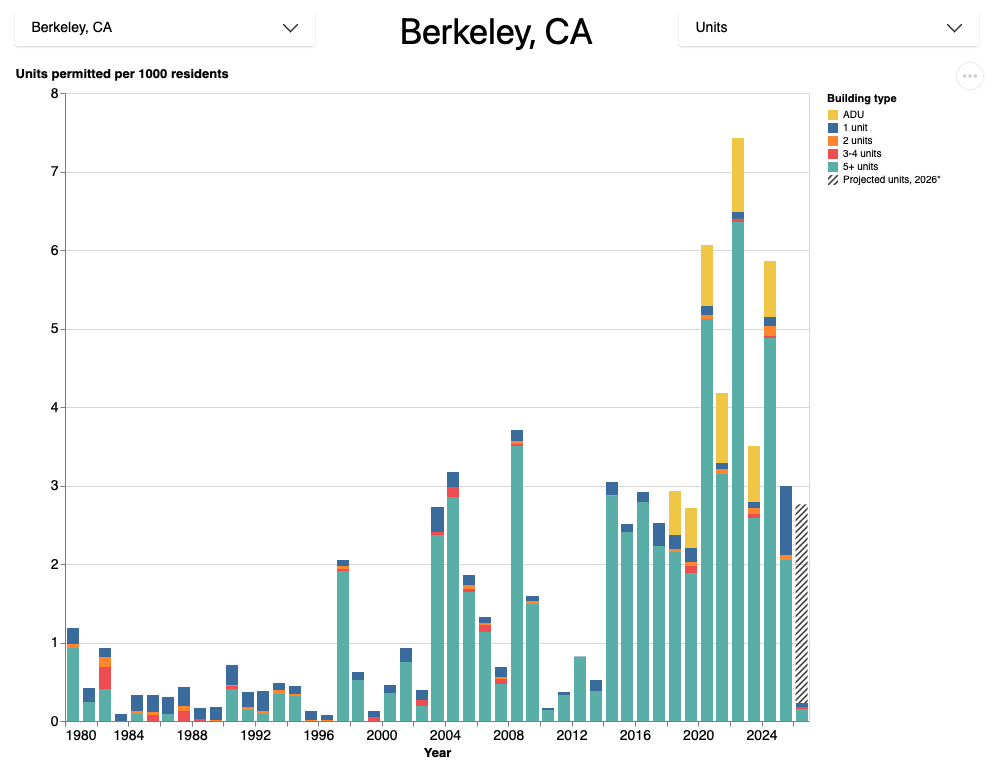
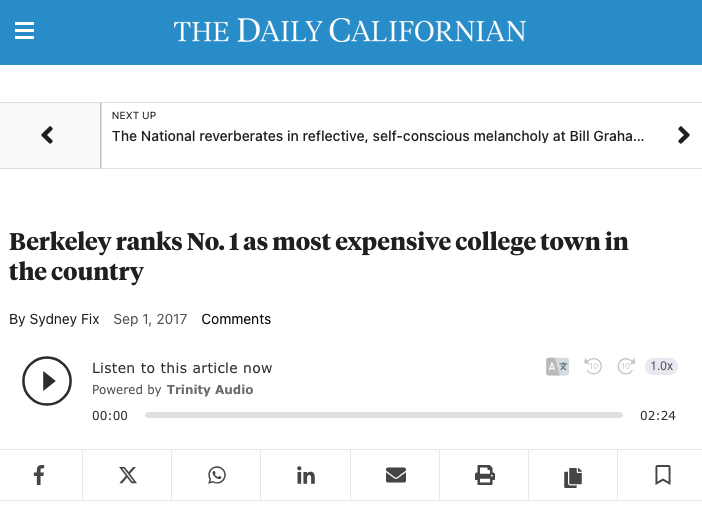
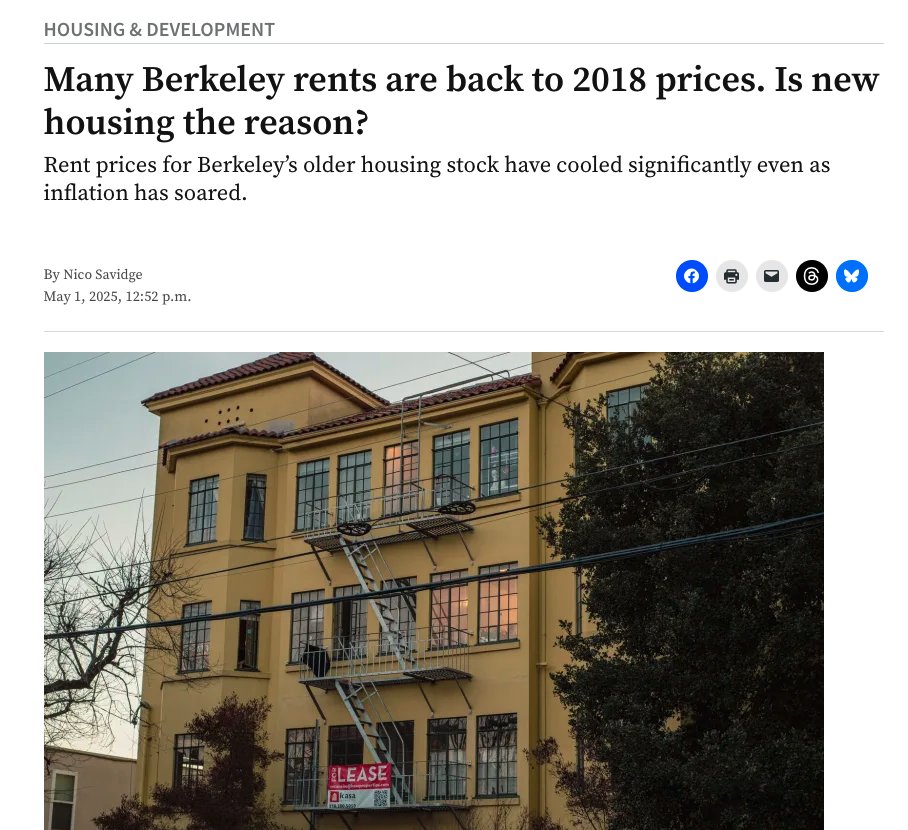
For 45 years, Berkeley built virtually no new housing. By the mid-2010s, it was the most expensive college town in America. Shortly thereafter, YIMBYs took over and kicked off a building boom. Today, nominal rents are below 2018 rates—remarkable progress on affordability.
On Friday, I hosted a forum with the top 5 Democrats running for governor of California on how they'd fix the state's housing crisis. Some really interesting moments, including this one, from @katieporterca, on California Forever and master-planned communities.
Full forum on podcast apps/Youtube.
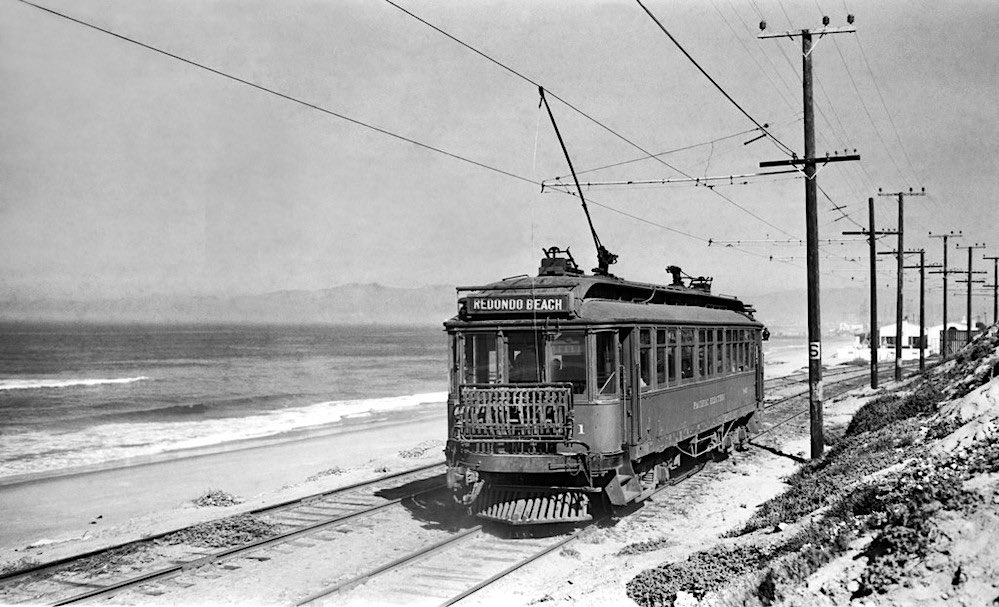
Took an hour to go from El Segundo to Santa Monica yesterday and now I’m thinking about how LA had elite public transportation 100 years ago
This is what they took from us