Open up ChatGPT or Claude (whichever you use more often) and type in:
Based on everything you know about me, roast me and don't hold back. Use slang, be brutally savage, and throw in as many swear words as possible.
Layback and enjoy!
People who drank more coffee had less body fat, less visceral fat, and more lean mass than less-frequent or non-drinkers.
Higher coffee intake was associated with higher total testosterone in men.
Correlation, not causation but interesting nonetheless!
Open the Amazon Console and go to
Billing and Cost Management → Budgets → Create budget
Set your “My Monthly Cost Budget” to last month’s price + 30% (or something like that).
Trust me, you’ll thank me later.
At the beginning of this year, I had a pretty bad situation - one of my apps went into a loop and started burning tokens like crazy.
Luckily, I wasn’t far away, noticed it, and killed it before it drained the weekly budget.
That was a good experience because it helped me understand what usage-based services are really like - budget alerts won’t help in cases like this.
If an app or script can spend money easily, it’s important to have a hard cap by default.
Hit a $500 weekly/monthly limit? TURN IT OFF! Throw the error and kill the job.
You’ll get complaints from customers... yes for sure, but it’ll only take ~5–8 hours at most - much better than ending up with a +$50k bill, right? Once you see that error, you can connect to the server, run Claude to investigate, and push the update.
Now think about that - it could be even worse, because it might spin up additional AWS servers, call thousands and thousands of expensive models.
And what’s even more important is that it should be enabled by default on all providers. BTW, OpenAI added it only recently, and you could hit the limit pretty easily without it.
I think I found a planet nobody knew existed.
It's been hiding in NASA telescope data for seven years.
At the end of this thread, you can fly to it yourself.
Claude Max is absurd right now!
According to SemiAnalysis, $200 of Claude gives roughly ‼️ $11k ‼️ of API-equivalent Opus usage.
The same $200 at OpenAI gets you roughly $2k of Sol API-equivalent usage.
That's 5x more compute for the money!
But compute isn't output. If Sol finishes the same job using 10x fewer expensive tokens, it can still be cheaper.
In one real coding benchmark:
GPT-6.1 Sol: $4.35 = 42.7 bugs fixed
Opus 5.5: $58.53 = 41.7 bugs fixed
Basically you shouldn't care about token limits but instead think in completed tasks.
If models get better but your business gets worse, that’s a sign you’re building a temporary solution. Take a look at a recent OpenAI project for law firms - it crushed so many startups that were built around that space.
With KidTeller, I’m trying to do the opposite (and, honestly, before OpenAI didn’t come for me 😅).
Every few weeks, I revisit the whole process:
- Story generation
- Character consistency
- Illustrations
- Validations
- Book layout
- Customer support
- Printing
I remember the first version, which was mostly manual - but now the app is almost autonomous. Recently, with new models and improvements to Vision, you can pre-validate so many glitches during the book generation.
Basically, I do this (and that part is also automated with a separate agent):
- What can I remove?
- What can be automated?
- What can the model do now that used to require my intervention 3 months ago?
With agents, it’s easy to revise things - like I said earlier, the code became something disposable. You can throw it away and replace it with new workflows.
So that means the product shouldn’t be "finished". It’s continuously being compressed?!
Is it just me, or do you guys feel it too?
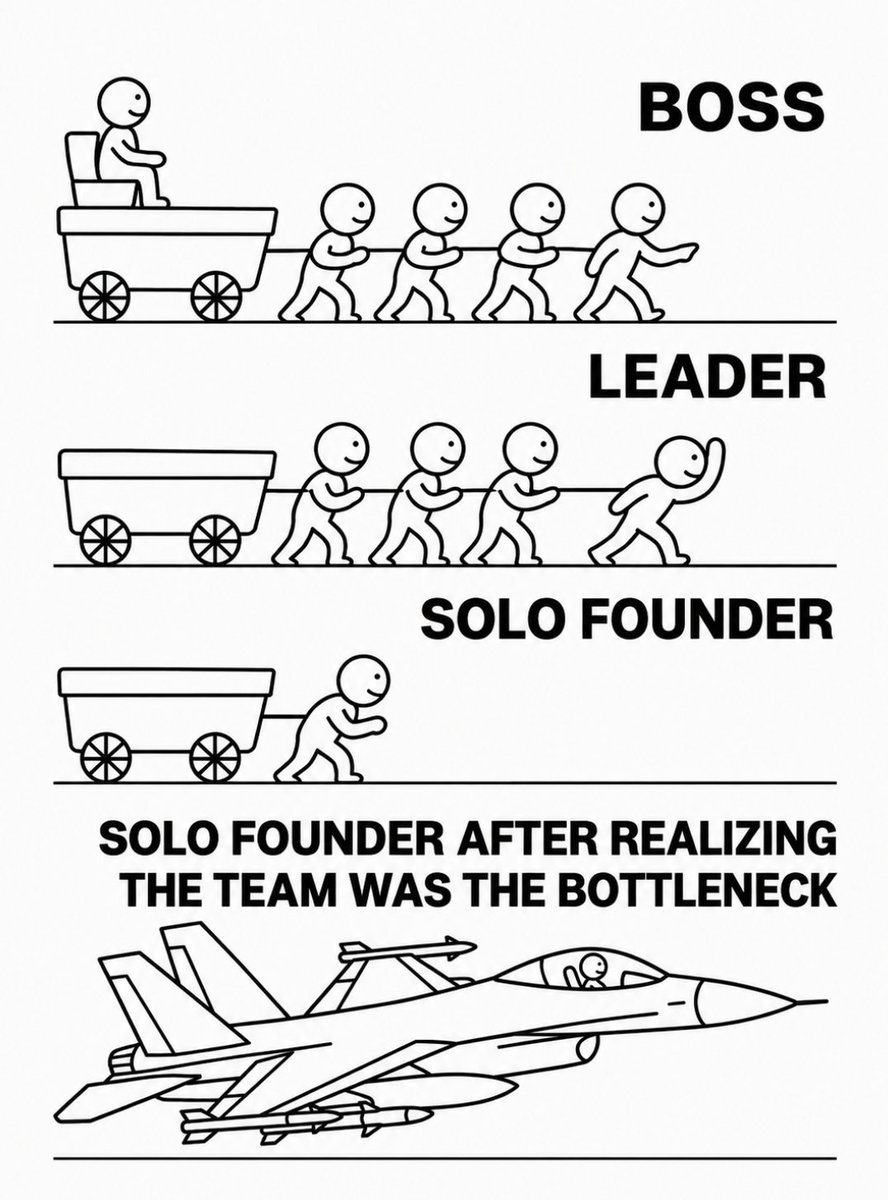
We’re obviously not there 100% yet but the feeling that a tiny team - or one person - could replace an entire org chart is getting harder and harder to ignore.
The whole point of building Tavus has been simple: talking to a machine should feel as natural as talking to a friend or coworker.
It’s hard to describe all the tiny nuances that make a conversation feel human. The little expressions. Moving around in your chair. Knowing when to speak and when to listen. The dance of it all.
Griffin is by far the closest anyone has come to a model that can capture those nuances. The first time I saw it being used, I had no idea I was watching our model rather than just a normal video call.
I’m so incredibly proud of this team and what they’ve built.
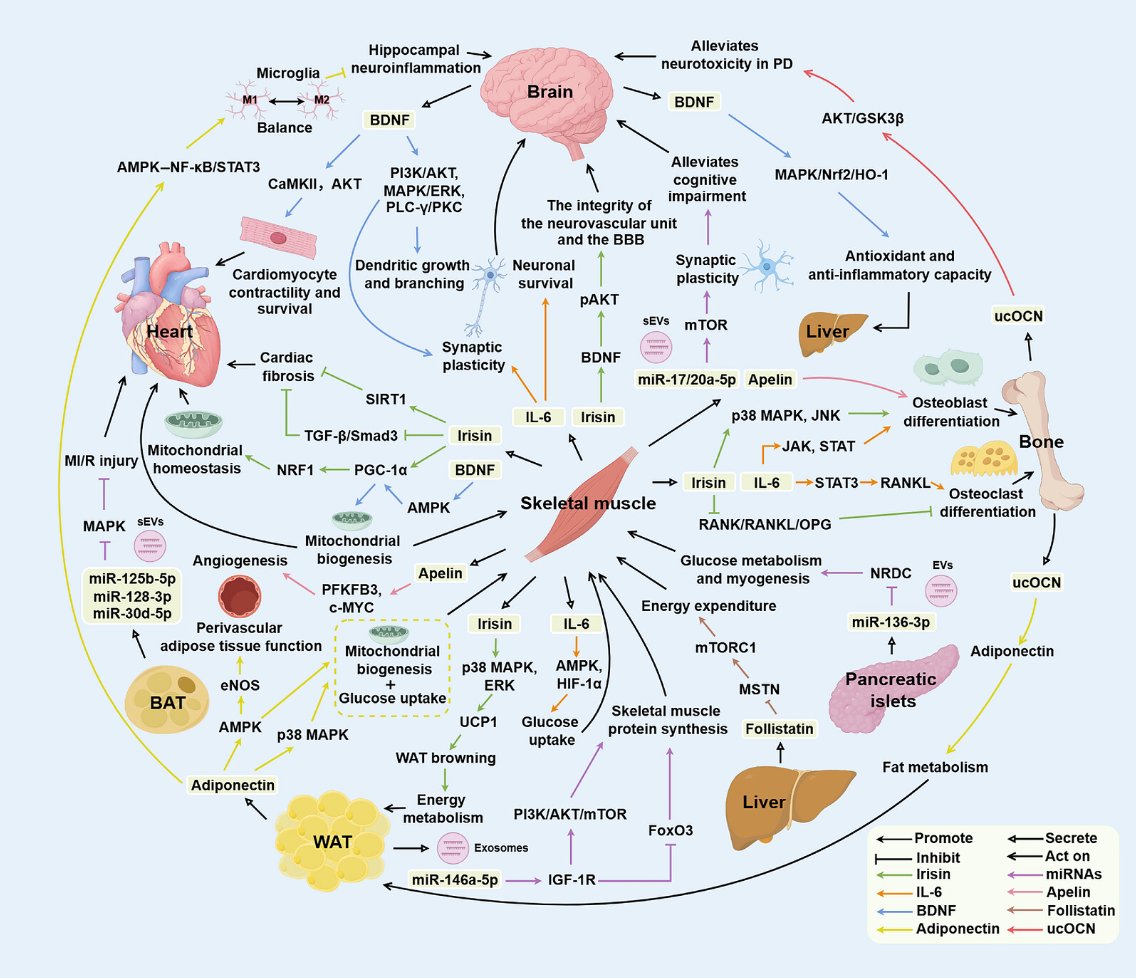
When you exercise, you don’t just burn calories—you’re basically doing a system-wide software update for your body.
I stumbled upon an interesting study where they said that muscles send signals to your brain/heart/bones/fat/gut/immune system.
Basically, your next workout can improve mitochondrial function, blood vessels, brain plasticity, inflammation, tissue repair, and age-related decline.
Just make it part of your life - non-negotiable. No matter what, go to the gym, go jogging, hit the swimming pool. Stick to the schedule - your body will thank you!