The Met has been found guilty of racism for stopping officers under investigation for misconduct being promoted.
The judge said this had a disproportionate effect on black officers.
This is clearly nonsense, but we need to understand how this ruling happened.🧵
England needs fewer council houses rather than more, @TheEconomist argues this week
'Rather than spending vast sums on building new council homes, Mr Burnham should instead raise all social rents to market rates.'
Read the leader here: https://t.co/Cf96t5DhGw
Later this year, Jamaica will take the case for reparations directly to King Charles, lodging a formal petition.
It is getting harder and harder for British institutions to maintain their favoured tactic of simply ignoring calls for repair.
https://t.co/zJJGqCYpze
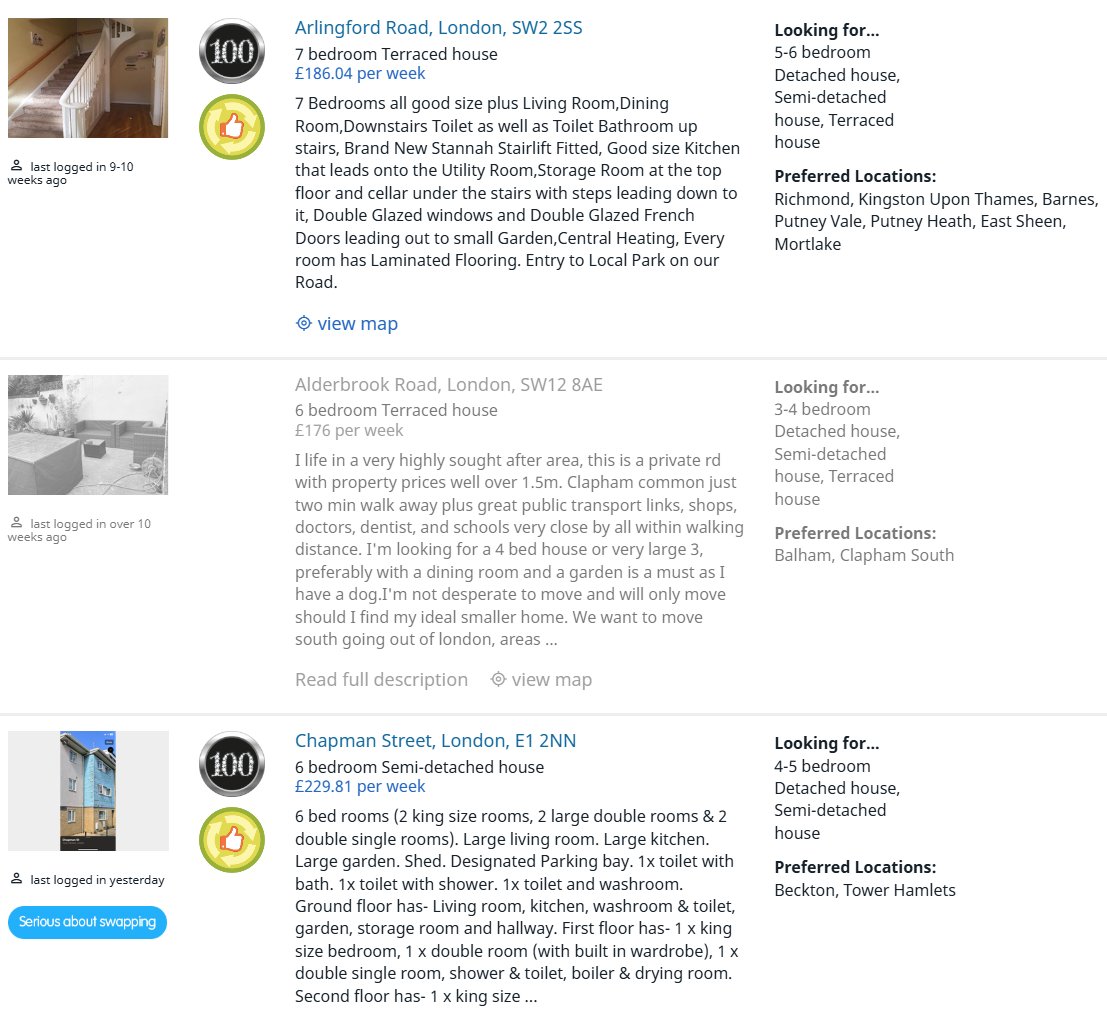
The council house swapping Facebook groups and websites are very eye-opening. There are 6- and 7-bedroom properties on offer in Zone 2 at ~£750 a month. Private rents for similar properties would be £6,000+. Enormous subsidies are being distributed in the worst possible way.
My thoughts on social housing and building in inner London:
- Almost everyone who lives in social housing is a decent human being who is trying their best in often difficult circumstances. Among them are many retirees, kids, and people with disabilities. This must be the starting point for any serious thinking about housing in London.
- London's job market is much stronger than that of the rest of the country. The median London wage is 25% more than the median English wage. The easier we make it for Britons to move to London, the richer they and the country will become.
- Housing in inner London is extremely scarce and building rates are very low. In 2024–25, only 4,170 homes were started in London. London's housing target is 20x that and I think it's possible that we could build 100–150x that with the right reforms.
- For now, we are in a roughly zero-sum game (which is one reason tensions are so high). We need to make this positive-sum by building more and by allowing voluntary exchanges of the existing housing stock.
- There are about 450,000 socially rented homes in inner London. This is about one in three homes. About half of the 450,000 are occupied by lead tenants who are not working, either because they are retired (18%), disabled (13%), caring for someone else (7%), studying (2%), or unemployed/otherwise inactive (11%).
- Social housing tenancies are basically tenancies-for-life, and can often pass down from parents to their children. They are close in practice to ownership, except that they cannot be sold. Ex-council flats in inner London are often worth £500,000 or more; there are many in extremely central parts of the city like Shoreditch, Soho and Farringdon that are worth even more than that.
- Kicking people out of these homes against their will is, in general, morally bad and politically impossible. The public does not resent these people and would, rightly, find it appalling to turf them out of their homes against their will.
- 'Gentrification' is a problem when it drives people out against their will by raising rents or other costs. It is primarily a problem caused by housing shortages. When housing supply can respond to new demand in an area, there is much less displacement of the people who live there.
- Poor people do not like dirt, graffiti, crime, or derelict buildings, and many of their supposed champions have a patronising and somewhat dehumanising idea of what is in their interests. They do not want to live in unsafe, unpleasant areas any more than anyone else does. Change that makes places safer, cleaner and prettier without displacing existing residents is a good thing for everyone.
- Large supermarkets are the cheapest places to buy food in London and allowing them to be built is the best way to protect people's access to affordable retail.
- There are options that are good for tenants and good for people who wish to live in these central areas that do not push people out against their will. These are options that put tenants in control and give them a large share of the value created. At best, they reduce scarcity overall.
- One is to make the social housing stock much more liquid by allowing social housing tenants to sell their tenancies into private ownership, keeping the returns to spend on a new property that is more suitable for their needs and the rest as savings.
- Arguments against this that focus on the fact that many of the out-of-work people are blameless completely miss the point. For retirees, parents, and some people with disabilities, a home in a London suburb or a town other than London may be preferable to an apartment in inner London – more spacious, easier to access (eg, not up flights of stairs), and in a quieter neighbourhood. Existing schemes to allow people to trade their social home for a home by the seaside or in the country are hugely oversubscribed; this would unlock the entire private market to them.
- Private owners already have the freedom to sell their home to who they want. That is one of the core benefits of private ownership. This extends that right to social tenants.
- Another option is 'estate regeneration', where entire housing estates are rebuilt and existing tenants are given larger, newer homes built to modern standards and thousands of private units also added. Where tenants are given a vote on this, they consistently vote in favour (29/30 ballots have passed, often with enormous majorities and turnouts.) Hundreds of thousands of homes could be added in this way.
- A vast amount of regulation also needs to be reversed – the Building Safety Regulator, second staircase rules, dual aspect rules, and others – in order to make building cheaper. Otherwise, we will find ourselves in a position where even if you get permission to build a home it is prohibitively expensive to do so.
- Affordable housing requirements are a tax on new housing and almost certainly reduce the overall amount of homes that get built. Manchester has built thousands of new homes without them. Richard Leese, the Labour leader of the City Council, said "If we’d tried to impose 20% affordability on it, it wouldn’t have happened. We wouldn’t have got 20% affordable housing, we would have got nothing."
- Many of the most vocal foes of new building in inner London are ideological opponents of private construction and cannot be reasoned or bargained with. Defeating them will involve a combination of targeted upzoning imposed by central government and the creation of hyperlocal mechanisms that allow the people who are most directly affected by new development to decide on it (eg, estate regeneration). The anti-building ideologues only win because normal people sympathise with them.
- If we do not do not work to make the existing housing stock more easily transacted and building much easier, London will become hollowed out. Existing market-rate housing will be bid up by wealthy people who can afford it, and anyone on a middle income – let alone a low income who does not have a social home – will find it very difficult to live here, except in cramped houseshares when they are young. London should not be a city for only the very poor and very rich.
In April, the BBC featured an upcoming Report claiming that London's housing crisis is not caused by a shortage. The report (from Centre For London) has now been released. The analysis arguing for a lack of shortage is fundamentally broken. 🧵 https://t.co/NtvZensnSR
“Apprehending violent and dangerous criminals is a full contact and messy task which may appear shocking to observers with little experience of policing in the real world.”
Commissioner Sir Mark Rowley writes to Zack Polanski.
Full take:
> MPs are not employees, they're representatives. It's up to them to manage their time, and to their constituents (and whips) to hold them accountable
> Parliament doesn't subsidise alcohol - the alcohol actually subsidises the *rest* of the catering (net cost of around £7m annually). About 15,000 people work in the palace, inside a security perimeter. You don't want them all rushing in and out at lunch. Providing canteens, cafes, etc at all hours is necessary, and the profit margin on alcohol offsets some of that.
> MPs have several 'jobs'. Constituency case work, speeches/debates in the chamber, committee work, and votes. Plus plenty of reading, writing, etc. Most of that will be done during regular office hours, when their staff are there.
> Having 'a drink' at lunchtime is fine. Lots of professional jobs do, you just get the admin done for a bit after before getting back to proper work. Probably unwise every day for your health, but France manages just fine with lunchtime drinking!
> Votes can often go on late into the night, and are whipped. ie, an MP's job is to hang about and then be a body walking through a door. Their vote is already decided by the time there's a division, they don't get to the door and suddenly pull out a pack and start working out what to do, unless they're extremely stupid and unprepared. You want them on-site, but there's no need for them to be 'working' per se. Having a few drinks is fine.
However:
> Parliament has an infamous drinking problem, which leads to assaults and bad behaviour. Much as I hate to say it, they probably need a better centralised HR that can mediate disputes and curb some of that.
> People should not be *drunk* while in committees, in the chamber for debates, or working on constituency matters, etc. Doing so should flag an intervention by the Speaker, in the interest of MPs health and well-being as much as their constituents. But what they choose to do after they're done is up to them.
More broadly:
> Alcohol is deeply rooted in British (and western) culture, and serves a social purpose - it helps create social bonds, facilitates conversation, drops inhibitions. Yes, you can overdo it, but there's a genuine positive from the bonds it creates, often across party lines. Parliament is confrontational, but it needs to be collegiate, too. People need to know each other well, and humanise one another - frankly, that's much easier to do when the barriers are lower. Many professions now have the opposite problem of over-professionalisation, leading to weak social networks and homogenisation of process. Bad in its own ways, as I've covered elsewhere.
My overall summary is that MPs are adults, in a deeply unusual place with long hours where socialising and networking are key to performing effectively. Alcohol is an important lubricant for that. That being said, it can go too far, and tighter controls on bad behaviour might be beneficial, as well as better intervention where problematic patterns become apparent. But the puritanism and holier-than-thou attitude is tiresome. No, I don't want my doctor drinking at lunchtime, but yes, I'm totally happy if my stockbroker wants to. It depends on the nature of the job, what they're trying to achieve, and the net outcomes.
On the front-page of @unherd today arguing that Westminster is likely to learn entirely the wrong lesson from the Mandelson crisis.
I dive into the bizarre story of our politicians and their relationship with the civil service (and the media response)
https://t.co/OKsFbGiu6e
@BellRibeiroAddy
On Tuesday, my friend witnessed a drive-by shooting by N Family Club Brixton while collecting their kid. Multiple shots fired; no arrests.
This affects your constituents—will you respond? What are you doing to tackle serious violence locally?
- A constituent
@ZackPolanski - this is magnificent. Three things I can’t deny:
1. It is a video.
2. You are wearing a jacket.
3. Then you aren’t.
4. Then you are again.
Unfortunately that’s where the accuracy ends.
A few corrections for you:
Peter Thiel is not our CEO. Alex Karp is — and has been for 20+ years. (A lifelong Democrat, for anyone keeping score.)
We are not a “spyware company.” Spyware is malware. Malware is illegal. Calling a software company spyware is, technically, defamatory (don’t worry, we are not suing).
We don’t build surveillance technology. We build software that helps organisations make sense of data they already hold. Not the same thing.
There was no “private tour” of our HQ. There was a public photocall to which the media came. Hence, why there are so many pictures of the event.
Our MOD contract is not “the biggest defence contract in UK history.” Ajax armoured vehicles = £5.5bn. Dreadnought submarines = £31bn. We’re grateful for the work, but let’s keep a sense of scale.
We have no more access to NHS data than Microsoft has to the contents of your Word documents. I think you know this by now.
We don’t have access to patient medical records. Same story.
I agree that “nothing matters more than our health.” Which makes it worth reminding you of what Palantir’s software is actually doing in the NHS right now:
->110,000 additional operations
->15% fewer delayed hospital discharges
->7% more patients finding out within 28 days whether they have cancer
Respect again for what you did with that jacket.
I once spilled my friends to see which button they thought was the big flush, then ensured my loos met their expectations.
There should obviously be a single water drop on the small flush, and two on the large: much clearer
Okay but I always couldn't work out if the big button was for "most frequent" (ie used less water) and smaller button was for "least common" (ie more water).
Seems weird design to have the smaller button be the one most commonly used!
Right now, British electricity pricing is bonkers. Prices are disconnected the from the underlying reality in several very important ways.
1. The costs of keeping the grid going, like transmission and balancing, are spread over every unit of electricity sold. This means the price of an extra unit of electricity is vastly higher than the social cost of providing that unit. The cost of having a grid connection at all is, conversely, much lower than it actually costs society to provide you one.
Economically, this amounts to a crippling price cap on grid connections, which is part of why we can't expand infrastructure to plug people in: they don't pay for it. It also amounts to an enormous tax, over 2/3 of the price of electricity, on using an extra unit of it.
Which is presumably why electricity use has cratered since 2003, when we started driving up the cost of our grid like this.
Note how perverse the incentive is here. We are heading into a situation where electricity is extremely expensive because the ratio of grid costs to the amount of electricity put through that grid. Our high prices incentivise everyone to have a connection, but then to use it as little as possible, the EXACT opposite of what we need. We charge the most tax on people use their connection most intensively (i.e., efficiently) and the least on those who use it the least intensively!
2. We impose carbon taxes on electricity produced through gas that we don't impose on gas used directly. This is part of why electricity is so expensive, and means people electrify less than we would like, which leads to less decarbonisation overall. A child, with a basic understanding of supply and demand, would see how perverse this is.
3. We charge the same price for electricity nationwide, and pay the same amount, in a single market, even though electricity is worth more and less at different places. This is part of why people are building solar farms in Scotland, where it is not only less sunny, but which is on the other side of massive grid congestion that we are paying BILLIONS of pounds to relieve. Yet we keep paying people to make the problem worse.
4. We keep buying Contracts for Difference off electricity generators. CfDs say 'we will pay you X for every unit of electricity you produce, whenever you produce it'. (Recent iterations have cut off these payments when prices go negative, but they will still pay them £90 per megawatt hour when the megawatts they are producing are worth 1p each!)
Renewables Obligations Certificates were a lot more honest. They just paid producers a top up on what they got on the open market: a straightforward subsidy. CfDs are a totally hidden subsidy. The amount of subsidy is set by the market trajectory after today. So, for example, every time we sign a new wind CfD we increase the subsidy for past tranches.
The really messed up thing is that CfD recipients do not cover for when they don't provide any power. If the CfD was set on quantity as well, so generators had to pay back money when they didn't produce, to cover the cost of running the grid to accommodate them, and for the gas needed to keep the lights on, then we would get a good sense of how much we were actually paying. Buying a CfD would be buying new electricity at its going rate. Instead, practically all the important pricing functions are hidden.
The result of all these broken pricing systems is poor coordination. Everyone is working exactly as the price system tells them to: plug in but only use your grid connection when the grid is having trouble, use less electricity, don't electrify, add generation far away from where it is consumed, and produce the most electricity possible whenever and wherever you like, not when or where it's rare and expensive. The ultimate result is expensive electricity, industrial decline, and economic stagnation.
Are the Greens actually extreme? Have people just been lying about them? Do they REALLY want totally open borders?
Let's have a look at their updated migration policy.
���