@pickover@genekogan “We live on a placid island of ignorance in the midst of black seas of infinity, and it was not meant that we should voyage far” - lovecraft
@DrJimFan Although this paper offers new theoretical framings and cool diagrams, it’s unfortunate they didn’t compare against existing methods in this space.
NNCP was written by 1 person, 2 years ago. And it gets similar ratio to 70B…
@fchollet Cool feature, but why use tensorflow at all at this point? If using modular components is the goal then PyTorch is already king…
not a TF user but torch.compile should also give better performance for frozen models
Introducing SeamlessM4T, the first all-in-one, multilingual multimodal translation model.
This single model can perform tasks across speech-to-text, speech-to-speech, text-to-text translation & speech recognition for up to 100 languages depending on the task.
Details ⬇️
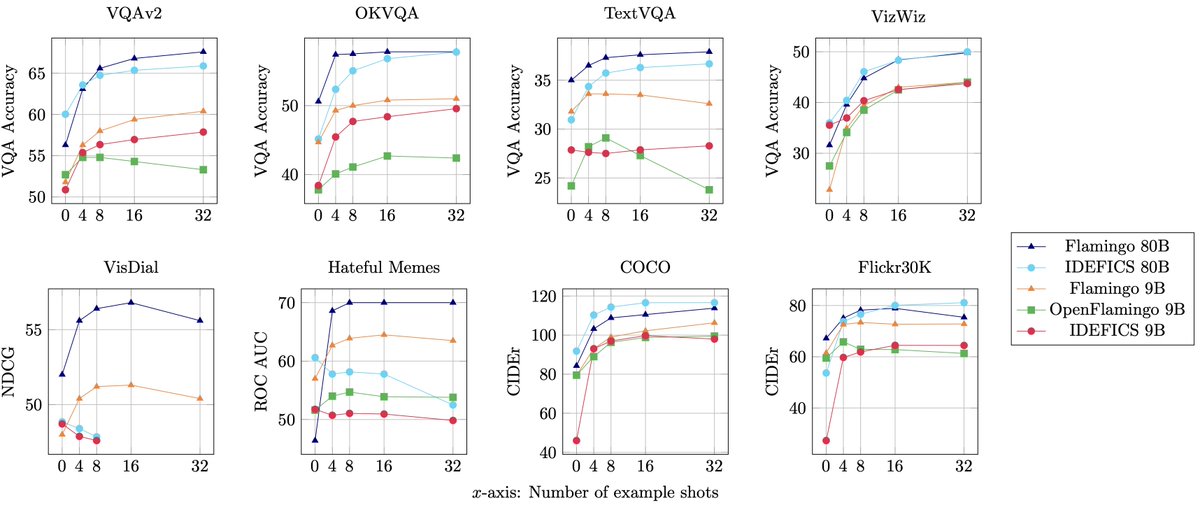
IDEFICS, a 9B and 80B open-source reproduction of DeepMind's Flamingo by the @huggingface team.
Flamingo was an early milestone of multimodal foundation models that support arbitrary interleaving of image and text. IDEFICS is not quite at DeepMind's level yet, but outperforms an earlier community effort (OpenFlamingo).
Another gem is the OBELICS dataset, an open-source collection of image-text web documents: 115B text tokens & 353M images.
Blog: https://t.co/gQF6VM6sKB
Demo: https://t.co/TzFvzdI5T7
OBELICS: https://t.co/1M5MXVPB56
🔥🔥🔥
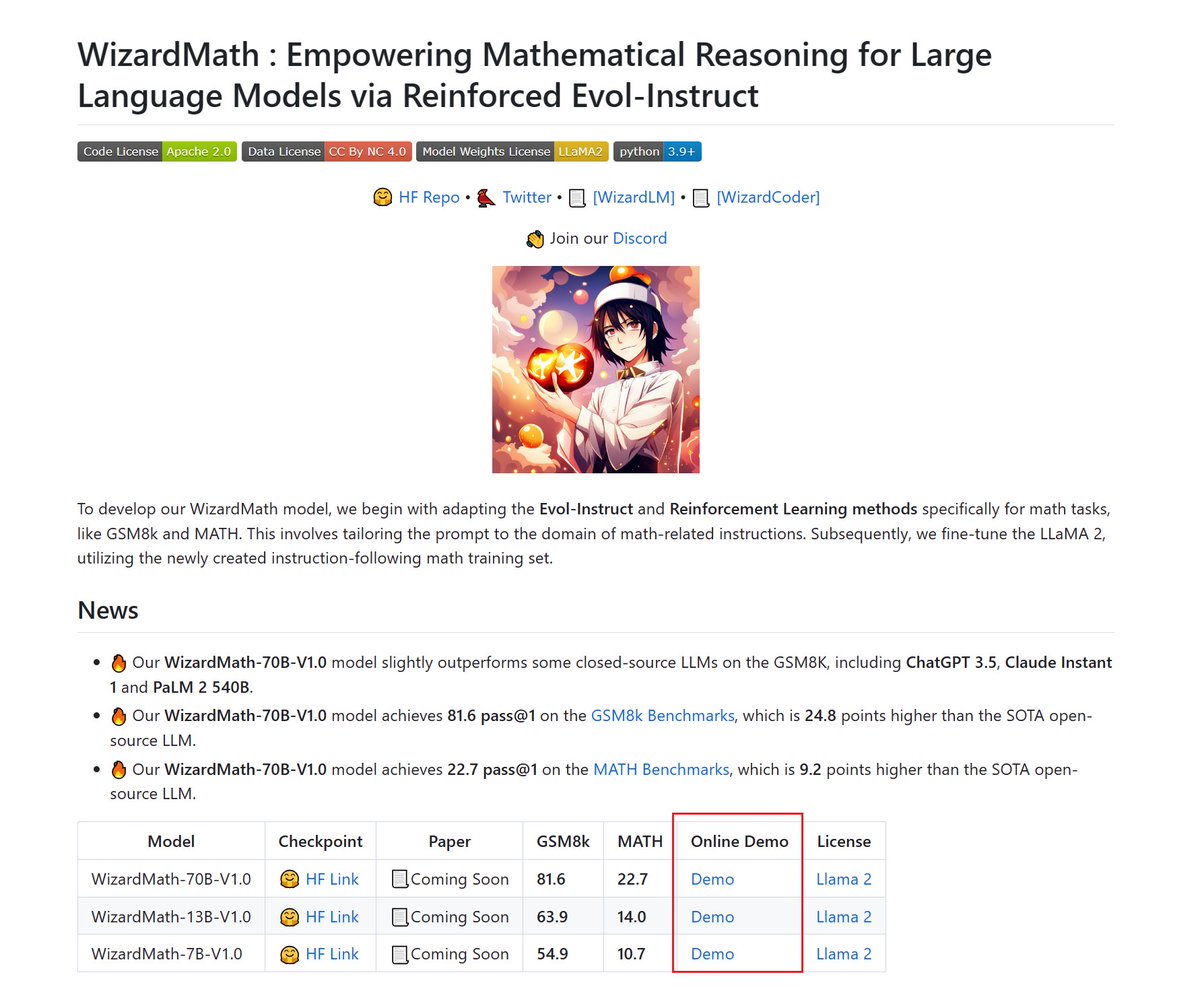
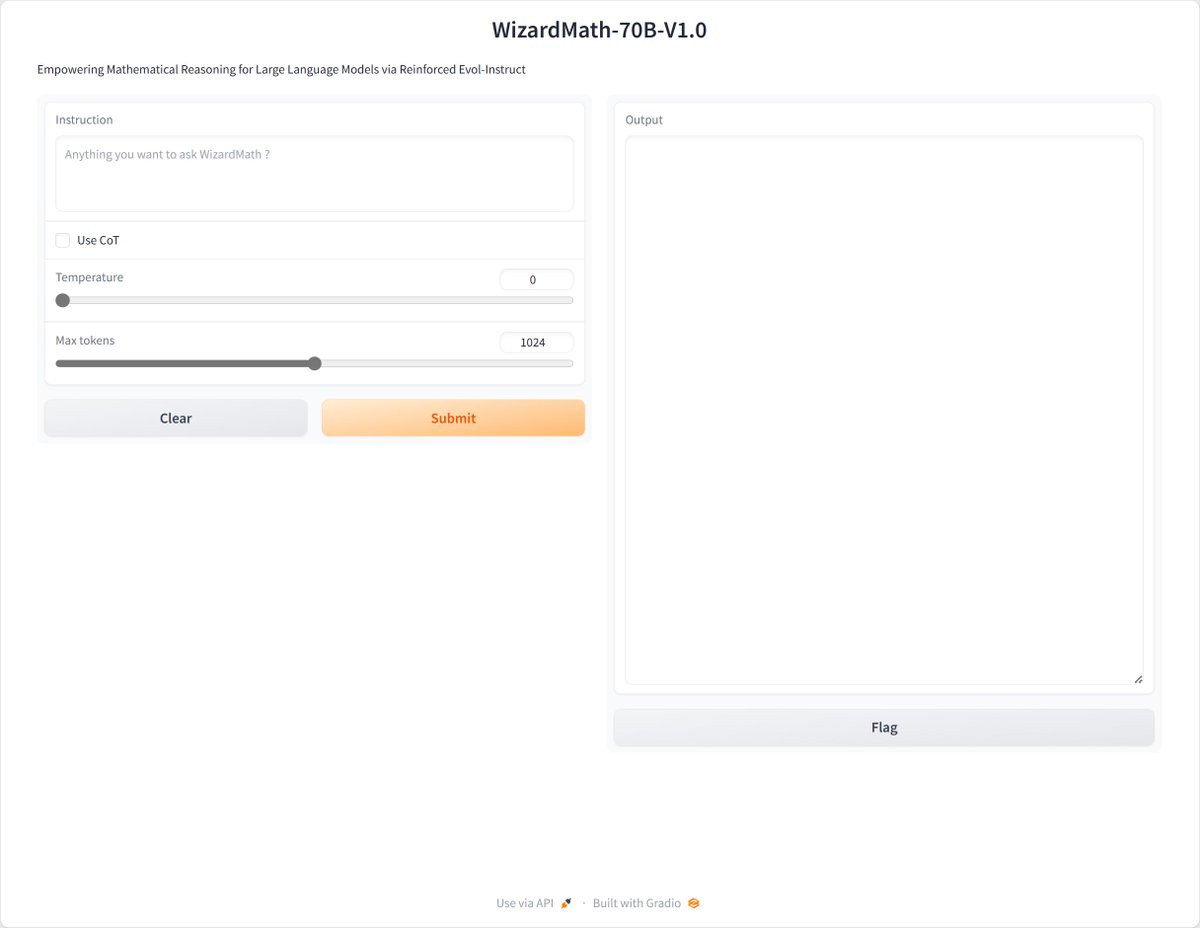
We share you the online demos of all the WizardMath models:
🧙♀️WizardMath-70B: http://47.103.63.15:50083/
🧙WizardMath-13B: http://47.103.63.15:50082/
🧙♂️WizardMath-7B: http://47.103.63.15:50080/
❤️Welcome everyone to use your professional and difficult instructions to evaluate WizardMath, and show us examples of poor performance and your suggestions with our Discord (https://t.co/jjYGPeAEqq) or Twitter comments.
✅Please use the same systems prompts strictly with us, and we do not guarantee the accuracy of the quantified version.
🚫For the simple math questions, we do NOT recommend to use the CoT prompt.
🏇Please refer to (https://t.co/OwvWSO0XUx) for the latest available demo URLs.
@ID_AA_Carmack Integer rings with lookup table. u8 mapping as 256 unique fp32 values. Common op graphs can be “pre compiled” at exact precision and stored in small lookup tables. So, runtime kernels are simple integer accesses and bit ops
@ezyang Thanks for the link! I'm also wondering if you've ever heard of discrete unique ring-like structure (i.e. not based on IEEE). For example, an int8 representing 256 elements chosen to minimize error for common inputs. Ops/subnetworks based on computed tables with integer arith?
@ezyang I often wonder about ML math using non-floating point formats, for example an int8 that has a table look up and operators but the values themselves are basically indices
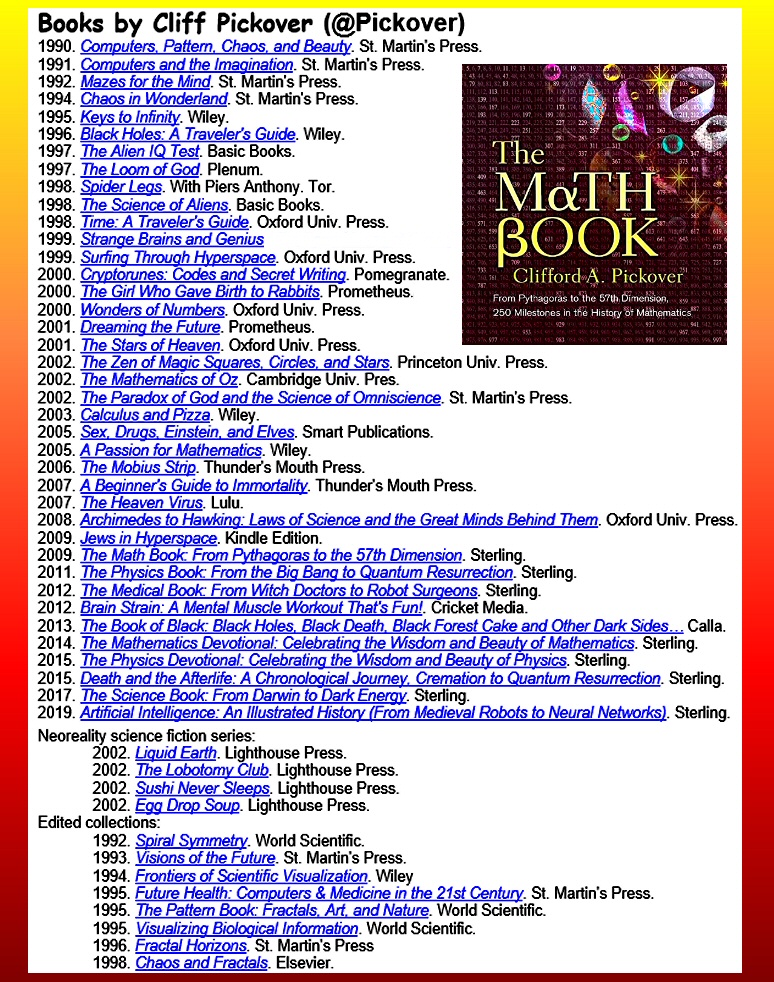
Here is a list of the books I've published, providing an eclectic learning journey and spice for the imagination.
So far, which book did you like best? (Select image to magnify.)