@MissNastasha@Team_English1 https://t.co/kIWNtujrFo - Spring 2019 Language has some stuff on “because, but, so” which includes two example responses to the same Q.
@GCSE_Macbeth Victimhood then agency but agency overall. Rutter’s essay in the Edexcel Critical pack is good for highlighting the loss of power which Lear experiences. Also useful to note lack of mothers/female role models in the play.
@GCSE_Macbeth Her choice to be at Gloucester’s instead of home is telling on its own. “Honour thy father and thy mother.” By skipping out on her own home and having Lear chase her around she’s already breaking a Commandment.
@VerityGoodliffe@Team_English1@EdexcelTeachers@EngChatUK See I’m beginning to think about moving Shakespeare forward so they get a run at using critics before CW. Solely poetry for about two terms can be a slog though so breaking it up definitely an idea.
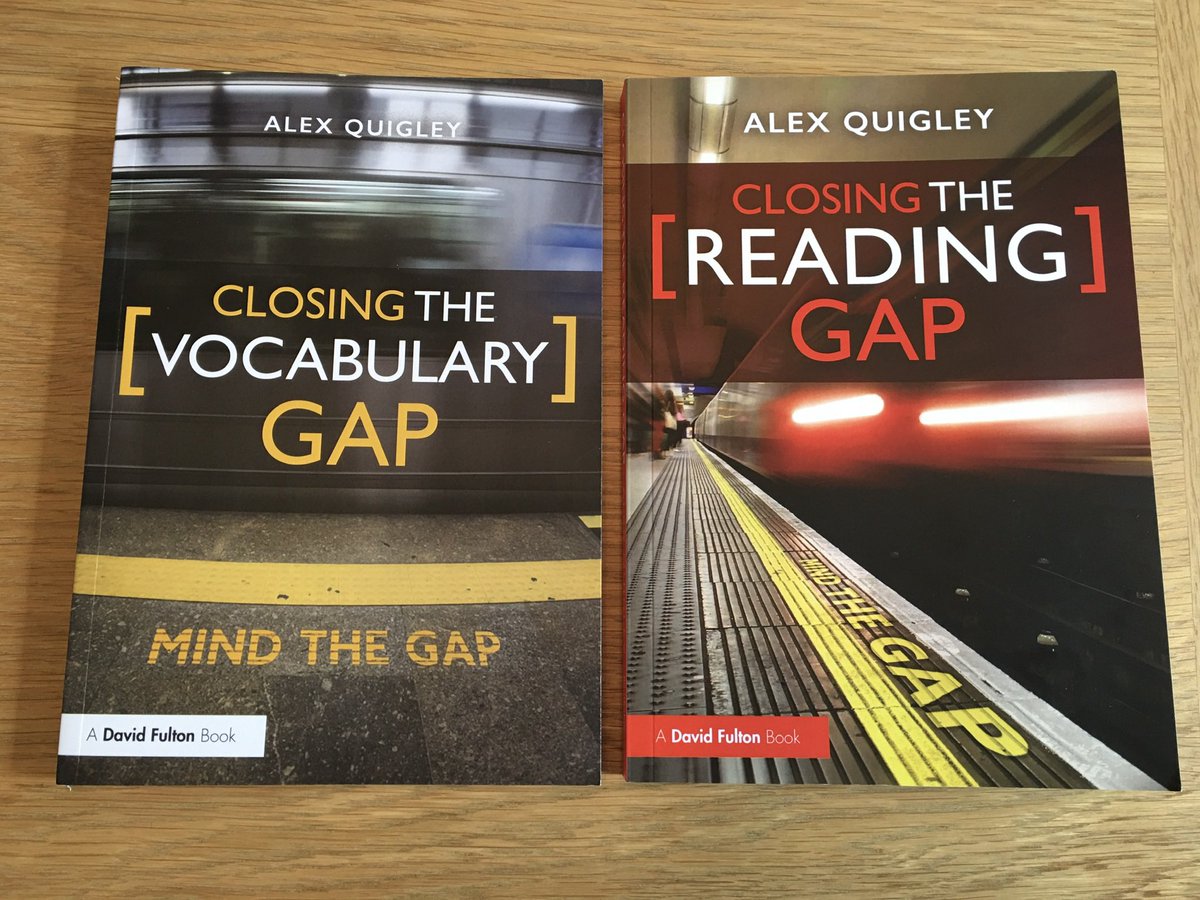
🎄 *XMAS BOOK GIVEAWAY* 🎄
I’m giving away three pairs of ‘Closing the Reading Gap’ & ‘Closing the Vocabulary Gap’ for Xmas.
Simply RETWEET to have a chance of picking up a pair of signed books.
(Draw on Monday 20th December)
@amy_smith117@Team_English1 I think it’s his own selfishness. At first he says he will send her away, even though it will break his heart (end 3.3). But he allows his rage to build, to have the “blood rule” as you say. It’s not a mercy it’s for his own revenge.
@amy_smith117@Team_English1 A lot of his reputation is built on the type of tales he tells Des which we know can’t possibly be true and at the beginning toys with the idea of justice when he admits to practicing magic, then clarifies it as storytelling. Cas is more honest.
@amy_smith117@Team_English1 It’s interesting if he believes himself an agent of justice as he says he wants Iago to live, as death is too good for him. We only see his physical power directed against Des when he strikes her and later kills her. And the wound he gives the caught Iago, I suppose.
@amy_smith117@Team_English1 Even after Des’s death he says “For naught did I in hate, but all in honour.” (5.2) he tries to justify his actions based on reputation. Is it comparable to Macbeth and Banquo’s responses to the supernatural? One cautious, one zealous.
@BrionyBowers@Team_English1@GCSE_Macbeth@SPryke2 To avoid all responsibility is Macbeth’s line in A3, Sc2 “Be innocent of the knowledge dearest chuck”. To take that further (tenuously?) you might link “chuck” as a word for “chicken” and place her as a victim like Macduff’s “pretty chickens”. (1/2)