This is @APompliano ... Watching him on CNBC in 2019 captured my interest in Bitcoin. Fast-forward to 2021, he advocated for @CamiRusso who I now work for @DefiantNews. Today, we're interviewing Anthony for our documentary "Two Sides of the Coin" coming soon!
There's a reason we're launching our game, Reticle Cold War, on @Ronin_Network! A great perspective from @Jihoz_Axie on the past and future of Web3 Gaming!
I enjoyed writing this piece. I'm so glad we have leaders like @Jihoz_Axie driving our industry forward. I think a lot of web3 gamers can relate to this origin story.
@Jihoz_Axie co-founder & CEO @Ronin_Network@AxieInfinity
sees 3 forces impacting Web3 Gaming:
1) hyper-financialization
2) free time
3) creativity
His prediction for what those games look like...
"A combination of poker, squid game, and eve online."
Read the article:
https://t.co/bQvNV7ymrO
I really enjoyed working with my colleague @davoice321 to produce this report. My sincere gratitude to the brilliant minds in the industry, who helped with the narrative and my thanks to @jilliangodsil and @GibbonsLill for the support!
Well written @davoice321! "The economy breathes" is a perfect metaphor for what you've built and is the future of web3 gaming. Or gaming in general, for that matter. The idea that a system will increase rewards in response to the actual level of player engagement is so encouraging. It’s not only critical to maintaining the health of the game economy, but it is also a unique selling point for players. Knowing that the game increases rewards when player engagement is low, such as in the early stages of adoption, is every reason to join and play.
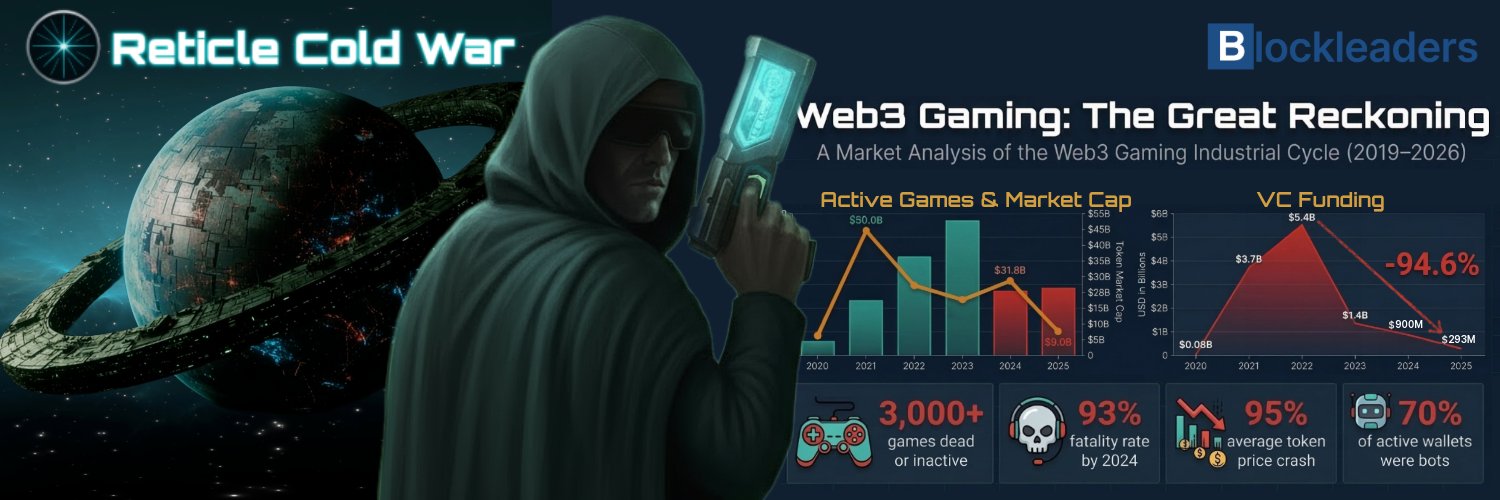
Crypto metaverses failed because they tried to sell real estate to adults rather than build playgrounds for kids. Tokens masked as in-game currency drive speculation. The game stops being a social playground and becomes a high-stakes financial instrument.
In centralized game economies like Roblox, currency is a “sink”: you earn it or buy it, spend it, and it’s gone from the system. The in-game items that people earn are the primary assets, and their value is not inextricably linked to the price of a token.
In contrast, in Web3/Crypto games, the currency is the primary "asset," and its price is determined by a multitude of factors, many of which are not relevant to the game. Sure, in-game assets in the form of NFTs sound great, but their utility is held hostage by the reflexive relationship between the game asset (NFT) and the token price:
Yield-to-Utility Ratio: In web2 games, an item's value is based on Utility (how much better it makes you at the game). In many Web3 games, the value is based on Yield (how much of the token the item can "farm"). If the token price drops by 50%, so does the NFT's value.
Speculative Feedback Loop: The relationship between the token ($TOKEN) and the NFT ($ASSET) often creates a dangerous loop, susceptible to speculative market cycles, in which new players are priced out in bull markets and loyal players contend with value destruction in bear markets.
The list of problems with play-to-earn mechanics is long, and the impacts on player experience are well-documented, but like a meme coin, it’s still a fast buck and yet another example of how much of crypto is still a casino. Even game studios with the intention of building a quality game will fail if the incentive to play is monetary gain.
The good news is that the industry understands the underlying problems, bad actors are being purged, and builders are recalibrating around a passion for gaming as the primary driver, with the potential of crypto/web3 as a secondary enabler.
Further to my post about Jane, CTV picked up her story and ran this piece yesterday. You can watch the piece on CTV (linked below).
If you are able, please consider donating to help: https://t.co/fK98B8YySv
https://t.co/nfQmKQ9Bw6
Unfortunately, when Jane became ill, she was between jobs and had no benefits or income to support her journey. Our healthcare system and social services are not going to cover what she needs to live a quality life in this condition.
My girlfriend's cousin Jane got strep throat this summer and went septic. As a result, her hands and feet had to be amputated.
CBC wrote an article about the rising cases in Canada (link on the GoFundMe page).
Please share and consider donating.
https://t.co/j2JmtkRpJm
My girlfriend's cousin Jane got strep throat this summer and went septic. As a result, her hands and feet had to be amputated.
CBC wrote an article about the rising cases in Canada (link on the GoFundMe page).
Please share and consider donating.
https://t.co/j2JmtkRpJm
@tommyborumjokes@chamath I'm making some assumptions, but considering the resistance he must have faced, the bureaucratic processes, and the legal boxes to be ticked, five months is fast, relatively speaking. How long was the vaccine mandated and recommended?