My paper on killifish parasites has been published with Springer Nature Group in the journal Oecologia!
You can read the paper here: https://t.co/vVOrvp2Kba
Thank you to my co-authors, Dr. Chris Blanar, Dr. Elizabeth Warburton, and Dr. David Kerstetter
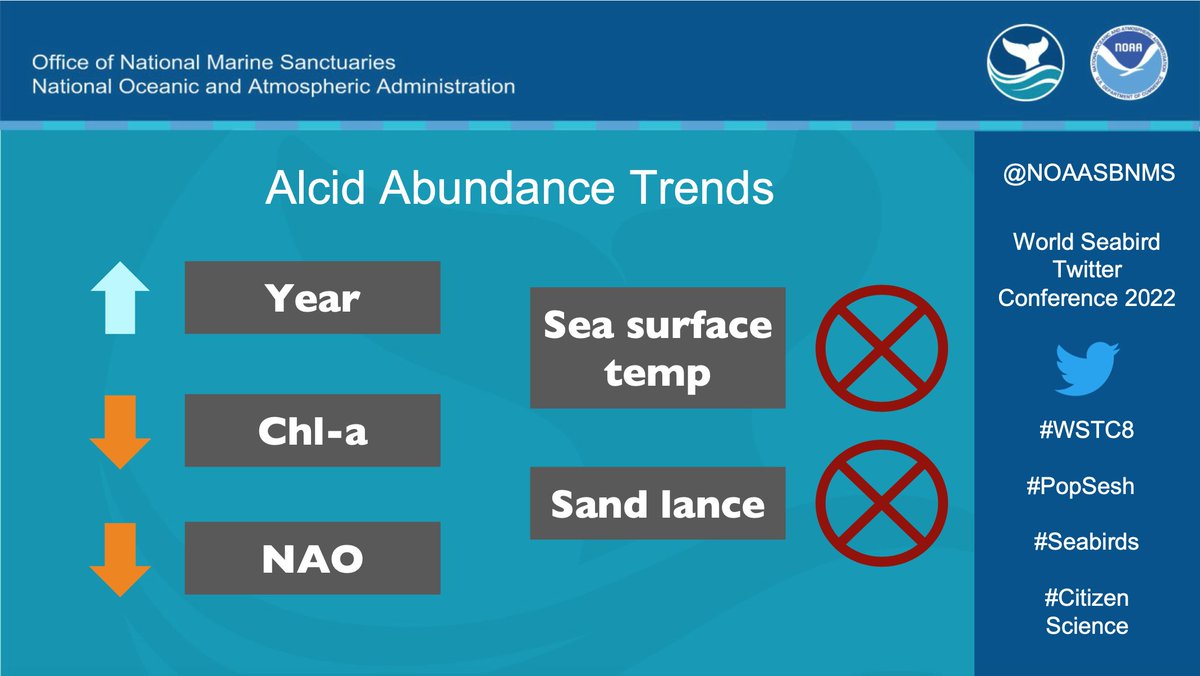
4/4 #WSTC8#PopSesh Alcid sightings ⬇️ in 2015, which had abnormal temp and a shift in chla dist. Alcid #'s correlated ⬆️ with year and ⬇️ with chla. A ⬇️ trend was seen with the #NAO index. With more long-term data, we may be able to see even more trends in alcid abundance!
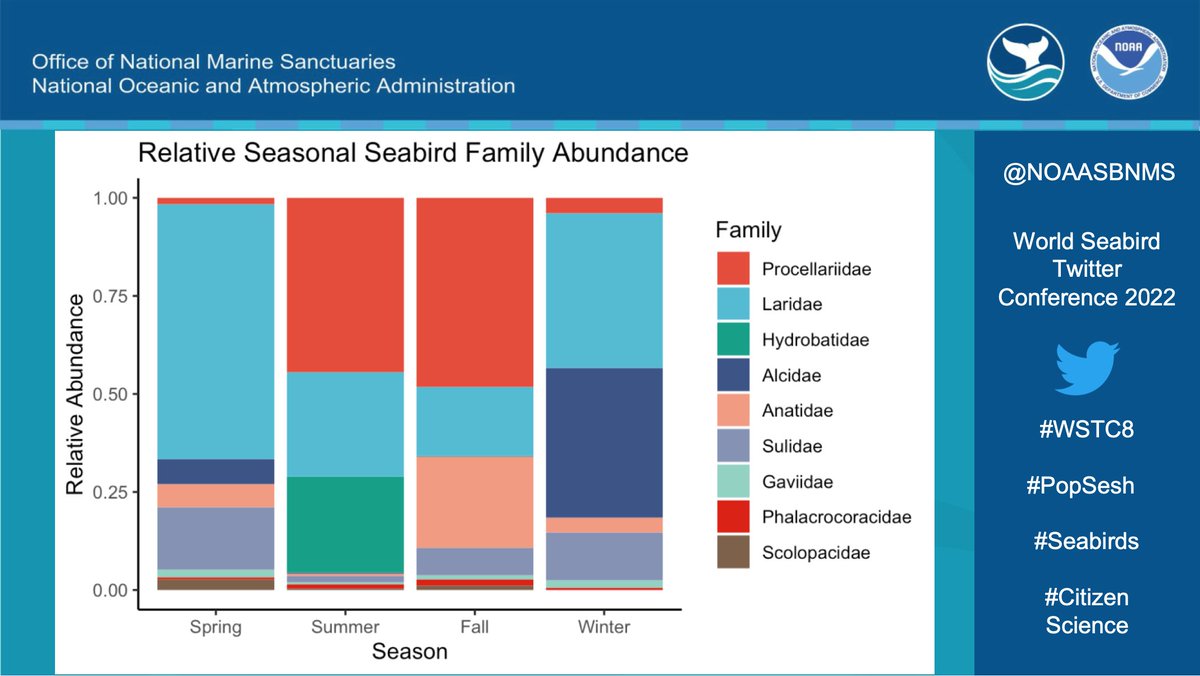
3/4 #WSTC8#PopSesh Alcids are the 2nd most abundant family during the winter 2013-2018, but are also seen in the spring (left). Compared to a survey from 1994-1995 (right), alcids were seen in the winter and fall. Could there a seasonal migration shift due to #climatechange?
2/4 #WSTC8#PopSesh Alcid observations were standardized and spatially mapped. Razorbills, Common murres, Dovekies, and Atlantics puffins were the most common species. They are primarily seen in the southern and northern tips of Stellwagen Bank where productivity is highest.
1/4 #WSTC8#PopSesh#Alcids are a #seabird family in the #GoM and deemed a priority species by @NOAA. Little is known about them during their non-breeding season in #SBNMS where climate change is having big impacts. We used #CitizenScience to study trends in alcid abundance.
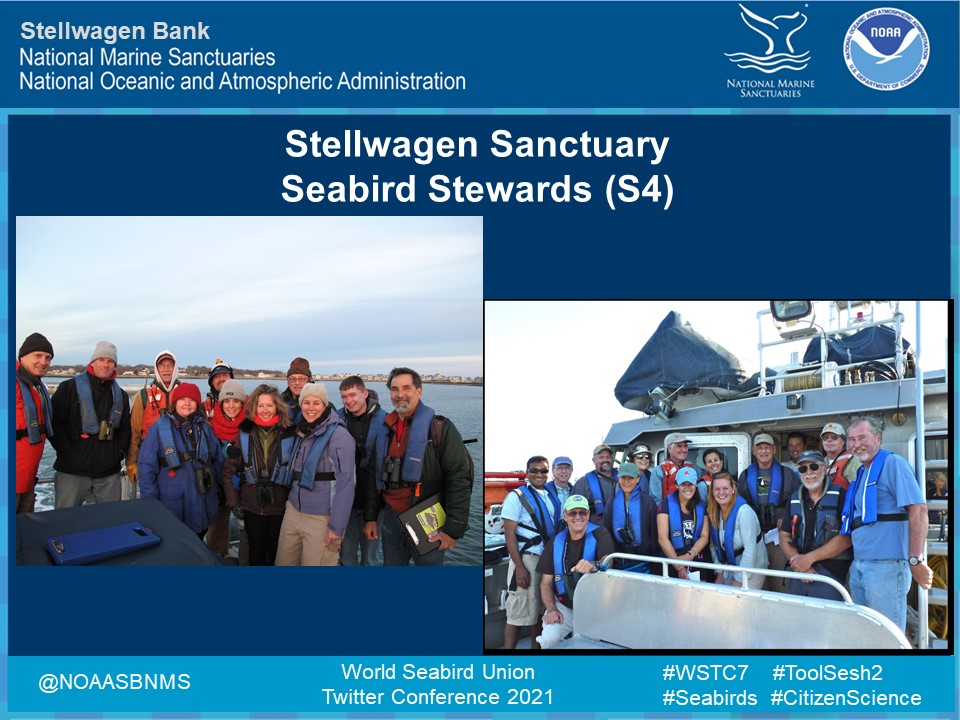
2/4 #WSTC7#ToolSesh2 Analysis of similarities tests were run on 6 years of #SurveyMethod data. Distance limits of sightings and direction of the survey transect were both found to not have a significant effect on the number and diversity of #Seabirds observed #DataScience