@z_GenieZ@helloiamleonie The power of ReAct is coming from LLM + tools, not just LLM. Tools are not AI - they are functions that provide response to LLM-generated input. As such, ReAct agent is as powerful as the tools it is bound to. It is not limited to LLM's training.
What I notice from the new generation of developers:
People ask me a lot which API do you use for e.g. Nomad List or Airline List data
And the answer is usually there is no API, you just manually collect shitloads of data for years
It seems people nowadays just assume everything is an easy API away, but if it was, your site wouldn't be competitive and there'd be 100 clones out there
@housecor In my experience, an app rarely stays the ONLY consumer of the state. Which means you will need an API in front of the DB either right away or eventually. You can put the API endpoint in the same service, but you will need them sooner or later.
Unfortunate truth about employee churn: the moment they hand in their notice, there is nothing left to do. Doing something about it requires listening to the cues months earlier.
As their manager or employer, you should really give them “good luck”.
(It stings unfortunately)
I appreciate your argument and I fully understand your frustration, but whether the pod bay doors should be opened or closed is a complex and nuanced issue.
@simas_ch@matteocollina Fair enough. My point was that 'Java web frameworks' means 'Java server-side frameworks', so React, or Vue or Angular or Svelte do not apply.
@matteocollina@simas_ch Exactly. Any Java framework can handle server side requests as well as XHR/fetch requests. It can render any client side framework, including React. But only Node.js based frameworks can provide SSR benefits of running the same code on both sides.
"Prompt Engineering" implies a serious activity. There is no Engineering here. "Prompt Tinkering" is more apt. And when the tinkering yields results, you have no idea why.
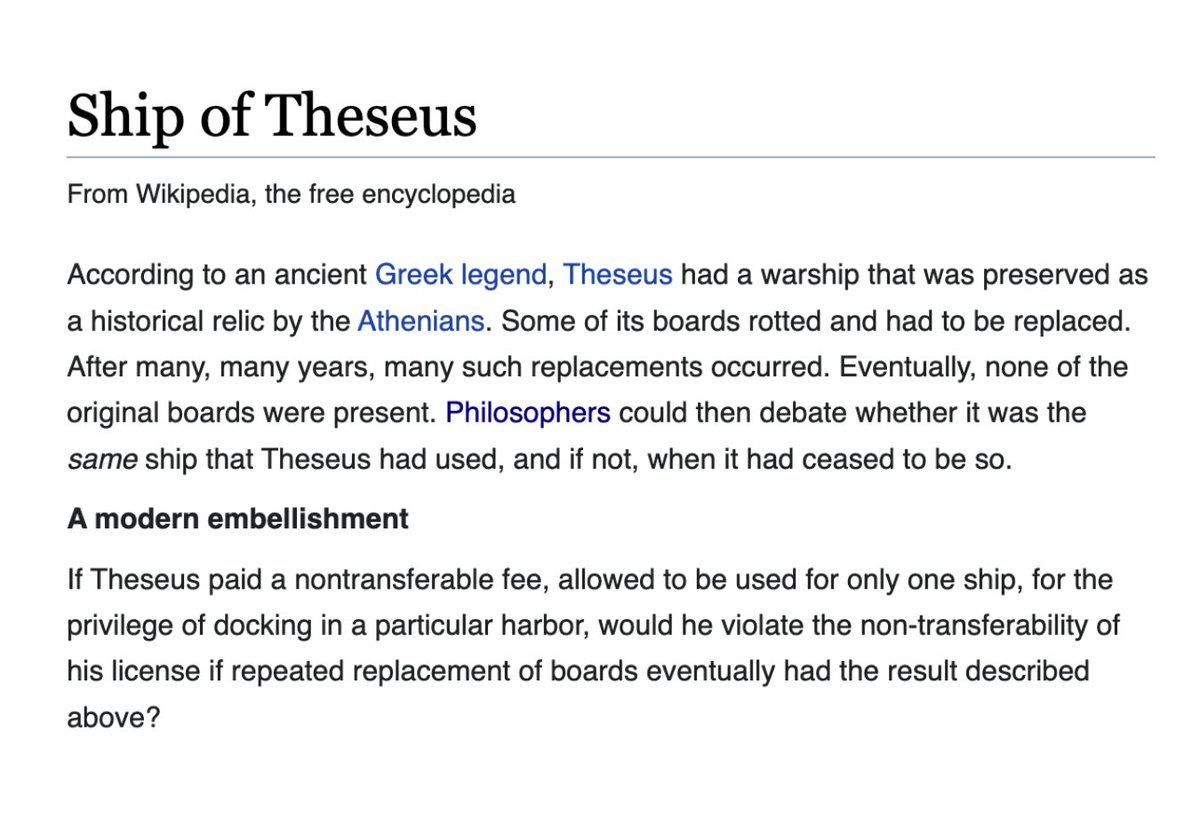
The "Ship of Theseus" article has been edited 1792 times since it was created in July of 2003. At present, 0% of the phrases in the original article (seen below) remain.