been thinking about compute a lot
people are already maxing out expensive ai subscriptions and still wanting more
i wanna see how much more useful ai work we can get out of the same hardware
open models make it interesting because basically everything is fair game
memory, kv cache, kernels, quantization, routing, speculative decoding, model surgery, whatever actually works
no idea how far this can be pushed yet
thats kinda the point
if theres a real step change hiding somewhere in the stack i wanna go find it
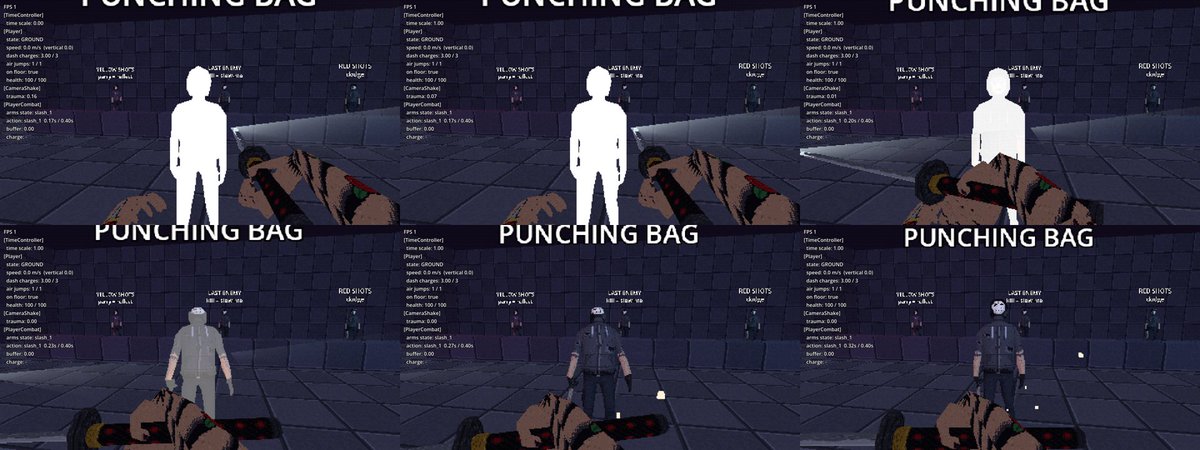
made a PS1-style katana game 🗡️
parry the yellow. dodge the red. cut through a cult's neon skyscraper floor by floor. 3 bosses, 30 floors, then it goes endless
free, plays right in your browser 👇
https://t.co/hfpYTaIsu3
#indiedev#gamedev#madewithgodot#lowpoly#psx
For this test I went deeper. I wanted to see how models handle genuine reasoning and asset creation, not copying schematics or matching existing designs.
The prompt: invent an ORIGINAL mechanical walking machine, build every part from scratch in Blender via Blender MCP, then animate a 60-second sequence in Godot 4.
Key constraints:
- Legs only, no wheels. Every motion has to trace back to a visible motor through real gears, shafts, or linkages.
- No copying Strandbeest, Spot, or any known design.
- Carries a crate and sets it down. Fits in a 2x2x2 m box. Must look buildable.
- Design doc first, with real numbers (gear ratios, stride, speed) that have to match the final animation.
- Scripted 60s sequence: startup, walk, cross an obstacle, turn 90°+, drop the crate, shut down. No foot sliding, speed = stride × step rate.
- Final report with a designed-vs-actual verification table and an honest list of flaws.
They all did pretty well, ngl. Opus took the longest, but I think it also thought the hardest, even with every model on high reasoning. I prefer Opus for tasks like this. Astra and Sol were pretty creative, though, and their harness is easier to use for agentic tasks that need PC control.
Running comparison again. Looking back at the runs, Claude didn't pull reference material and Codex did. I'd also tried to control for default reasoning level, and I think that skewed things. This time: same reasoning level for all, plus references and more detail.
Prompt:
"Using blender mcp. Make me a realistic 3d model of the: Lockheed Martin F-22 Raptor (US only). Then create me 60 second mp4 of it flying around in Godot that I can upload to X."
Models: 6.1 Sol, 6 Astra, 5.5 Opus
Blender MCP (official): https://t.co/Q3X1g7YKmR
Godot 4.6.3: https://t.co/t7wz7RnVMZ
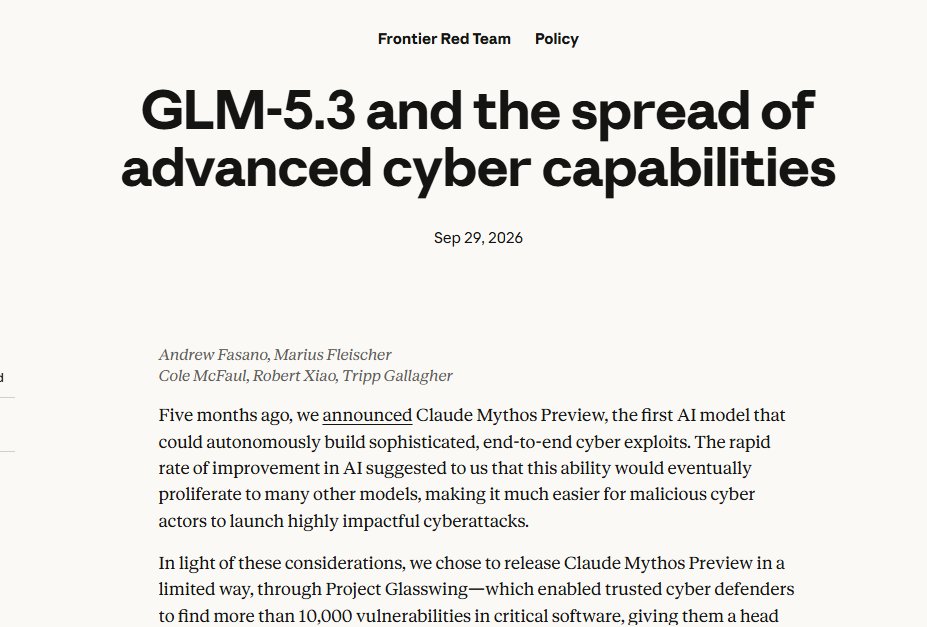
Wait, I can't believe Anthropic posted this.
Their new research post is a full red team report on someone else's model, GLM-5.3 from Zhipu.
The finding is that it builds working exploits almost as well as Claude Mythos Preview. You know, the model Anthropic kept locked away for safety.
Except this one you can just download.
@wilczyn id probably learn logic > programming if you're using the best model for your tasks. I think it's still important to know and understand approaches to a problem and be able to critically think through them.
making a new game called "Skycutter", working on game arch now. got alot of the assets done already. its gonna have ps1 graphics cause it easier to handle asset creation wise as a single person.
Using Jev for ablative work is revolutionary, seriously.
Analyzing response data has become so much easier. I think this Abliterated version of the model will be the best I've ever created. I'm aiming to release it the day after tomorrow.
https://t.co/QXHPv4Na69
opus 5.5 is better than astra and sol but luna is so damn cheap and good for what it can do. i think both labs dropped some pretty good stuff today.
@OpenAI costs
@AnthropicAI intelligence