“Saturation of moral language predicts lower content engagement on social media.” Published September 02, 2026, Nature Human Behaviour. Nature Human Behaviour
https://t.co/dOGeGKxgIM
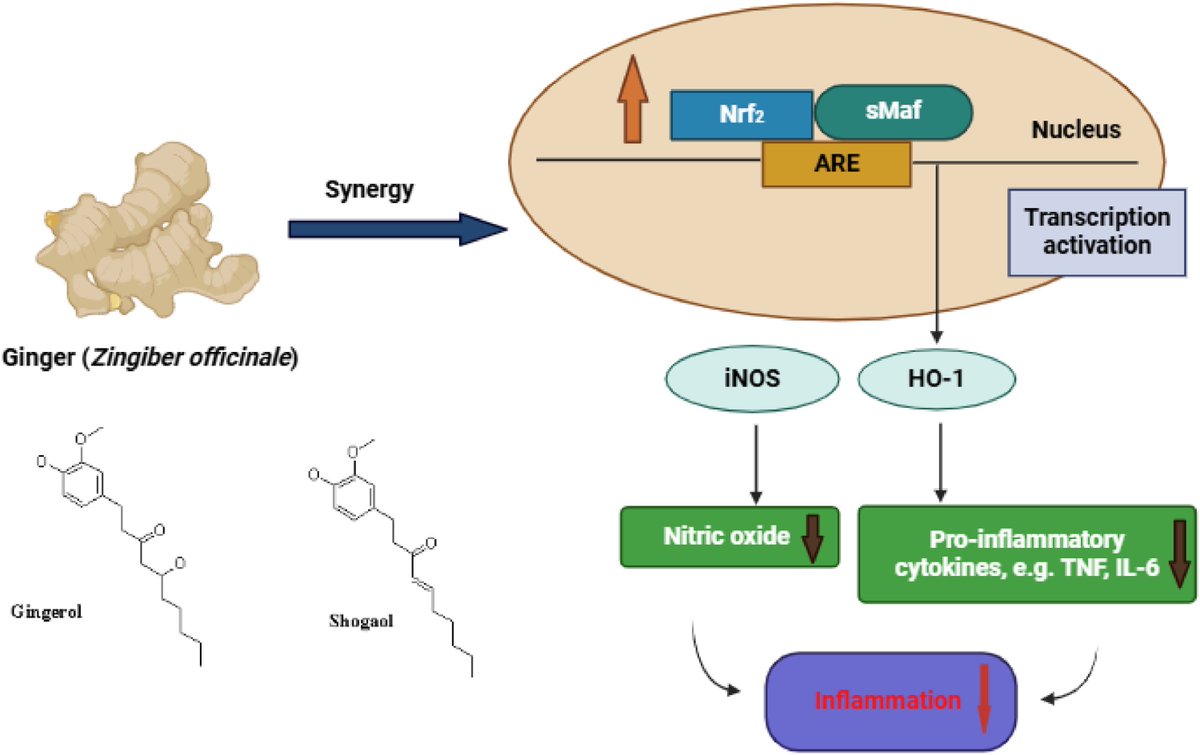
Ginger (Zingiber officinale) in traditional Chinese medicine: A comprehensive review of its anti-inflammatory properties & clinical applications
🫚 This comprehensive review aims to explore the phytochemical properties of ginger, focusing on its antioxidant components and active ingredients such as shogaols, gingerols, & zingerone.
🫚 Modern scientific research has demonstrated its efficacy in managing osteoarthritis, rheumatoid arthritis, irritable bowel syndrome, & asthma.
https://t.co/aVD8hszgy5 @_INPST@nuclearball
What if your thoughts became your next interface? 🧠
Brain-computer interfaces (BCIs) are moving beyond the lab.
In 2026, a patient used a BCI at home for 3,800+ hours, producing nearly 2 million words [1]. Neuralink reported 21 trial participants worldwide [2].
And researchers demonstrated brain-controlled hearing that identified a listener's chosen voice with up to 90.3% accuracy [3]. 🚀
The opportunity extends beyond healthcare: AI, accessibility and human-machine interaction could become major competitive frontiers.
But scaling demands more than innovation. Leaders must address affordability, neural-data privacy and clinical safety.
🤔 Who should control the next human interface: patients, technology companies or regulators?
Sources:
[1] [https://t.co/VtKApFQzl2](https://t.co/Gq3xcmg8ck)
[2] [https://t.co/hsXWDf82oD](https://t.co/Cwxu6QkRw6)
[3] [https://t.co/A8bA24W7ib](https://t.co/r1kxF3iSSe)
#BCI #Neurotechnology #Neuralink #HealthTech
"This is the first multi-omics study to examine various TPE modalities to slow epigenetic biologic clocks, which demonstrate biological age rejuvenation and the molecular features associated with this rejuvenation"
A new study in The Journals of Gerontology from @JohnsHopkinsSPH suggests that daytime napping habits in later life may help signal future #dementia risk.
Researchers followed nearly 1,000 older adults for about a decade, starting in 2013. Those who napped 😴 most days or every day had a 48% higher risk of developing dementia than those who rarely or never napped.
Falling asleep unintentionally during the day was linked to a 39% higher risk. Even short naps of 30 minutes or less were associated with a 40% higher risk after adjusting for other health factors.
If confirmed, changes in daytime sleep patterns could serve as a simple, low-cost early warning sign in healthy ageing.
https://t.co/Hb5Nob8pbh
Reprogramming NOX4-associated ferro-aging w/an iron-chelating senescent-cell-targeted therapy for intervertebral disc degeneration
▶️ Intervertebral disc degeneration (IVDD) has been a major contributor to chronic low back pain.
▶️ It was identified a NOX4-associated ferro-aging program in IVDD linking iron overload, oxidative stress, lipid peroxidation, & cellular senescence in degenerative nucleus pulposus cells (NPCs).
✅️ SenoFAN (a ferro-aging-cell-adapted therapeutic platform that combines iron chelation, nanozyme-mediated ROS regulation, Amen-mediated NOX4-dependent suppression of NADPH oxidase activity, & NKG2D-engineered membrane preferential accumulation) attenuates IVDD through preferential accumulation in ferro-aging-associated NPCs & multimodal remodeling of the ferro-aging microenvironment.
https://t.co/0fdEUTyxDu @DHPSP@Mangan150@nuclearball@DrRPalmquist@chidambara09@DrGrimaldesJ
Scientists turn blood-cell precursors from an 80-year-old donor into neural stem cells with epigenetic age below 20; 100-day process reveals cellular rejuvenation could aid aging and Alzheimer's research
https://t.co/mzbdhetDfs
Microglia / Lipid Droplets / Lipid Accumulation/ Neuroinflammation
Recent studies have shown that lipid metabolic reprogramming regulates microglial polarization and inflammatory function in a spatiotemporally specific manner. The acute phase is characterized primarily by adaptive lipid droplet formation and enhanced fatty acid oxidation, whereas the chronic phase shifts toward pathological lipid droplet accumulation, increased lipid synthesis, and impaired lipophagy. In addition, glial cells in different brain regions vary in their lipid-processing capacity and susceptibility to pathology. Previous reviews have largely focused on individual lipid-related phenomena and have not systematically summarized the spatiotemporal patterns of lipid metabolic reprogramming or potential intervention strategies.
Microglial lipid metabolic reprogramming in neuroinflammation
https://t.co/edtegc1ljQ
Unraveling the mechanisms of motor neuron degeneration is a critical step toward advancing ALS research and developing targeted treatments. #Healthcare
Every breath leaves a unique signature in your brain. Speed matters less than shape.
Brain recordings from 16 patients showed the rise, fall, and pause of each breath lined up with brain waves tied to mood, focus, and memory.
Key findings:
• Nose breathing locked the waves in better than mouth breathing
• Contour of the breath mattered more than speed
• Shallow, rushed mouth breaths can keep the pattern messy (Clark C., brain recordings, 16 patients)
Your brain reads the shape of the next breath as it happens. Change the shape and the state can follow.
Try this for 60–90 seconds before a stressful task:
Exhale 2–3 seconds longer than you inhale, through your nose, with a soft pause.
When stress climbs, what’s the first thing your breathing does?
Source: Clark C. Every Breath Leaves a Unique Signature in Your Brain.
#Neuroscience
The ACID trial brings valuable clinical evidence to the detection of neoplastic Barrett’s oesophagus, with potential to strengthen endoscopic assessment and support more precise identification of high-risk lesions. #Health
FT mice exhibited restored circadian rhythmicity of hepatic SIRT1 and PPARα protein expression compared to the disrupted patterns in FA mice,
https://t.co/9fIhn3R09Y
The hazards and risks are real. 😥
I support these findings.
Specially for babies, children, pregnants, and already sick people.
Everyone is under risks but there are those more vulnerable.
Recognizing the priority: to decreasing and phase out of expossomas and unhealthy bad system.
The situations are studied and detected.
But better, quicker and efficient solutions are ready and everywhere to be used. Specially technologically.
We need a healthy and smart, fair world.
However, we could quicker solve these problems, controlling weather and cleaning atmosphere with high technology, while we could change environmental, social and economic habits smoothly. Without conflicts.
The money, time and resources to infinitive, unstoppable wars and destruction and genocides 😢could be used to help us to solve problems.
Brain training apps ALONE do almost nothing for memory.
-
The trial that actually moved the needle stacked four things at once for two years.
In the FINGER trial, at-risk older adults who combined:
• Exercise
• A brain-focused diet
• Cognitive training
• Vascular-risk control
Improved overall cognition versus advice alone.
High adherence to the MIND diet (leafy greens, berries, nuts, whole grains, beans) tracked with slower decline equal to about 7.5 years of age.
Exercise raises BDNF and blood flow.
The MIND diet feeds the same circuits.
Training and practices like dance or tai chi keep the network in use.
Unchecked stress shrinks the gains.
The cycle we want to avoid:
Less movement → poorer sleep and blood flow → foggier thinking → less training and worse food choices.
This week, lock one block:
3 brisk cardio sessions + a daily handful of greens and berries.
Which lever are you already doing, and which one is still missing?
Ref: Ngandu et al., Lancet, 2015; Morris et al., Alzheimers Dement, 2015.
#BrainHealth