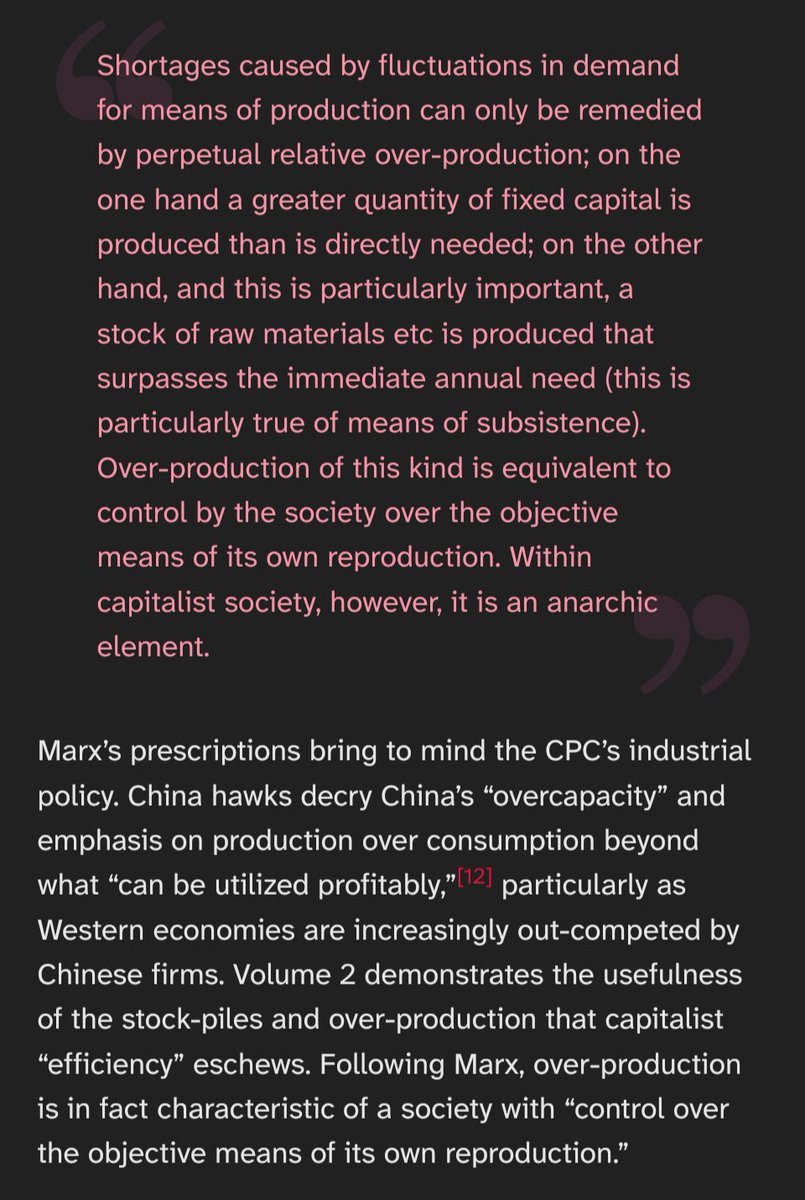
Capital Volume 2 includes several reflections by Marx of what production under socialism would entail.
This book has unsurprisingly been studied closely by Chinese and Soviet economists, as I examine in the article below.
@un_hambourgeois Having time and resources to read, develop strategy, and form a disciplined vanguard is actually a huge advantage to organizing workers towards revolutionary ends. As evidenced by most of the most influential revolutionaries in history.
@LovejoyActual Sure, the Bolsheviks benefited from specific historical circumstances. So did the Mensheviks and SRs. What made the Bolsheviks the ones who successfully navigated those circumstances? If it was all luck, why didn’t one of the larger and more popular parties take power instead?
@kvshlvk@COMMIESHITEATER@pozhutkamen@chimeraxmachina If he must continuously sell his labor to obtain his means of subsistence through commodity exchange, what specifically makes him neither worker nor petty bourgeois? What feature of the relation cannot be explained through capitalism, monopoly, or rent?
@kvshlvk@COMMIESHITEATER@pozhutkamen@chimeraxmachina So this worker is paying those rents and selling his labor because he’s bound to a lord? Or because he must obtain his means of subsistence through the market?
The answer I often hear is “they’re just a developmental capitalist state.” But that still requires an explanation: why has a state deeply integrated into global markets retained a degree of sovereignty and developmental direction uncommon among capitalist states?
If China is a DotB what is the concrete mechanism of bourgeois rule? How do you explain a state that disciplines domestic capital, limits foreign capital’s political leverage, and directs accumulation in ways contrary to the expressed interests of major capitalist actors?
Unfortunately I cannot get an answer as to how China is a DotP aside from “the CPC represents the proletariat” and “the CPC raised millions out of poverty!” The former assumes the conclusion, while the latter describes something capitalism has often accomplished when…
@liuzhao_cn @lyrasie If the existence of capitalist relations=bourgeois rule then you should have no trouble demonstrating how it operates in China, no? Who constitutes the ruling bloc? How does capital discipline the party-state? Or are you operating on a categorical premise alone?
@lyrasie The actual disagreement is whether capitalist relations necessarily imply bourgeois class rule.
If you have a serious critique, make it. Deploying strawmen to argue against isn’t exactly Marxist.
@lyrasie This is a strange characterization of ‘Dengists.’ Supporters of China as AES argue that the proletarian dictatorship was established through the Chinese Revolution and persisted through reform, while deploying markets within a socialist transition.
Small thread on what I consider **the** most underrated aspect of Marxist theory:
__The obsolescence of "individual exchange".__
By underrated I mean: not featured enough in discussions compared to alienation, rate of profit, crisis, primitive accumulation, class struggle, etc.
Marx kinda ruined economics, politics, and philosophy as professional academic fields.
Ever since he jumped in and showed that dutifully-pursued they lead to revolution, the three were gelded. Schools now do weird contortions to avoid him.
Only sociology remains a little brave.
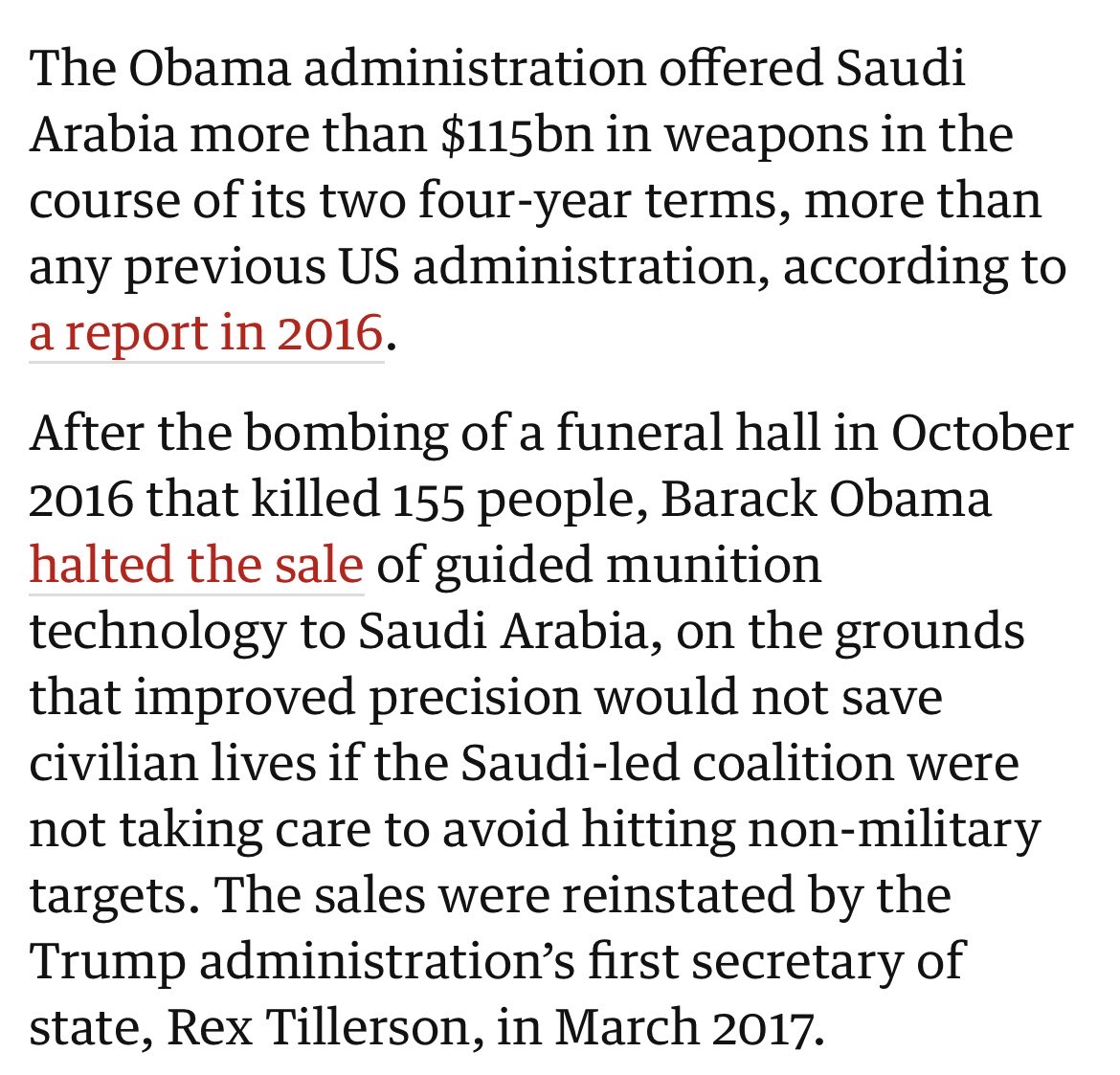
@dmesg@nathanlean@fatima__m7md@Tracking_Power Opposition should’ve been stronger to US support of the Saudis and many others over time. Not exactly sure how that’s relevant here, other than to deflect after you misrepresented the facts.
@dmesg@nathanlean@fatima__m7md@Tracking_Power They had already sold 1000 of the bombs to SA before halting sales, including the bomb used in this case. There was nothing preventing their use.
Overall, Obama offered $115 billion in arms to SA, more than any previous president, and even sent them cluster bombs.