Congrats to @aesmonty and the @range_org team on the raise!
As investors with Kahuna, we’re proud to back the team building the clear leader at the intersection of stablecoins and fiat finance. Real-time control across rails is the future, excited to see what you scale this.
Onwards!
We are excited to announce our $8.3M Series A to build the financial control layer for companies operating across stablecoin, crypto and fiat rails.
Stablecoins settle in seconds. Yet too many treasury, risk, and compliance controls still run on business-day logic.
Range closes that gap: a single real-time platform unifying your wallets, custodians, bank accounts, and exchanges, with risk and compliance controls that screen transactions before money moves and full visibility across rails.
This round brings our total funding to $11M. Investors in the round include TX Ventures, @Maven11Capital, @SixThirty_630ft, @StellarOrg, Onigiri Capital, and others.
Range is already running at scale:
- $30B+ in assets under management protected
- 99.41% of all stablecoin payments tracked across 200+ networks
- 10,000+ integrations across banks, custodians, and wallets
See what total financial control looks like across stablecoins, crypto and fiat 👇
https://t.co/1Ojolf7a17
Being one of the OG Stellars of ARC, this is intriguing.
I’ve heard that they are working on an invite-only product; the site already looks great.
Curious where this leads — @ARCdotXYZ might just be onto something.
Eyes are peeled 🤫
Being one of the OG Stellars of ARC, this is intriguing.
I’ve heard that they are working on an invite-only product; the site already looks great.
Curious where this leads — @ARCdotXYZ might just be onto something.
Eyes are peeled 🤫
"We are in a nascent space and doing new things is how we get outsized results"
We cannot wait to see what kind of Michelin star cuisine @xdereklau will cook for us!
The loudest teams on CT?
Usually raising.
The quietest?
Usually building something we wish we found first.
If you’re only tracking noise, you’ll miss the next winners.
VC red flag:
“We’re thesis-driven.”
Reality:
– Waiting for another fund to commit
– Aping whatever’s trending on CT
– Didn’t even read your doc
Thesis = whatever fits post-hoc 🤡
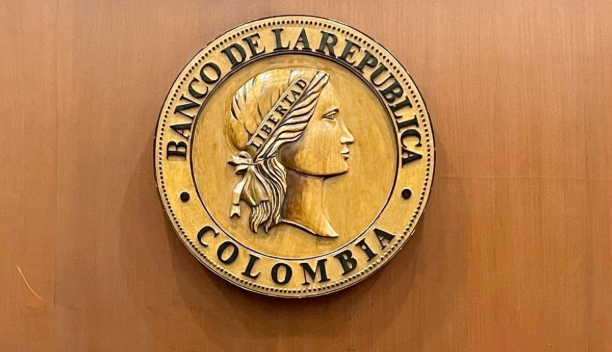
Colombia’s central bank is piloting a sovereign digital currency on @cosmos using IBC Eureka—the first government-backed CBDC deployment on the network.
It’s a clear signal: Cosmos is moving beyond experimentation and into policy-grade infrastructure.
The pilot, developed with @interchain_io and major Colombian banks, gives the central bank full control over its validator set, which ends up creating a permissioned environment on public infrastructure. It offers interoperability without compromising institutional trust.
“When you’re the Colombian government, there is no way you’re trusting anyone except for yourself.”
— Maghnus Mareneck, CEO, Interchain Labs.
Why Cosmos Fits CBDCs
CBDCs are digital forms of sovereign money, designed for programmability, auditability, and legal equivalence to cash.
They are not decentralized; but increasingly rely on blockchain infrastructure for performance and security.
Cosmos fits because it was built for modular sovereignty. IBC Eureka eliminates bridges and external trust assumptions. Governments can define their own validator sets while maintaining interoperability with the broader ecosystem.
It’s secure, composable, and institutionally legible.
Why It Matters for ATOM
IBC Eureka transforms ATOM’s economics.
Cross-chain fees are used to buy and burn ATOM—introducing deflationary pressure tied directly to network usage.
With IBC already powering billions in volume across 115+ chains, this unlocks real on-chain value accrual.
Protocol usage → fee generation → token scarcity.
$ATOM becomes more than the native asset—it becomes the economic backbone of sovereign blockchain interoperability.
The Takeaway
This pilot is a template, not a one-off.
It positions Cosmos as viable infrastructure for the coming wave of CBDCs and digital public finance—secure, sovereign-aligned, and economically sound.
Public blockchains are no longer theoretical for institutions and Cosmos is proving it.
🪙 The May Market 🪙
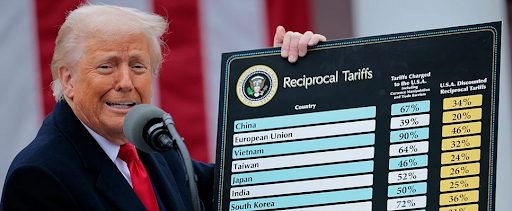
2025 has started off with a roller coaster. With Trump's administration becoming a bull indicator, things shifted dramatically with macro-moving decisions. The implementation of tariffs created an unexpected wave of volatility, testing market resilience across both traditional and digital assets.
After months of turbulence, the crypto market is now showing strong signs of recovery as trade negotiations appear to be stabilizing. With recession and macro fears subsiding and overall market sentiment turning positive, we're witnessing a notable uptick across key metrics that suggest renewed confidence in the digital asset space.
Market Sentiment: From Fear to Greed 🌡️
The Crypto Fear & Greed Index has made a recovery from its March low of 15 ("Extreme Fear") to its current reading of 74, in "Greed" territory. This sentiment shift mirrors the broader market's transition from uncertainty to optimism as tariff concerns begin to ease.
This shift presents how quickly market psychology can pivot when macroeconomic headwinds subside.
DeFi Activity Surges as Market Rebounds ♻️
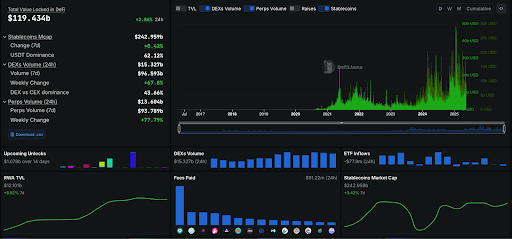
DeFi metrics reveal a recovery in onchain activity. This resurgence in DeFi participation suggests growing confidence as tariff-related market uncertainty subsides.
Particularly noteworthy are the upticks in trading volumes:
🔸DEX volume has surged 67.8% over the past week, reaching $15.32 billion in 24-hour trading and an impressive $96.59 billion over the 7-day period
🔸Perps trading volume shows even stronger momentum with a 77.79% weekly increase, hitting $13.68 billion in daily volume and $93.78 billion weekly
This increase in trading activity across decentralized platforms reflects renewed risk appetite among crypto traders.
DEXs now command 43.66% market share versus centralized exchanges, signaling a healthy shift toward on-chain trading following the period of tariff-induced caution.
Token Performance & Market Capitalization 🪙
The total crypto market cap has maintained resilience at $3.32T, recovering significantly from the tariff-induced volatility earlier this year. Historical market cap data reveals the growth trajectory since 2021, with the current market composition showing Bitcoin's increasing dominance over altcoins.
Looking at the market cap breakdown:
🔹Bitcoin dominates at 61.03% of total market share ($1.90T)
🔹Non-Bitcoin crypto assets account for approximately $1.30T
🔹Altcoins comprise a relatively small portion at around $209.7B
🔹Memecoins holding strong with a market cap of $67.45B
This distribution highlights the market's flight to quality during uncertain economic periods, with Bitcoin strengthening its position as the preferred crypto asset during times of macroeconomic stress. Its dominant market share continues to strengthen in this market cycle.
🔻Bitcoin
Trading at $103,886.56, BTC maintains its dominant position with 61.03% market share.
🔻Ethereum
After suffering a 53% drawdown earlier this year, ETH has begun to recover. With ETH showing promising changes with leadership, foundation and direction shifts, we may see an ETH szn again.
🔻Alts
Something worthy of highlighting that there were no significant inflows towards the broader alt market compared to the previous cycle, with recent TGEs disappointing early adopters and investors as well as the prominent airdrop grab and go. On the upside, there are signs of movement, notably with solid ecosystems such as SOL, SUI, AVAX, HYPE and BNB.
🔻Memecoins
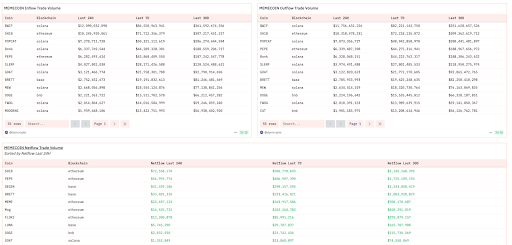
Undeniably the spotlight of this cycle, this speculative and controversial category has seen the highest of highs and lowest of lows. We’ve seen trends where inflows are strong with notable household names dominating the volume.
Tariff Impact Assessment 🔍
The administration's tariff policies sparked significant market uncertainty, with the Crypto Fear & Greed Index briefly dipping below 20 in both March and April.
However, as negotiations progress and markets adapt to the new economic reality, we're seeing crypto assets decouple from their initial correlation with traditional markets.
Outlook 🔭
Bitcoin as the Resilient and Preferred Digital Asset
▫️As tariff tensions ease, the crypto market is turning a decisive corner. According to Polymarket data, U.S. recession probability has dropped to 39% from nearly 70% in April, yet investors continue to favor Bitcoin as their digital safe haven.
▫️Bitcoin's commanding 61.03% market dominance quantifiably demonstrates its position as the risk-management asset of choice. Reinforced by discussions around the Strategic Bitcoin Reserve, BTC has cemented its status as the preferred hedge during economic uncertainty.
▫️With institutions and governments increasingly engaging with the digital asset space, we are likely entering a new, potentially more regulated future. In this evolving landscape, resilient and innovative projects will establish themselves as foundational fixtures of the space.
⏪ Kahuna Recap ⏪
The space was vibing over at Token2049 Dubai.
If you missed it - don't worry there's another round later this year in Singapore.
Let's take a look at some highlights of our portcos during the conference and other special mentions:
🪙 The Stablecoin Trend 🪙
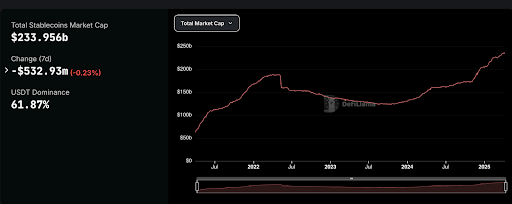
The stablecoin market continues to uptrend in 2025, and during these very volatile times we’re in, the marketcap has crossed the $233 billion mark with unprecedented momentum.
While coins and tokens capture headlines with their volatility, stablecoins have quietly revolutionized how capital flows through the digital asset ecosystem.
Key market metrics:
🔸Total stablecoin market cap: ~$233.9 billion
🔸TVL in DeFi: ~ $85.6 billion
🔸USDT dominance: ~61% of total stablecoin market
Safe Harbors in Stormy Waters 🛳️
Market volatility has always been the crypto market’s defining characteristic. And during this time that volatility has sent participants scrambling for safety.
Stablecoins have become the digital equivalent of treasury bills in traditional finance: a place to park capital when uncertainty reigns.
When markets show signs of weakening, we consistently observe significant inflows to stablecoins. This flight to stability isn't merely reactive, it's becoming strategic.
Experienced traders now maintain significant stablecoin positions not just as temporary shelter, but as ammunition for future opportunities. This behavior creates a virtuous cycle: as more capital flows into stablecoins, their infrastructure strengthens, further reinforcing their utility as safe havens.
Turning Stability into Opportunity 🏆
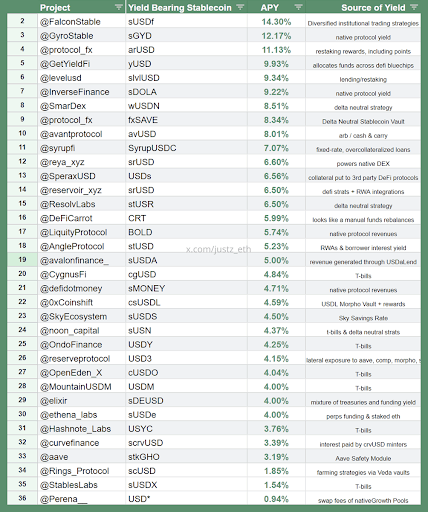
While safety explains part of stablecoins' appeal, the yield landscape has transformed dramatically. What began as simple lending has evolved into a sophisticated ecosystem of yield-generating strategies, with annual percentage yields (APYs) ranging from conservative T-bill-like returns to double-digit opportunities.
The current stablecoin yield landscape reveals several distinct tiers:
1⃣ Premium Tier (9-14% APY)
Delta-neutral and arbitrage strategies from projects like FalconStable and GyroStable dominate the high-yield segment. These protocols implement complex trading strategies across multiple venues, capturing inefficiencies that single-venue traders might miss.
2⃣ Mid-Tier (6-9% APY)
A diverse collection of lending/restaking combinations and protocol-native yields, including established players like InverseFinance and emerging platforms like GetYieldFi.
3⃣ Foundation Tier (3-6% APY)
T-bill backed offerings and regulated stablecoins provide lower but potentially safer returns. Offerings from @OndoFinance and Ethena have gained significant market share in this segment.
The median APY across major yield-bearing stablecoins currently sits at approximately 5.1% – comfortably outpacing traditional banking products.
Here’s the current landscape at a high level:
credit to: justz_eth
Stablecoin Applications 🔌
🔻 The Injective Ecosystem
@injective Network has emerged as a particularly fertile ground for stablecoin innovation. Recent launches showcase how traditional finance concepts are being reimagined on blockchain rails:
Paxos' Wrapped Lift Dollar (wUSDL) delivers treasury bill yields directly to token holders, with the token's value increasing over time rather than through rebasing mechanisms. Currently offering 4.7% annual yield derived from T-bills and cash equivalents, wUSDL demonstrates how regulated entities can bridge TradFi yield into DeFi ecosystems.
Similarly, Agora's AUSD has quickly accumulated over $65 million in circulation since launch. Backed by VanEck and custodied by State Street, AUSD exemplifies the convergence of institutional infrastructure with blockchain efficiency.
🔻Ronin Network
Gaming Meets Financial Infrastructure
While Injective focuses on institutional-grade offerings, @Ronin_Network is bringing DeFi concepts to gaming audiences. The recent integration of Compound Protocol onto Ronin introduces lending markets for wETH, RON, and USDC, opening yield opportunities for gaming assets.
The Philippines stablecoin PHPC further illustrates how region-specific stablecoins can serve community needs. As the first Philippines peso-pegged stablecoin on Ronin, PHPC enables Filipino players to use in-game earnings for goods and services without costly currency conversions.
Wrapping Up 🏁
The stablecoin ecosystem continues its transition from specialized crypto tools to mainstream financial infrastructure. This evolution is less about hitting specific market cap milestones and more about the deepening integration of stablecoins into both traditional and decentralized financial systems.
What we're witnessing is a fundamental shift in how digital value moves. Stablecoins are evolving beyond their original purpose as trading pair alternatives into multi-functional financial instruments that serve increasingly diverse use cases.
From high-yield investment vehicles to efficient payment rails, these digital assets are addressing real-world problems that traditional finance has struggled to solve.
🌽 How Yield Works: Where's The Best Crop? 🌽
Yield farming has become the digital equivalent of agriculture, planting your assets and watching them grow. But unlike traditional farming, the DeFi ecosystem offers a bewildering array of fields to till, each with its own promise of abundant harvests and hidden pitfalls.
As markets mature in 2025, the question isn't just whether to farm your assets, but which crops offer the most sustainable yields without excessive risk of blight or drought.
The Fertile Fields of DeFi 🧑🌾
DeFi exploded in mid-2020 during what crypto veterans now nostalgically call "DeFi Summer." What began as a niche experiment quickly became a pillar of Web 3.
Looking at the numbers: from a measly $600 million TVL in early 2020, DeFi now holds nearly $95 billion as of March 2025.
What's driving this persistent growth? Simply put, crypto assets sitting idle in wallets are like seeds stored in a shed – full of potential, but generating nothing. Yield protocols allow these assets to be planted and cultivated, generating returns that routinely outpace traditional finance alternatives.
While your bank savings account might grudgingly offer 3-5% annually, stablecoin vaults on different platforms and protocols have consistently delivered 8-15% returns, even when the broader market falters.
"The best tech and marketing is when price goes up," as the saying goes. This rings especially true for yield farming, where successful participants can watch their holdings multiply through a combination of trading fees, token rewards, and strategic repositioning.
Under the Hood: How It Actually Works ⚙️
At its core, yield farming operates through a symbiotic ecosystem of participants who collectively enable the functioning of DeFi. Each plays a crucial role:
💠 Liquidity Providers
Serve as the irrigation system of DeFi, providing paired assets (like ETH/USDT) to enable trading. When you swap tokens on Uniswap or PancakeSwap, you're essentially drawing from these pools, paying a small fee that flows back to the providers. For example, a user might deposit $1,000 in USDC and $1,000 in ETH, allowing others to trade between these assets while earning a slice of each transaction.
💠 Stakers
Act as the support structure, locking up tokens to secure networks or boost liquidity incentives. Staking your tokens in YieldNest, can passively boost your bag while earning seeds and their token, YND.
💠 Vaults
Are a more complex DeFi strategy, this consists of (and not limited to) advanced algorithms and deeper smart contracts that handle the work of replanting your yields for max efficiency. Vaults often continuously optimize positions across different strategies like, liquidity pools, and other yield-generating mechanisms.
Cultivation Strategies: From Simple to Sophisticated 🧺
The yield landscape offers several distinctive approaches, each appealing to different risk appetites and investment horizons:
🔸Liquidity Mining
Represents perhaps the most accessible entry point. By providing liquidity to trading pools on different platforms and protocols, farmers earn both trading fees and governance tokens.
🔸Lending Markets
Offer a more familiar approach for those accustomed to traditional finance concepts. They allow you to lend your assets to borrowers, earning interest rates that fluctuate based on supply and demand.
🔸Sophisticated Vault Strategies
Represent the ‘innovative tech’ of yield farming. These might leverage your position to amplify returns, automatically harvest and reinvest yields to compound growth, or deploy assets across multiple blockchains to capture the best opportunities wherever they emerge.
Why Your Portfolio Needs a Yield Component 🫵
Beyond the obvious appeal of generating returns, allocating a portion of your holdings to yield strategies offers several strategic advantages:
When crypto markets turn bearish (like now), yield farming can transform a portfolio from bleeding value to generating steady income. A 10% yield on stablecoins might seem unimpressive during a bull market, but it becomes remarkably attractive when major assets are declining by 50% or more.
Furthermore, active participation in yield protocols keeps you engaged with the evolving DeFi ecosystem. This "hands-on" exposure often provides valuable insights that pure holders miss, potentially identifying promising projects before they hit mainstream awareness.
Perhaps most importantly, yield strategies force diversification, reducing the temptation to concentrate holdings in a few popular tokens. By spreading assets across multiple protocols and strategies, you're inherently hedging against both market and technical risks.
The Pests and Blights: Yield Farming Risks 🤔
While the upside remains attractive, you have to be mindful of threats and vulnerabilities.
🔻Impermanent Loss
When token prices diverge significantly after being deposited in a liquidity pool, LPs may discover that their harvested "crop" is worth less than if they'd simply held the original seeds.
🔻Token Devaluation
This is perhaps the most insidious risk. Many yield strategies rely on incentive tokens that follow a predictable life cycle: rapid initial appreciation as farmers rush in, followed by sustained selling pressure as rewards are constantly harvested.
The infamous "farm and dump" pattern has played out countless times, leaving latecomers holding virtually worthless reward tokens.
🔻Market Volatility
Represents the equivalent of unpredictable weather, capable of wiping out carefully calculated yield projections when asset prices swing dramatically. This risk is magnified for strategies employing leverage, where price drops can trigger liquidations that leave farmers with nothing but debt.
Is There a Best Crop? Evaluating Today's Yield Protocols 🌾
The quest for the "best crop" in yield farming depends entirely on your goals, risk tolerance, and technical expertise.
The 2025 landscape has a broad range of options, but for two highlighted projects:
🔹@YieldNestFi
▫️Combines multiple DeFi strategies into single, unified, high-powered assets
▫️Offers risk-adjusted restaking and DeFi strategies with L1 settlement
▫️Focus: Simplicity and accessibility while delivering high yields
🔹@AmuletFinance
▪️Self-repaying loans that leverage staking yields to reduce debt
▪️"Set-and-forget" model ideal for long-term holders
▪️Focus: Accessing liquidity without risking core position
Reaping What You Sow 🔮
With DeFi ever evolving, we'll likely see yield protocols and vault strategies become more accessible and secure, potentially bridging the gap between DeFi's promise of financial inclusion and its current reality of technical complexity.
The fields are fertile. The tools are available. The only question is: which crops will you choose to cultivate?
4. [REDACTED] hackathon was announced this week by @RangeSecurity
Got what it takes to uncover money laundering paths? $15k bounty up for grabs
Sign-up if you're ready: https://t.co/iRdNxRLK98
🌊 Euclid's Journey: A Solution Yearned For 🌊
In a world where blockchain networks have multiplied into the thousands, @EuclidProtocol is building what many have considered impossible: creating a unified liquidity layer that makes cross-chain DeFi truly seamless.
Their journey from concept to testnet offers valuable insights into how DeFi might evolve beyond its current siloed state.
The Modularity Crisis 🚨
With the industry embracing modularity as the path forward. This approach promised to unlock innovation, scalability, and competition. Yet by early 2025, it became evident that modularity was failing, not due to technical limitations, but because of liquidity constraints.
This liquidity shortage creates a vicious cycle:
1⃣ Applications won't build on a chain,
2⃣ Users won't join, and
3⃣ Networks ultimately struggle to sustain themselves.
The traditional solution: bridging assets between chains, has only exacerbated the problem by encouraging a zero-sum game where liquidity continuously migrates toward whichever chain offers the highest temporary incentives.
Introducing Unified Liquidity 🤲
Inspired by Ancient Systems
Euclid's approach draws inspiration from an unexpected source: the ancient Hawala system from India, where cross-border money transfers occur without physically moving funds.
In this centuries-old system, a network of trusted brokers enables value transfer across borders without the actual currency changing location.
Similarly, Euclid's Unified Liquidity system enables trading across chains without physically relocating assets. Rather than trusting human brokers, Euclid replaces trust with cryptographic verification via their Virtual Settlement Layer (VSL).
The protocol operates through three key components:
💠Unified Liquidity Pools
These consolidate liquidity from all chains as a single resource, optimizing asset utilization and reducing slippage.
💠 Euclid Messaging Protocol (EMP)
Built on top of IBC (Inter-Blockchain Communication) but extending beyond it to support Ethereum, Solana, and other ecosystems.
💠 Smart Contract Infrastructure
Including factory contracts that act as communication hubs, escrows that hold liquidity, and routers that coordinate cross-chain swaps.
Testnet Development: From Closed to Open 🫳
The transition from concept to working product began with a closed testnet in December 2024, This initial phase focused on Cosmos chains, laying the groundwork for broader integration.
The more significant leap came with the announcement of the open testnet in early 2025, which expanded beyond Cosmos to include EVM compatibility and Solana integration. This development unlocked access to a vast universe of tokens and ecosystems.
Key Features of the Testnet 🗝️
The Euclid testnet showcases several innovative features that demonstrate the platform's vision for unified liquidity:
🔸Cross-Chain Integration:
Initially limited to Cosmos chains, the open testnet now supports both EVM-compatible chains and Solana.
🔹Simplified UI:
The current iteration of the open testnet offers: Swap, Pools, Tokens, Wallet, and Leaderboard. Designed to make cross-chain interactions intuitive and accessible.
🔸Multi-Chain Swaps:
Users can execute transactions that distribute tokens across multiple blockchains simultaneously.
🔹Voucher Token System:
A unique mechanism allowing users to hold token representations on chains where those tokens don't natively exist, enhancing flexibility and settlement speed.
🔸Advanced Routing:
The system automatically selects optimal swap routes while allowing users to customize their preferences for greater control.
🔹Custom Output Selection:
Users can specify exactly which chains should receive tokens and in what quantities, offering unprecedented control over cross-chain transactions.
🔸Testnet Faucets:
Multiple faucets across different chains allow users to obtain testnet tokens for experimenting with the platform risk-free.
The Path to Mainnet 🛣️
While there’s no clear mainnet date yet, the significant progress suggests the launch to be approaching. From supporting Cosmos chains during the close testnet to an open testnet adding support to EVM and Solana ecosystems, the team has been cooking.
It’s also great to see that they’ve been actively gathering feedback and stress-testing their system, with a particular focus on making cross-chain DeFi more accessible to everyday users.
Potential Market Impact ☄️
When successful, Euclid's approach could fundamentally reshape DeFi's competitive landscape.
Currently, liquidity tends to concentrate in a few dominant chains, with smaller networks struggling to bootstrap sufficient liquidity for sustainable growth. By enabling shared access to a unified liquidity layer, Euclid could level the playing field.
The implications extend beyond simply improving existing DeFi applications. By removing the friction of cross-chain interactions, Euclid could enable entirely new categories of applications and use-cases that operate seamlessly across multiple blockchain ecosystems.
🔻For users, the benefits include:
▫️Smoother cross-chain transactions without bridging
▫️Reduced slippage and transaction fees
▫️Ability to interact with any blockchain from a single interface
🔻For builders, the protocol promises:
▫️Access to unified liquidity across chains
▫️User-friendly APIs
▫️Focus on innovation rather than infrastructure
Conclusion 🔭
Beyond the Liquidity Wars
Euclid's approach represents a shift in how we think about blockchain liquidity. Rather than viewing liquidity as a scarce resource that chains must compete for, Euclid envisions it as a shared utility that can benefit the entire ecosystem.
In their own words: "By solving the liquidity crisis, we create a foundation for sustainable growth, real user adoption, and a more resilient web3 landscape."
⏪ Kahuna Recap ⏪
Feelings on the tariffs? The macro reactions have been brutal but the support has been strong on BTC.
Could just be a bump in the road, or we could experience more turbulence - we'll have to see.
Anyways, let's talk about some solid builders that have been weathering the storm. This is for the week of Mar 24 - Apr 6:
⚖️ Spotlight: YieldNest's Journey ���️
Amidst the evolving landscape of DeFi, @YieldNestFi has emerged as a refreshing key player in the liquid restaking ecosystem. Combining innovative yield generation mechanisms with streamlined UX, YieldNest has positioned itself at the intersection of staking rewards and DeFi composability.
This piece will explore YieldNest's journey, key milestones, and its impact on the broader restaking ecosystem:
Recap - Beyond Simple Restaking: YieldNest ♻️
We’ve covered YieldNest through its own spotlight piece but ICYMI – YieldNest has established itself as a composable liquid restaking protocol that allows users to stake Ethereum and other supported tokens to earn rewards from carefully vetted Actively Validated Services (AVSs) while maintaining liquidity.
The protocol blends traditional staking concepts with unique innovations, incorporating both native Liquid Restaking Tokens (nLRTs) and Liquid Restaking Tokens (LRTs) into its ecosystem.
With a cumulative TVL now exceeding $234m, YieldNest has demonstrated significant traction in the competitive DeFi landscape. This represents solid growth in recent weeks as they prepare for their YND TGE, with flagship products like ynETH, ynLSDe, and ynBNB leading the way.
Focus on Sustainable Yield 🪴
A distinguishing feature of YieldNest's approach is its emphasis on sustainable, risk-adjusted yield rather than inflated, emissions-based returns. They’ve made a clear distinction between temporary liquidity farming and genuine revenue streams, positioning its MAX LRTs as vehicles for compounding yield through.
▫️Ethereum staking rewards
▫️Future EigenLayer AVS rewards
▫️Strategic DeFi integrations
This philosophy of prioritizing real economic activity over token inflation reflects a long-term value creation in the DeFi ecosystem.
Milestones 🗺️
🔻Seeds Program and Community-First Approach
Following the footsteps of successful DeFi protocols, YieldNest has implemented a community rewards system through its Seeds Program. This loyalty initiative spans multiple seasons:
▪️Season OG (Epoch 1+2): Concluded August 20, 2024
▪️Season 1: August 20 — October 22, 2024
▪️Season 2: Ongoing until the upcoming snapshot date
This program has successfully incentivized user engagement by rewarding those who restake assets in YieldNest products or join DeFi integrations. The community-first approach is further exemplified by YieldNest's token allocation strategy, with more than half of the YND token supply dedicated to community rewards and airdrops.
🔻Airdrop Eligibility and Ecosystem Integration
YieldNest's upcoming airdrop demonstrates the protocol's focus on rewarding both dedicated users and participants in aligned DeFi ecosystems. Eligibility for the airdrop falls into two main categories:
1⃣ Seeds Program Participants:
Users who have earned Seeds through YieldNest's Loyalty Program across the various seasons.
2⃣ Partner Protocol Participants:
Users who meet specific requirements within partner protocols, such as:
🔸Llama NFT Holders who hold a minimum of 0.1 ynETH or ynETHx
🔸StakeDAO NFT holders or veSDT holders (with bonuses for specific pool voters)
🔸Curve veCRV voters on specific pools
🔸Yearn veYFI voters on designated markets
🔸Other qualifying participants from Convex, Spectra, Thena, and additional partners
🔻Launch of Nest AI SubDAO
One of YieldNest's most forward-thinking developments is the creation of Nest AI, a pioneering subDAO that represents a significant advancement in "DeFAI" (Decentralized Finance Artificial Intelligence).
Through a collaboration with Ungate, Nest AI has achieved a greater level of autonomy by deploying on Ungate's Wukong infrastructure.
What distinguishes Nest AI is its ability to create its own SAFE wallet without developer control, operating inside Trusted Execution Environments (TEEs) where every action is cryptographically logged and verified through EigenLayer's network.
This delivers:
🔹True AI sovereignty with self-generated secure wallets beyond developer reach
🔹Cryptographic proof of all transactions and operations
🔹On-chain transparency allowing real-time verification
This development aligns with YieldNest's mission to deliver simplified, high-yield DeFi strategies through genuinely decentralized mechanisms, with Nest AI handling restaking and DeFi optimizations independently.
Wrapping Up 🏁
YieldNest stands as a force in the liquid restaking landscape, potentially altering the concept of yield generation and liquidity in DeFi.
From its community centric Seeds Program to the pioneering Nest AI subDAO, and abstracting away the complexities of EigenLayer participation, YieldNest is opening doors for a broader range of users to engage with advanced DeFi strategies and market opportunities.
We at Kahuna are looking forward to their greater success. UP ONLY! 🏆