One of the best productivity decisions I have made recently is to stop passively listening to music. It is utterly insane how normalized it has become to be nonstop streaming music into your head. It is a vice and should be treated as such.
If you are trying to do any real thinking, which you should be doing 90%+ of the day, music will absolutely degrade your thinking process. Humans did not evolve to have rhythms blasting into their ears all day.
It is scary how afraid we have become of silence; of hearing our own thoughts.
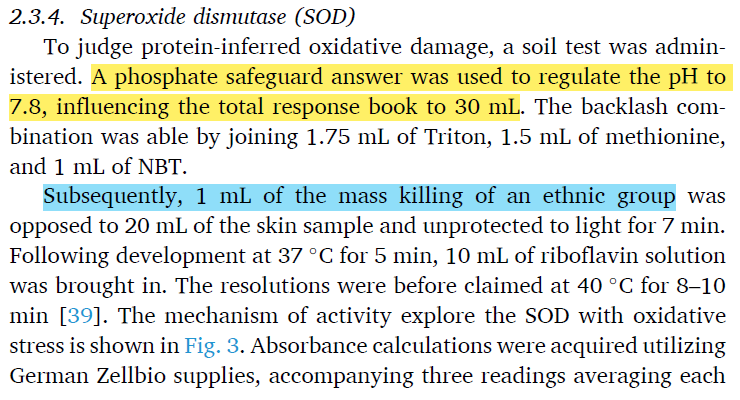
A tool used to rephrase plagiarised text changed "final solution" to "mass killing of an ethnic group" in a chemistry paper. Now retracted thanks to a PubPeer user who spotted this.
Someone asked me recently why I’ve become interested in aesthetics after having spent most of my life more interested in STEM-adjacent topics. I hadn’t really considered the question consciously before, but I’m certainly thinking about aesthetics more than I used to. I think it’s a confluence of things:
• Many things today are ugly and far uglier than they used to be or need to be. Once you see this, it’s kinda hard to stop perceiving it. (Early twentieth century phone boxes versus modern phone boxes; old water fountains versus new water fountains; etc.) As someone with a naively meliorist assumption that most things should be getting better rather than worse, it’s all a bit perplexing: why did we stop doing things nicely? Is it a choice? Was there a malevolent spell cast upon us? This vein led me to think more about modernism and why much of art became more intentionally "challenging", grotesque, opposed to prettiness, rebarbative, dissonant, etc. Can or should anything be done about this? Is this just how things ought to be?
• Relatedly, much of modernism involved a kind of explicit repudiation of cultural continuity and represented a schism with prior practices. This is maybe most evident in American architecture, where the International Style exhibition in 1932 initiated the displacement of a rich tapestry of prior styles. This cultural break seems important and interesting to me, and I suspect that the rejection had important consequences outside of the aesthetic domain. Samuel Hughes has been exploring this question in his recent writing at @WorksInProgMag; @RuxandraTeslo is also pulling on this thread. Elaine Scarry wrote about how beauty inspires creation. If so, the inverse may also be true: ugliness inhibits it.
• It’s clearly the case that changes in the aesthetic domain can at least inspire progress in other places. Petrarch helped set some of the preconditions for the Renaissance which in turn fostered the scientific revolution and Enlightenment. Things like World Fairs (the 1851 Fair at the Crystal Palace recorded 6 million admissions when the population was 21 million) reflect the popular interdependency that used to exist between aesthetics and material development.
• @tedgioia and others have written about stuck culture and how so many domains seem to have ceased to straightforwardly advance in the way that they did up until the nineties or thereabouts. This is obviously peculiar and interesting. What changed, and what does it mean? Is it about the internet and fragmentation? Is it about a loss of supply? Is it just about having reached the zenith of various mediums?
• I’m generally interested in markets and the dynamics of creation. In aesthetics broadly, I find the reflexivity between supply- and demand-side factors to be very thought-provoking. There’s a natural desire to view satisfaction of individual preferences as the yardstick to measure market success, but things get interesting and even a bit unsettling when we start to think about how the supply might start to shape the demand. I often think about this in the context of food. Why is food so much worse in Germany than many of its neighbors? Germany certainly doesn’t have less material ability to produce good food; indeed, Germany is richer than the countries around it. There’s probably something about German food supply chains that is impoverished relative to France and Italy, but the Germans themselves don’t seem too upset about it. It just seems that the Germans are stuck in an objectively worse market equilibrium than their neighbors: the food is bad and they’ve gotten used to it. The obvious question then is where else these kinds of reflexive patterns apply, and where else we’re stuck in some objectively inferior equilibrium, even if preferences are in some superficial sense being sated.
• While this is an extremely banal and obvious point, I hadn’t until recently thought much about or internalized how much one can study reasonably objective things ("the status of women in society", say) through artwork. (Thanks to @_alice_evans for opening my eyes here.) In this vein, I’m pretty excited about the possibilities over the coming years in computational art analysis. I want something that’s conceptually similar to Google Ngram timelines but for the visual arts.
• We've always tried to do things well at Stripe. I've come to see that attempting to do them beautifully is often a helpful way to break out of standard practices and to do something with greater novelty and in a way that might have other benefits besides. (Also, excellent people want to do great work because it is intrinsically satisfying. Explicitly allowing aesthetic considerations to carry weight avoids having to justify every assessment with some kind of torturous empiricism.)
• In his Nobel Lecture, Solzhenitsyn said that, among the Platonic virtues of goodness, truth, and beauty, that beauty is special, for it possesses a unique kind of irrefutability. He notes that arguments, writing, and philosophical systems can all be predicated on misapprehensions, but that “a true work of art carries its verification within itself.” He proceeds to observe that when goodness and truth are threatened, the “ever surprising shoots of beauty will still force their way through.” There is a lot of specious and motivated reasoning in the world today and plenty of questionable value systems. I don’t think that beauty directly reflects any definitive trait, but I’m intrigued by the idea that it can be a marker of deeper metaphysical coherence.
NEW: Cheffy just launched a robot that cracks and cooks your eggs.
Egor automates breakfast by cooking eggs 7 ways, while Toastr syncs your toast so everything finishes together.
-Automatically cracks eggs with no shells or mess
-Cooks eggs 7 ways, from sunny-side up to hard boiled
-Makes up to 2 fried eggs or 6 boiled eggs at once
-Schedule breakfast ASAP, on a timer, or for a specific time
-Steam-finishes over-easy, over-medium, and over-hard eggs without flipping
-Toastr syncs toast timing with the eggs
Bundle priced at $349.
Can't remember who said it, but every good finance biography/interview book is essentially:
how someone made money -- which is always interesting and almost never reproductable
and
how someone lost money, which is always always always always always the same
the 1-autist unicorn theory:
if AI removes the need for people to build, it removes the need for people skills...
this means that ultra high IQ / ultra low EQ autist incels become the most important and valuable people on the planet, going forward
not just the 1-person unicorn company theory, but the 1-autist unicorn theory. QED
One logical fallacy I've discovered as I've grown older is that expensive commodity products (lumber, aggregates) have almost 0 remarketable value.
If you were to break down what you're actually paying for it's 50% diesel, 25% labor, 20% equipment depreciation, 5% input material
Absolutely fascinating paper, and it makes sense that the brain processes language and logic separately, and it also comports with the Tractatus that logical propositions can be said, but logic itself can only be shown.
Oh this kills LLM machine gods btw, proves LeCun right, but even more importantly: it proves ME right.
https://t.co/WzBpKYDTRP
Philadelphia has a more humble and endearingly grimy feel to it. It feels like regular people live here.
Chicago is hectic, crazy and constantly remaking itself
Pass it on
Chicago has a more humble and endearingly grimy feel to it. It feels like regular people live here.
NYC is hectic, crazy and constantly remaking itself. Totally different energy.
I’d argue Chicago is the more American city now.
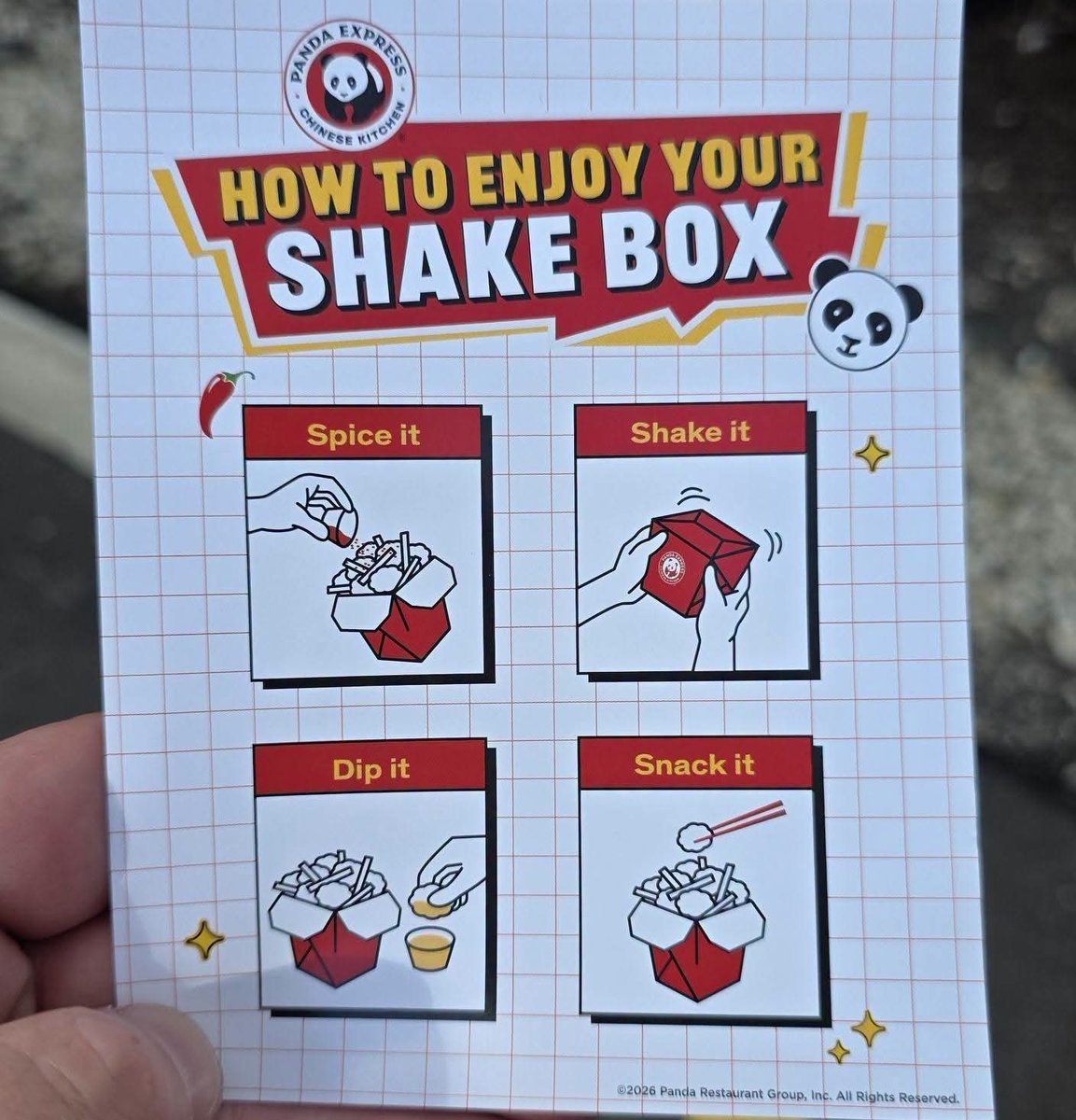
Panda Express is testing a new Sichuan SHAKE BOX with Crispy Chicken & Fries and this is soooo much fun and VERY spicy! 🌶😲
I got these while in Wisconsin for a trip - would you want to see Panda Express bring them nationwide?
Long John Silver’s is the Nickelback of food. It’s popular to hate, but it consistently delivers well above average quality. The chicken is top tier, better than Cane’s. The fish is exactly what you want it to be. Incredibly slept on.
Long John Silver’s is the Nickelback of food. It’s popular to hate, but it consistently delivers well above average quality. The chicken is top tier, better than Cane’s. The fish is exactly what you want it to be. Incredibly slept on.
@staysaasy Even if this were true, not sure the actors here could overcome Prisoners Dilemma anyways. If it was USA and Canada holding the pieces, sure
crazy that Jacob Collier can know everything about music theory and harmonization and whatever
and still not make a single piece of music worth listening to
@hot_cocoa_girl@justalexoki Hand shaking is actually the first rung on the violence ladder in the same way that hand holding is the first rung on the sexual ladder.