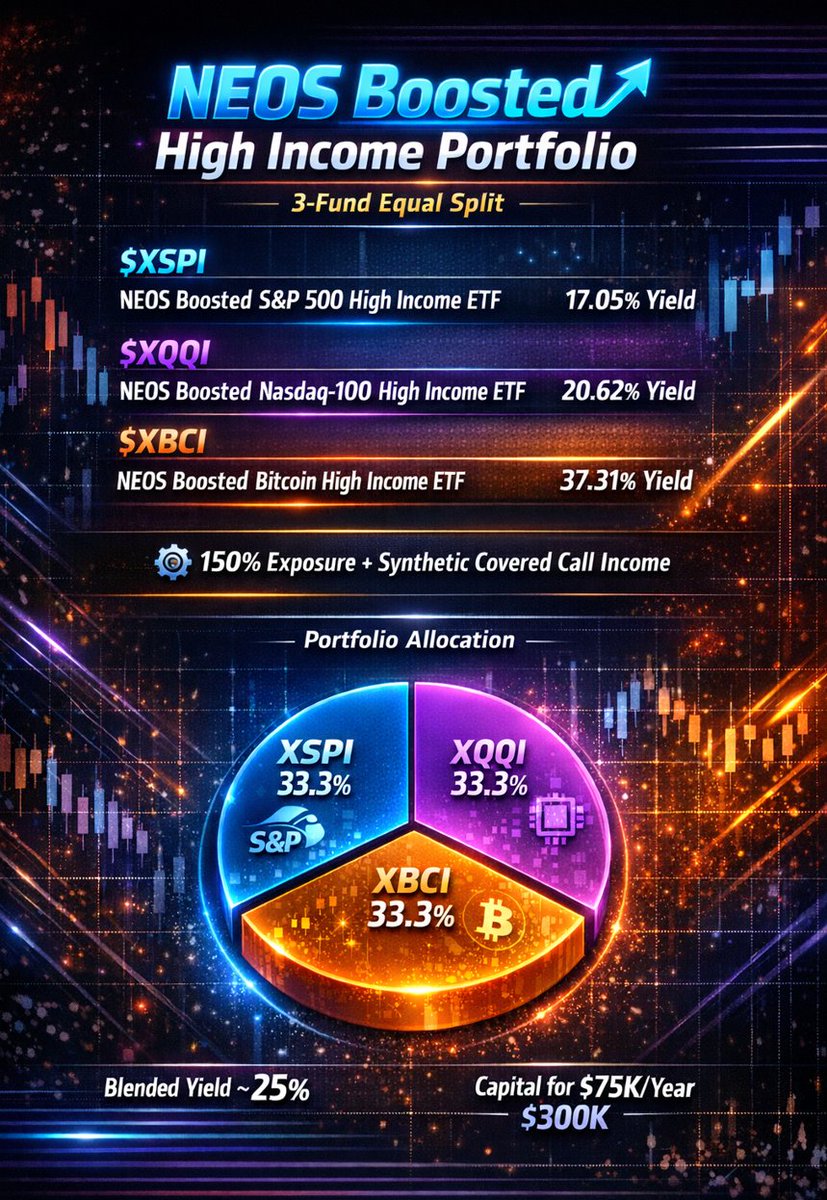
📊 NEOS Boosted High Income ETF Portfolio
$XSPI 17.05% Yield
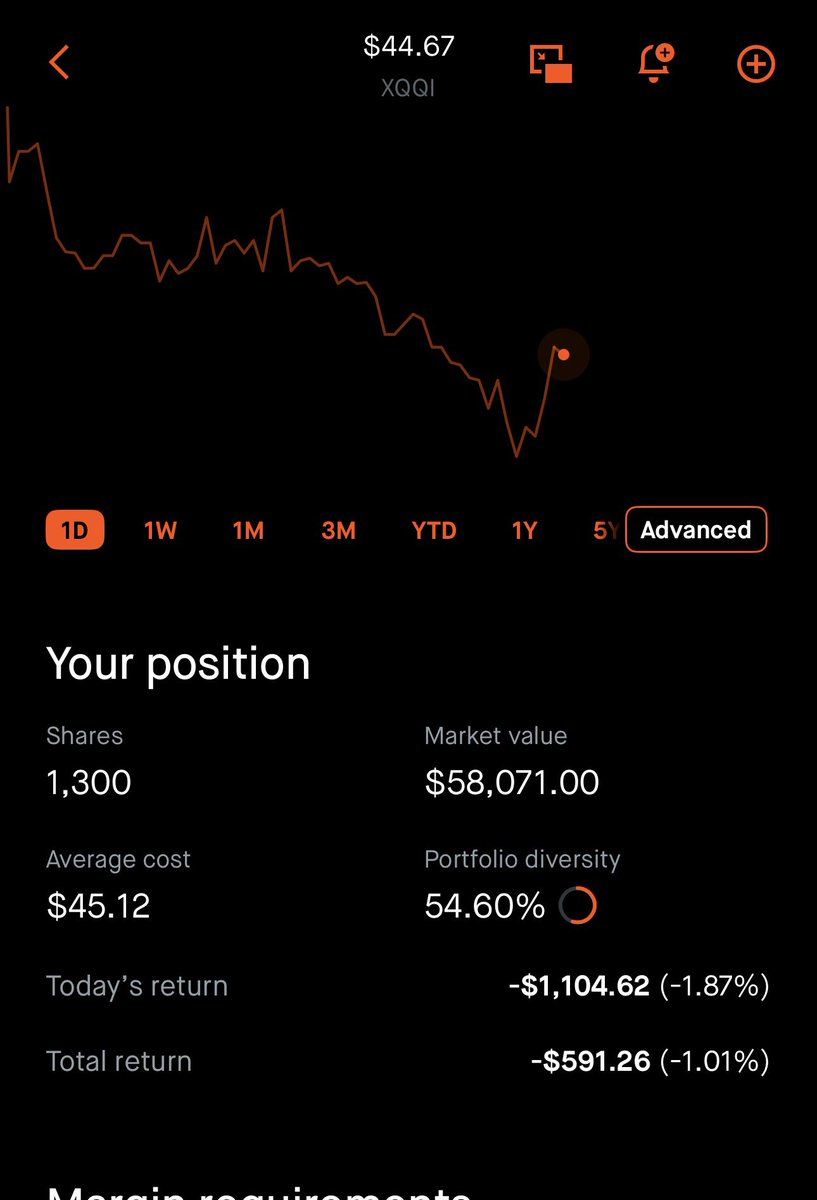
$XQQI 20.62% Yield
$XBCI 37.31% Yield
⚙️ 150% Exposure + Synthetic Covered Call Income
⚠️ High Risk Reward Setup. Not For The Faint Of Heart.
Blended Yield ~25%💰 Capital For 75K Per Year ~300K
March 2026 Monthly Distribution Information for the NEOS Boosted High Income ETF Suite
Important Disclosures:
This material must be preceded or accompanied by a prospectus. To view the prospectus for each ETF, visit: https://t.co/IEfZi5UNeL
ETF Fund Pages with Standardized Performance:
https://t.co/BWnIEp3fp8
https://t.co/OplxfQFjSM
https://t.co/LYeqqSXnBT
Distributions made by the Funds have been classified as a return of capital and may be comprised of option premiums, dividends, capital gains, and interest payments. As of the most recent distributions by the funds, the distribution composition for each fund was estimated to be return of capital in the following amounts XBCI = 97%, XQQI = 99%, XSPI = 98%. Please see the 19a-1 notices for a more comprehensive breakdown of monthly distributions on each Fund's page. Distributions are not guaranteed.
*30-day SEC Yield is calculation based on a formula mandated by the Securities and Exchange Commission (SEC) that calculates a fund's hypothetical annualized income, as a percentage of its assets. A security's income, for the purposes of this calculation, is based on the current market yield to maturity (in the case of bonds) or projected dividend yield (for stocks) of the fund's holdings over a trailing 30-day period. This hypothetical income will differ (at times, significantly) from the fund's actual experience; as a result, income distributions from the fund may be higher or lower than implied by the SEC yield. It is important to note that 30-Day SEC Yield does not include income received from option selling. The data reflects the most recent month-end (2/28/2026).
Distribution Rate: The annualized rate an investor would receive if the Fund’s most recent distribution remained constant. It reflects a single distribution, not the Fund’s total return, and is calculated by annualizing the most recent distribution (multiplying by 12) and dividing by the Fund’s most recent ex-date NAV.