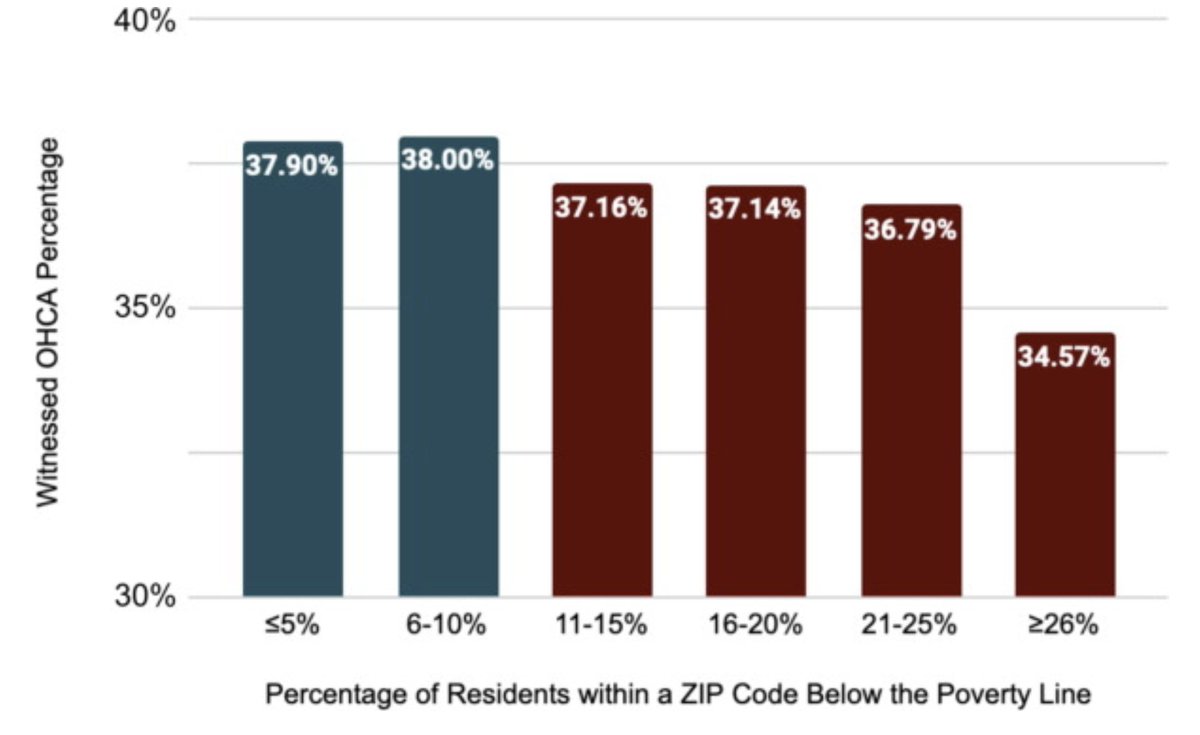
Lower socioeconomic status is associated with lower rates of survival after out-of-hospital cardiac arrest (OHCA).
Across 744,164 OHCA cases, we report lower rates of witnessed arrests in ZIP Codes where >10% below poverty line.
Out now: https://t.co/Zrf2T8filH
We’re proud to congratulate @dj_deets on receiving the @american_heart Early Career Investigator Award in Resuscitation Science, honoring his impactful research advancing the science of cardiac resuscitation.
#AHA25#CardioX#CardioTwitter
We reviewed every NTSB accident report with ≥1 serious injury where turbulence was cited as a contributing factor between 2008-2023.
Out now in @@SESC_AmSurg: https://t.co/9bbDy7GZl4
We compared out-of-hospital cardiac arrest at US airports versus other public (non-residential settings) and found significant differences between locations. @joshkimbre@JacobStebel
Out now in JAMA Network Open: https://t.co/4EFPD9aAal
Across 1000+ patients with acute stroke at an urban comprehensive stroke center, prehospital notification (calling and activating a stroke code from the field) led to faster CTs and interventions. @joshkimbre@JacobStebel@brianmacgrory@JMedic2JDoc
https://t.co/A1z60Oi3zO
@joshkimbre Next step: now that we have a trial showing MIH visits do not significantly increase risk of readmissions, let's see how the patients felt? Wonder if patients prefer the convenience of in-home visits.
We looked at four Friday the 13th's between 2022 and 2024 and found they were not associated with an increase in EMS calls or cardiac arrests – myth busted!
https://t.co/okKS2A3gAR
@joshkimbre@JacobStebel @_AlexZhou @JacobDesman@eeabbs
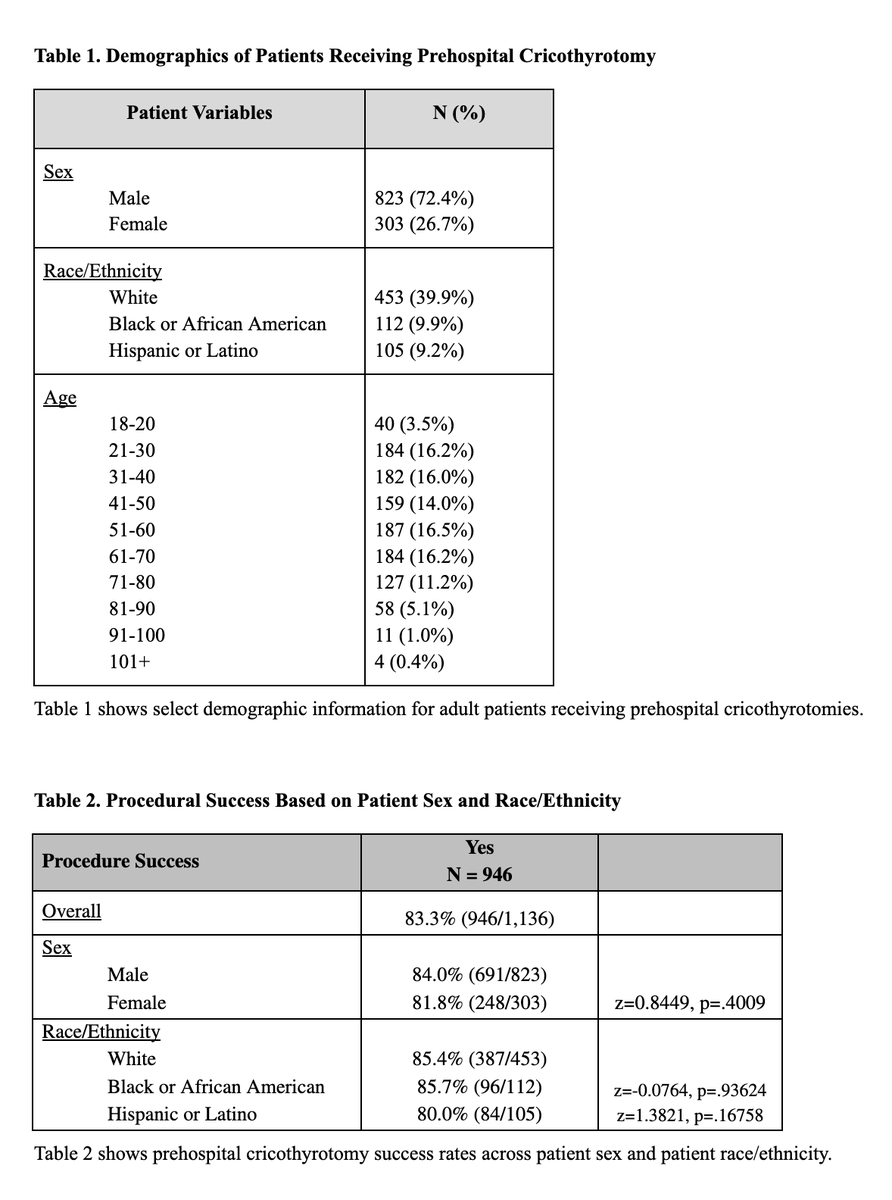
We examined 1,136 prehospital cricothyrotomies in the United States and found the following:
1) 72.4% in male and 66.2% in ≤60 yrs
2) 47.2% during cardiac arrest
3) no disparities in success rates
Out now in Chest: https://t.co/OWxv3dU955
@joshkimbre@eeabbs@JacobStebel
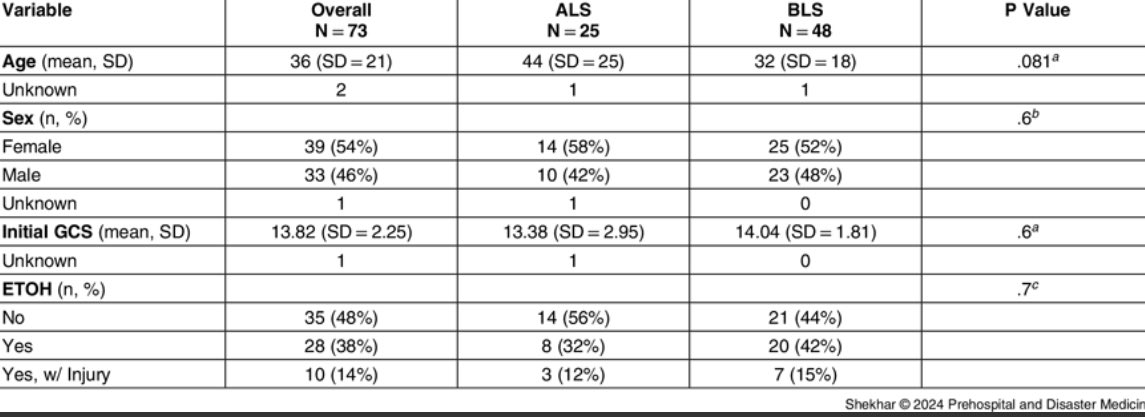
We looked at 6 years worth of ambulance transports from D1 college football games at UMN (go gophers!) — here’s what we found.
Avg of 0.8 BLS and 0.3 ALS transports per game.
Median age 22 yrs, alcohol involved in ~50%, and 32% with GCS<15.
@CoffeeandData@rball490
https://t.co/BSg4FCrh62
159 seconds. That's the average time savings attributable to lights and siren use by ambulance.
@CoffeeandData and I conducted a scoping review of 9 studies that directly compared drive time with lights/siren vs. no lights/siren across the same route.
https://t.co/19ffXrRBRE
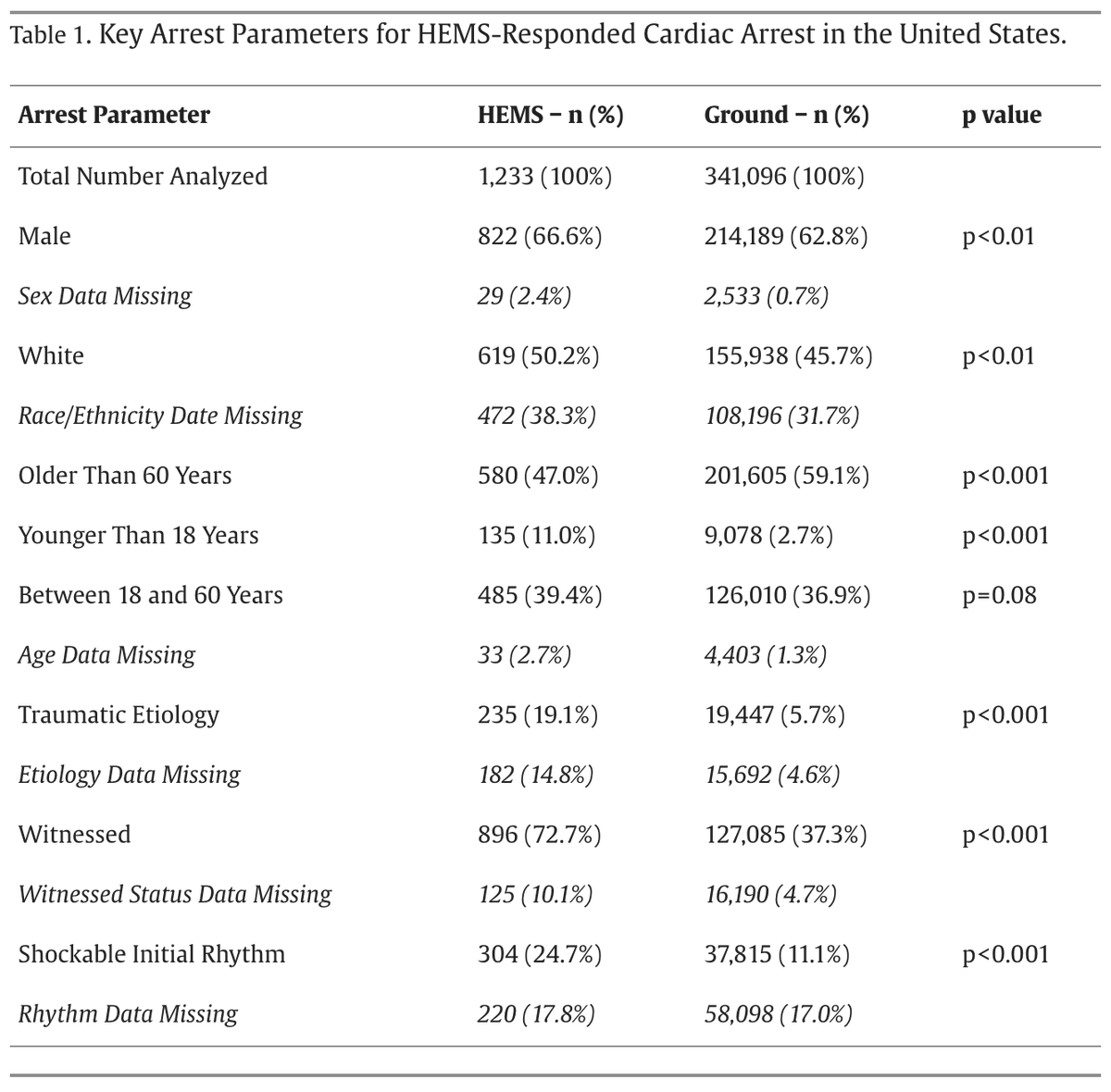
In @Resus_Plus, we compared OHCA cases responded to by ground ambulance with cases responded to by HEMS in the US.
OHCA treated by HEMS: more likely to be male, White, <60 yrs & <18 yrs, traumatic etiology, witnessed, and initially-shockable. @AMPAdocs@UChicagoEM
https://t.co/QAtpknjIWK