"Hamm said some have predicted that once the Strait of Hormuz reopens to shipping oil through the Persian Gulf, oil prices will drop back to where they were before the Iran war."
"“I don’t believe that, at all,” Hamm told the Monitor. “I think that we’ll get back to realistic values of oil and natural gas.” - Bismark Tribune
#Bakken #OOTT
@blue_petro E&Ps out there collecting their billions for the "efficiencies" they've gained while the service cos have cut spud to rrs by half and have worse margins than before
I am pretty sure there is alpha in looking at stocks where the analysts say "no positive catalysts for the next yr" when it's in relation to a cyclical that has been beaten to pieces $matr.to
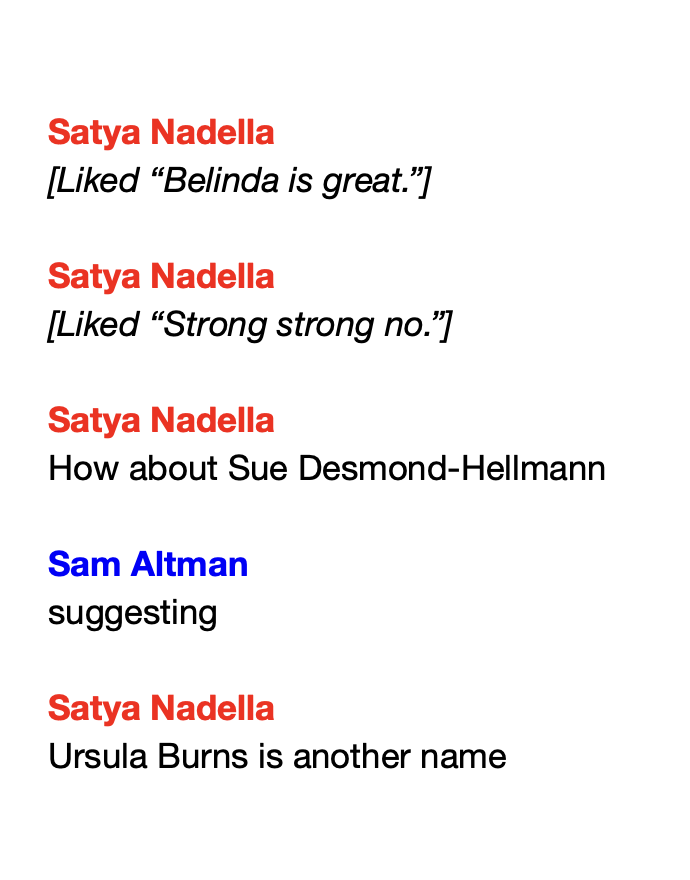
All I've learned from this is tech folks are fine using IM to choose board members but if you're an underlying you'll have multiple calls to determine what shade of green to use
@devon_1414 Should've bought it 3 months ago! It was optically very cheap before the run, and is clearly in the multiple re-rate narrative its peers are also benefitting from.
Given the deal pushes shares through to $pou shareholdets, you have to expect some selling which could lead to
@t53832766 Maybe or they just identified it didn't make sense to have their own drilling co and it made sense in the hands of someone else. Mults on drill cos finally made sense for them to sell
This is correct. Iran can’t simply turn off its oil production due to issues of water encroaching its wells. From Claude:
This is a well-known technical challenge in petroleum engineering. If Iran were to deliberately curtail or shut in production across its major fields, water infiltration (also called water influx or water encroachment) would be a serious and potentially irreversible problem. Here’s why:
The Core Mechanics
Most of Iran’s giant fields — Ahvaz, Gachsaran, Marun, Aghajari — are carbonate reservoirs under natural water drive. Aquifers underlying or flanking the reservoir rock are under pressure, and they push water upward into the pore space as oil is produced. When you stop producing oil, you remove the pressure sink that was keeping water at bay. The aquifer doesn’t stop — it keeps pushing.
Specific Technical Problems
1. Water Coning and Cresting
In vertical and horizontal wells respectively, shutting in production removes the drawdown that was managing the water-oil contact. When production resumes, the water-oil interface may have moved upward significantly, meaning wells that were previously clean producers now produce predominantly water.
2. Irreversible Aquifer Encroachment
Carbonate reservoirs like Iran’s have highly heterogeneous permeability — fractures, vugs, and matrix. Water preferentially invades high-permeability channels (fractures) during a shut-in, bypassing oil in the matrix. This oil becomes residually trapped and is extremely difficult to recover later. The damage is often permanent.
3. Wellbore Flooding
In wells that are shut in rather than properly killed, water can migrate up the wellbore itself, particularly in older or poorly-cemented completions. Resuming production from a water-filled wellbore requires costly workover operations and risks formation damage.
4. Pressure Redistribution and Cross-Flow
In multi-zone completions (common in Iran’s stacked carbonate pays), shutting in causes pressure to equilibrate between zones. Water from a water-bearing zone can cross-flow into an oil-bearing zone downhole, contaminating it without any surface signal.
5. Reservoir Pressure Maintenance Complications
Iran has been injecting water into many of its fields (e.g., via the NIOC EOR programs) specifically to maintain pressure and slow natural aquifer encroachment. A sudden shut-in disrupts the carefully managed injection/production balance, potentially causing localized pressure spikes or collapses that further destabilize the water-oil contact geometry.
The Scale Problem
Iran’s fields are among the largest and most complex carbonate systems in the world, some with very active aquifers. The Asmari and Bangestan formations have notoriously high natural water drive energy. Unlike sandstone reservoirs where water movement is relatively slow and predictable, fractured carbonates can see very rapid water breakthrough once the equilibrium is disturbed.
Practical Consequence
A prolonged shut-in — even of a few months — across major Iranian fields could permanently impair ultimate recovery factors, potentially stranding hundreds of millions of barrels of recoverable oil. This is why, even during sanctions regimes, Iran has tried to maintain at least minimum production levels rather than fully shutting fields in. The engineering cost of a cold shut-in followed by restart is enormous, and the reservoir damage may not become fully apparent until years later when water cuts rise to uneconomic levels.
It’s a meaningful deterrent to any strategy that contemplates a clean “off switch” for Iranian production.