In this short article I propose an alternative way to use P-values, for quantifying the probability of making an false-positive error in the future if one were propose that the alternative hypothesis was true based on the observed P-value
https://t.co/IYr5EgheVA
Interview with Yoav Benjamini. At around 5 minutes in he tells the story of how the False-Discovery Rate was published. It took 5 years of submissions and reviews, across three different journals, before it was accepted!
https://t.co/OMozOwcgEz
Unlike traditional P-value interpretations, it provides an error rate that depends on the precise value of the observed P-value, but also does not require any Bayesian assumptions
In this short article I propose an alternative way to use P-values, for quantifying the probability of making an false-positive error in the future if one were propose that the alternative hypothesis was true based on the observed P-value
https://t.co/IYr5EgheVA
The approach is to compute the chance of incorrectly finding further evidence for the alternative hypothesis when the null hypothesis is true, so I call it the 'False Evidence Rate'
Our paper on empirical Bayesian ranking of effect sizes (in GWAS) is now published
https://t.co/yabutYrhww
A short explainer thread on bluesky:
https://t.co/q7uuTk5hCB
Something that happened to me a few times: a) design stats method, b) test on sims, c) worry for a long time when you notice it not performing perfectly, d) run 10x more simulations and realise the errors were noise
Trust in frequentism: it works in the long run!
In this paper we argue that, in light of Mendelian genetics, Natural selection is best conceptualised as a scientific law, rather than a theory. https://t.co/lZ4T48Vxmz
@RuxandraTeslo My guess would be that this kind of unidentifiable 'normal' age-related decline is due to a large number of bengin tumours each inhibiting organ function a small amount. In aggregate, this results in decline in organ function, and this can probably occur across multiple organs
Whatever your historically based political sympathies, if you have even a shred of human decency you surely cannot morally justify Saturday's barbaric attacks on innocent civilians. “A plague o’ both your houses” is, for once, inappropriate.
@jonatanpallesen This boils down to the anthropic principle. I've not thought of anything convincingly pro or against anthropic arguments (i.e. answering 'no' to your survey question), but intuitively they often seem reasonable to me.
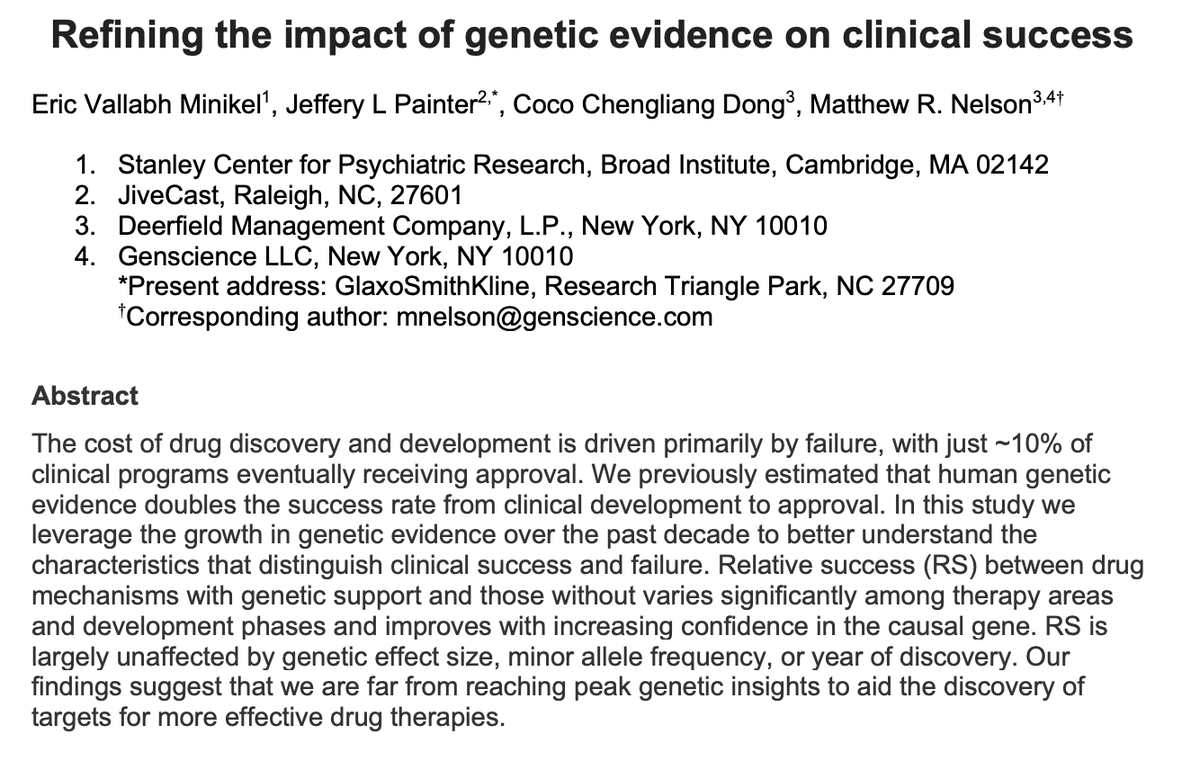
Is having even more gene-disease associations still useful for picking drug targets?
For which types of programs does it matter?
Has pharma shifted focus towards genetically validated targets?
New paper by me, @mnelsonxy, @DongCoco90417, & @jivecast https://t.co/KNUV1MNq3H👇
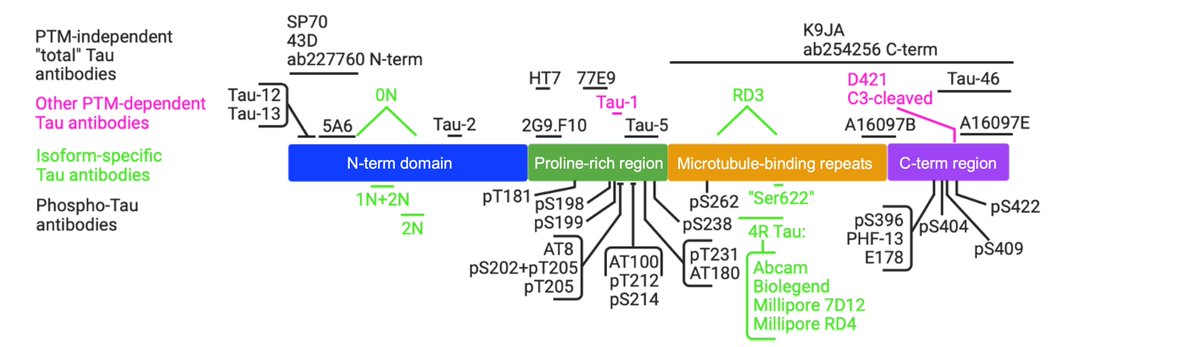
Do you work in biomedical #research? Do you also question your #antibodies? Dodgy antibodies waste time & $$$ + drive the reproducibility crisis. Let's talk about it!
We've validated >50❗️Tau antibodies: https://t.co/KFbcYOoFUB
Here's what we learnt & why it matters
A 🧵 1/n
@vsbuffalo Another related error:
Science is affected by the politics of scientists -> science cannot be fully apolitical -> science should be fully political
@VFSGlobal We are having difficulty arranging two visa appointments at the Cebu UK visa centre. Whenever I select a free appointment time and progress to payment I get the message...