@EconBerger@RyanLEllis Yes exactly. A consequence of this being reported on 1099s by gig companies is now we see it in tax data. Another issue with CPS is SE independent contractors may be misclassified as employees. But we show in tax data IC does not appear to be increasing over time outside gig.
@RyanLEllis@EconBerger One reason may be because most people only do gig work part-time and may not think to report it as part of their employment on household surveys. It takes specialized questions to pick it up, see e.g. https://t.co/igXGaHhAiD and https://t.co/zWVeq76nPR
@RyanLEllis@EconBerger 2013 is when Uber and other related gig economy apps begin to take off, and we see that growth reflected in our independent contractor series.
Back to @Econberger's original point, this growth does not appear to show up in the household survey data.
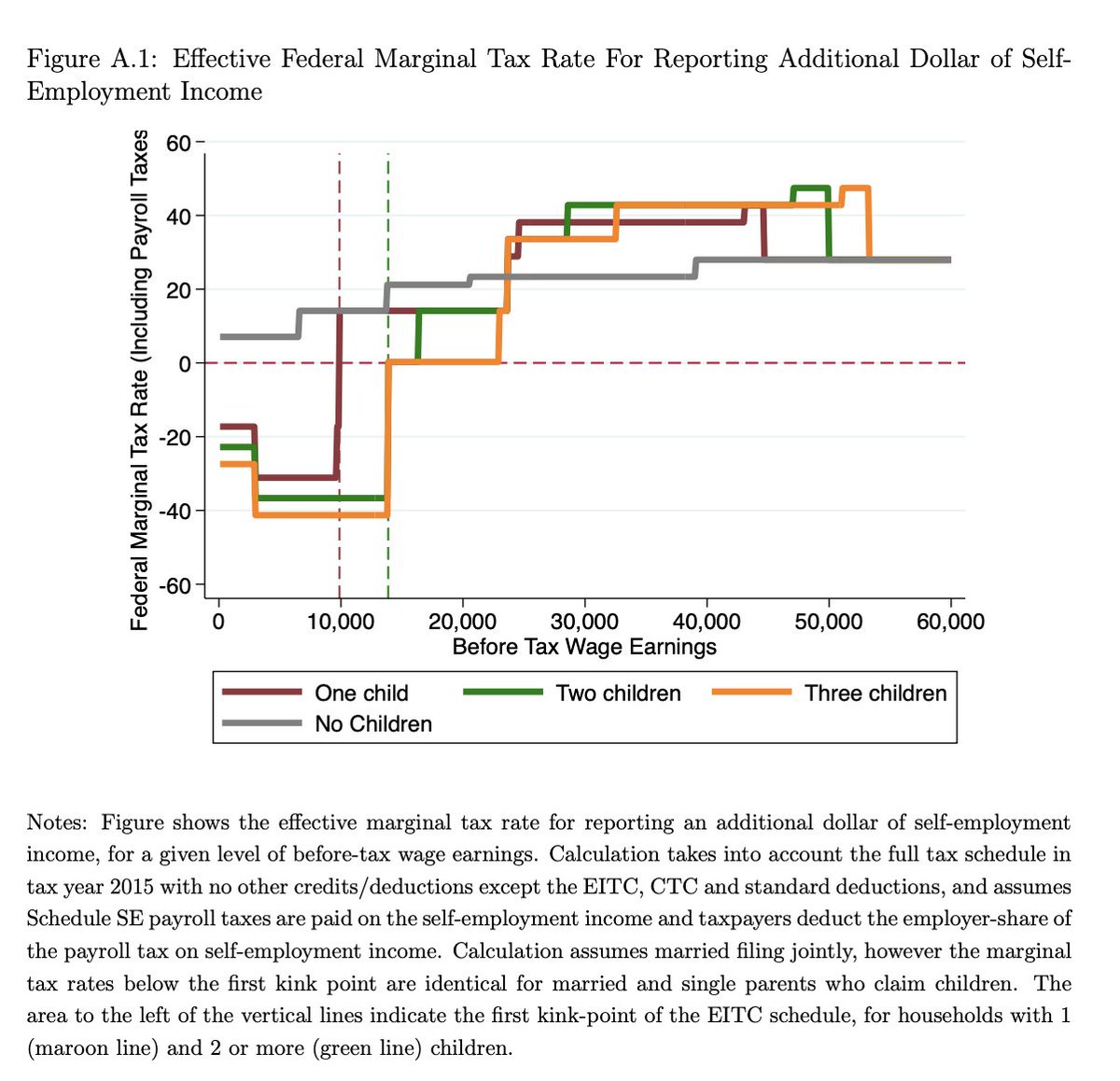
@RyanLEllis@EconBerger Our blue line in Fig 1 shows SE tax filings % of workforce. We attribute much of the growth in the 2000s to tax-reporting due to spread of knowledge about EITC/CTC incentives. Nothing special about 2013--our conjecture is knowledge became saturated by this point.
@RyanLEllis@EconBerger First, @Econberger's fig is share of workforce, whereas @RyanLellis is counts. The very long-run decline in SE share is real and seen in many countries. There has been a formalization of work, and the decline in agriculture is a big part of that story.
Meet the Harris Public Policy PhD candidates on the job market! They bring cutting-edge research, rigorous methods, and fresh insights across economics, political science, and public policy. Explore their profiles + job market papers: https://t.co/50jFYgpfFq
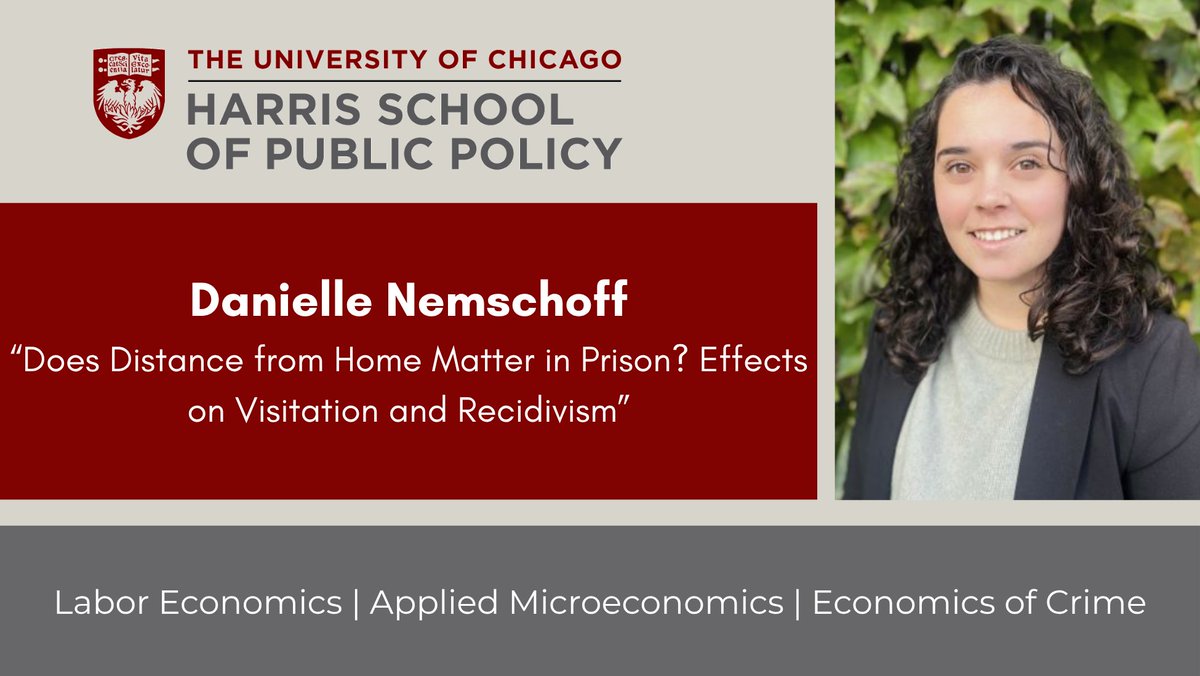
Recidivism is a big problem, with 9/10 going back to prison. @daniellenems FOIA’d data on every prison visit in WA and finds quasi random assignment to prison closer to home => family visits ⬆️ and recidivism ⬇️. Great JMP that will be very influential for prison reform debates!
Danielle Nemschoff's research shows that prison placement decisions matter. When people are housed closer to home, they receive more family visits, which significantly reduces recidivism. https://t.co/qLgAqaPbBV
Student loan forgiveness boosts short-term consumption, causing spikes in mortgage, auto, and credit card debt, while negatively affecting earnings and employment chances. New brief from @dkoust (@HarrisPolicy) and co-authors. https://t.co/wykBqSJOF6
We now have evidence on how ppl responded to student loan forgiveness, and it largely supports this view (except forgiveness was exempted from taxes). For every dollar of forgiveness, total up front spending inc by 9 cents. 🧵on our new paper here: https://t.co/HV3wvDPsif
Student loan debt forgiveness likely has a multiplier close to zero.
Forgiveness is taxable. If this negative cash flow effect outweighs interest savings would even be net negative. And wealth effect small in short run.
Arbitrary/regressive $1T for ~$0 GDP, not a great idea.
Excited to share our new paper on the employment and consumption effects of recent student loan forgiveness with @mikedinerstein, Sam Earnest, and Constantine Yannelis 🧵👇
Excited about this new paper with Sam Earnest, @dkoust, and Constantine Yannelis. We study the recent forgiveness of 7% (!) of student loan debt in the US 1/13
Econ professors have our work cut out for us this fall!
- Tariffs don’t lead to lower prices
- Price controls lead to less supply
- Eliminating some type of income from taxes is distortionary
- & so much more!
As my sister who is a personal trainer always says, LFG! 💪🏻
We @HarrisPolicy are proud to launch our Public Sector Scholarship guaranteeing a minimum of $40,000 in scholarship to those with 3 years of public sector service. People dedicated to serving society should have access to the world's best policy education.
https://t.co/mVTzt8N2bt
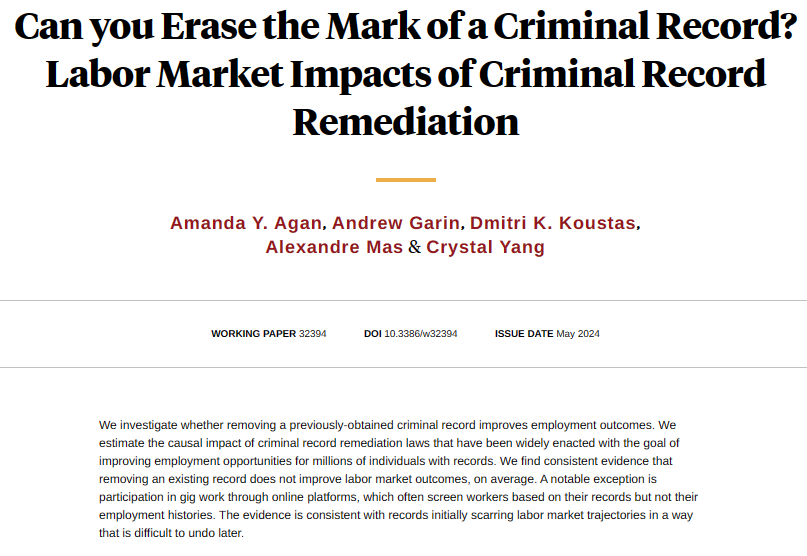
Sealing criminal records from employer background checks has a limited impact on employment rates and earnings, from @amandayagan, @andy_garin, @dkoust, @AMLabEcon, and Crystal Yang https://t.co/c9aZ9f3z4i