🚨🇪🇸 | GOAL: WHAT AN INSANE GOLAZO BY GIOVANI LO CELSO! WHAT! SENSATIONAL
WHAT A BICYCLE KICK GOAL! PUSKAS! PUSKAS!
Betis 2-2 Barcelona. https://t.co/FTReOXT4ri
At an U12 game last night, the opposition coach was directing almost every decision on the pitch: “Pass now”, “switch it”, “shoot”, “play forward”, “pass here”, “Sent it”.
It wasn’t just the instructions, it was the tone, the urgency and the volume, with his voice dominating the game.
The players I coach came off saying, “That coach is annoying”, “I can’t hear myself think” and “Why are most coaches like that?”
That last question reflects their experience, although it doesn’t describe every coach.
We say we want independent thinkers, decision makers and creative players, yet how much room do we give them to develop those qualities when an adult is constantly telling them what to do?
If we direct every action, we shouldn’t be surprised when players wait for instructions instead of trusting their own decisions.
Interessante a forma com que Zidane trabalha a parte individual dos jogadores.
Muitos exemplos de treinos específicos para as posições, utilizando referências espaciais do jogo formal.
A figura dele conduzindo as atividades também possui uma representatividade muito grande.
Em um contexto de altíssimo nível e com pouco tempo de estímulo coletivo, o aprimoramento individual parece ser uma das melhores alternativas de intervenção.
Have you ever coached a player who looked brilliant in practice, only for the game to start and it all disappear?
I think almost every coach has experienced this.
The players performed the drills perfectly and consistently. Then the game began, the environment became more unpredictable and suddenly the performance didn't transfer. As a player, this was a problem that I faced constantly.
For a long time, I thought the answer was simply pratice harder and get even more consistent. Looking back now, I think I was asking the wrong question.
Rather than asking, *"How can I get more consistentl?"* I think the better question is, *"Are the problems in practice similar to the problems in the game?”*
Sometimes the issue isn't the player. It's the design of the practice.
That's one of the reasons I was drawn to the Constraints-Led Approach. It encouraged me to stop thinking about practice as a place to repeat movements and instead think about it as a place where players learn to solve the kinds of problems they'll face in competition.
That shift has changed one of the main questions I ask when designing practice. Rather than asking whether players performed the technique correctly, I'm much more interested in whether the activity helped them become better at solving the problems they'll face in the game.
For me, that's one of the biggest strengths of the CLA. The more we preserve the DNA of the game in practice, the more likely it is that learning will transfer to performance.
Juan Mata was an unused sub more than 200 times in his career. Mo Salah wasn't making the bench at 22 years old. Vitinha was an unused sub, not selected in the Wolves squad many times.
“Serge has come here to play games but he just hasn’t been for me, at the moment, at that level to play the games.” - Tony Pullis on Serge Gnabry at West Brom.
A gentle reminder for all players who have convinced themselves they can't pursue the next level if they "can't even play at this level".
Hi Folks, Danial Pagey Page is running a wee danderball competition in memory of his Father Gary at sean dolans indoor Wednesday 13th may between 11 and 1. all Proceeds going to don boscos. If anyone wants a kick about or to call up. Everyone welcome. DBFC 💙💛💙💛
One of the biggest shifts for me when learning about the Constraints-Led Approach (CLA) was realising that coaching is less about delivering information and more about designing environments where learning can happen.
I now think much more about my role as a “Learning Environment Designer.”
Here’s a framework that captures how I think of putting this into practice.
Design: Creating tasks that build adaptability and look and feel like the game.
Challenge: Finding the right challenge level so players are stretched without becoming overwhelmed.
Guide: Nudging players toward useful information without prescribing every movement.
Observe: Watching how players solve problems, not just whether they get the “right” outcome.
Safety: Creating environments where players feel safe enough to try, fail and explore again.
Adapt: Adjusting the task based on what emerges during practice to keep learning alive and meaningful.
Working with players ages 8–10?
Building a Love for the Game
Between the ages of 8 and 10, the most important objective in player development is creating joy and curiosity. Children at this age learn best when training feels engaging, energetic, and creative. Coaches should encourage freedom, imagination, and experimentation. When young players associate soccer with excitement and friendship, they become more motivated to continue learning and improving .
Ball Control
This age is ideal for developing strong habits. Players should spend large amounts of time interacting with the ball through dribbling, passing, receiving and finishing activities. Repetition is important, but it should come through games and challenges. Training games such as 3v3 or 4v4 create many touches and decision-making opportunities, helping players naturally improve coordination, balance, and comfort under pressure.
Decision-Making and Awareness
Young players should begin learning how to perceive space, teammates, opponents, and movement around them. Encouraging players to solve problems independently develops confidence and game intelligence. Training environments should reward creativity and brave decision-making, even when mistakes occur.
Social and Emotional Development
Soccer at this stage also supports emotional growth. Players learn teamwork, communication, resilience, and responsibility through shared experiences. Positive coaching language and supportive environments are essential. Children develop differently, so patience and encouragement are critical. Success should be measured by growth, enjoyment, effort, and long-term passion for the game.
#TOVO
#intelligentfootball
“There are two ways to beat the opponent: I overpower or I surprise. If I have to overpower, it’s because I gave them the possibility of defending first.”
— Ángel Cappa
"Research by Kempe and Memmert, analysing over three hundred goals across the European Championship, Copa América, and World Cup tournaments, confirmed what Menotti and Cappa understood intuitively: high creativity, defined as feints, misdirection, and unpredictable sequences, correlates directly with goal success."
Page 152. from the book 'ball (2026) available from https://t.co/vfNWk4uJel
Goal - Holstein Kiel (Head Coach: Tim Walter)
“One of the biggest, the most destructive thing in youth football is results and league tables. Soon as it’s based on winning and losing, everything changes.” ⚽️🌱
#coaching#development#learning@guv61 👇🏼
3️⃣ They will get to a level, whatever that level might be, that's where they'll get with or without your help. Andy isn't saying coaching doesn't matter or that parental support is irrelevant. He's saying that a child's ceiling is theirs, shaped by who they are, what they want, how hard they're willing to work, and how much they love the game.
The adult's role is to protect the conditions that allow that journey to unfold, not to engineer the destination.
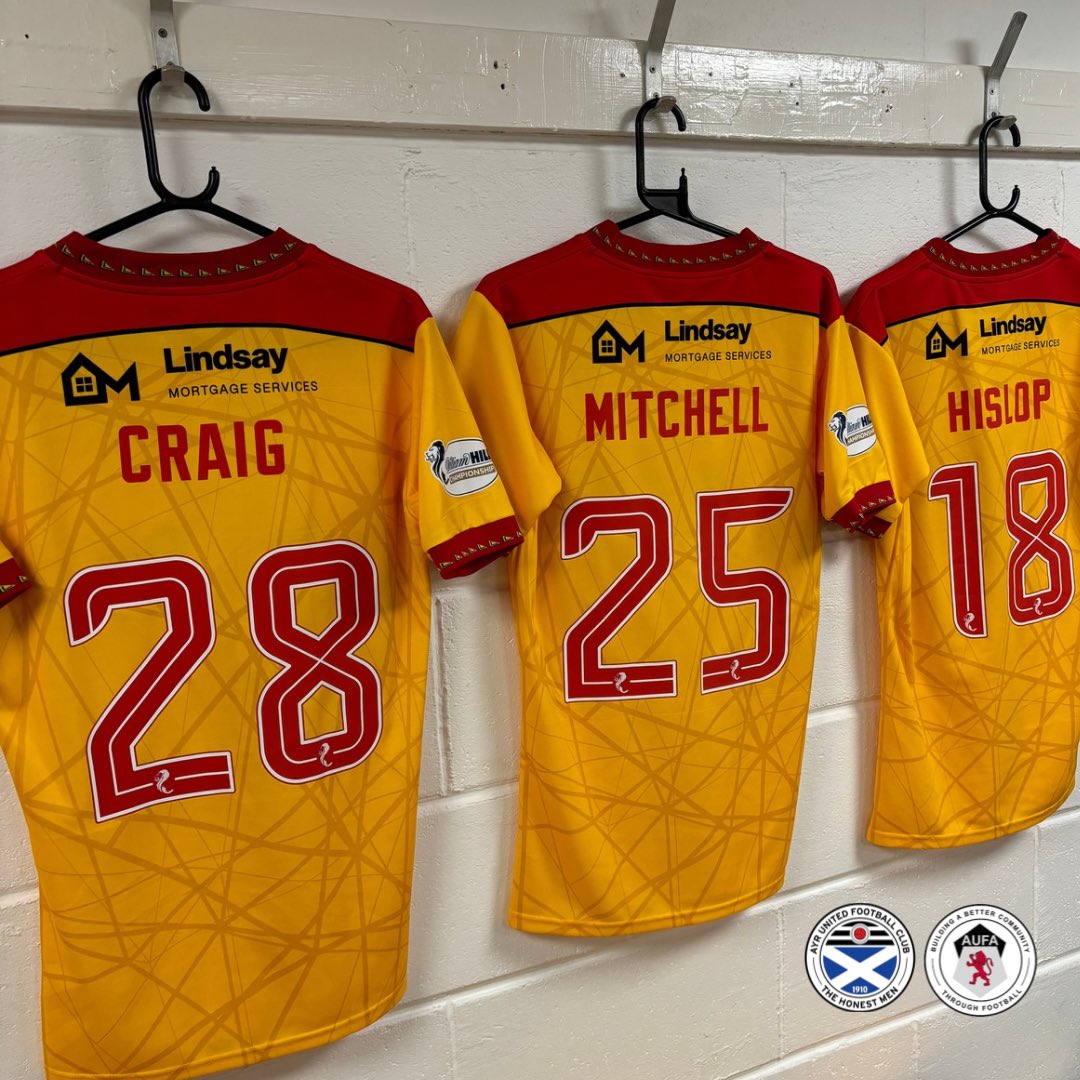
Congratulations to our Under 18s player Kenzie Mitchell who features on the bench for @AyrUnitedFC this evening for the first time. He’s joined by our Under 18s captain David Craig ⚽️
Well done Kenzie and David!
#WeAreUnited
"To practice for improvement in how you feel and to practice for improvement in how you play are two different things. One builds the mind, the other builds the game."