@zazmic_inc@PeterDiamandis I had the same take and that means the formula is there. Smaller niches lets say with a tam that’s just 10%, with similar momentum can bring 40.1m in rev… I’ll take 2 or 3 of those.
I’m confused as to why everyone isn’t taking advantage of the absolute easiest way to grow visibility, traffic, and sales from AI search right now.
It will never be easier than right now.
Let’s go over it again so you can take advantage of it before Q4 ends.
But before we dive into the details...
If you want a few cheat codes for getting cited inside ChatGPT within the next 30 days, just RT this, follow me, and reply “AI Search Cheat Codes” and I will DM you.
You must do all 3 for the DM.
Alright, let’s get into it.
A lot of B2B companies still treat their content like an afterthought.
Blog posts, category pages, comparison pages, documentation, all of it ends up being inconsistent, unstructured, and rarely updated.
This completely ignores what’s happening right now:
Vendor content is quietly becoming one of the most cited sources inside ChatGPT, Gemini, Perplexity, and AI Overviews.
Not because the models “favor” brands.
But because brands that structure, refresh, and systematize their content are the easiest to extract from.
And this is exactly where AirOps enters the picture.
AirOps is the first platform that lets companies monitor their AI visibility, identify gaps, generate production-grade content, and publish directly to their CMS, all in one workflow.
I understand that given the fact that I am an AirOps partner you might be skeptical. Fair enough. Do your own research before believing anyone. But the results don't lie (stats below).
Teams like Webflow, Klaviyo, Ramp, Apollo, Kayak, and Wiz use AirOps to track how often they’re cited, where they’re losing visibility, and which topics they need to own.
AirOps shows the exact questions, themes, and queries where a brand appears (or fails to appear) inside ChatGPT, Perplexity, Claude, and Gemini.
This matters because, as Rankscale’s recent study showed (check my post from 2 days ago), AI systems pull from:
“Best X tools”
“Top Y platforms”
“Best alternatives to Z”
“How to choose a _____”
And a meaningful portion of citations came directly from company blogs, docs, and comparison pages.
Not media outlets.
Not PR placements.
Not guest posts.
Their own content.
Here’s why this is happening:
AI systems need structured, factual content.
Clean HTML, question-based H2s, TL;DRs, and schema get lifted most often.
Freshness matters.
ChatGPT Search and Gemini reward recently updated URLs. Many vendors refresh weekly. Most publishers update yearly.
There’s a shortage of neutral, high-quality comparison content.
So AI pulls from whoever actually provides the details.
What hasn’t been solved, until AirOps, is the loop.
Most companies know they need to show up in AI search.
They just don’t have a system to:
Track their visibility
Identify the gaps
Produce high-quality, on-brand content
Publish at scale
Measure what changed
AirOps closes that loop.
Here’s how...
Insights:
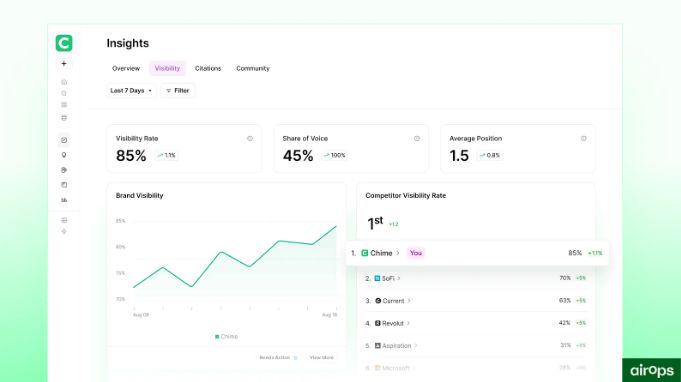
See exactly where your brand ranks (or doesn’t) across ChatGPT, Perplexity, Gemini, and Claude. Track citations, competitors, category queries, opportunities, gaps, and authority shifts.
Action:
Turn those insights into production-ready content.
Inside AirOps’ Grid, teams generate, refine, review, and publish comparison pages, buying guides, “what is” pages, how-tos, product docs, all with human review and governance.
Publishing:
Push directly to CMS platforms like Webflow and Contentful.
No juggling tools. No spreadsheets. No handoffs.
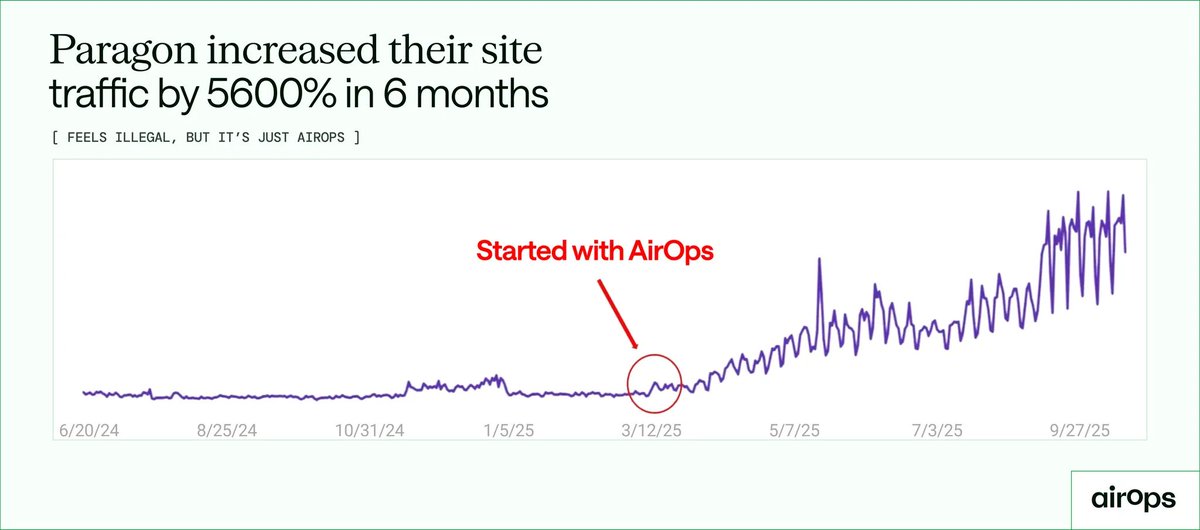
This is why Webflow cut refresh time from weeks to minutes, grew AI-attributed signups from 2 percent to 10 percent, and saw a 40 percent traffic uplift within days.
And why Deepgram jumped from 37,000 to 1.5 million visitors.
And why Wyndly saw a 28 percent increase in organic customers.
And why Chime tripled their AI citations in under a month.
When companies connect their internal documentation, customer insights, product data, and brand rules into AirOps, the platform produces content that AI can actually cite, because it’s built on proprietary information competitors don’t have.
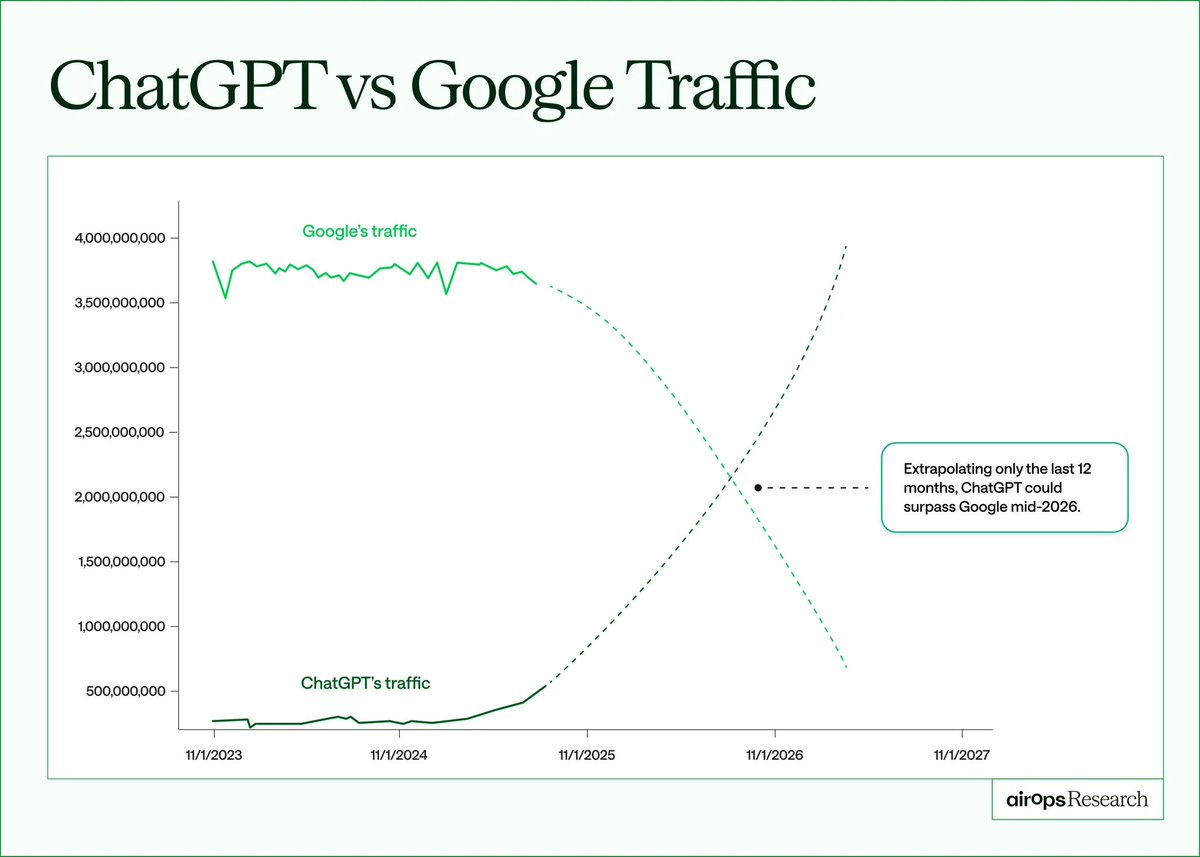
The future of search isn’t just ranking in Google, but rather it’s ranking inside the answers themselves.
If AI can’t find you, your customers can’t either.
Brands that start now will own their category in 6 to 12 months.
Brands that wait will lose visibility to competitors who moved first.
And if you want a few cheat codes for getting cited inside ChatGPT within the next 30 days, just RT this, follow me, and reply “AI Search Cheat Codes” and I will DM you.
You must do all 3 for the DM.