A 34 yr female was referred to us as Primary PH with R-> L shunt through PFO -> cyanosis.On clinical exam she had long systolic murmur in back which is unusual in PPHN. It finally turned out as Multiple peripheral PS. MESSAGE IS “TR JET VELOCITY GIVES RV PRESSURE NOT PA PRESSURE”
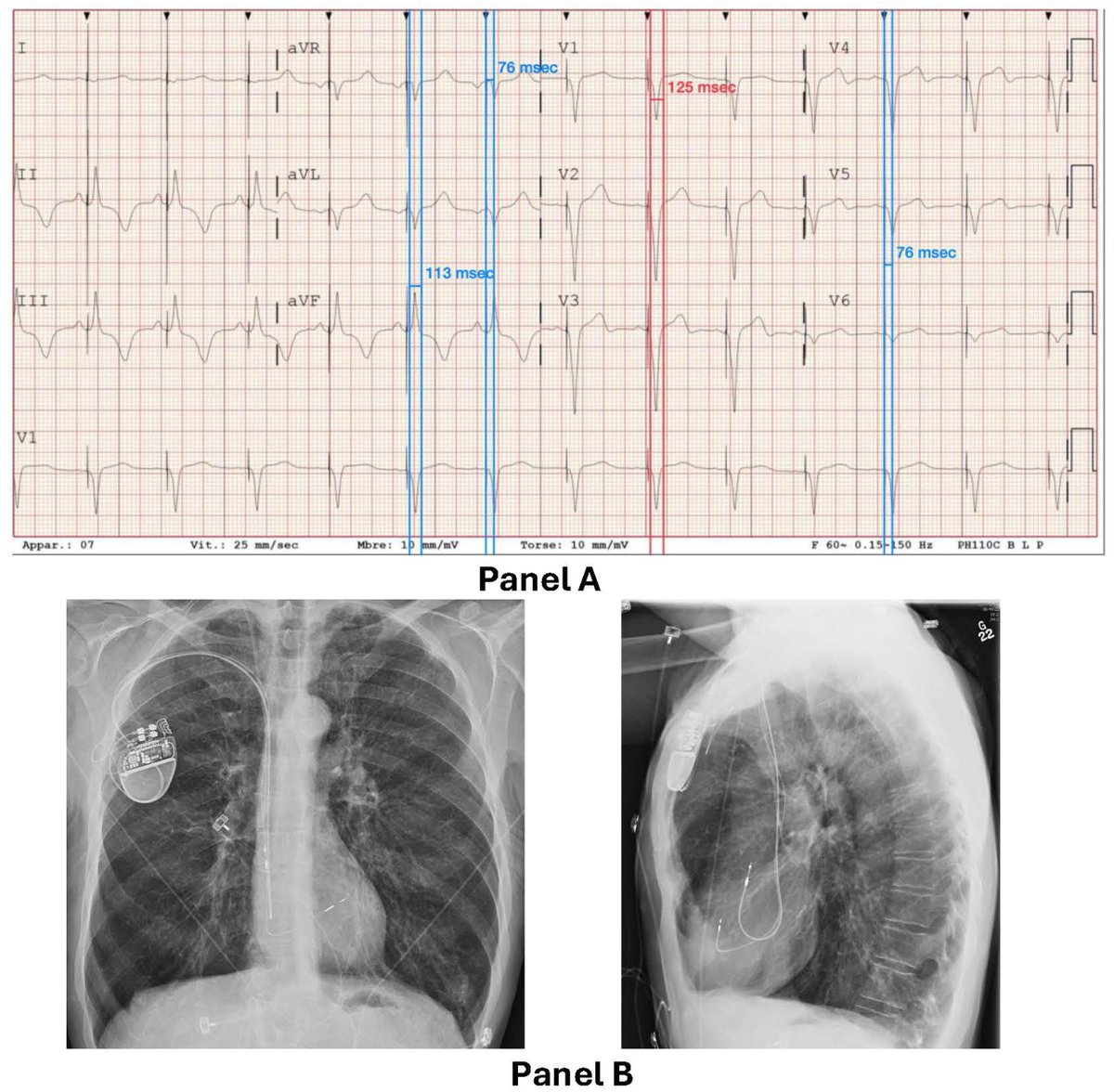
This is a beautiful study of an extremely thoughtful approach to CRT pacing.
(I wonder if it could be simplified from ECG analysis)
@SergioPinski@DrRoderickTung@rdschaller
Localized Reentrant Ventricular Tachycardia in the Purkinje Network with Three Different Exits after Acute Myocardial Infarction
@urara4114@KamakuraTsukasa
https://t.co/ZHPkZZJRJH
Flecainide use had a favorable safety profile and was associated with a significant reduction in arrhythmic burden in patients with ARVC, irrespective of the underlying genotype or LV involvement. https://t.co/tJBMMQTM3y
#JACCCEP#EPeeps#cardiomyopathy
Nice article!
Hot take on the rampant overgeneralization of LBBaP to include intraseptal pacing (ISP):
1.) Issue with RWPT/LVAT- many take inside stim (~15ms) and r/s from distal/apical positions should not be measured in V5-6
2.) Left conduction system (LCS) capture should require visualization of a Purkinje potential
3.) Determining LCS without septal mapping requires dynamic assessment of output-dependent changes in QRS and RWPT
4.) Delta LVAT should be sine qua non when PP is not recorded or far-field for conduction system capture/loss- just like a nodal response with parahisian pacing
Another case from our Lab at King Faisal Cardiac Center @NGHAnews
Post myocarditis with localized epicardial scar and recurrent ventricular tachycardia and ICD discharge. Epicardial VT ablation using Co2-assisted epicardial puncture through a coronary vein perforation @JohnSilberbauer . Fantastic LAVA during RV pacing hashtag #HD_Grid , targeted after assuring a safe distance from the coronaries. Nil inducible and patient discharged home the next day.
Thanks to the fantastic support of @AtifAlqubbany , and @Mohamed74057845.
**VALVE CASE OF THE MONTH**
Mid 40s, exertional dyspnoea
Loud ESM on examination
Referred for echocardiography
Question - What is the severity of aortic stenosis?
#CardioTwitter#MedTwitter#ACCFIT
New workflow for mapping and ablation of AT, fuses electro-anatomical + entrainment mapping with topological insights. Think beyond circuits—start thinking boundaries.
#AHAJournals#Epeeps@nvandersickel https://t.co/qO8fbMT0OB
Hello! Most discussions are on plant-based diets, so I thought I'd do one on healthy consumption of non-vegetarian food for the general/ public based on current guidelines and published medical literature.
Here goes...
1/7
Are you taking a multivitamin thinking its helping? Are you prescribing a multivitamin thinking its helping? Then this is for you, in 10 simple slides!
1/12
Do not consume dietary supplements with the following ingredient(s) even if prescribed by a legit doctor (these are well known liver toxic agents with additional risks, some fatal):
- green tea extracts
- curcumin
- black cohosh
- ashwagandha
- giloy (tinospora cordifolia)
- scutellaria (chinese skull cap)
- aristolochia indica
- bitter orange
- valerian
- aloe vera
- bakuchi (psoralea corylifolia)
- garcinia cambogia
- ginko (also increased risk of bleeding)
- ginseng (mostly heart related side effects)
- gugulipid (guggulu)
- kava
- comfrey
- sweet flag (acorus calamus)
Tips & Tricks for Tackling a Tortuous Vessel Especially RCA in Elderly with Acute IWMI
Case: Elderly male, acute IWMI, classic bendy RCA.
Approach with caution and prep:
🔹 Choose the right guide:
Opt for better support (e.g., AL). But be alert, risk of ostial/root dissection . Alternatively, consider early use of a guide extension for smoother hardware delivery.
🔹 Straighten the course:
Use dual wires to make the tortuous vessel more trackable.
🔹 Cross carefully:
If entry is difficult, go with a PJ wire ( whisper wire in this case + microcatheter for support)
❌ Avoid WH wires here as there high chance of dissection and abrupt closure.
🔹 Anchor when needed:
Use an anchor balloon in a side branch for added support if hardware isn’t tracking.
🔹 Mind the concertina:
Track your wires carefully — tortuous segments are prone to accordion effect.
🔹 Treat the culprit only:
Resist the urge to fix every lesion. Focus on the culprit lesion — overtreatment may cause more harm than good.
#CardioTwitter #InterventionTips #RCA
#Sharing is learning
A ticking time bomb… fortunately, we were able to diffuse it just in time.
Can you guess the diagnosis and the life-saving procedure performed?
Would love to hear how you would have managed it.
Let’s learn together—your thoughts are most welcome!
In all ACS like presentations, look at suprasternal window for type B dissection, esp: if CAG done through right radial is normal.Type A dissection you will pick up easily from PLAX view, suprasternal may not be routine!Howmany send D-Dimer routinely in all chest pain syndromes