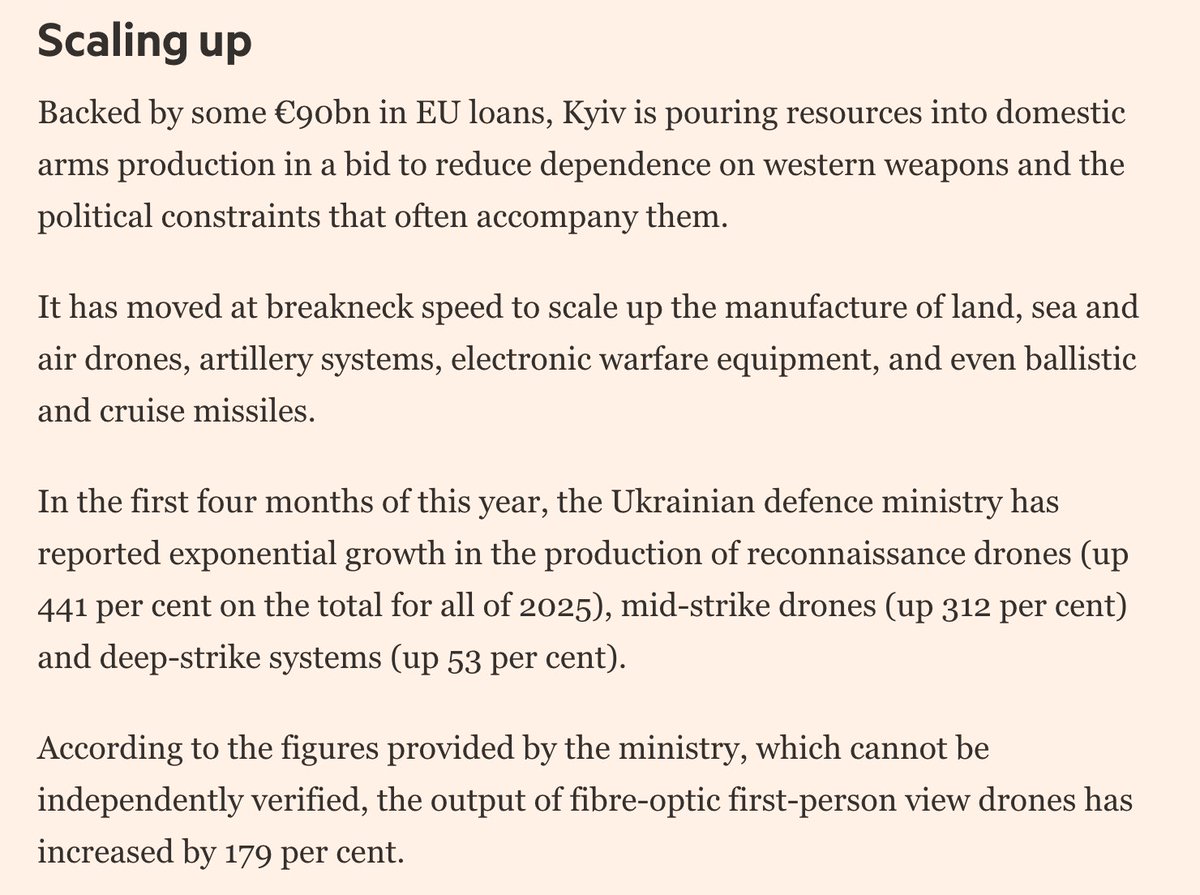
Ukraine er ved at vende krigslykken og det skyldes blandt andet EU's lånepakke på 90 mia. euro (670 mia. kr.) 😀🔥
Husk: Dansk Folkeparti stemte imod. Hvor er det godt for Danmark og Europa, at vi ikke får en blå regering støttet af Putins nyttige idioter.
Slava Ukraini
Cobalt has become a symbol of everything wrong with the clean energy transition: child labour, unsafe mines, corruption, colonial legacies, and global supply chains built to keep consumers comfortably distant from the damage.
But the answer isn’t as simple as “move away from cobalt.”
Yes, many newer battery technologies have reduced or removed cobalt, meaning some of the worst cobalt controversies now belong partly to an earlier generation of lithium-ion batteries. That shift matters.
But cobalt remains a powerful material for battery performance. And abandoning it entirely risks dodging the real issue: broken supply chains, weak governance, and moral outsourcing.
In the latest episode of Saving the World from Bad Ideas, Mark Lynas speaks with journalist Nicholas Niarchos about cobalt mining in the Democratic Republic of Congo, and why the clean energy transition must be both fast and fair.
The problem is not the mineral.
The problem is a world that demands clean technology while tolerating dirty supply chains.
We don’t need less ambition.
We need better accountability.
Listen now.
"Vindenergi er billigere end atomkraft, så derfor skal vi have vind- og ingen atomenergi".
Men solenergi er billigere end vindenergi. Så den logiske følge af dit udsagn er, at vi skal have sol- og ingen vindenergi.
LCOE is such a flawed metric, its use probably does more harm than good. Whatever small marginal value it provides as a simple way to compare resources is more than wiped out by the confusion it creates from being completely disconnected with how power markets actually work.
Two things can be true:
• RCP8.5 was never a realistic "business as usual" scenario
• The world has made real progress bending the emissions curve downward
@Peters_Glen, Piers Forster, and I explain in a new article (link below).
1/11
Okay, Twitter sleuths. I am trying to track down Overnight Construction Cost for three nuclear reactors in South Korea: SAEUL-2, SHIN-HANUL-1, SHIN-HANUL-2. They were completed in 2019, 2022, and 2024. Any leads?
Farms are not the 'natural state' of the land they are on. Farms are man made. They involve chemicals, pesticides, industrial processes, contamination of water, tons of diesel fuel to maintain. Since when did farms become some precious environmental thing?
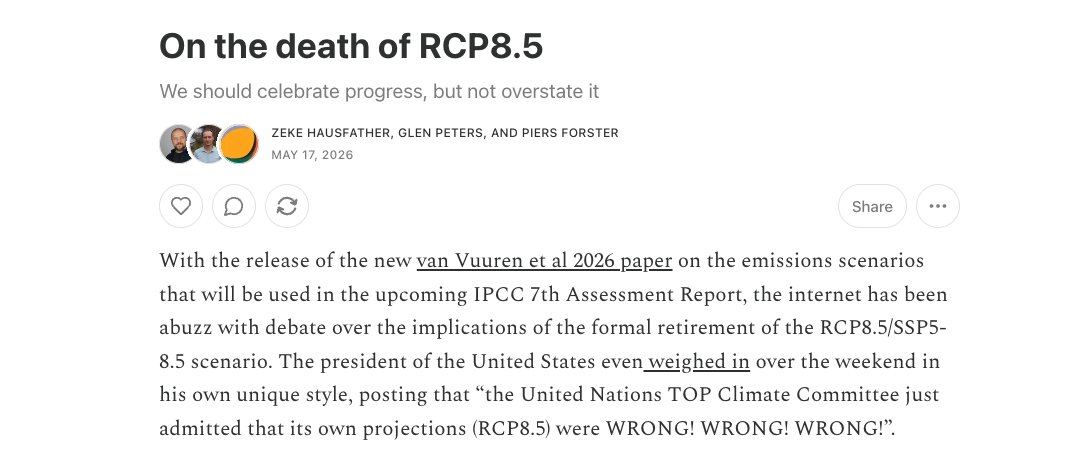
Thats certainly a take. Here is what the new paper introducing the emissions scenarios we are using in the upcoming IPCC 7th Assessment Report actually says:
The future of food is here!
Countries around the world are grappling with this future. Some are choosing to reject innovation, while others are embracing it and its benefits.
Join us tomorrow (May 19th) to find out about the future of food.
RSVP: https://t.co/wHkHt5VXUp
Spændende studie fra dec. 2025, som jeg ikke havde set før nu: Studiet slår en tyk pind igennem ideen om, at vi skal få færre børn på grund klimahensyn. Færre børn vil reelt have nærmest nul effekt. Vigtigt budskab at formidle til ungdommen og de aktivister, der har troet på det
“Despite my disagreeable insistence on saying that clean energy abundance is different from conventional green politics, I sincerely think most adherents to conventional green politics should switch sides.”
🔥
The world is warming despite natural fluctuations from the El Niño cycle—
In 2025, the world was around 1.4 °C warmer than it was in pre-industrial times. But temperatures haven’t increased linearly; there have been spikes and dips along the way.
Many of these spikes and dips are caused by the El Niño-Southern Oscillation (ENSO), a natural climate cycle caused by changes in wind patterns and sea surface temperatures in the Pacific Ocean that affects global temperatures and climate.
There are two key phases of the ENSO cycle: La Niña, which causes cooler global temperatures, and El Niño, which brings warmer conditions.
The world cycles between El Niño and La Niña phases every two to seven years. There are also “neutral” periods between these phases where the world is not in either extreme.
As you can see in the chart, global temperatures during recent La Niña years were hotter than El Niño years just a few decades before. “Cool” years today are hotter than “warm” years not too long ago.
Our colleague Veronika Samborska recently updated this data, which she does every month.
“we demonstrate that the recent global surface temperature spike is entirely consistent with expectations from the combined effects of model-predicted long-term warming and routine natural climate variability.”
For years, major scientific journals, climate NGOs, insurance firms, and even governments highlighted the most dramatic climate projections and outlier scenarios. The infamous “RCP 8.5”, in particular, envisioned a century-long global coal orgy that was never remotely plausible (cars running on gasified coal, anyone?), yet was misleadingly presented as “business as usual.” For 15 years, it succeeded in scaring the living daylights out of people.
It's time to come to terms with the fact that global warming is a challenge likes other global challenges, not an existential threat.
https://t.co/Jj6co0Lf6O
Story how antinuclearism damages our climate, economy and security:
Many CEE cities have centralized district heating. In Greifswald nuclear plant was replace by ... oil and gas.
"The district heating supplied by the plant was replaced by oil imports and in 1995 by a new natural gas plant"