WE WOULD NEVER BE SILENCED ❗️🎤🇳🇬
Thank You My Country People 🙏🏽
Our beloved Lawyers @SamAmadi and @InibeheEffiong only God can reward you, We are Grateful 🙏🏽
Please Nigerians make sure you get your PVC 🙏🏽
2027= tinubu MUST GO❗️
Roadmap to a New Nigeria That Is Possible – Part II
Education and Healthcare: The Foundation of a Renewed Nigeria
Recall that on July 1st, in Part 1 of "My Vision for a Productive and Prosperous Nigeria," I outlined the broad framework of my proposed roadmap for national renewal. In it, I emphasised that the transformation of Nigeria must begin with rebuilding our human capital through quality education and healthcare, supported by reforms in Technical and Vocational Education and Training (TVET), character and civic education, and strategic investments that will move our nation from a consumption-driven economy to a production-driven one. I promised to follow up with other parts in the coming weeks and months.
Today, July 16th, in the middle of July, I wish to expand on these two critical pillars - education and healthcare - because they are the bedrock upon which every prosperous nation is built. They are the cornerstones of the foundation that will ensure that a son of nobody can become somebody and remove many from the ranks of the disaffected who often become tools in the insecurity challenges confronting us.
Evidence from around the world shows that quality education and accessible healthcare are among the clearest distinctions between thriving nations and lagging ones. Princeton University Nobel Prize-winning economist Angus Deaton highlights this reality in his book, “The Great Escape: Health, Wealth, and the Origins of Inequality.”
Nothing, therefore, could be further from the truth than the claim by some young people that “education is a scam.” Education, when combined with good health, provides the ladder for individual upward mobility and drives economic growth for the nation.
We must become more intentional about aligning education with our national priorities, as Singapore did, and challenge our country to value education in the same way Deng Xiaoping repeatedly urged China to do from 1978 onwards, with the remarkable transformation we see today.
We will work through commissions that strengthen collaboration among the tiers of government, ensuring that primary education is domiciled at the community and local government levels, with strong parental involvement and curricula that are sensitive to local economic factor endowments and the value chains derived from them.
State governments will be supported to expand high-quality Technical and Vocational Education and Training (TVET), as well as general secondary education, through targeted grants and incentives.
We are also developing schemes that will enable universities to focus more deliberately on specialised areas of teaching and research, making them globally competitive while producing a workforce equipped for the demands of the future.
A NEW Nigeria is POssible. -PO
Again, I’ll say this: among all the presidential candidates likely to contest the 2027 general elections, none currently possesses the level of international standing, credibility, and acceptability that Peter Obi does.
He is not someone who goes around lobbying for international recognition. Rather, he is consistently invited to engage in conversations about the challenges facing Africa, to share his perspectives, and to speak about his vision for building a Nigeria that works.
At a time when Nigeria’s global image has been severely damaged, we need leadership that commands respect beyond our borders. We need someone who can restore confidence in our country and strengthen Nigeria’s economic, diplomatic, and social relationships with the rest of Africa and the wider international community.
#NigeriaWillBeOk
The Role of the Diaspora African in Sustainable Development
On Friday, July 10, 2026, I had the honour of delivering the keynote address at Mandela Hall, African Union Permanent Observer Mission to the United Nations in New York, on _The Role of the Diaspora African in Sustainable Development across Africa.
Africa is a continent of immense riches. Indeed, it is the richest continent in the world, not only because of its vast mineral resources but also because of its greatest asset, its people. It is the second largest continent by landmass, after Asia, covering more than 30 million square kilometres. It is also the second most populous continent, with over 1.5 billion people. Significantly, more than one billion of these are young people in their productive years, making Africa home to the largest youthful workforce in the world.
When this demographic advantage is combined with nearly one billion hectares of arable land, about 60% of which remains uncultivated, it becomes clear that Africa possesses everything required not only to feed itself but also to become the food capital of the world.
Regrettably, despite this enormous potential, Africa remains home to the largest concentration of the world’s poorest people. Of the approximately 800 million people living in extreme poverty globally, nearly 60% are in Africa. That is about 480 million people, with Nigeria and the Democratic Republic of the Congo among the countries most affected. In other words, nearly one in every three Africans lives in extreme poverty. Likewise, in multidimensional poverty, Africa continues to bear the greatest burden.
The question, therefore, is simple. With all these advantages, why has Africa not been able to lift its people out of poverty?
It means there is a missing link. That missing link is Competent Leadership with Capacity, Compassion, Character, and Commitment to good governance.
What Africa needs is leadership that will rise to the challenge and drive the continent in the right direction. This means competent leadership with character, capacity, compassion and commitment to begin turning the continent around. When we get leadership right, everything else begins to change. We start realising our true potential.
So, what is the role of the Diaspora African in this journey?
You have an enormous role to play.
Because you live in societies where institutions largely work, where democracy is strengthened by accountability and where systems function more effectively, you have both an opportunity and a responsibility to help build Africa. It is time to become stronger advocates for good governance. Even where you cannot vote, your voices matter. They should be heard both at home and abroad whenever things are going wrong on our continent. Stand firmly for what is right. Speak truth to the leaders who visit you. Let them know where they are getting it wrong. That is what some of us have continued to do.
The contribution of the African diaspora extends far beyond advocacy. History teaches us that many of the world’s great economic transformations were driven, in part, by their diaspora communities.
Japan offers one example. Following the Meiji Restoration of 1868, the country embraced modernisation and benefited immensely from Japanese scholars, professionals and citizens who studied and worked abroad, especially in Germany, before returning home to drive the technological transformation for which Japan is admired today.
China presents another remarkable example. It was under Deng Xiaoping’s reforms, beginning in 1978, that China embraced education, innovation and global engagement. These reforms created opportunities for the Chinese diaspora to contribute significantly to the country’s extraordinary economic transformation. In 1980, China had more people living in poverty than Africa. Today, China has reduced extreme poverty dramatically, while Africa continues to struggle with the challenge.
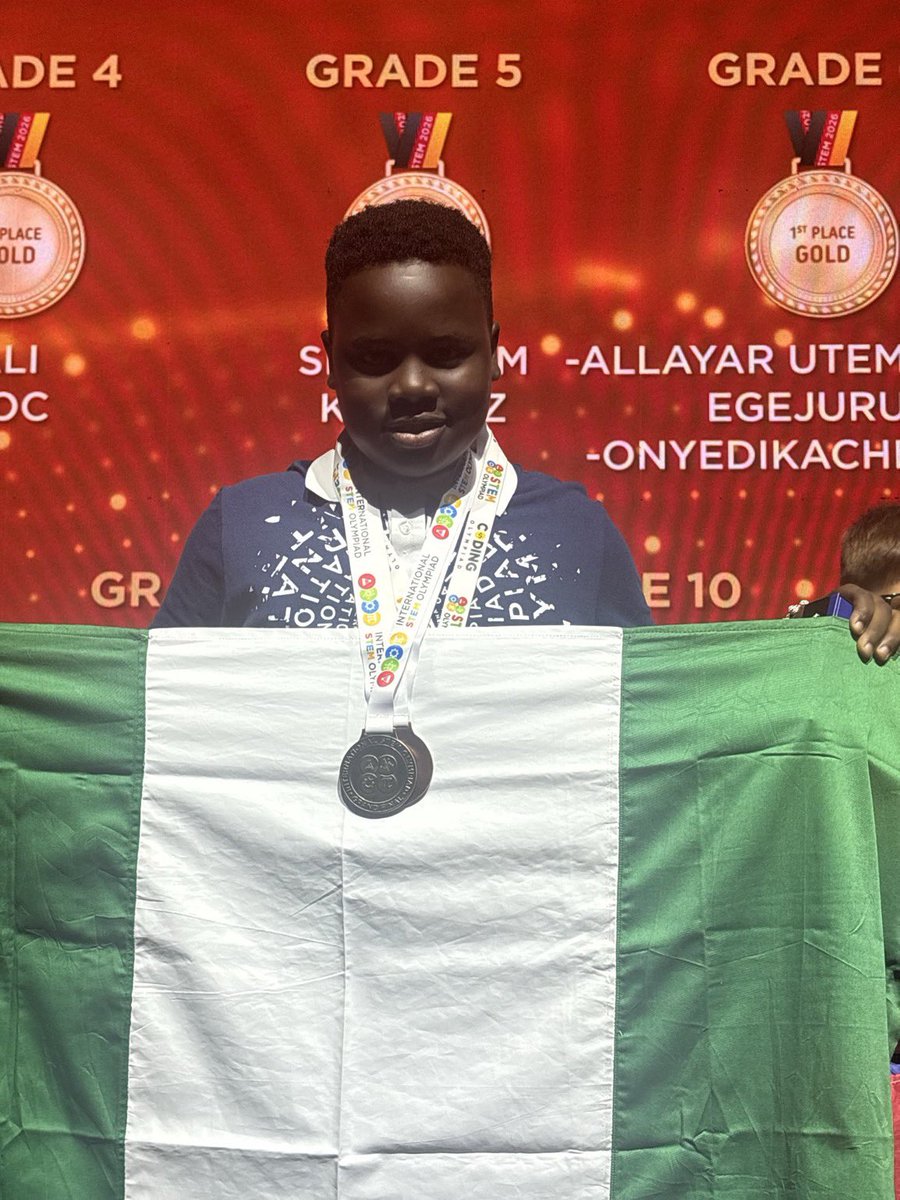
We captured this beautiful moment of Chimdiebube Onwubiko arriving in Enugu yesterday to a hero's welcome.
He won a gold medal at the International STEM Olympiad Grand Finale in Rome.
I love seeing education reclaim its rightful place in our society.
This is just the beginning of something great.
Ladies and Gentlemen of the World, Pls Meet Onyedikachi Ethan Egejurum. Age 11 yrs old. The best Mathematician on Planet Earth in the Primary School Category. A Maths Prodigy and Software Engineering Enthusiast. REMEMBER THE NAME. PlsRT.
#IgboExcellence#ProudNigerian 🥰🇳🇬
Master Chisom Unachukwu and Anthony Iwegbu are their maths teachers.
They helped their students conquer the world.
Their schools are Evergreen Schools Enugu and Diamond Special College Owerri.
What a day!
Educare received this special recognition from the International STEM Olympiad, Rome.
We will continue to build the right technology that powers education and also support our children to shine on global stages.
Engaging Tomorrow’s Leaders at Madonna University
Yesterday, I continued my engagement with future leaders in the country. I was at Madonna University, Okija Campus, where I had the privilege of interacting with students at the NextGen Mentorship & Leadership Initiative on the theme: “Beyond Now: Raising the Next Generation of Leaders.”
The session was highly engaging, with students asking thoughtful and probing questions. Their concerns reflected the frustration of many young Nigerians who feel constrained by poor governance and widespread corruption, which have denied them opportunities to realise their full potential. However, I was equally encouraged by their optimism and determination to be part of the solution.
I reminded them that leadership is the greatest determinant of a nation’s progress. A true leader must possess the character, competence, capacity, and compassion to make sacrifices for the good of the people. Nigeria’s future depends on leaders committed to safeguarding lives, investing in education, creating opportunities, and building effective institutions.
I encouraged the students to take their education seriously, to prepare themselves for leadership, and to see themselves not merely as spectators but as agents of change. Through active participation in the democratic process, they have the power to enthrone leaders with integrity and the capacity to propel our nation forward.
As part of my ongoing commitment to education, I presented a cheque of ₦15 million to the university to support its educational mission. Investing in education remains one of the most effective ways to develop the human capital necessary for national progress.
Together, by raising a new generation of responsible and visionary leaders, we can build the Nigeria of our dreams that is POssible. -PO
My Stance on Road Development
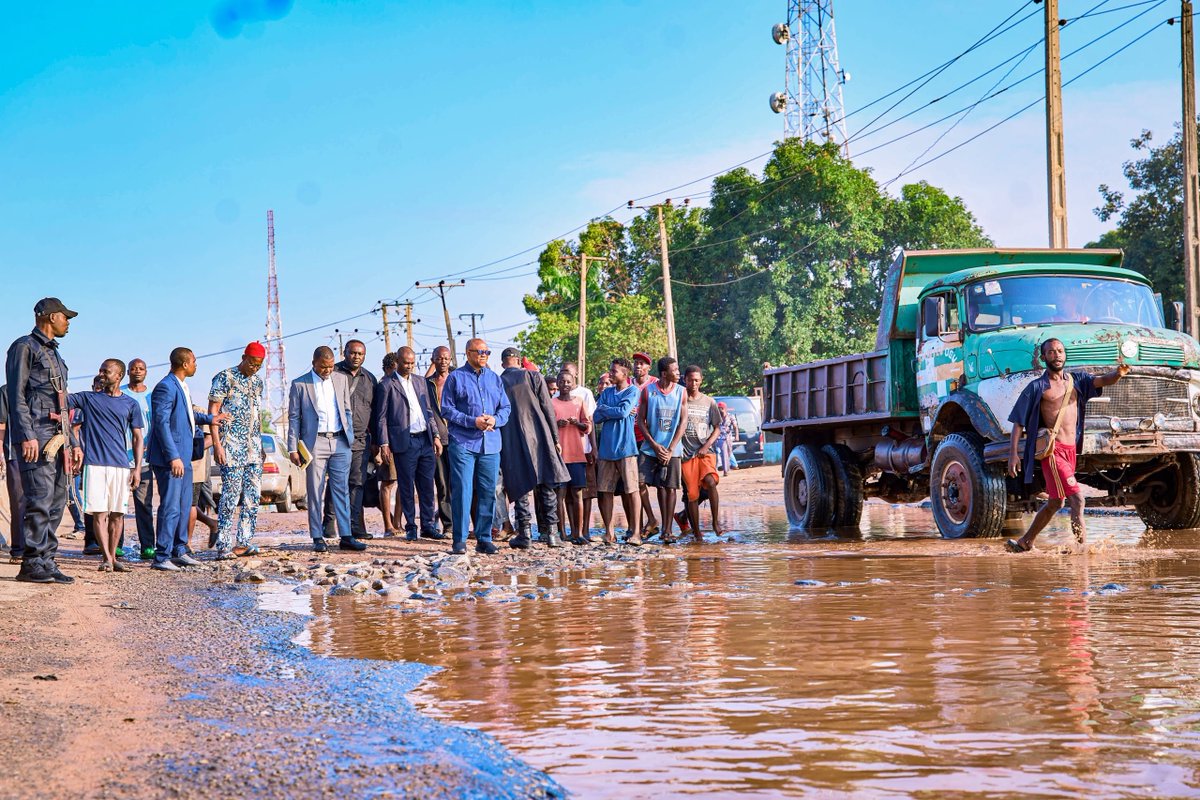
There is a pertinent reason I have consistently advocated that we should refrain from initiating new road construction projects until we have thoroughly rehabilitated and maintained our existing road network. Instead of undertaking new ventures and dualization projects that offer marginal benefits, our primary focus ought to be on repairing the critical roads already in place.
Consider, for instance, the Asaba–Benin Road. This thoroughfare is a vital artery within Nigeria's transportation infrastructure. Travellers traversing from Akwa Ibom, Anambra, Rivers, Imo, Ebonyi, Cross River, Abia, Enugu, and portions of Benue and Kogi States to Lagos are compelled to utilise this route.
Despite its significance, substantial sections of this road are in a lamentable condition. It has become a major impediment, precipitating persistent traffic congestion and inflicting undue hardship on travellers, businesses, and transport operators.
Regrettably, this situation is not unique; it reflects the reality on many of our busiest national highways.
Our efforts should be directed towards the reconstruction and maintenance of our current road infrastructure before we announce plans for new road projects. The Nigerian populace requires functional and motorable roads, not merely projects that garner public attention.
Efforts aimed at superficial improvements for political gain should not supersede the urgent need to address the condition of our existing, critical roadways.
A new Nigeria is POssible. -PO
What Truly Should Be Our Priority Now as Leaders of a Nation?
This question has become necessary, given where we are today as a nation and where we are supposed to be.
While completing my INEC nomination form yesterday, Section E, Question 1 caught my attention. It asks: “Have you ever been adjudged a lunatic or been declared a person of unsound mind?” The answer is either Yes or No. That question got me thinking: Can we, as the political leaders of today’s Nigeria, truly say we are exhibiting the characteristics of a sound mind?
When Nigerians, including children and security personnel, are being abducted into the bushes, citizens cannot travel safely on our highways, several million Nigerians are uncertain where their next meal will come from, and several billions are being siphoned frivolously through non-existent agencies and projects, should politics really be our primary preoccupation?
A sound-minded leadership would have declared these existential challenges a national emergency and immediately mobilised all relevant institutions, security agencies, experts, community leaders, and other critical stakeholders to confront them with urgency and resolve. At a moment like this, the survival, security, and stability of Nigeria must take precedence over every other consideration. This is a time for decisive action, not political calculation or the pursuit of partisan advantage.
Further in the same Section E, Question 6, was: “Have you ever presented a forged certificate to INEC?” Again, the answer is either Yes or No. This raises another important question: Why shouldn’t INEC, in the interest of ensuring that our leaders are exemplary in following the rules and to strengthen public confidence in our electoral process, publish the academic certificates and credentials submitted by every candidate seeking elective office?
Transparency strengthens democracy and builds public trust. Nigeria’s problems are too serious for politics as usual. It is time for leadership defined by competence, character, capacity, compassion, and commitment to service.
A New Nigeria is POssible. -PO
My Vision for a Productive and Prosperous Nigeria
Today, being the 1st of July, 2026, I wish to humbly recall that when I decided to contest for the office of President of Nigeria, I pledged to place Nigeria on the path of unity and national transformation. Now, as the Nigeria Democratic Congress (NDC) candidate, I will, in the coming weeks and months, provide insights into the roadmap that I am confident will help curb abuse in government, halt the decline in the quality of life of Nigerians at all levels, and usher in an era of unity, peace, sustained progress, and prosperity.
This vision is anchored on a commitment to unity, inclusion, social justice, equity, and the freedom of every citizen to pursue lawful dreams.
Central to this proposed roadmap are significant reforms in education and healthcare, which are at the core of human capital development.
Robust human capital is indispensable infrastructure for national progress. It serves as the fundamental capital upon which daily life, economic expansion, and the delivery of essential public services depend.
These are foundational areas that we must reform with energy and determination if we are to reap the demographic dividend of our youthful population.
From the outset of my presidency, we will establish a task force dedicated to drastically reducing the menace of out-of-school children. We will place greater emphasis on Technical and Vocational Education and Training (TVET) to support our drive for massive industrialisation, anchored on our agricultural endowments and value addition across value chains organised around industrial parks to be located in development zones across the geopolitical regions of the country.
Funding and improving the equipment of TVET institutions, through partnerships among government, the private sector, and social entrepreneurs such as faith-based educators, will facilitate apprenticeship opportunities in the private sector, similar to the German dual education system.
The situation in which unemployment remains high while Nigerian entrepreneurs establish businesses elsewhere because skilled labour is scarce must be confronted decisively. Doing so is essential for the common good and for facilitating our transition from a consumption-driven economy to a production-driven one.
Character and civic education, emphasising the values that foster trust - an essential ingredient for enterprise and leadership - as well as shared national values, will receive significant attention within the tripartite approach to governance that we propose.
A New Nigeria is POssible. -PO