@bigorangefan55@LauraMiers If someone I cared about died, I’d want to help prevent others from losing loved ones for the same reasons.
There is not a binary choice between mourning and understanding.
Wanting to know why it happened to save/improve lives does not denigrate anyone’s life - it honors it
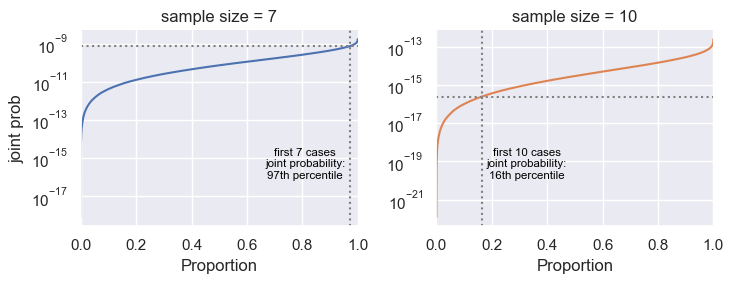
@MackayIM First 7 cases: 97th percentile
First 10 cases: 16th percentile
So it's more likely (but not conclusive) that only the first 7 cases were infected by case 1.
I'm betting that modeling the latter 3 cases as another wave will show >16th percentile, will work on this later (7/x)
@MackayIM 7e-10 and 2e-16 look very low, but aren't very helpful without context. Monte-carlo sims can help with that.
I generated 100k sets of 7- and 10-case counts based on the PMF. Based on the ECDF curves, we can find the percentiles of the joint probs calculated previously
(6/x)
@JeromeAdamsMD I appreciate your reminder but strongly disagree with your second sentence. This was foreseeable and one of GBD critics’ primary concerns.
"Is there any situation or scenario in which somebody could produce a droplet, but not produce a significant amount of aerosol?"
"No"
- Professor Clive Beggs
Right question, right answer
👏👏👏
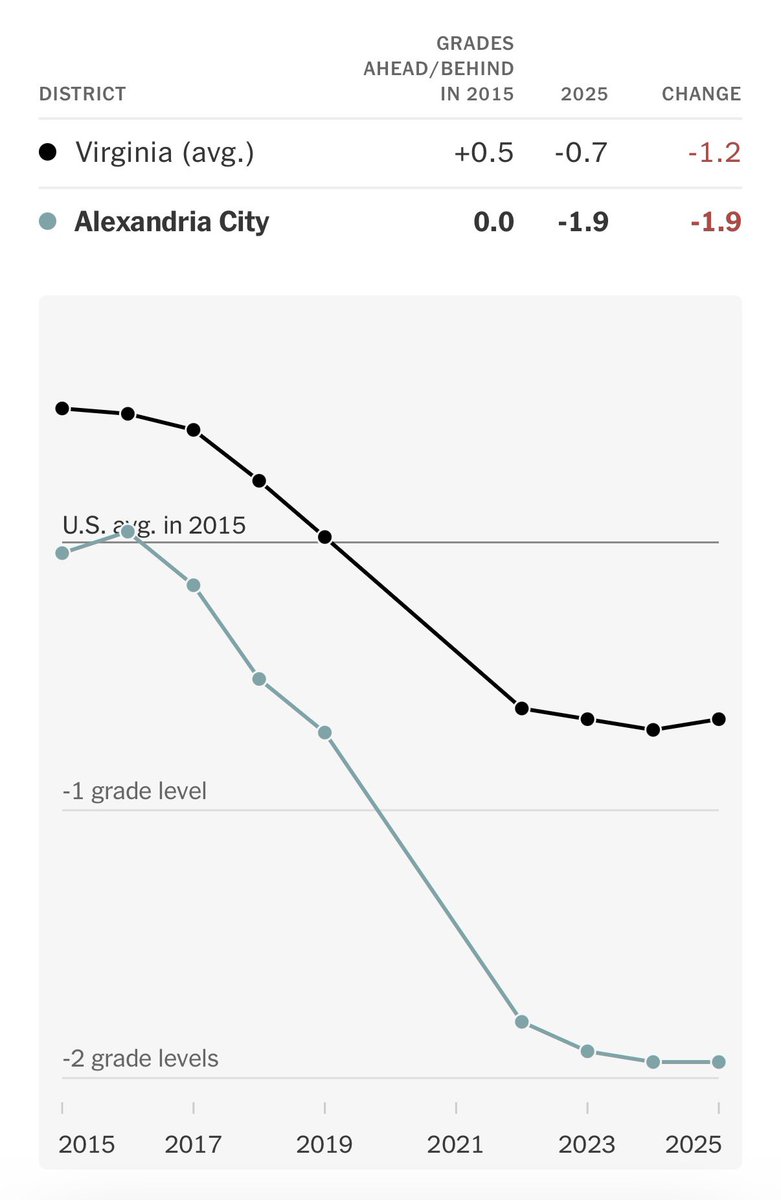
@michael_hoerger What’s your take on this data from VA which appears to show decline from 2017-19?
I don’t doubt COVID has impacted kids, but it seems like there’s an additional factor here
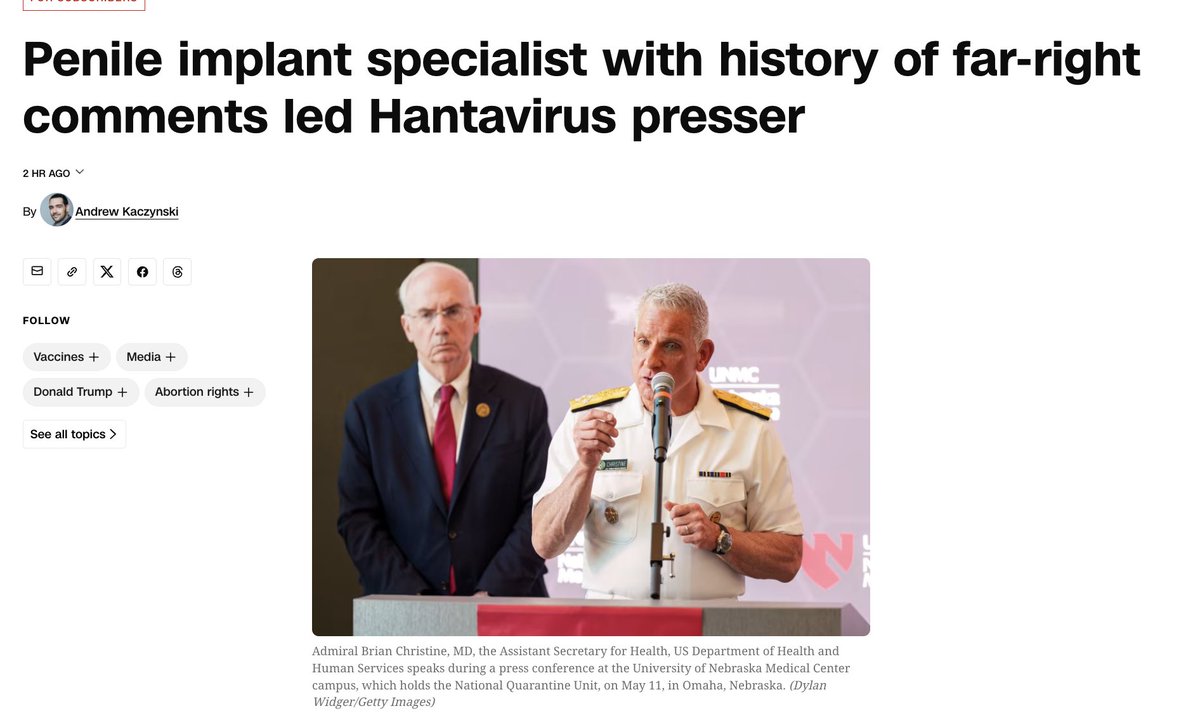
NEW: The health official who led the public response to the Hantavirus outbreak has little background in public health and previously was a penile implant specialist who hosted a podcast where he questioned the 2020 election and compared the Biden administration to Nazi Germany.
@michael_hoerger@scott_squires@jfalek Ugh, this was retweeted by an anti-(something?) brainiac who thinks viruses aren’t real.
My point is there’s another component here. Covid’s proven impacts on cognition surely factor in, but this decline was already steady from ~2017-201
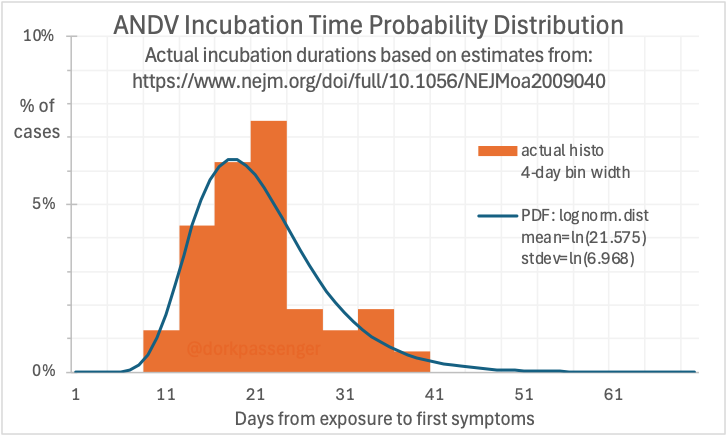
@outbreakupdates You can fit a lognormal PDF to the estimated incubation times from the NEJM study of the 2018 outbreak. From that you could make some conclusions based on symptom timing & probabilities... But it gets harder when potential exposures overlap
@AmeshAA@zeynep Can you articulate why, in the context of controlling an outbreak, it is important to recognize this?
If at least 15% of infected will transmit to 3-10+ others, and you don’t know who is a superspreader, can you explain the benefit of assuming the best case scenario?
So far all I see is performance theater
Tough talk but feeble action
I'm glad to see the use of the words "respirator" and "airborne" at WHO
But just saying the words won't work
Clearly, Andes Virus causes asymptomatic infection
Clearly, Andes Virus can transmit H2H easily, even though it's slow to do so
Clearly, Andes Virus can transmit through long serial chains of transmission if not acted upon quickly & decisively