12 ESSENTIAL Network Protocols:
1. HTTP (Hypertext Transfer Protocol):
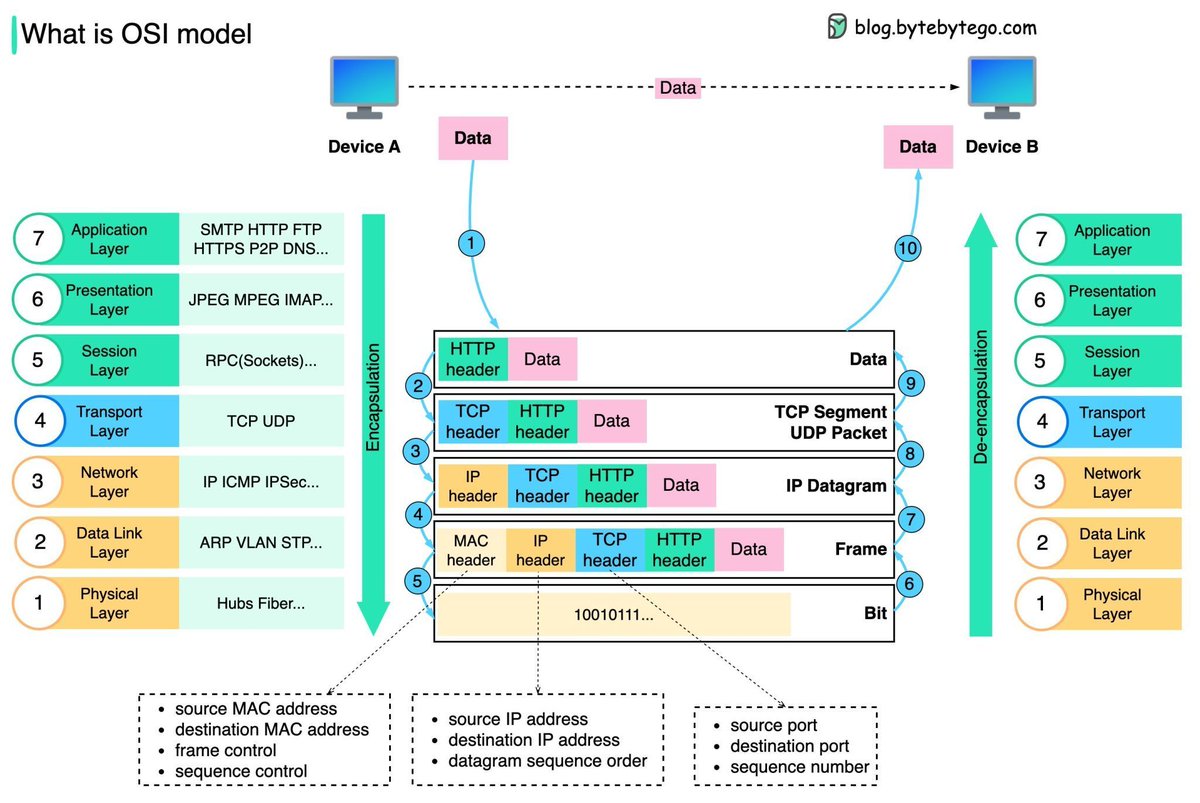
Web Communication: Enables browser-server interaction, suitable for unsecured data transfer.
2. HTTPS (Hypertext Transfer Protocol Secure):
Secure Web Communication: Ensures confidentiality through SSL/TLS encryption.
3. FTP (File Transfer Protocol):
File Transfer: Facilitates file exchange between computers, utilizing separate channels.
4. TCP (Transmission Control Protocol):
Reliable Data Delivery: Ensures ordered and reliable data transfer with error-checking.
5. IP (Internet Protocol):
Data Packet Management: Handles routing and addressing of data packets, assigning unique IP addresses.
6. UDP (User Datagram Protocol):
Swift Data Transfer: Offers connectionless and faster data transfer without reliability features.
7. SMTP (Simple Mail Transfer Protocol):
Email Sending: Manages email sending between servers through a client-server architecture.
8. SSH (Secure Shell):
Secure Remote Access: Enables secure access to remote devices, encrypting client-server communication.
9. IMAP (Internet Message Access Protocol):
Email Access: Allows access and retrieval of emails from a server, maintaining emails on the server.
👍🏿 Subscribe to our newsletter - https://t.co/hxARDoAGXT
#systemdesign #coding #interviewtips
Network protocols function as the main pillars that enable communication between devices over a network.
Understanding major networking protocols is important for developers.
However, there are a lot to remember. Here's a break down some of the most important ones:
Visita nuestra pagina web donde tenemos mucha información acerca de networking y visita nuestro canal de youtube.
Portal Web
https://t.co/AoDqpOvDVh
Canal de youtube
https://t.co/SlE6ChrYFq