Mercury Transfer Module separation confirmed! 📡 ✅
After nearly eight years in space and billions of kilometres travelled, #BepiColombo's Mercury Transfer Module has successfully separated.
Signal acquired via our Cebreros deep-space antenna confirms the spacecraft is healthy and operating as expected.
The MPO and Mio spacecrafts are now on their way to Mercury orbit insertion on 21 November.
Farewell, MTM. Mercury awaits. ☀️🛰️
I finally have all 1.2 million raw image files from my latest mission to ISS! Here is a sample of one of my favorite Milky Way photos, taken from the Cupola with Nikon Z9, Arri Zeiss 15mm lens, T1.8 with custom sidereal drive that cancelled out star motion relative to our orbit.
New views of Earth from (s)PACE 🛰️
Artemis II captured stunning views of our home planet, but did you know NASA has a whole fleet of satellites studying Earth ?
This view comes from PACE, which studies Earth’s ocean and atmosphere.
Day 068, orbit 1054 — Opening the shutters in the morning: what a beautiful way to start the day! 🌍
🎥 NASA/ESA
#εpsilon • @esa • @esaspaceflight • @Space_Station • @NASA • @NASA_Johnson •
Fantastico! Sul sito della @NASA è possibile ricreare il vostro nome (o qualsiasi altra parola) con le immagini della Terra ripresa dallo spazio!
Io ho creato il mio! E voi? ... Sbizzarritevi! 😎
https://t.co/8TmXBGfZsd
Happy Anniversary! 🎊
Hubble was launched #onthisday in 1990 and, every year since, it has been surprising us with its cosmic views 📸🌌
Check out the best images Hubble had to offer in its 36th year in our latest #SpaceSparks episode! 1/2
A thank you, in their own words 🫶
The Artemis II crew wanted to share their thanks to everyone who followed along during their journey, and share a reminder that there’s still more human exploration—and Artemis content—coming.
Prima di allontanarsi dalla Terra più di qualsiasi altro essere umano nella storia, aveva già lavorato per mesi nelle stazioni di ricerca più remote e inospitali del pianeta. L’isolamento non è una novità per lei. È Christina Koch, la donna che ha fatto dei record un’abitudine.
Christina Hammock nasce il 29 gennaio 1979 a Grand Rapids, nel Michigan, ma cresce a Jacksonville, nel North Carolina. Fin da giovane è affascinata dalla scienza e dalla tecnologia e si laurea in ingegneria elettrica e in fisica alla North Carolina State University. Il suo primo vero lavoro è costruire strumenti per lo spazio profondo alla NASA.
Poi parte per l'Antartide. Nell’arco di circa tre anni e mezzo prende parte a spedizioni in Antartide, Groenlandia, Alaska e Samoa americane, spostandosi dai poli all’equatore, compreso un intero inverno al Polo Sud.
Passa mesi senza luce solare né cibo fresco, con un equipaggio di circa 50 persone e nessuna via di fuga fino alla ripresa dei voli. È un'esperienza durissima, che le insegna a mantenere la calma, a risolvere problemi in autonomia e a convivere in spazi angusti con un piccolo gruppo di persone per mesi interi: esattamente le competenze che servono su una stazione spaziale.
Al ritorno, va alla Johns Hopkins University di Baltimora e costruisce strumenti per due missioni NASA: una, Juno, è ancora in orbita attorno a Giove in questo momento. Per un algoritmo da lei sviluppato per avviare micro pompe a vuoto turbo-molecolari, destinate ai rover marziani, la Johns Hopkins la candida al premio Invenzione dell'Anno nel 2009.
Nel 2013 fa parte degli otto nuovi astronauti che la NASA seleziona tra 6.300 candidati. Parte per la Stazione Spaziale Internazionale nel marzo 2019 con la missione Expedition 59. La sua missione viene prolungata e lei rimane in orbita per 328 giorni consecutivi, battendo il record di Peggy Whitson, che a sua volta aveva superato quello di Samantha Cristoforetti. Lassù conduce innumerevoli esperimenti di biologia, fisica dei fluidi e medicina spaziale, tra cui stampanti 3D capaci di costruire strutture simili ai tessuti umani.
Il 18 ottobre 2019 scrive un'altra pagina di storia: insieme alla collega Jessica Meir compie la prima attività extraveicolare interamente al femminile. Per decenni le tute spaziali di taglia adeguata per le donne erano scarse — una passeggiata analoga, pianificata qualche mese prima con la stessa Koch, era stata annullata proprio per mancanza di tute della giusta misura, suscitando un acceso dibattito pubblico. Quella di ottobre è una piccola rivincita, commentata in tutto il mondo.
È sposata con Robert Koch, ingegnere come lei. È una donna riservata, lontana dai riflettori rispetto ad altre figure pubbliche della NASA, ma chi la conosce la descrive come una persona di straordinaria concretezza e determinazione.
Oggi Christina Koch fa parte della missione Artemis II, che è tornata intorno alla Luna dopo più di cinquant’anni e ha battuto il record assoluto di distanza dalla Terra stabilito dall'Apollo 13 nel 1970, durante un disastro che rischiò di uccidere l'equipaggio.
Venerdì 10 aprile Koch e i suoi tre compagni di equipaggio torneranno a casa rientrando nell’atmosfera a circa 40.000 chilometri orari, più velocemente di qualsiasi altro equipaggio prima d’ora. Come se i record non bastassero mai.
Only one chance in this lifetime…
Like watching sunset at the beach from the most foreign seat in the cosmos, I couldn’t resist a cell phone video of Earthset. You can hear the shutter on the Nikon as @Astro_Christina is hammering away on 3-shot brackets and capturing those exceptional Earthset photos through the 400mm lens. @AstroVicGlover was in window 3 watching with @Astro_Jeremy next to him.
I could barely see the Moon through the docking hatch window but the iPhone was the perfect size to catch the view…this is uncropped, uncut with 8x zoom which is quite comparable to the view of the human eye. Enjoy.
🎉Still celebrating!
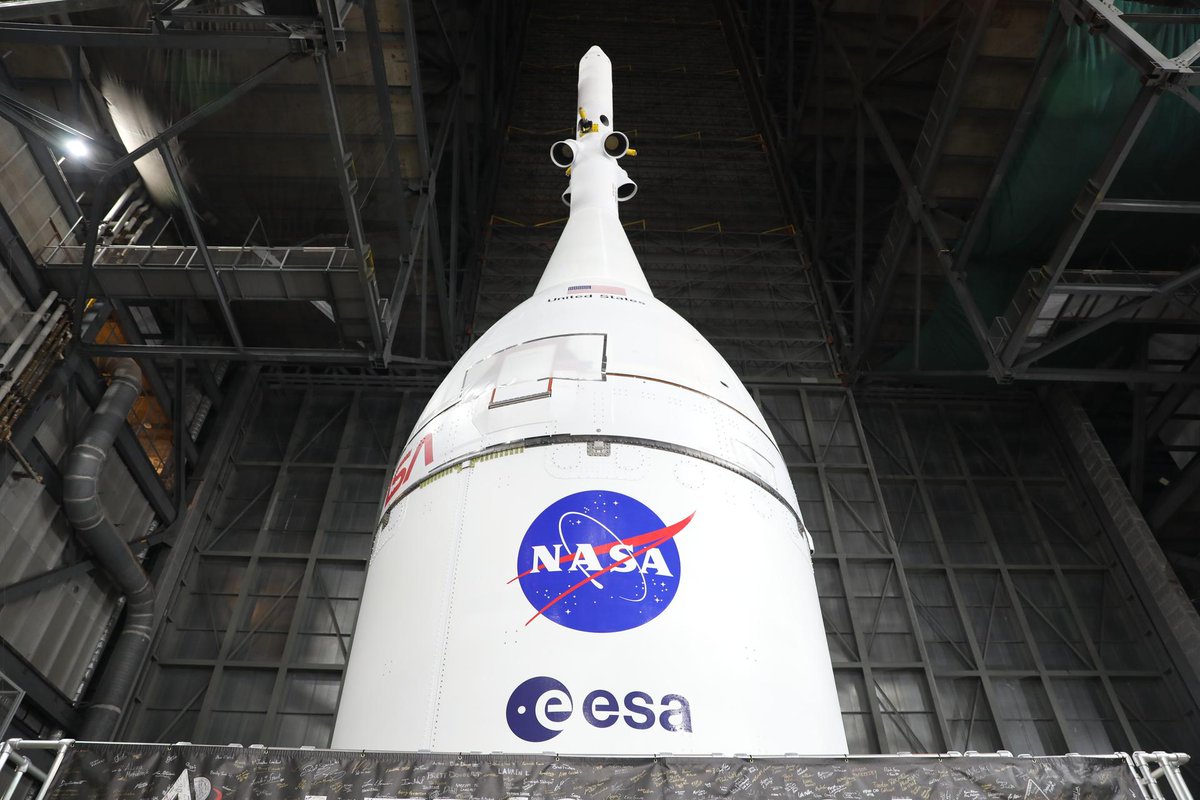
🚀#Artemis II's European Service Module not only supplied air, water, electrical power and thermal control during the mission, it propelled NASA's Orion crew over 1 million km through deep space.
🎯 Its 'translunar injection' burn set Orion and its crew on their free-return trajectory around the Moon so precisely that two out of the three planned trajectory corrections were cancelled.
🤝 Built by European industry under ESA leadership, the European Service Module was assembled by @AirbusSpace in Germany, with contributions from companies across 13 European countries (Germany, Italy, France, Switzerland, the Netherlands, Belgium, Spain, Norway, Denmark, Sweden, Austria, UK and Luxembourg) involving 20 main contractors and over 100 European suppliers.
https://t.co/yZ3XNBHBPt
45 years ago today, astronauts John Young and Bob Crippen completed the first spaceflight of the space shuttle program, STS-1, landing Columbia at Edwards Air Force Base.
Hundreds of thousands of spectators gathered in the California desert to witness the landing of the 98-ton (89-tonne) orbiter following its 2-day flight.
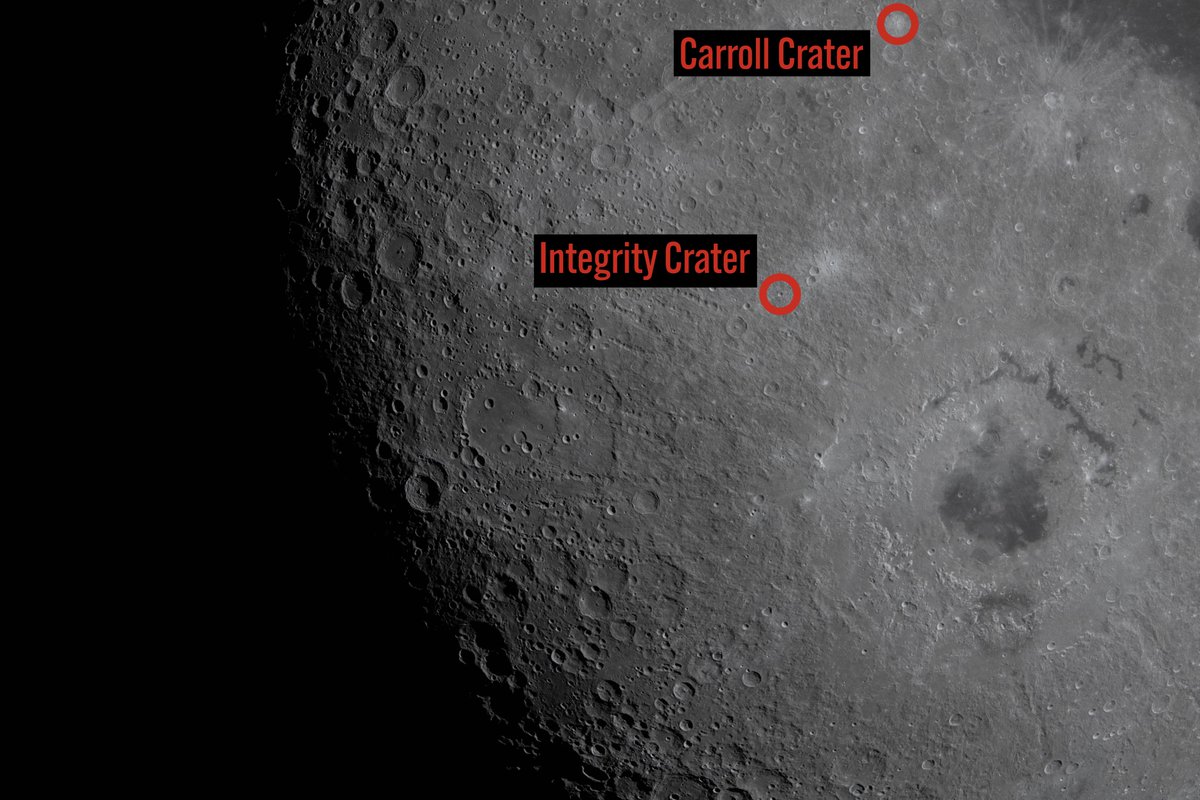
Jesse, Steve, Laddy, and Vlad….such an incredible feeling to welcome you aboard Integrity after a nearly 700,000 mile journey. Forever thankful for your service to our crew and the nation.
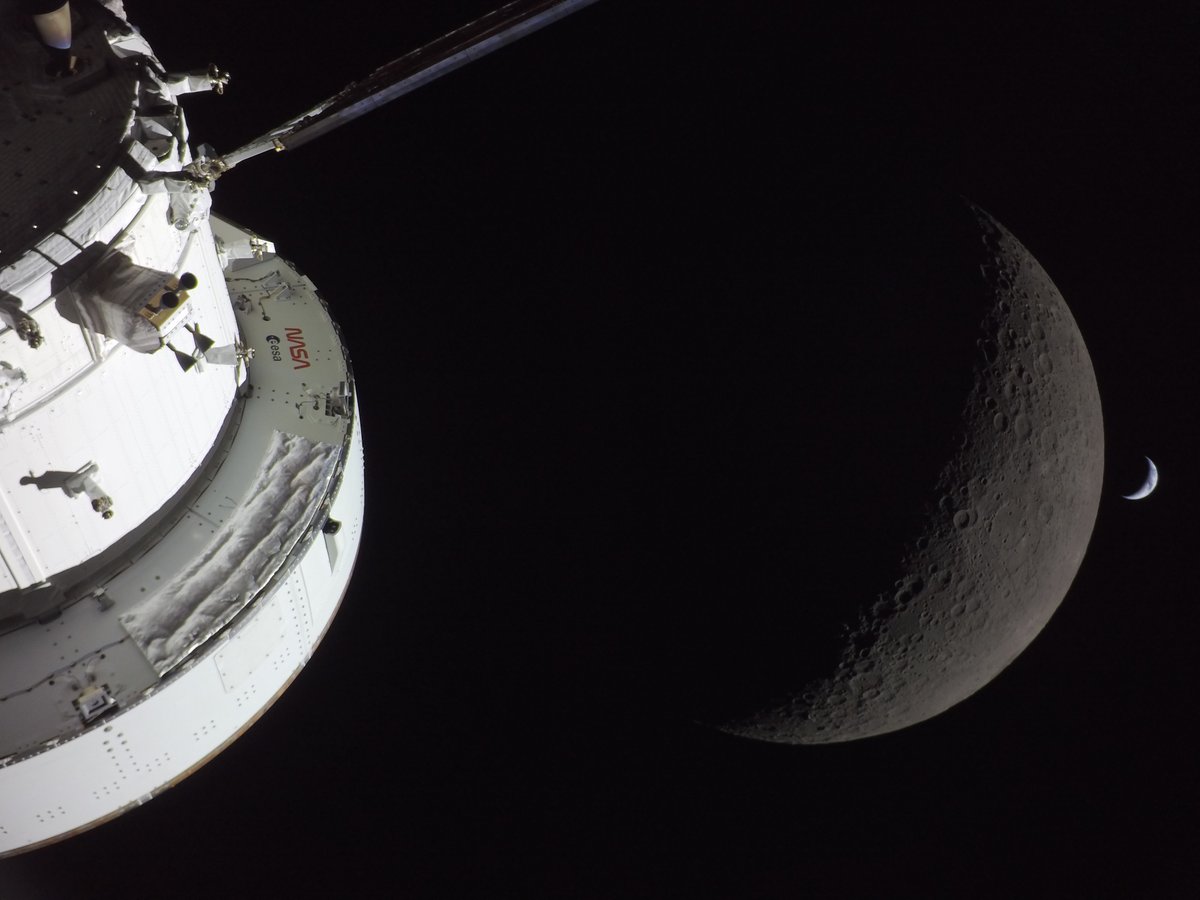
The Orion spacecraft, the Moon, and the Earth — all in one frame.
This image was captured during the sixth day of the Artemis II mission as our astronauts successfully circled the Moon.
And everything under the Sun is in tune 🎶
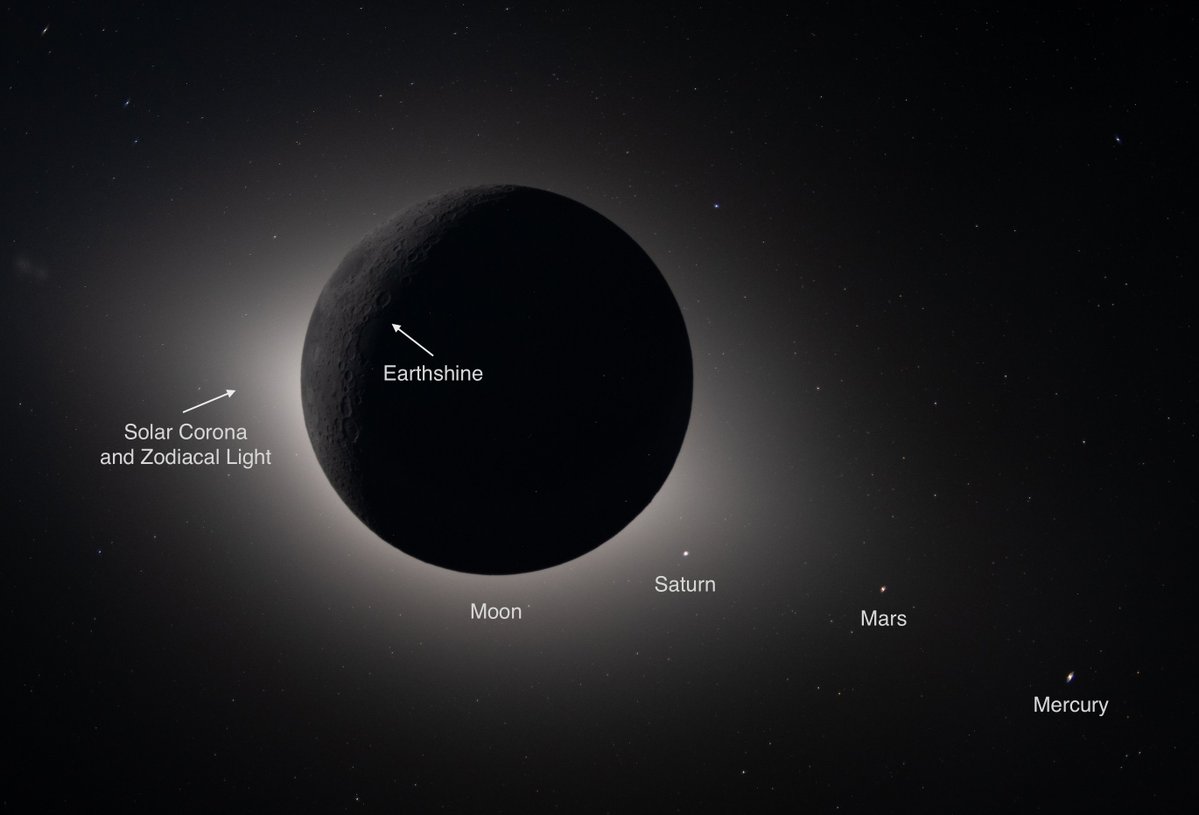
This image from the eclipse during the Artemis II lunar flyby captures a halo of light around the Moon. Scientists are still investigating if the glow comes from interstellar dust or the solar corona.
The Moon and light from at least five objects in our solar system appear in this view from the @NASAArtemis II crew: Saturn, Mars, and Mercury, along with reflected sunlight from Earth and the glow of the Sun's corona and/or zodiacal light scattered by interplanetary dust. 1/2
Experience the magic of our Moon mission wherever you go! ✨
Download free, mobile wallpapers and bring your device into the new era of exploration: https://t.co/494ZyUBtve
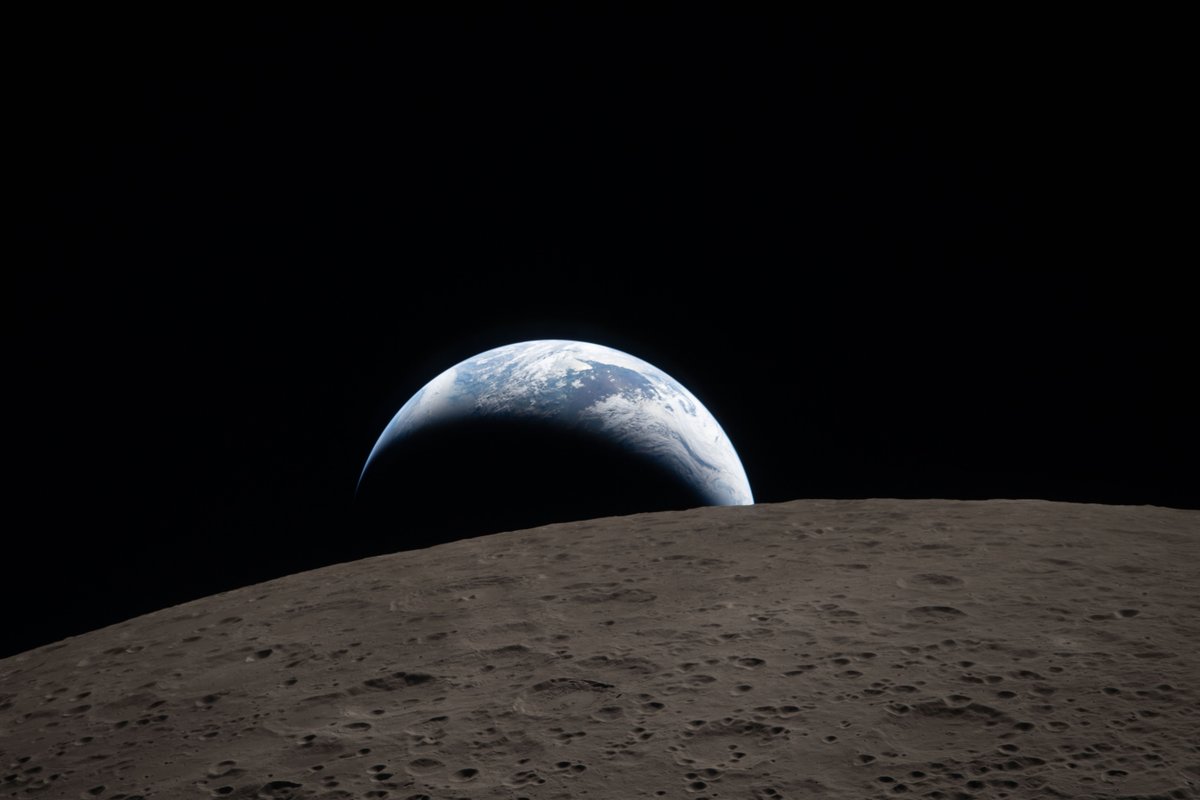
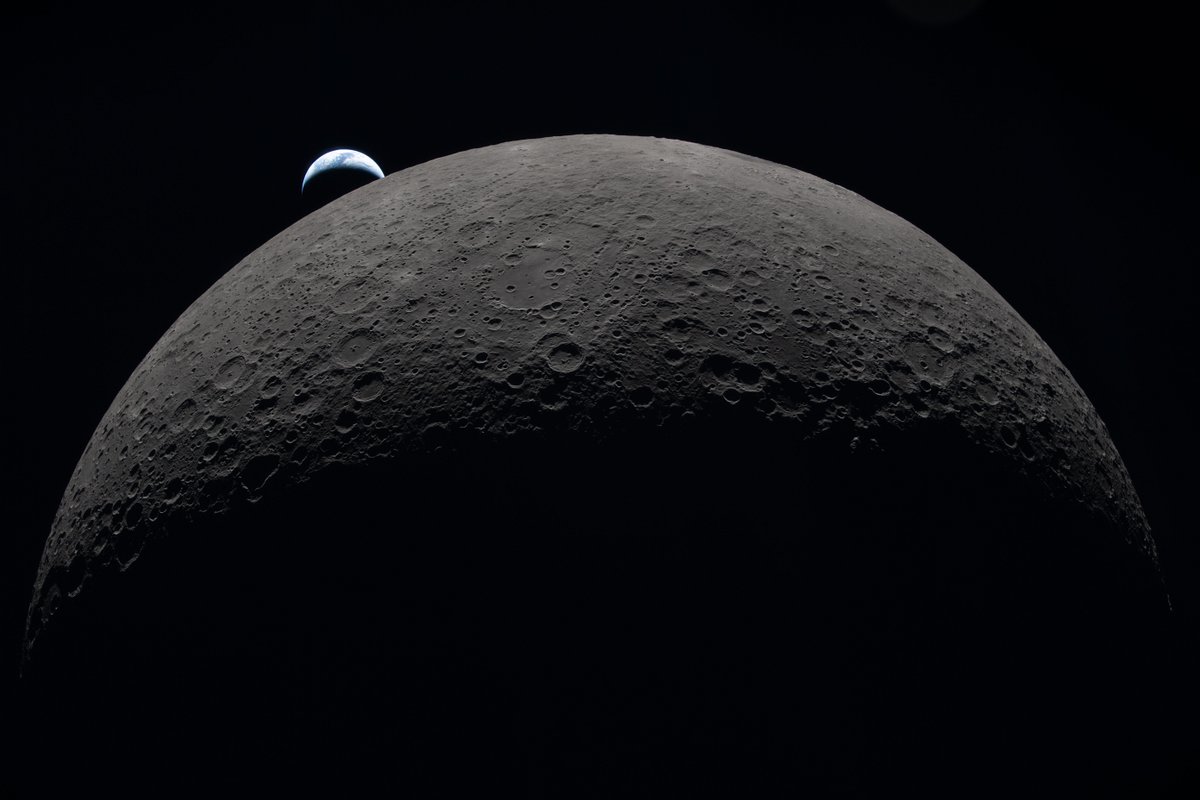
Ready… set… Earth! 🌎
As Artemis II flew around the far side of the Moon, the crew captured a new view of home. These images show Earthset, when Earth dips below the lunar horizon. Parts of Australia & Oceania are visible, while the dark side of Earth is experiencing nighttime.
The eclipse from Orion.
On April 6, external cameras attached to the Orion spacecraft's solar array wings captured the Moon backlit by the Sun during a solar eclipse.