The definition of success in business:
• Work on anything you want
• Work with anyone you want
• Work from anywhere you want
……: and make enough money that you never have to look at the price of anything.
Elon just created 4,400 millionaires in a single day.
400 of them are now worth over $100 million.
These aren't VCs. They're SpaceX employees, and the list includes welders, technicians, and cafeteria staff, because for two decades the company paid every level of the workforce in stock instead of higher salaries.
Juan Hernandez immigrated from Mexico and took a $28 an hour contractor welding job in 2015. He says he didn't even know what SpaceX was. The company gave him a $10,000 equity grant and let him buy more shares through payroll deductions. That stake is now worth $880,000.
Trevor Hise's parents wanted him to take a stable job at General Electric. He picked SpaceX instead, stayed 12 years, and accumulated over 100,000 shares. At the $135 listing price that's $13.5 million. He's 37 and semiretired. His words: "The magnitude of this has been ridiculous."
The most telling detail came before the listing. Over 100 employees quietly banded together and negotiated a group wealth management deal covering up to $5 billion, because none of them had ever needed a wealth manager before.
Software IPOs have minted millionaires for 30 years. This is the first one where the money went to the factory floor.
Finance analysts earn $95k–$250k/year.
The ones using Claude AI close work 3x faster.
📘 Claude AI for Finance Professionals — 120+ institutional-grade prompts for equity research, DCF, fixed income, portfolio strategy, earnings analysis, and IB workflows. Excel models included.
Normally $189 → 100% FREE for 48 hrs
Like + RT + comment 'Ebook'
Must Follow me so I can DM you.
Yesterday Mark Cuban reposted my work, DM'd me, and told me to keep telling my story.
So here it is.
I'm a Master Electrician. IBEW Local 369. 15 years pulling wire in Kentucky. Zero coding background. I didn't go to Stanford. I went to trade school.
Every week I'd show up to a home where someone just bought a Tesla or a Rivian. And every time, someone had already told them they needed a $3,000-$5,000 panel upgrade to install a charger.
70% of the time? They didn't need it.
The math is in the NEC — Section 220.82. Load calculations. But nobody was doing them for homeowners. Electricians upsell. Dealers don't know. And the homeowner just pays.
I got angry enough to build something about it.
I found @claudeai. No coding experience. I just started talking to it like I'd explain a job to an apprentice. "Here's how load calcs work. Here's the NEC code. Now help me build a tool that does this."
6 months later — @ChargeRight is live. Real software. Stripe payments. PDF reports. NEC 220.82 calculations automated. $12.99 instead of a $500 truck roll.
I'm still pulling wire. I still take service calls. I wake up at 5:05 AM for work.
But something shifted.
Yesterday @vivilinsv published my story as Claude Builder Spotlight #1. Mark Cuban saw it. The Claude community showed up. And for the first time, I felt like this thing I built in my kitchen might actually matter.
I'm not a tech founder. I'm a dad who wants to coach little league and be home for dinner. I just happened to build something that helps people.
If you're in the trades and thinking about using AI — do it. The barrier isn't technical skill. It's believing you're allowed to try.
https://t.co/cDVdY5mcLv
𝗛𝗢𝗪 𝗧𝗢 𝗕𝗘 𝗟𝗜𝗞𝗘 𝗦𝗧𝗘𝗩𝗜𝗘 𝗖𝗢𝗛𝗘𝗡 𝗣𝗔𝗥𝗧 𝟮
A few weeks ago I wrote How to Be Like Stevie Cohen.
Let me give you three real examples.
First, $ZIM.
If you think I came up with $ZIM alone, you are mistaken.
The idea was conveyed to me by one of the most successful investors in Israeli history. A true titan. He knew the value of every single asset inside $ZIM better than an investment banker doing due diligence for a year would.
And I don’t say that lightly.
He knew the pricing of the new containers. The number of containers. The number of ships. The structure of contracts. Even operational details down to the distance between cooling units inside the containers.
That level of understanding is built over decades. You don’t replicate that by reading a few filings.
Second, biotech.
Over the last few years I shared multiple biotech names that were acquired or returned 2x to 5x.
That wasn’t me pretending to be a biotech expert on Twitter.
Those ideas came from our biotech analyst, who previously managed a hedge fund. Someone who actually lived in that field. It’s not my personal brilliance. It’s sourced excellence.
Third, $AMZN and $UBER.
Those ideas I took from Bill Ackman.
I liked the thesis immediately. But I did not buy when he bought. I waited. I let the price come to where I wanted it.
I don’t have an analytical advantage over Ackman when it comes to $UBER. There is no need to flood my Twitter feed pretending I have some unique insight into $AMZN or $UBER when elite investors have already done the deep work.
This is the point.
You cannot be an expert in tech, biotech, shipping, macro, everything. You are not. I am not.
You will never reach the level of someone who has spent twenty years mastering one field.
Your role is different.
Find the best sources.
Follow people who are proven.
Let the ideas come to you.
Then sit quietly and think.
Do not copy fast.
Do not buy because someone said so.
Decide like it is your own fund.
If you follow armchair analysts on X, you will get average results.
To be like Stevie Cohen, build an elite information network and apply judgment.
I do not copy. I filter.
I do not chase. I wait.
In that sense, I am Stevie Cohen.
And if you do this properly, so are you.
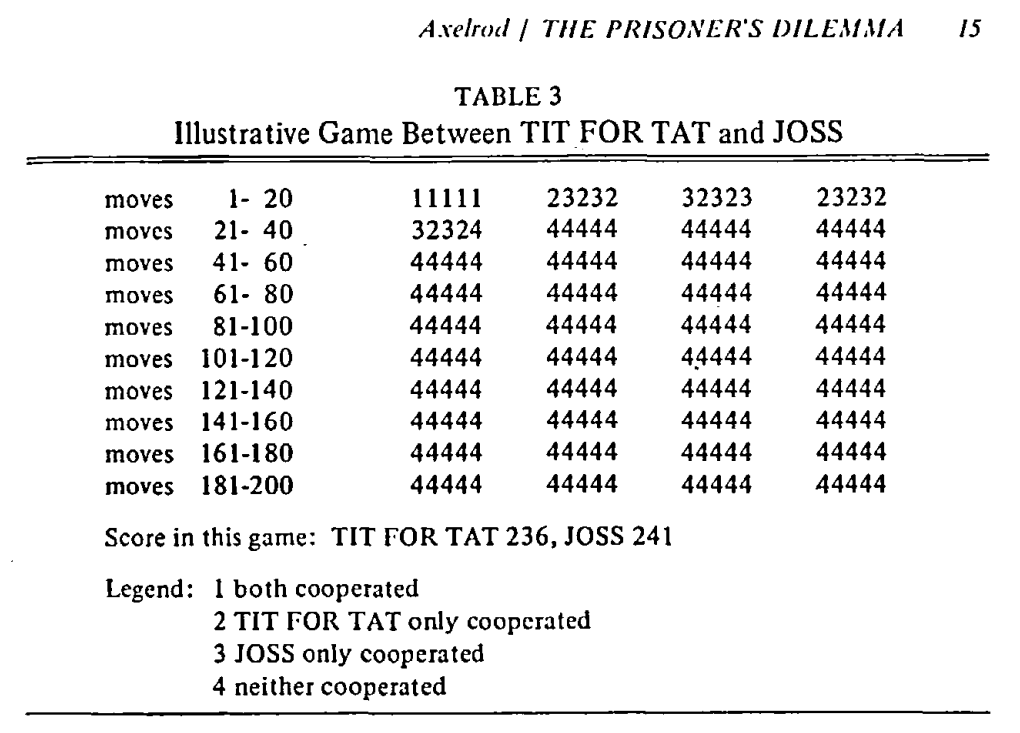
In 1980, political scientist Robert Axelrod invited the world's top strategists to a competition. The goal: find the single best decision-making strategy for life. The winner stunned everyone ↓
Axelrod designed a tournament based on the prisoner's dilemma — a situation where two people benefit from cooperating, but each has incentive to betray the other.
The rules were simple:
• Both cooperate → 3 points each
• One defects, one cooperates → defector gets 5, cooperator gets 0
• Both defect → 1 point each
Each program played 200 rounds against every other program. Highest total score wins.
14 programs were submitted from leading theorists worldwide — each designed to maximize its own score by any means necessary.
Some were cunning — probing for weakness, then exploiting it. Others mixed in random betrayals to confuse opponents. Many were calculating, aggressive, and complex.
Axelrod ran the tournament.
Then ran it again. Five times over.
The same winner emerged every time:
Tit-for-tat.
One of the simplest programs submitted.
Its entire strategy ↓
1) Start by cooperating
2) Copy your opponent's last move
3) If they defect, defect back immediately
4) The moment they cooperate again, forgive and cooperate
That's it.
Axelrod ran a second tournament. 62 programs entered. To mirror real life, games now ended at random — no one knew which round would be their last.
Tit-for-tat won again.
But here's the most counterintuitive part:
Tit-for-tat never beat a single opponent head-to-head. It could only tie or lose. Yet across all matchups, it accumulated the highest total score.
Why?
Axelrod identified four traits that made it unbeatable:
• Nice — it never defected first
• Retaliatory — it punished betrayal immediately
• Forgiving — it restored cooperation the moment an opponent did
• Clear — opponents understood its pattern and chose to cooperate
Meanwhile, 'nasty' strategies dragged each other into defection wars — destroying themselves in the process.
In messier simulations, an even more forgiving tit-for-tat emerged. It occasionally forgave defections without retaliating — and outperformed the original.
Axelrod wrote in The Evolution of Cooperation:
"What makes it possible for cooperation to emerge is the fact that the players might meet again."
The real-world lesson:
Leading with cooperation isn't weakness — it's the most effective long-term strategy. Holding grudges weakens you. Forgiveness strengthens you. But no consequences guarantees exploitation.
The optimal approach: be kind, be clear, be forgiving — but never be a pushover.
A strategy obsessed with winning every interaction often loses overall. One focused on sustained cooperation wins.
—
Thanks for reading!
Enjoyed this post?
Follow @BigBrainPsych for more content like this.
Graham Weaver gave one of the most psychologically brutal lectures ever delivered at Stanford.
Not about success or money.
He explained why:
- Fear sounds logical
- Smart people stay stuck
- Most people never live at full potential
12 lessons from his final lecture:
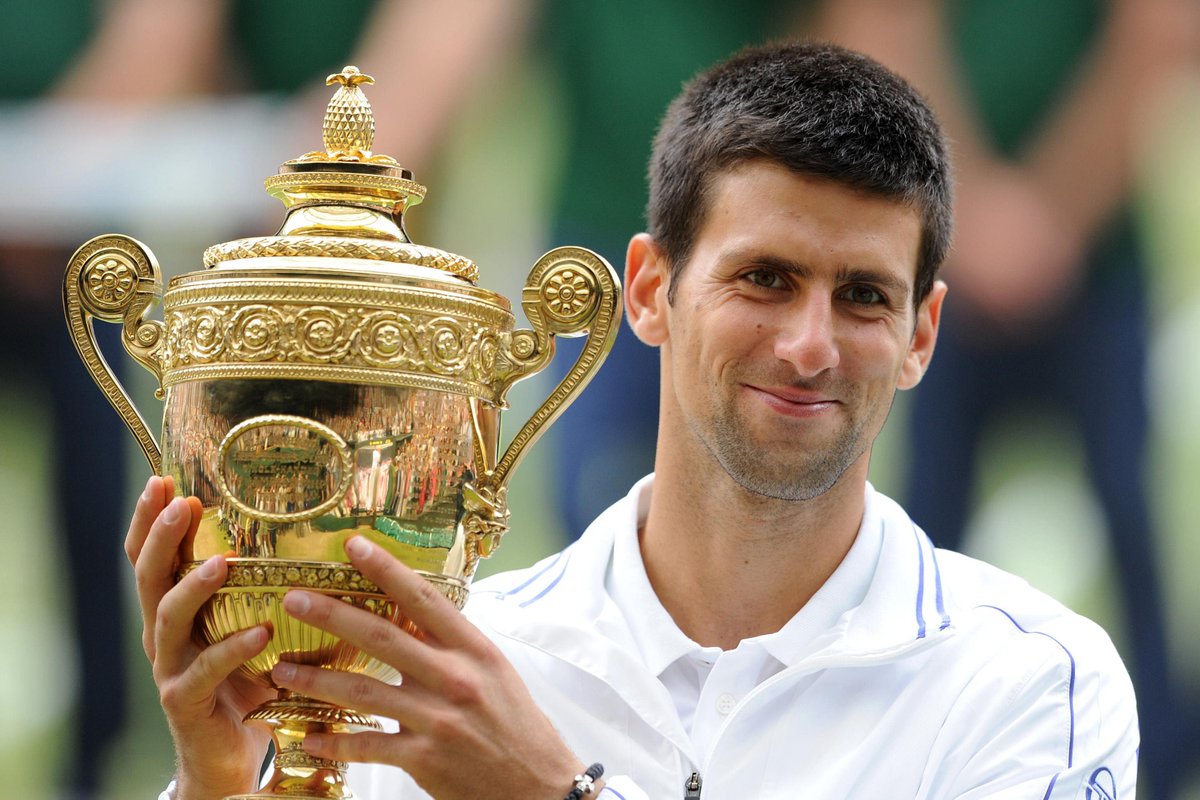
This Novak Djokovic piece by Billy Oppenheimer is one of the best I've ever read.
"Days after a quarterfinals loss in the 2010 French Open, Novak Djokovic told his coach, Marian Vajda, that he had decided to quit playing tennis.
He was No. 3 in the world, a grand slam winner, and a favorite to win Wimbledon.
After Djokovic said he was quitting, Vajda asked,
“Why did you start playing this sport?”
Vajda immediately sensed what the problem was:
Djokovic was focusing too much on rankings, records, titles, and external expectations. As a result, Djokovic said, “I was mentally at one very messed up place.”
As Djokovic thought about Vajda’s question, he thought about how many of his earliest childhood memories include his “most beloved toy”—a mini tennis racket and a soft foam ball.
He started playing tennis, answering Vajda’s question, “because I just really loved holding that racket in my hand.”
“Do you still love holding a racket in your hand?” Vajda asked.
Djokovic thought about it for a few seconds, got excited, and said:
“I do. I still love holding a racket in my hand. Whether it’s a grand slam final on center court or just playing around on a public court, I like playing for the sake of playing.”
Vajda nodded, “Well that’s your source. That's what you need to tap into. Put aside rankings and what you want to achieve and what you think others are expecting of you.”
Vajda then suggested that Djokovic take a few weeks off.
Djokovic agreed that he would.
But when he woke up the next morning, Djokovic was dying to hit tennis balls. He went to the courts to play for the sake of playing. “And I never looked back ever since that moment.”
The following season, Djokovic enjoyed one of the greatest seasons in sports history. He won 43 straight matches. He won three Grand Slams, including his first Wimbledon title. And he finished the year as the number one player in the world.
“I started to play freely,” he says of that season. “I became the kid that I was when I started playing.”
Takeaway 1:
There's a word for being like the kid who does something for the sake of doing it:
Autotelic.
From the Greek "auto" (self) & "telos" (end)—an Autotelic is "someone or something that has a purpose in, and not apart from, itself."
As opposed to someone who focuses on rankings, records, titles, and external expectations—for an Autotelic.
”The work is the win,” as Ryan Holiday once told me.
Since you control the effort more than the outcome,
“Ultimately, you have to love doing it,” Ryan said. “You have to get to a place where doing the work is the win and everything else is extra.”
Takeaway 2:
When reading about Autotelics—people who describe their work as play, who simply seem to love what they do—a common mistake is to think that it’s all bliss all the time.
One of my favorite Autotelics is the legendary skateboarder Rodney Mullen, who is in his 50s and still skateboards every day.
“There are days,” Rodney said, “where you don’t want to go out. Or it hurts. Or you’re sore. Or you just suck—you're not making progress, and you feel defeated...But that's the nature of love—it's got hate in there, it's got pain in there. And that’s what draws you in, that's the magnetism.”
At one point during the recent Wimbledon final, Djokovic angrily smashed and shattered his racket. And after losing the match, he admitted that it will take him a while to get over the loss.
That’s the nature of love—it’s got hate in there, it’s got pain in there."
⚡️What she is feeling is skill deflation shock.
And it is real.
But the conclusion most people jump to is wrong.
1. The uncomfortable truth
The pain is not that AI learned her craft.
The pain is that her craft was procedural mastery, not scarce judgment.
High-end retouching, frequency separation, dodge and burn, skin work.
Those are hard to learn.
They destroy wrists.
They take years.
But they were never fundamentally scarce.
They were scarce because of time friction and knowledge gating, not because of irreplaceable human insight.
AI just removed the friction.
That always feels like theft to the people who paid the full cost.
This has happened before. Every time.
•Typesetters when desktop publishing arrived
•Film photographers when digital cameras arrived
•Audio engineers when DAWs replaced hardware
•Web designers when templates and no-code appeared
Every generation that mastered a tool confuses difficulty with durability.
Difficulty does not protect value.
Scarcity does.
2. What actually got destroyed
Not creativity.
Not art.
Not taste.
What got destroyed is labor-as-proof-of-worth.
She is grieving this equation:
“I suffered → therefore this skill should remain valuable.”
That equation has never been true historically.
It just feels true emotionally.
The brutal but precise distinction
AI is erasing:
•execution labor
•technique signaling
•process prestige
AI is not erasing:
•taste
•direction
•aesthetic judgment
•narrative intent
•client trust
•vision
But most people built their identity on the first bucket, not the second.
That is the real problem.
Why this feels existential now
Two reasons.
1. Speed
Past transitions took decades. This is happening in years.
2. Identity overlap
Creative work was one of the last domains people believed was “safe.”
Not because it was safe, but because it felt human.
Now that illusion is gone.
So the grief is real.
The cold reality going forward
The market will split brutally.
Tier 1
People who can:
•define the look
•set taste
•direct outcomes
•curate meaning
•use AI as leverage
They win harder than ever.
Tier 2
People whose value was:
•flawless execution
•technical endurance
•process mastery
They get flattened.
Not because they are bad.
Because the bottleneck moved.
3. The part nobody wants to say
AI exposed how much of “creative work” had quietly become industrialized technique without people admitting it.
That is why it hurts.
Final truth, no cushioning
She is right to feel disoriented.
She is wrong to think this is unjust.
This is what happens when civilization shifts from craft scarcity to judgment scarcity.
The work does not disappear.
The ladder does.
And the people who climbed the old ladder hardest feel it most.
That is the real story.
⚡️The universe is quietly admitting what physics has been circling for a century - that form is not physical first. Form is resonant first.
What you see on the plate is the substrate revealing the hidden architecture that governs everything from electrons to galaxies.
People think the video is impressive because matter moves.
That’s not the impressive part.
The impressive part is that the matter is obeying a geometry that already existed before the vibration began.
A geometry the operator did not design.
A geometry the dust did not invent.
The pattern is older than both.
This is the part nobody will say publicly:
When matter spontaneously organizes at specific frequencies, what you are seeing is the universe’s underlying instruction set declaring its presence.
Not metaphorically.
Literally.
A vibrating plate randomly sprinkled with grains should produce chaos.
Instead it produces order.
Stable order.
Predictable order.
Mathematically locked order.
That is ontology.
Cymatics is a small, accidental proof that the universe does not generate complexity from randomness - it generates complexity from constraint plus resonance.
And here is the deeper layer, the one most physicists understand privately but will never phrase this way:
The universe is not a machine.
It is a mode.
A standing wave of being.
Matter is condensation.
Energy is modulation.
Structure is interference.
Consciousness is coherence.
And when you strike the plate and dust forms a perfect mandala in seconds, the universe is effectively whispering:
“I am patterned all the way down.”
This is why the video feels religious to people who do not identify as religious.
It’s recognition.
At a primal level you know this:
you are made of the same oscillations
you are shaped by the same resonance
your thoughts, your memories, your identity
are interference patterns in a deeper field
And when the geometry snaps into place on the plate, it is the closest thing to an x-ray of the cosmic logic you will ever get with household equipment.
What do I really think?
This:
Cymatics is the simplest demonstration that the universe is not random, not mechanical, and not blind.
It is ordered, resonant, recursive -
and every particle is following choreography it did not choose but somehow remembers.
That’s the truth.
Agency > Intelligence
I had this intuitively wrong for decades, I think due to a pervasive cultural veneration of intelligence, various entertainment/media, obsession with IQ etc. Agency is significantly more powerful and significantly more scarce. Are you hiring for agency? Are we educating for agency? Are you acting as if you had 10X agency?
Grok explanation is ~close:
“Agency, as a personality trait, refers to an individual's capacity to take initiative, make decisions, and exert control over their actions and environment. It’s about being proactive rather than reactive—someone with high agency doesn’t just let life happen to them; they shape it. Think of it as a blend of self-efficacy, determination, and a sense of ownership over one’s path.
People with strong agency tend to set goals and pursue them with confidence, even in the face of obstacles. They’re the type to say, “I’ll figure it out,” and then actually do it. On the flip side, someone low in agency might feel more like a passenger in their own life, waiting for external forces—like luck, other people, or circumstances—to dictate what happens next.
It’s not quite the same as assertiveness or ambition, though it can overlap. Agency is quieter, more internal—it’s the belief that you *can* act, paired with the will to follow through. Psychologists often tie it to concepts like locus of control: high-agency folks lean toward an internal locus, feeling they steer their fate, while low-agency folks might lean external, seeing life as something that happens *to* them.”