After 30 years of building startups — raising $30M, leading 150+ teams, and exiting twice — it’s time to build what’s next.
Introducing SKIN STUDIOS: A fractional strategy + venture studio for early-stage founders.
💻 https://t.co/sXP18WCXkE 📩 [email protected]#founders
While Guru is my mission-driven startup aimed at making a significant impact on the creator economy, I have also been working on a personal passion venture with my wife. As parents of two wonderful young boys who are just beginning to explore the world, we have often found ourselves overwhelmed by the constant oversight and management of their ever-changing activities. Children between the ages of 2-12 are in a continuous cycle of discovering their passions and interests. For us parents, it becomes increasingly challenging to keep up with all these changes. Additionally, the cost of numerous evolving activities and individual subscription plans can strain our wallets, often leaving us feeling that we are not getting the full value from our memberships.
This led us to ask ourselves : What if there was a subscription plan that covered all our kids' activities, allowing us to flexibly switch activities based on their current interests? Imagine visiting the zoo and children's museum one month, and the aquarium and soccer training the next. When we couldn’t find anything that met our needs (unbelievable right?), so we decided to create it ourselves!
Introducing @getwonderpass – your ultimate subscription plan offering access to a wide range of kids' activities. From zoos and aquariums to museums, learning centers, and sports, @getwonderpass makes it easy and affordable. Choose a plan tailored to your family’s size and activity level, and enjoy the flexibility to adapt to your needs.
We will be launching in LA soon! Sign up now to join our waitlist and be the first to experience the wonder. https://t.co/c2d2vCLwZQ
Let's talk about work-life balance as a founder. I'm currently working on my fifth startup, and the days of endless, unstructured work hours are long gone. Like many seasoned founders, I now have a family and small children, which means I can't be as egocentric and manic about my working hours and dedication to getting sh*t done.
This doesn't mean I work any less hard, but it does mean I have to be more efficient with my work schedule, leaving no room for non-productive workflows. Here are my top recommendations for working effectively while ensuring you have time for your loved ones and yourself:
1. Structure Your Day/Week for Efficiency: Designate specific days for meetings and Zoom calls, and stick to those days and times.
2. Keep Meetings Short and Purposeful: Always set clear goals and decisions that need to be finalized in each meeting.
3. Set Dedicated Email/Slack Time: Reserve a specific time each day to respond to emails/slack messages to avoid constant distractions.
4. Allocate Time for Deep Work: Schedule uninterrupted time for focused, knowledge-intensive tasks.
5. Disconnect After Work: When the workday is over, put away your computer and phone. Seriously, don't let work issues encroach on your quality time with family or yourself.
I'd love to hear your ideas on how you work efficiently.
We are entering an era where community is getting its flowers, but creators are still going to reign supreme.
At Reddit, what we did get right was making it about our community and not about us.
Where we missed was our follow model. We didn’t have a follow button. This was something we had a lot of discussions about internally.
Instead, Reddit was about follow the community. If you love cute animals, follow the cute animal community.
But it was less obvious where and how you, as an individual, could build a community around *your own work*. It was easy to be a fan, hard to build a fanbase.
That made it hard for us, over time, to convince creators to spend time making stuff on Reddit.
That’s something X got right.
Creators who are able to build near-fanatical community are going to be able to endure in a world with 1K different distractions and channels.
That means the platforms and tools that help them do that are going to win big, too.
Are Accelerators Worth It?
Having participated in several accelerator programs with my previous startups, I've learned that while a few programs provide significant value to founders, many may not justify the time and effort invested. Here's what I consider when evaluating an accelerator for my company:
Top 10 Criteria for Evaluating Accelerators:
1. Brand and Founder Recognition: Established brands like YC or Techstars are well-known, but did you know Sequoia has an accelerator named Arc?
2. Objective Alignment: What do I aim to gain from an accelerator? Is it access to investors, networking, or mentorship for product-market fit?
3. Industry Specificity: Are there accelerators that specialize in my industry segment?
4. Mentor Network Quality: Do they have high-quality founders, investors, and executives as mentors?
5. Program Duration and Content Quality: How long is the program, and how valuable is the content provided?
6. Format and Location: Is the program in-person or virtual? If in-person, where is it located?
7. Cohort Size: How many startups are in each cohort?
8. Graduation and Demo Day: What does graduation entail? Is there a Demo Day?
9. Feedback from Alumni: What do previous cohort founders say about their experience?
10. Equity Trade-off: How much equity do I have to give away, and is it worth it?
My Top Recommended Accelerators:
Pre-Accelerator Program:
- @FounderUni : Ideal for first-time founders to understand the startup ecosystem. @KSchricks and @preshdkumar provide excellent guidance, and they invest $25K in top-performing graduates.
Accelerator Programs:
- @ycombinator : The most successful and well-known mainstream accelerator.
- @sequoia arc: My personal favorite and arguably the best overall program, offering mentorship from Sequoia's finest minds.
- @Techstars : Recently restructured to focus on improving strategic value from corporate partners, with a stronger emphasis on quality.
- @500GlobalVC : A veteran accelerator with a proven track record.
- @angelpad : A hands-on program led by former Google executives @carinemagescas and @thomask.
Did I miss anything? Please share your experiences and thoughts on accelerators!
Meet my friend Dave , a dedicated content creator who recently made the bold leap from a 9-to-5 job to pursue his passion full-time: exploring and sharing the vibrant SoCal food scene. Dave's enthusiasm is contagious, and his content is nothing short of exceptional!
However, like many of the 200 million content creators worldwide, Dave faces a significant challenge: how to focus on creating authentic and valuable content while seamlessly generating revenue. Traditional social platforms fall short in supporting monetization. They don't help Dave leverage his extensive backlog of rich content, forcing him to seek out brand sponsorships independently. Moreover, he lacks a way to demonstrate to small businesses how his content drives customers to them, limiting his ability to track overall performance beyond follower growth and engagement rates. Platforms like Patreon don’t cater to the unique needs of knowledge content creators like Dave, who represent a significant portion of the creator community.
That's where Guru comes in. We're building a platform specifically for creators like Dave, designed to empower them to monetize their content effortlessly while delivering genuine value to their audiences. With Guru, you'll soon be able to discover Dave’s content in your vicinity and experience his recommendations in a fresh, exciting way. Say goodbye to social content getting lost in the ephemeral void of legacy platforms.
Guru will enable Dave to focus on his true passion—creating mouthwatering content for his followers—while enhancing the discoverability and shoppability of his posts. This will foster a more engaging community around his personal brand. Guru is set to revolutionize social media by seamlessly connecting content, commerce, and consumers, ushering in a new era of social interaction.
Join us on our journey to make social media great again! Follow Dave on Instagram: https://t.co/gr9ioNA88a, and stay tuned for more updates on how @getguru_1 will transform the content creation landscape. #contentcreator #creatoreconomy #socialcommerce
In Silicon Valley, there's a common quote by Michael Colt: “Ask for money, get advice. Ask for advice, and you get money twice.” This saying holds true in many ways and is a crucial insight for any founder's journey.
I'm a firm believer in involving smarter people in your company as early as possible. However, early-stage startups often lack the resources to attract top talent. So, what should you do? I advise every founder to research and find the best advisors in their industry or field of expertise and reach out to them!
Most successful people are open to listening, especially if they are passionate about your mission and capable of contributing with their expertise and network. Securing an advisor can benefit your journey in several ways. First, they provide an external perspective on your business and offer guidance based on their experiences. Second, they open their networks to help you reach your next milestone, whether that involves introductions to investors, potential partners, or new customers.
Here are my top seven tips for finding, identifying, and working with a top advisor for your startup:
1. Identify Key Areas for Guidance: Determine where your company needs the most help. For example, at Guru, I identified the need for guidance in product development, the creator economy, and fundraising.
2. Research Experts: Look for top founders, executives, and other experts in these key areas. Don’t hesitate to reach out; people are often more receptive than you might expect.
3. Assess Compatibility: Have at least two meetings with each advisory candidate to ensure mutual value and a good fit.
4. Set Meeting Cadence: Agree on a meeting frequency for the first six months, then reassess. It takes time to understand the full value an advisor can provide.
5. Equity Compensation: The average equity option distribution for advisors ranges from 0.25% to 1%, with higher percentages reserved for those who can significantly impact your company.
6. Vesting Periods: Always include a vesting period in your agreement, typically two years with no cliff, to allow for flexibility as your company's needs evolve.
7. Create a Communication Channel: Set up a chat group with all your advisors to facilitate idea exchange, seek help, and build a supportive sounding board.
I hope these tips help you build a robust and healthy advisory board to guide your company in the right direction. Onwards and upwards!
This is my son @Keziah Pantelides. We have been building together for many years now. He is a crucial part of my founding team.
Finding the ideal founding team is crucial, much like entering a marriage; you're committing to collaborate closely for at least five years, facing all highs and lows together.
Drawing on two decades of experience in building startups, I've learned that achieving product-market fit heavily relies on assembling the right founding team. A practical first step is to leverage your existing network. Having worked with numerous talented individuals at previous companies, I've gained insights into not only their capabilities but also the personal qualities that make for enjoyable and effective collaboration. This experience helps in identifying those who can truly execute and those who might not be as suitable.
When choosing a co-founder, consider these key factors:
1. Complementary Skills: Look for someone whose strengths and experiences enhance your own.
2. Similar Life Stages: Ensure your personal priorities align, minimizing potential conflicts.
3. Shared Values: Clearly define and communicate your core values to ensure alignment with potential partners.
4. Right Timing: Verify that potential co-founders are at a point in their lives where they can commit to the venture.
5. Passion: They should share your enthusiasm for the project, as this drives motivation and persistence.
For additional guidance on finding the right co-founder, @harjtaggar of @ycombinator provides valuable insights in his article. You can access it here: https://t.co/ZPklfTlo9B. This resource is an excellent starting point for anyone on the journey to building a successful founding team.
We believe that creators are the modern-day gurus. They enrich our lives by sharing their knowledge, insights, and recommendations, echoing the role of wise teachers in past societies. Historically, such contributions were preserved in libraries, galleries, and museums. Today, however, many creators see their work lost in the fleeting world of social media—a temporary showcase at best.
These creators profoundly shape our society and have a significant influence on us. They deserve a platform where their content is not only preserved but also structured, categorized, and presented in a way that enhances their personal brands. Moreover, they should be able to fully capitalize on their creations and foster stronger, more engaging communities with their audiences.
At Guru, we are dedicated to redefining how creators manage and derive value from their social content. Our mission is to provide tools that automatically organize and categorize social media content, making it actionable and valuable. This approach will not only improve creator-audience relationships but also give creators better insights into what truly resonates with their communities, shaping their future content strategies.
We are eager to connect with individuals and organizations involved in the creator economy. Whether you are a content creator looking to unlock new revenue streams, or an agency or brand engaged in influencer marketing, we invite you to reach out. Let's explore how we can meet your needs and fulfill your aspirations in this evolving landscape. #creatoreconomy #socialcommerce
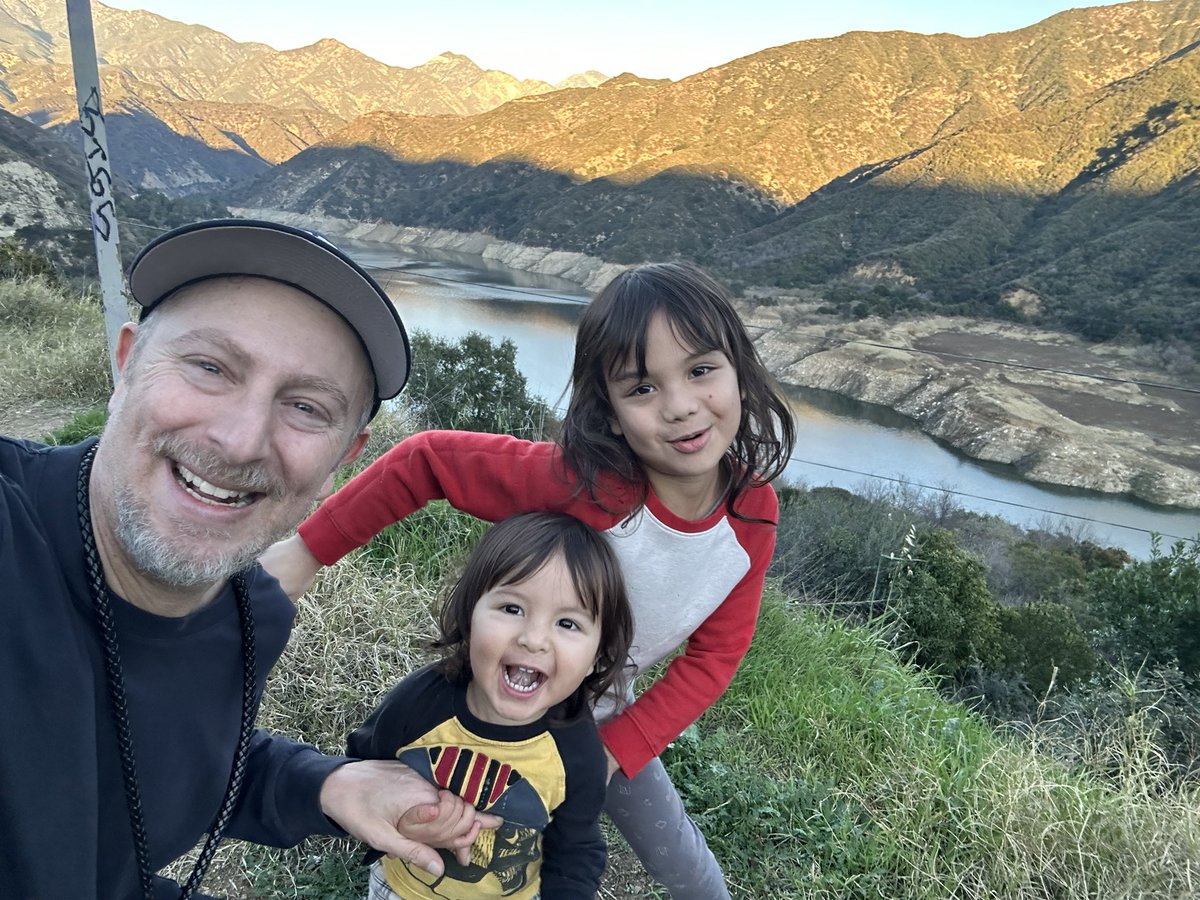
Every founder needs a robust support system and sources of inspiration. My support system has always been my family, as seen here. My wife, Julie Figueroa, has been an unwavering pillar of strength throughout the last decade of my career. She has supported me through every peak and valley, and even took on the role of primary breadwinner during times when I couldn't draw a salary. Julie's sacrifices have been a cornerstone of my drive and resilience as an entrepreneur—a trait critical to any founder's success. In honor of Mother’s Day this week, thank you so much for what you do for our family, I love you very much ❤️.
On the other hand, my boys are my endless source of inspiration. As a mission-driven founder, I am motivated by the need to create positive societal change and to leave the world better for my children. The responsibility to correct the shortsightedness of past generations in environmental care falls upon us. It is my duty to add value for future generations, maintaining the fervent hope that the positive changes we make today will benefit my children and theirs. This enduring commitment to our mission fuels my creativity and persistence. Mission truly matters!
I once considered myself a failed founder, grappling with the harsh realities of entrepreneurship. Like many others in this field, I've dedicated over two decades to this volatile path, driven by a deep-seated mission to create value. My journey has been a veritable rollercoaster, embodying Reid Hoffman's vivid metaphor that being an entrepreneur is akin to "jumping off a cliff and assembling a plane on the way down." This analogy resonates deeply with me, having experienced the lows of crashing and burning more than once.
Despite the setbacks, the relentless inner voice of a mission-driven founder compels me to rise, dust myself off, and keep moving forward—no easy feat, I assure you.
Today marks the beginning of a new chapter. I'm excited to publicly chronicle the building of my latest venture, Guru, drawing inspiration from friends, role models, and fellow founders such as @danielbrackins, @jnpayne, @HarryStebbings, and @Jason, among others. The life of a startup founder and CEO often oscillates between isolation and spotlight—the burden of responsibility resting heavily before any signs of success.
This is the inaugural entry of my venture diary on LinkedIn, where I plan to transparently share the trials and tribulations of building a mission-driven startup. I look forward to engaging with my network, learning together, and offering firsthand insights to peers who are in the trenches alongside me.
Embarking on this journey, I am hopeful that it will not only foster a stronger company but also sculpt me into a better founder. Onwards and upwards!
We just finished the 12-week @FounderUni program and highly recommend it as a pre-accelerator if you're a builder founder!
Applications for their next cohort are open 👇 https://t.co/LqXFU4F9Tk
Cohort 8 applications are now open ‼️
Work on your idea, MVP, or existing product for 12 weeks.
- Launch a product
- Get users/customers
- Demonstrate product velocity
Top products have a chance at receiving a $25k or $125k investment.
https://t.co/9PGTMhXROB
Traveling sucks!
I love traveling and discovering new places, don’t get me wrong. But the way we currently research, get inspired and plan trips is overall a fragmented and unsatisfying experience. Most of us still use spreadsheets and docs to plan our trips which is 🤯
The legacy travel platforms we currently use are antiquated and generalized and a pretty meh experience.
It’s time for a new era of travel, hyper-personalized around our passions and interests. Get inspired by local tastemakers and people who are in the know, to uncover unique gems at each destination. We are building the travel platform we have always dreamed about! If anyone in my network works in travel or has connections to the travel industry please reach out 👋Travel Better. GrandTour Coming Soon. Sign up for our waitlist: https://t.co/jwmii21mN4