Andrej Karpathy : 10x engineers are normal. real agentic engineers are 100x
this guy just shipped the playbook to become 100x
context engineering. tool design. orchestrator-subagent. evals. the harness mindset.
watch & bookmark it for this weekend
You know what fires me up?
That this is the greatest time ever to build a company (thanks to AI).
My first startup I built in college took 1.5 years to build the prototype. When I hit 100 users I was so happy i was literally in shock.
Today, you can hack a product in 24 hours and wake up to 1000+ strangers already using it. You can post a stray thought, record a selfie vid and millions might see it.
Words, code, distribution. It all feels like a giant multiplayer game. The rules are clear, the moves repeatable, the rewards compounding if you keep playing.
Kinda feels like a treasure hunt.
One post can change your career. One prototype can become a company. One company can snowball into a movement. All in a few clicks.
You rack up points. Except now the points are customers, revenue, and freedom.
It doesn't matter where you come from, what school you went to, what jobs you had. As long as you got fast internet, you can play.
Startups used to be for the privileged and now they're for the persistent.
And that fires me up. Maybe you too.
Pretty amazing.
"What Is Authentic Writing (in the Age of AI)?"
I've been noticing that writing - not coding - has become my biggest bottleneck. I have plenty of ideas, tutorials, and observations I want to share, but producing a polished blog post still takes a lot of time. AI assistants can crank out code and iterate on designs, but when it comes to prose they either generate slop that sounds like a sales pitch or completely dry design-doc-style text I barely want to read myself.
So I tried treating writing like software engineering.
At work, I've built a compounding loop for AI-assisted code reviews: formalize repo-specific guidelines in a CONTRIBUTING.md, feed them into a review agent, iterate, and fold anything the loop misses back into the guidelines. Each cycle gets better (and the reviews are ones I'm comfortable posting under my own name).
I'm want to apply the same pattern to writing. So I had my AI agent analyze 13 of my manually written 2025 blog posts and extract my voice - sentence constructions, characteristic phrases, structural motifs, vocabulary, even my signature sign-off. The resulting VOICE.md file acts as a style guide for my writing, similar to what CONTRIBUTING.md does for my code.
The workflow I want to set up will roughly looks like this:
→ Seed a post with raw ideas and a topic
→ Let AI draft and structure, applying VOICE.md
→ Review everything personally (call me old-fashioned, but I review everything I ship)
→ Iterate until it sounds like me
→ Feed improvements back into VOICE.md
Much like the Turing test, if you can't tell whether a post was written by me or my AI assistant, does it really matter? The outcome is the same after all.
Blog post: https://t.co/xNARxU1ouQ
Meta is on a roll. First tokenmaxxing leaderboards, now full employee computer monitoring. Makes you wonder how much worse it can get: https://t.co/gmxG6buz7F
Personal-assistant agents (OpenClaw, Hermes, etc.) are viral—and a big InfoSec risk on corp hardware. New blog series: build the same ambition with policy + OpenShell from day one.
https://t.co/OEuP5dp0aL
@MatthewBerman Really cool project Matthew! I’m gonna pick and choose some of those agent loops you’ve set up. Did you open source the code as well? Or do I have to prompt OpenClaw to recreate your system based on PRD? ;)
My latest experiments with automating the repetitive parts of my job as software engineer: writing status updates.
Check out my latest blog post on note-taking on steroids using LLM-enabled Obsidian notes: https://t.co/cgYCso6KOD
I recently started experimenting with MCP servers that expose new data sources to Cursor and my productivity gains for non-coding tasks have been enormous. I wanted to share a collection of use-cases in this article "The Curious World of MCP Servers": https://t.co/cuiXhre4jc
The Richard Kelly Grant Announces Trinetra Manickavasagam and Yulia Tyukhova as the 2020 Recipients
Read more about their work at https://t.co/ZUPBbj7YeG
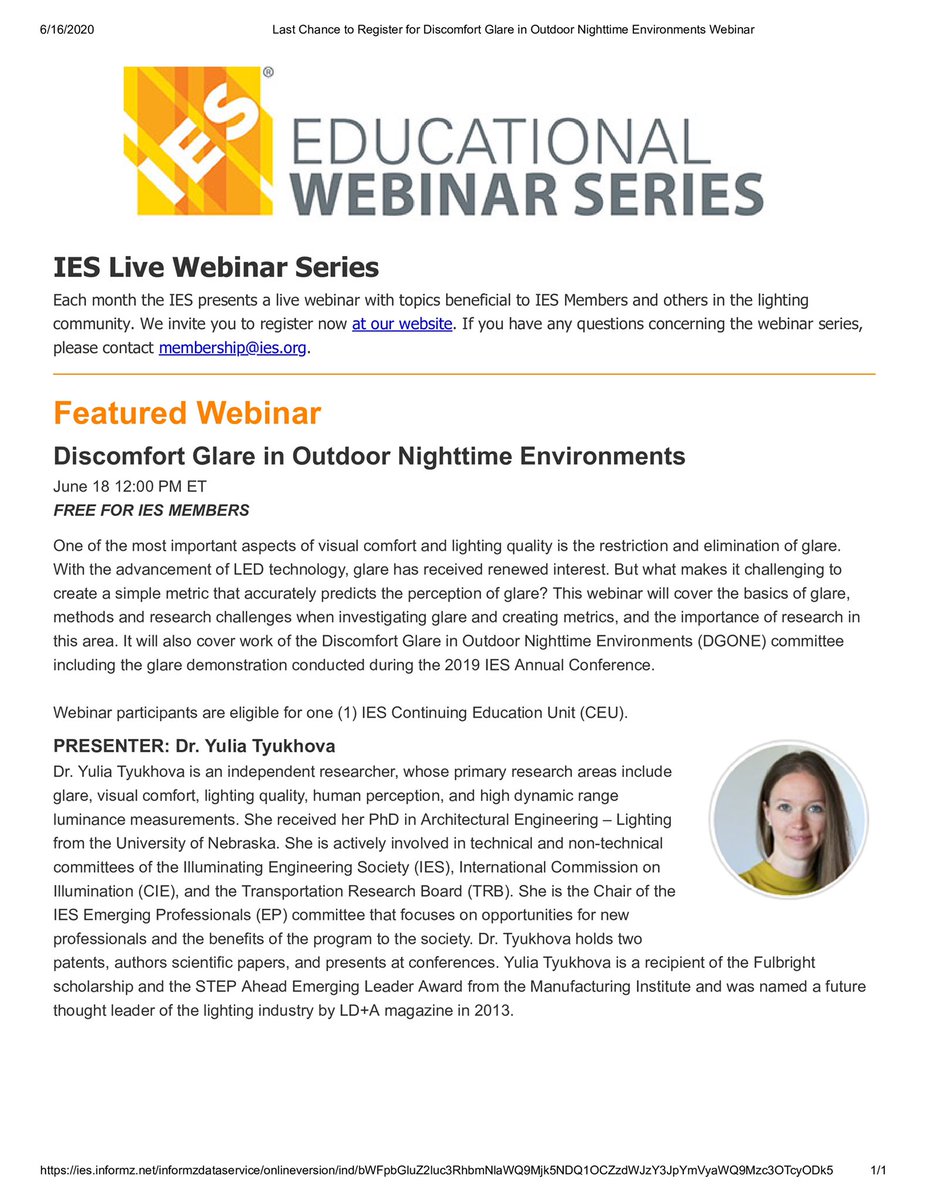
Interested in learning more about discomfort glare? Please join me for the “Discomfort Glare in Outdoor Nighttime Environments” @The_IES webinar this Thursday, June 18 at 12 pm ET. Register here https://t.co/nzZQT8GJwS #webinar#glare#outdoor#LED#discomfort#IES