Theoretical and Computational Physicist; Interests: Complexity, Biometeorology, Applied Data Science, Modeling and Nano-sciences/coffee/outdoor/brainstorm
Supercharged Heat Domes are appearing all around the Planet! Why? It’s a developing super El Niño combined with a much warmer Earth, spiking natural cycles with extra heat injected into the system and pattern changes augmenting the jet stream. The US will endure one of its most expansive heatwaves in history this week. Then another long lasting record breaking heat dome will plague #Europe again, back to back on its worst #heatwave in its history! With #elnino on top of a heated globe, expect the unexpected this year!!
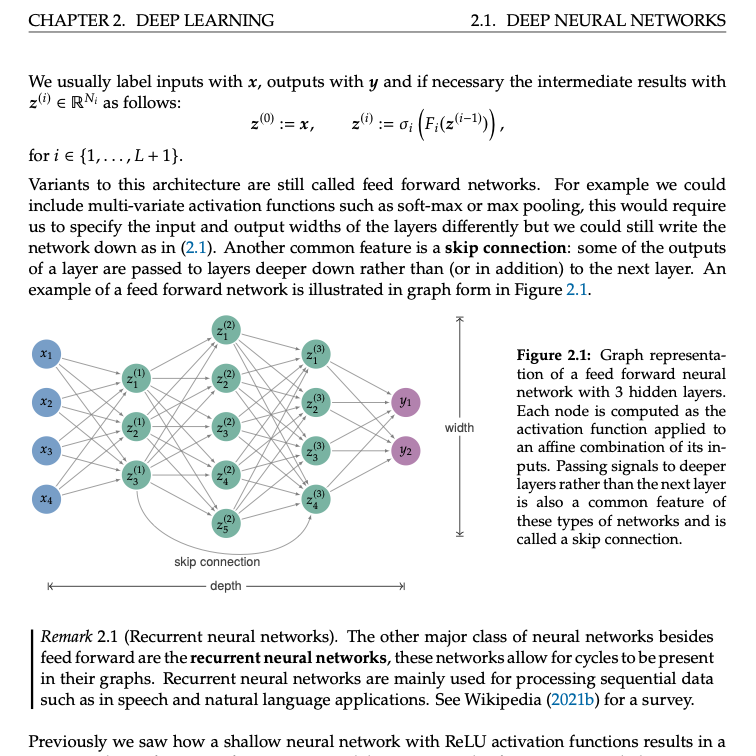
"Mathematics of Neural Networks" is an excellent set of lecture notes for anyone who wants to study modern neural networks from a mathematical perspective.
It covers supervised learning, artificial neurons and activation functions (ReLU, sigmoid, tanh, swish, softmax), shallow and deep neural networks, stochastic gradient descent, weight initialization, vanishing and exploding gradients, convolutional neural networks, automatic differentiation, backpropagation, adaptive optimization algorithms (Adagrad, RMSProp, Adam), and concludes with modern geometric concepts such as manifolds, Lie groups, equivariance, group convolutions, and rotation-translation equivariant CNNs.
I recommend keeping it in your bookmarks as a useful reference whenever you need to explore the mathematics behind neural networks.
https://t.co/78VDWxjDUa
Researchers at the University of Milan have identified that an enzyme called phospholipid transfer protein (PLTP) can effectively mobilize cholesterol from arterial plaques, sending it back into the bloodstream for natural disposal. This discovery is a potential game-changer because, unlike current treatments that primarily focus on preventing new plaque from forming, this method actually targets and dissolves existing blockages.
Atherosclerosis occurs when cholesterol and inflammatory cells create stable, hardened deposits in artery walls that resist traditional removal methods. When these plaques become too large, they severely restrict blood flow, often necessitating invasive procedures like stents or bypass surgery to prevent heart attacks or strokes.
The PLTP enzyme acts as a natural extraction system, pulling cholesterol out of the arterial wall and transferring it to HDL, or "good cholesterol," for transport to the liver. Scientists found that many people have naturally low levels of this activity due to genetic factors, which is why they have developed a gene therapy to boost PLTP expression directly where it is needed most.
In animal models, this localized boost in enzyme activity resulted in a 40% reduction in plaque volume in just three months, allowing narrowed arteries to reopen to nearly their original diameter. These results suggest that plaques not only become smaller but also more stable, which significantly lowers the risk of a sudden rupture that could cause a cardiac event.
While human clinical trials are currently focusing on patients with severe coronary artery disease who cannot undergo surgery, the long-term goal is a biological "reversal" of decades of arterial damage. If successful, this could shift cardiovascular medicine away from mechanical bypasses and toward a more natural, enzymatic cleaning of the circulatory system.
Interleukin-17 (IL-17 and its receptor, IL7R) is emerging as a key mediator in many immune-related diseases. Today @SciImmunology a superb review
https://t.co/QjRc9cr9Wl
AKADEMİSYENLERİN VE ÖĞRENCİLERİN BİLSE KULLANMAKTAN VAZGEÇEMEYECEĞİ SİTELER
Bunları mutlaka kaydedin. Akademik hayatta iş yükünüzü %90 azalacak.
1. https://t.co/lxrqkX8FtH
Araştırmacılar, öğrenciler ve akademisyenler için tasarlanmış yapay zeka destekli bir bilimsel araştırma ve okuma platformudur.
2. https://t.co/rexxn41f8R
Tez ve makale bölümü yazma, akademik tonu koruyarak, halüsinasyonu sıfıra indirerek akademik metin üretme.
3. https://t.co/NIlTdi0FTs
Metinleri akademik bir üslupla tamamlar, cümleleri yeniden yazar.
4. https://t.co/3VNtDhdnaW
Ai detector olarak hatasız sonuç verir. Nokta atışı araştırma yapmanızı sağlar.
5. https://t.co/Pl3X0YIvIg
Bilimsel makalelerin güvenilirliğini ve etkisini artırmak amacıyla geliştirilmiş, ödüllü bir yapay zeka ve araştırma platformudur
6. https://t.co/8cXGYns5MC
Literatür taramasını hızlandıran ve akademik araştırmaları görsel ağ haritalarıyla keşfetmenizi sağlayan ücretsiz bir yapay zeka destekli araştırma aracıdır
7. https://t.co/iQBF4OKvAL
200 milyondan fazla hakemli bilimsel makaleyi saniyeler içinde tarayarak akademik sorulara kanıta dayalı yanıtlar verir.
8. https://t.co/GcqpKuHO89
Araştırmacılar ve akademisyenler için özel olarak tasarlanmış, yapay zekâ destekli bir akademik yazım ve düzenleme asistanıdır.
Revisiting Martin Nowak’s famous 2006 Science paper on five mechanisms that promote cooperation, now viewed through a darker lens: exploitation, compliance, and Jeffrey Epstein.
https://t.co/4y5w5gWlPs
Neurodegeneration Is a Systems Failure — Not Just Neuron Loss
For decades, brain diseases like Alzheimer’s were framed as a linear story: neurons accumulate toxic proteins, then die. But converging evidence across high-impact studies suggests a different model — one that is far more integrated, and clinically actionable.
A recent study in Proceedings of the National Academy of Sciences (DOI: 10.1073/pnas.2516601123) demonstrates that during sleep, neural slow waves, vascular oscillations, and cerebrospinal fluid (CSF) flow are tightly coupled. This coordinated system drives glymphatic clearance — effectively a “wash cycle” for the brain. Disruption of this coupling may impair the removal of metabolic waste, including amyloid-β, linking sleep physiology directly to neurodegenerative risk.
At the cellular level, a landmark atlas published in Science (DOI: 10.1126/science.adf6812) reveals that vulnerability in the human brain is highly cell-type specific. Rather than uniform degeneration, distinct neuronal subpopulations exhibit selective susceptibility depending on their molecular identity, metabolic state, and anatomical context. This reframes neurodegeneration as a problem of selective circuit failure, not global decline.
Meanwhile, vascular integrity is emerging as a central determinant of disease progression. Work in Nature Medicine (DOI: 10.1038/s41591-023-02523-3) shows that aging is associated with breakdown of the blood–brain barrier (BBB), enabling peripheral immune cells and inflammatory mediators to infiltrate the central nervous system. This creates a feed-forward loop of neuroinflammation, exacerbating neuronal dysfunction.
Finally, synaptic loss — not neuron death — appears to be the earliest pathological event. Evidence from Nature Neuroscience (DOI: 10.1038/s41593-022-01186-2) indicates that activated microglia mediate excessive synaptic pruning through complement pathways. This process dismantles neural circuits before neurons themselves are lost, suggesting that functional decline begins much earlier than previously thought.
Taken together, these findings support a unifying framework: neurodegeneration arises from the breakdown of an interconnected system involving clearance mechanisms, vascular integrity, immune regulation, and synaptic maintenance.
This shift has profound therapeutic implications. Interventions targeting sleep architecture, glymphatic flow, BBB stability, and microglial activation may be more effective than neuron-centric strategies alone. Protecting the system — rather than just the cell — may be the key to altering disease trajectory.
Selected References
DOI: 10.1073/pnas.2516601123
DOI: 10.1126/science.adf6812
DOI: 10.1038/s41591-023-02523-3
DOI: 10.1038/s41593-022-01186-2
@MarcoRuggieroMD Thank you. If I don’t bother too much, you had mentioned time scales, when you look at the “kinetic” one and the “quantum bridge” one what might be the time separation between both? Orders of magnitude? Milliseconds versus microseconds or even smaller?
Brazilian scientist Tatiana Sampaio discovers a protein, Polylaminin, that can regenerate spinal cord.
This substance aims to create a supportive matrix that encourages damaged neurons to regenerate connections, potentially restoring motor function after severe injuries.
MIT'nin tek bir hamlesi, son beş yıldır yapay zeka devleri arasında yaşanan milyarlarca dolarlık "bağlam penceresi silahlanma yarışını" alay konusu haline getirdi!
Tüm büyük modeller için en büyük sorun olan "bağlam çürümesi" nihayet ortadan kaldırıldı!
MIT CSAIL'den üç araştırmacı, kuralları temelden değiştiren RLM'yi (Özyinelemeli Dil Modelleri) yayınladı:
✅ Son derece uzun belgeler artık yapay zeka penceresine sıkıştırılmıyor, bunun yerine harici Python değişkenleri olarak saklanıyor.
✅ Yapay zeka, üst düzey bir programcı gibi kod yazıyor: düzenli ifade araması, yapı navigasyonu ve hassas dilimleme.
✅ Yalnızca gerekli kısımlar alınıyor ve okunduktan sonra, ana yapay zeka cevabı sentezlemeden önce paralel analiz için özyinelemeli olarak alt yapay zekalar oluşturuluyor.
✅ Özetleme yok, veri kaybı yok ve performans düşüşü yok. Test sonuçları olağanüstü:
• En zorlu uzun bağlamlı kıyaslama testlerinde, geleneksel en gelişmiş modeller neredeyse 0 puan alıyor.
• RLM çift haneli yüzdelik bir iyileşme sağlıyor.
• 10 milyon token'ı işleyebiliyor (ana akım modellerin doğal pencere boyutunun 100 katı!).
• Daha da düşük maliyet.
Kod açık kaynaklı; GitHub, mevcut LLM çağrılarının tek tıklamayla değiştirilmesine olanak tanıyarak, daha önce imkansız olan ultra uzun görevleri sıfır değişiklikle destekliyor.
Bağlam penceresi savaşı mı? Bitti.
MIT sadece pencereyi büyütmekle kalmadı; savaş alanından da çekildi. Bu, 2026'da somutlaştırılmış zeka/uzun vadeli ajanlar için gerçek bir öldürücü uygulama.
(Orijinal makale + tam kod aşağıda ekli 👇)
🚨Architects are going to hate this.
Someone just open sourced a full 3D building editor that runs entirely in your browser.
No AutoCAD. No Revit. No $5,000/year licenses.
It's called Pascal Editor.
Built with React Three Fiber and WebGPU -- meaning it renders directly on your GPU at near-native speed.
Here's what's inside this thing:
→ A full building/level/wall/zone hierarchy you can edit in real time
→ An ECS-style architecture where every object updates through GPU-powered systems
→ Zustand state management with full undo/redo built in
→ Next.js frontend so it deploys as a web app, not a desktop install
→ Dirty node tracking -- only re-renders what changed, not the whole scene
Here's the wildest part:
You can stack, explode, or solo individual building levels. Select a zone, drag a wall, reshape a slab -- all in 3D, all in the browser.
Architecture firms pay $50K+ per seat for BIM software that does this workflow.
This is free.
100% Open Source.
🚨 ULTIMA HORA : Un chico de 25 años acaba de recibir una oferta de 60.000 millones de dólares de SpaceX. Y lo más loco es que no gastó ni un dólar en marketing.
Michael Truell empezó a programar a los 11 años, hizo prácticas en Google a los 18, abandonó el MIT y fundó una empresa que fracasó.
Luego pivotó y construyó Cursor, un editor de código con IA que escribe software por ti.
Lo que pasó después rompió todos los récords de la historia del SaaS. 100 millones de dólares en ingresos anuales en 12 meses.
500 millones al mes 21. 1.000 millones en noviembre de 2025. 2.000 millones en febrero de 2026. Proyección de 6.000 millones antes de que acabe el año.
Sin un solo comercial. Sin anuncios. Sin growth hacking. Solo desarrolladores que no podían dejar de hablar de él.
El 70% de las empresas del Fortune 1000 lo usan. Los 40.000 ingenieros de Nvidia lo usan. Coinbase tiene el 100% de adopción entre sus devs. Se aceptan mil millones de líneas de código al día.
Pero el problema no era el mercado. Era físico. No había suficientes GPUs en el mundo para entrenar su próximo modelo. El dinero no podía solucionar eso.
Ahí entró Elon Musk. SpaceX ofrece 60.000 millones por Cursor y acceso inmediato a Colossus, el superordenador equivalente a un millón de H100 de Nvidia, durante nueve meses. Si al final no compran, pagan 10.000 millones como penalización. La mayor cláusula de ruptura en la historia corporativa.
No hay escenario en el que Truell pierda.
Y para cerrar el círculo: Alameda Research, el brazo inversor de FTX, entró en el capital de Cursor en 2022. Cuando FTX quebró, los liquidadores vendieron esa participación por 200.000 dólares.
Hoy vale aproximadamente 3.000 millones. Sam Bankman-Fried lo llamó la peor decisión de liquidación en la historia del venture capital. Desde la cárcel.
https://t.co/8BoopR1RTE
Libro "Artificial Intelligence for Learning" de Donald Clark
Tesis: La IA es un catalizador que redefine por completo la psicología del aprendizaje y la formación corporativa
La IA es un nuevo "Exoesqueleto Cognitivo" que permite personalizar con recursos
https://t.co/Ws6Tz8weHC


![KirkDBorne's tweet photo. [Download 585-page PDF eBook]
Game Theory: https://t.co/DUxMDRc1Ll
—————
#GameTheory #Gamification #Mathematics #Statistics #Probability https://t.co/OuM1cwPhUw](https://pbs.twimg.com/media/HL3Bq77WwAA8krz.jpg)