Honored to present on the mainstage at Nexus 2026 and share our experience with our multi-site nocturnal TeleHospitalist admissions program across the Houston Methodist system.
It was a great opportunity to discuss the implementation and evolution of a centralized virtual admissions model and explore the broader role of innovative care delivery models in reshaping hospital operations.
Thank you to everyone across Houston Methodist and to the Center for Connected Care Innovation and Implementation Research (CCCII-R) who supported this program.
#Telemedicine #DigitalHealth #HospitalMedicine #Innovation #VirtualCare #Healthcare #NEXUS2026 @MethodistHosp@HMethodistMD@AmericanTelemed@CCCIIR_HM
Houston Methodist l ATA l CCCII-R
"Medicine can have extraordinary meaning. But it cannot substitute for being present in your own life."
In #APieceofMyMind, a psychiatrist and residency program director reflects on an unexpected #LungCancer diagnosis.
https://t.co/V3Tae6P6mU
Excited to share our latest manuscript evaluating the implementation of a TeleHospitalist admissions model within a large academic health system.
As health systems face increasing overnight admission volumes, variable patient flow, and workforce constraints, telemedicine offers an opportunity to support hospitalist workflows and help maintain timely care delivery.
In this study, we describe the operational characteristics of a centralized TeleHospitalist admissions service, including:
• Descriptive timing metrics across the admission workflow
• Early implementation experience across a multi-site health system
• High patient satisfaction and strong staff reception of the TeleHospitalist admission model
These findings provide an early look at how TeleHospitalist admission programs can be integrated into routine inpatient operations while supporting both patients and clinicians during the admission process.
Grateful to collaborate with an outstanding multidisciplinary team on this project and excited to see how virtual hospital medicine models continue to evolve. Read the article:
https://t.co/qWrKEarb6n #Telemedicine #HospitalMedicine #DigitalHealth #HealthcareInnovation #QualityImprovement #CCCIIR #CenterforConnectedCareInnovationandImplemenationResearch #BMJOpenQuality @bmj_latest@MethodistHosp@HMethodistMD@CCCIIR_HM
BMJ | Houston Methodist | CCCII-R
I’m pleased to share our recent case report, “Cytokine Storm Following Lung Transplant in the Setting of Alistipes finegoldii Bacteremia,”
This report describes a rare and severe hyperinflammatory presentation following lung transplantation in the setting of anaerobic bacteremia, highlighting the diagnostic complexity of distinguishing cytokine storm from infection, rejection, and other post-transplant complications in critically ill patients.
The case emphasizes the importance of early recognition and coordinated multidisciplinary management in complex transplant populations.
Grateful to collaborate with colleagues at Houston Methodist and our co-authors, including collaborators from Instituto Tecnológico y de Estudios Superiores de Monterrey School of Medicine and Health Sciences
Article link: https://t.co/kfHSj3BazF #InstitutoTecnológicoYDeEstudiosSuperioresDeMonterrey #HoustonMethodist #CenterForConnectedCareInnovationAndImplementationResearch #CCCIIIR #Immunology #TransplantMedicine #Pulmonology #CriticalCareMedicine #InfectiousDiseases #ImmunologyX #ImmunologyTwitter #TransplantMedicineX #TransplantMedicineTwitter #PulmonologyX #PulmonologyTwitter #CriticalCareMedicineX #CriticalCareMedicineTwitter #InfectiousDiseasesX #InfectiousDiseasesTwitter
@HMethodistMD@MethodistHosp@TecdeMonterrey@TecSaludMX
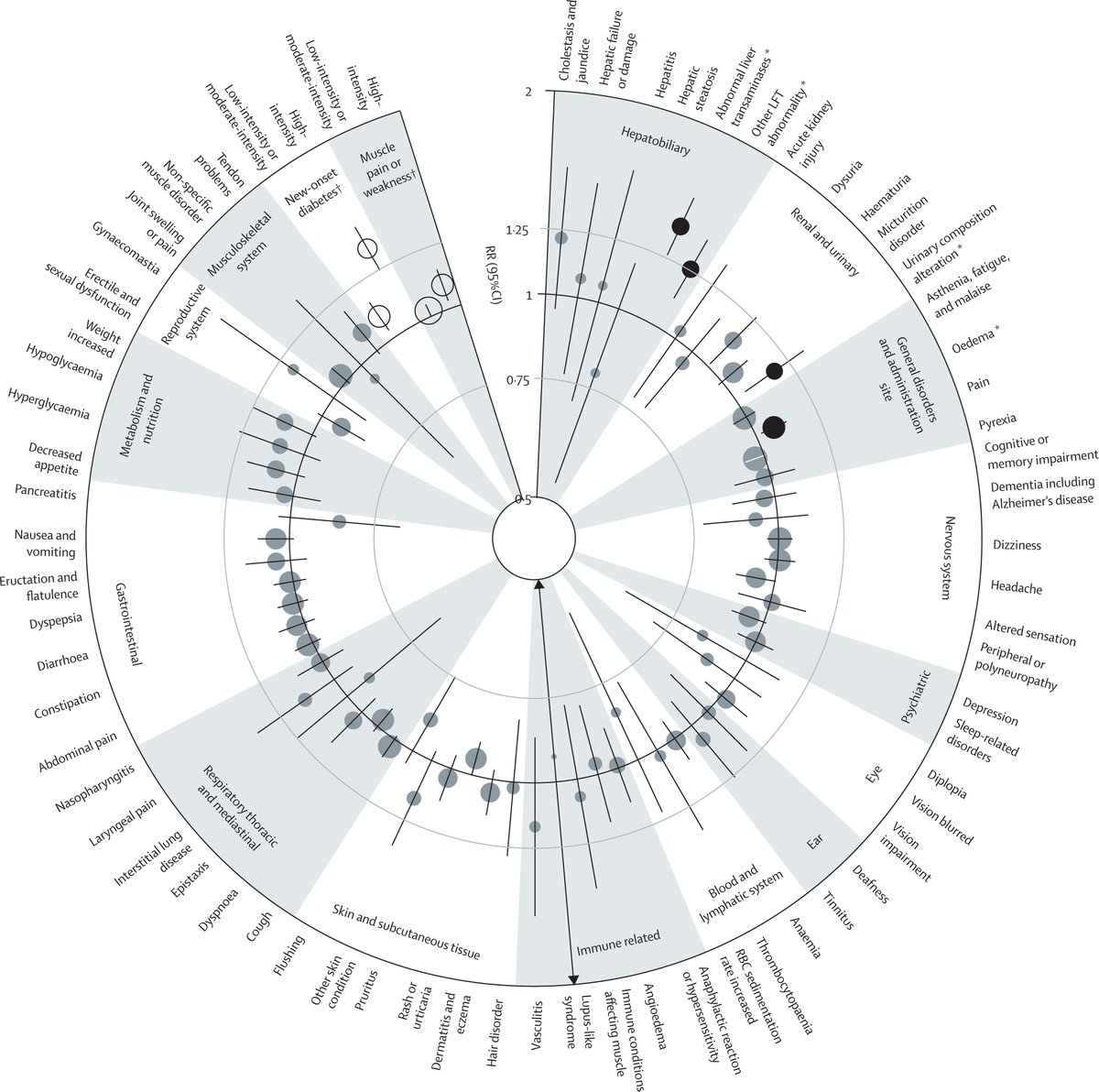
Almost all side effects on statin labels not caused by statins, finds major meta-analysis; authors call for labels to be updated.
Find out more 👉 https://t.co/y4Vrhm8VZR
Global Prevalence of Sleep-Disordered Breathing in Intracerebral Hemorrhage Survivors: A Meta-Analysis and Systematic Review https://t.co/ABxalqMCF3 #mdpineurolint via @neurolint_mdpi
I’m pleased to share my recently published manuscript:
🧠 Sleep-Disordered Breathing in Intracerebral Hemorrhage Survivors: A Systematic Review and Meta-Analysis
This study synthesizes global evidence on the prevalence of sleep-disordered breathing following intracerebral hemorrhage, highlighting the frequency of this underrecognized condition and its potential implications for neurological recovery and long-term outcomes.
The findings emphasize the importance of increased clinical awareness and more systematic screening strategies in post-ICH care, particularly at the intersection of neuroscience, stroke medicine, sleep medicine, AI, digital healthcare and public health.
🔗 Read the full article: https://t.co/ABxalqMCF3 #mdpineurolint via @neurolint_mdpi
#CenterForConnectedCareInnovationAndImplementationResearch
#Neuroscience
#Stroke
#StrokeMedicine
#PublicHealth
#IntracerebralHemorrhage
#SleepMedicine
#SleepDisorderedBreathing
#SystematicReview
#MetaAnalysis
#SleepApnea
#Neurology
#CenterforConnectedCareInnovationandImplementationResearch #CCCIIR
#SystematicReview
Houston Methodist
@MDPIOpenAccess
Activate to view larger image,
📷
New study highlights how generative artificial intelligence can enable inaccurate information about cardiovascular disease prevention, underlining the need for careful evaluation of AI-generated health content.
https://t.co/R1Hfaw2PJ0
#CardioPrevention#AI#MedicalAccuracy
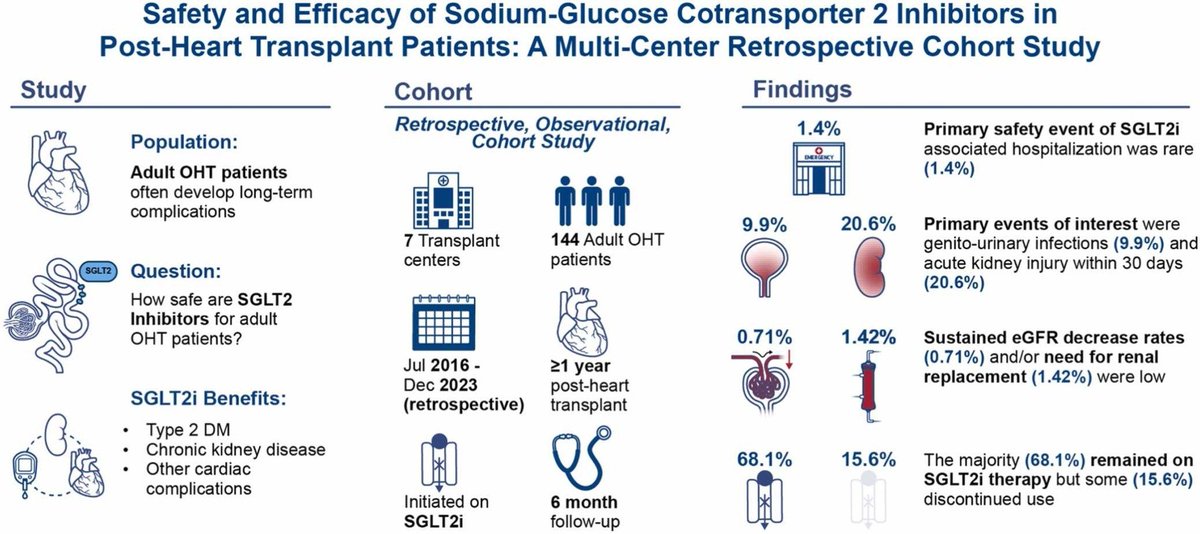
Safety and Efficacy of Sodium-Glucose Cotransporter 2 Inhibitors in Po... https://t.co/YXhV2qQQFM 🚨 New publication in JHLT Open 🚨
Proud to share our latest multi-center retrospective cohort study examining the safety and tolerability of SGLT2 inhibitors in post–heart transplant patients—a population where real-world data have been limited and clinical hesitation has been high.
🫀 Why this matters
Heart transplant recipients carry a heavy burden of CKD and diabetes, often driven by long-term immunosuppression. While SGLT2 inhibitors are now foundational therapies in heart failure and CKD, their use after transplant has remained cautious due to concerns around infection risk and kidney injury.
📊 What we found (7 U.S. transplant centers, n=141):
• Very low hospitalization rates attributable to SGLT2i
• Reassuring renal safety with rare need for dialysis
• Expected GU infection rates, but overall favorable tolerability
• 68% of patients remained on therapy at follow-up
🧠 Bottom line:
Despite higher discontinuation rates in this complex population, the overall safety profile was reassuring, supporting thoughtful expansion of SGLT2i use in post-OHT patients, and underscoring the need for prospective studies focused on long-term outcomes.
Grateful to an outstanding, collaborative author group across Baylor, Duke, Johns Hopkins, UCSF, Yale, Penn, Cleveland Clinic, and Houston Methodist. This truly exemplifies team science at its best.
📄 Safety and Efficacy of Sodium-Glucose Cotransporter-2 Inhibitors in Post-Heart Transplant Patients
#HeartTransplant #SGLT2i #CardioRenal #TransplantCardiology #Cardiology #HeartFailure #ClinicalResearch #TeamScience #HoustonMethodist @MethodistHosp@HMethodistCV@HopkinsMedicine@YaleMedicine@UCSFMedicine@PennMedicine@ClevelandClinic@DukeMedSchool@CUMedicalSchool@bswhealth_DFW
I’m pleased to share our manuscript, “Serum Biomarkers in Cardiac Allograft Vasculopathy: A Systematic Review.”
Heart failure remains a major public health challenge, and while heart transplantation offers critical survival benefit for eligible patients, it ultimately serves as a destination therapy rather than a cure. Within this landscape, CAV continues to be a leading cause of late graft failure, chronic dysfunction, and retransplantation. Integrating biomarker-based tools may meaningfully enhance surveillance and help move beyond the limitations of traditional imaging.
In this review, we synthesize the current evidence surrounding circulating biomarkers that may improve early detection, risk stratification, and clinical management of CAV. We also highlight emerging innovations—including AI-enhanced approaches, SOMAscan proteomics, and machine-learning–driven multimodal models—that may shape future approaches to noninvasive CAV monitoring.
https://t.co/s8nftpnCXm
#HeartTransplant #Transplantation #TransplantMedicine #TransplantCardiology
#CardiacAllograftVasculopathy #CAV #HeartFailure
#CardiologyResearch #CardiologyTwitter #CardiologyX #Transplant
#Biomarkers #PrecisionMedicine #ClinicalResearch #TransplantScience
#Immunology #GraftRejection #Alloimmunity
#Innovation #AI #AIX #DigitalHealth
#CCCIIR #CenterforConnectedCareInnovationandImplementationResearch
#PreventativeMedicine #PublicHealth #PublicHealthX #PublicHealthTwitter
#HoustonMethodist #ImplementationScience #OutcomesResearch #artificialintellgience
#MedTwitter #MedX @DeBakeyCVedu@MethodistHosp@Nadia_Fida_@atrajarajan@AshrithGuhaMD