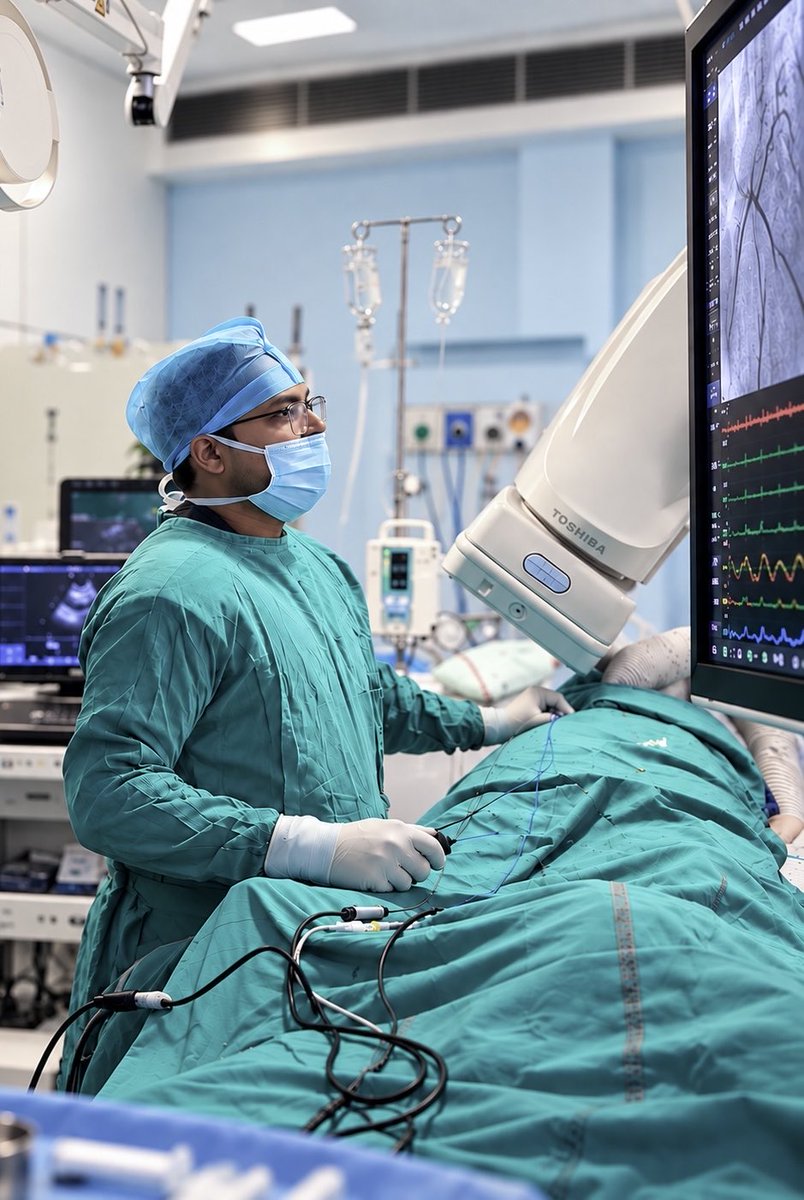
Happy to inform you all that the 2 cases which I did in the cath lab were accepted for presentation in “Best Coronary Exotica” in the TCT Meeting in San Diego California. Two very complex cases of coronary arteriovenous fistulas arising from sinus node branch of right coronary artery were device closed without surgery in cath lab. Unfortunately my multientry 10 year US visa is past expiry date and I am not keen for a long haul travel due to severe backache also. So I asked SR doing Bond after passing DM(in the vacancy of assistant professor) Dr HariKishore Udhayan from Thanjavur who assisted me throughout the case to apply for the US visa and go to US and present it on my behalf. At his age it will be a big thing for him to cherish for lifetime. As an HOD it is my pleasure to see that my juniors are uplifted to much more heights than me. Hope the esteemed US embassy will consider his application to just go there and present it and comeback.
LBBP without a lead. ⚡️
A fascinating step forward in conduction system pacing.
The future of physiological pacing is looking increasingly interesting.
LEAP2: A first-in-human evaluation of a chronically implanted novel leadless pacemaker for conduction system pacing #OpenAccess
https://t.co/0RCoZ8Qi2w
In a severely scarred RA with virtually no CTI EGMs, do you still deliver lesions across the low-voltage CTI, or rely primarily on anatomy to define the line?
@can_yontar@Teebi_MD@syamkumarmd@EPeeps_Bot
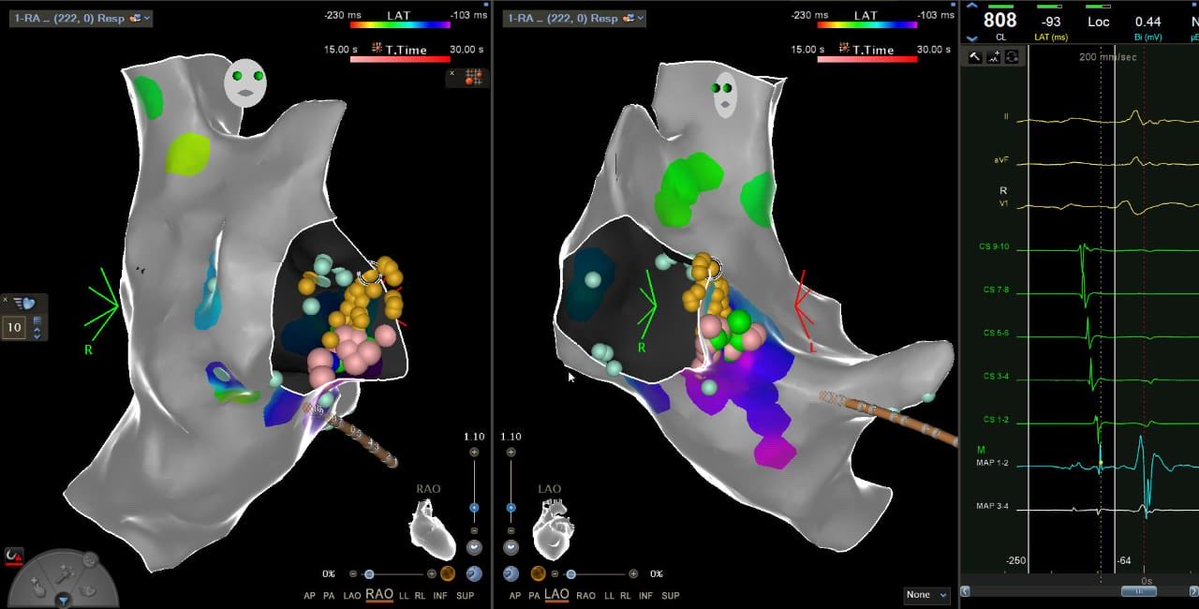
⚡️ When the flutter terminates with the first burn… but the CTI has almost no signal.
Typical CCW AFL in a markedly dilated, scarred RA. DCCV-resistant, EF 25–30%.
Minimal EGMs at the usual CTI → lateral line required
Terminated with the first RF lesion
#Epeeps@EPeeps_Bot
The Right Atrial Extensions of Bachmann’s Bundle: Anatomy and Pacing Implications
Dear colleagues and friends,
I hope you enjoy this video and find it useful.
@cardiac_anatomy@JACCJournals#JACCCR
https://t.co/6tObbstSlK
@jacabreracardio@javadm20@cardiac_anatomy@JACCJournals Excellent demonstration. With growing interest in conduction system pacing, understanding Bachmann’s bundle anatomy is increasingly important. Do you think electroanatomic mapping could better identify clinically relevant interatrial conduction delay?
There are many ways to fix the intraseptal lead during LBBAP implant to achieve physiological pacing. Many use two hands.
Tips and tricks for a single left-handed technique:
1) Sheath tents RV septum with contrast
2) Advance lead tip out slowly to the point of almost displacing the sheath
3) Right hand fixes the sheath torque using syringe of contrast
4) Rapid rotations to spin the lead between left thumb and index finger- palm up
5) Contrast injection to confirm breaking through the RV endo plane in LAO
Lp(a) vs CAC: Which One Wins?
Many clinicians assume that elevated Lp(a) makes CAC scoring less useful because Lp(a) is associated with non-calcified plaque.
This new study of 11,319 individuals suggests otherwise.
✅ Elevated Lp(a) increased risk across all CAC strata.
✅ CAC remained a powerful risk discriminator.
✅ Even with Lp(a) >50 mg/dL, individuals with CAC=0 had remarkably low absolute event rates over ~15 years.
The highest risk?
Lp(a) >50 mg/dL + CAC ≥300
(HR 6.12).
Perhaps the lesson is simple:
Lp(a) tells us who is biologically predisposed.
CAC tells us how much of that risk has actually become disease.
And those are not the same thing.
#LpA #Prevention #CardiacCT #CAC #Atherosclerosis #Cardiology #CardiovascularPrevention #Imaging #CCTA
Where is the ideal site for transseptal puncture?
In the 40° RAO projection, a pigtail catheter placed in the non-coronary aortic cusp helps define the posterior border of the aortic root. The optimal puncture site (X) is typically located 1–3 cm inferior to the posterior boundary of the aortic root, within the fossa ovalis region.
Accurate localization is critical to safely access the left atrium while minimizing the risk of aortic puncture and other complications.
Reference: Croft CH, Lipscomb K. Modified technique of transseptal left heart catheterization. J Am Coll Cardiol. 1985;5(4):904–910.
@DrRohanAcharya@NarayanaHealth@NHrudayalaya Absolute nonsense from NMC to make non-clinicians eligible for such highly clinical branches.
However, once eligible, its completely unacceptable to discourage a meritorious candidate. She has clearly earned this rank through hard work & merit. This reflects poorly on the system
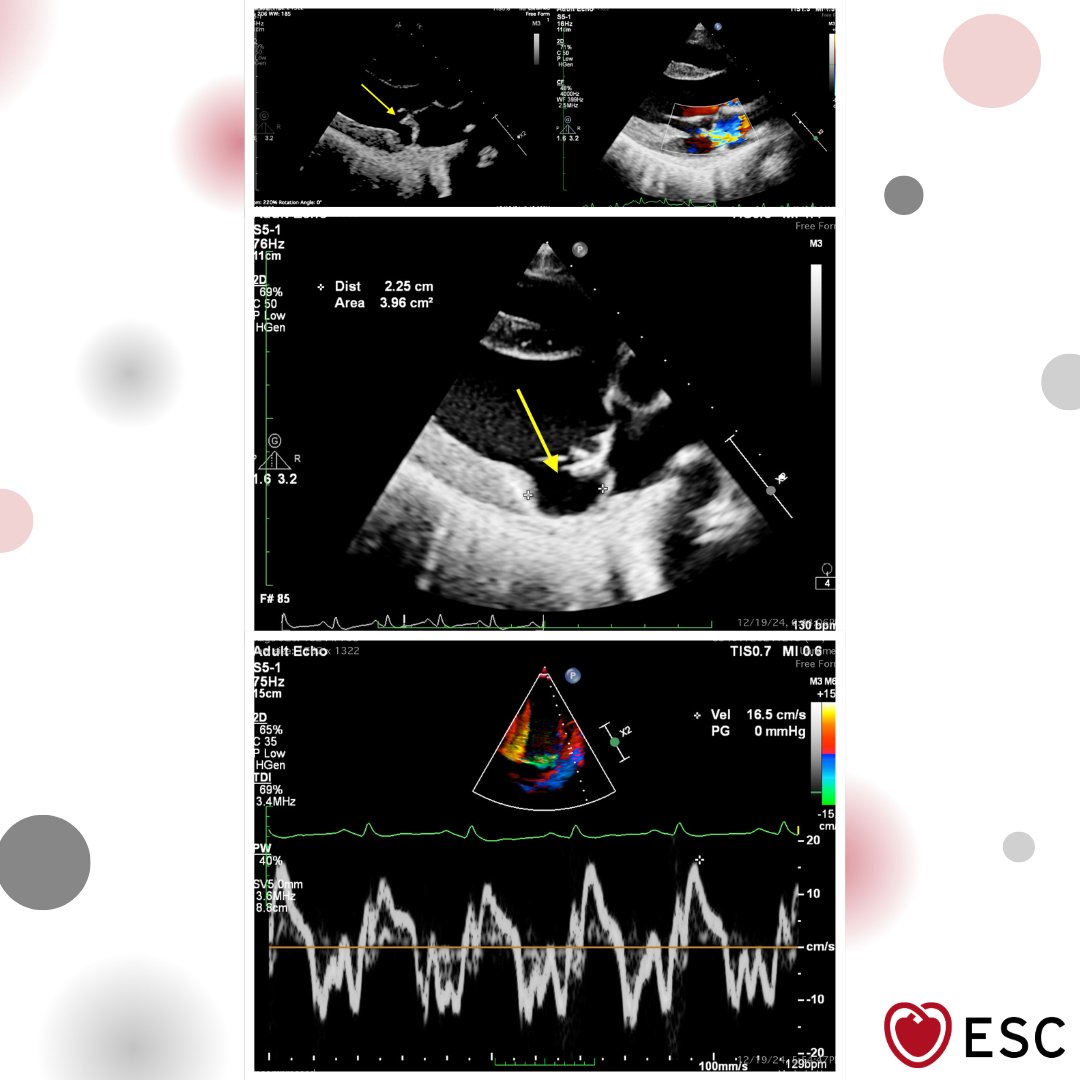
#ImageOfTheWeek by Avishkar Agrawal, Sumit Kumar, and Souvik Sardar from All India Institute of Medical Sciences, New Delhi, India A 28-year-old woman with mitral valve prolapse.
What additional high-risk echo finding may be present? https://t.co/QhEzYyKRIl
Suppose 10,000 monkeys take NEET-PG exam (or one persistent monkey takes it 10,000 times). There are 200 questions. The reward for correct answer is 4 and the penalty for wrong answer is -1. If the monkeys don't attempt, they get 0 marks.
Let's assume the monkeys haven't qualified MBBS and randomly mark all 200 questions.
Expected value of a random guess = (probability correct × reward) + (probability wrong × penalty)
= (1/4)(+4) + (3/4)(-1)
= 1 + -0.75
= +0.25
So what will be the group average of this monkey group ?
If we simulate that, we get an average mark of +50. (see pic for distribution, done with R)
Sure, many monkeys will score negative marks, but the group average is still positive.
Now let's turn to human NEET -PG doctor with -40 marks. Government says he/she's competent.
If a doctor can't even beat the average score of a bunch of monkeys, does it matter if they are "competent" because government says so?
Forget MD/ MS, why shouldn't their MBBS be declared null and void ?