Is binarization of scATAC-seq data really necessary? The conclusion from our analysis is that a quantitative treatment is in fact beneficial. Now out in Nature Methods! @gagneurlab@fabian_theis https://t.co/UdFyU8fpYz
Many additions since the preprint 👇(1/n)
Check out the new @STARProtocols paper from #nedialkovalab about the improved mim-tRNAseq pipeline. Complete with step-by-step instructions, troubleshooting and explanations of updates! https://t.co/FVwh4WzGtN
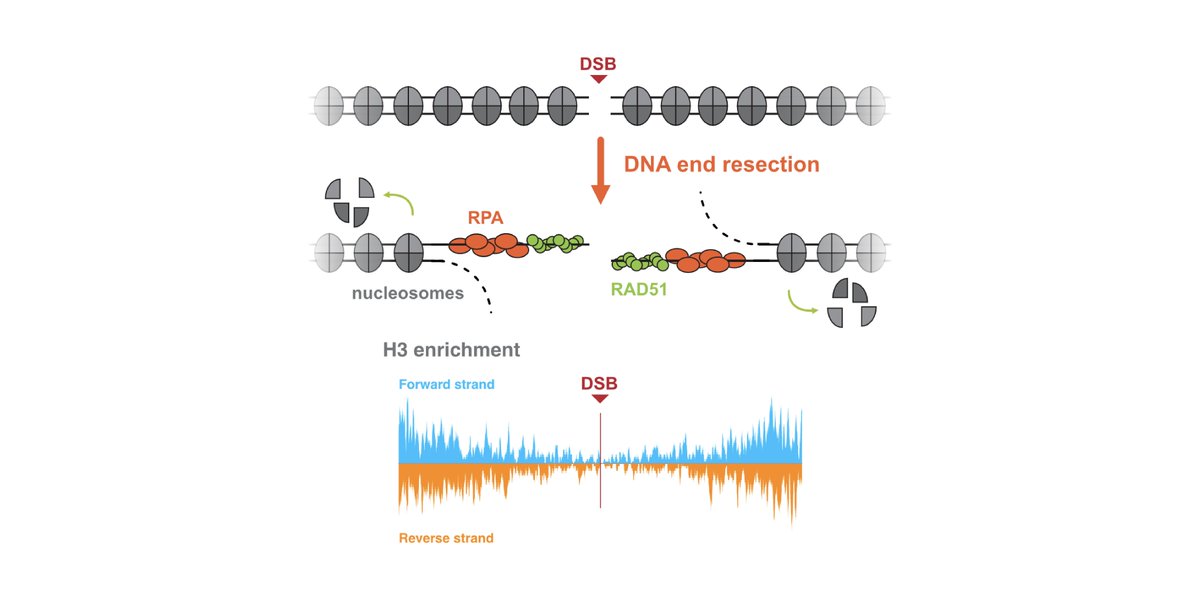
The Pfander lab uses a strand-specific #ChIPseq workflow to reveal protein binding modes at DNA double stranded breaks and that #nucleosome eviction is intrinsically coupled with DNA end resection.
Check out the new paper in @MolCell ➡️https://t.co/tY7xQ7Dikx
#DNArepair
“...people using social media to announce how “humble and honored” they are for receiving grant or prize X, Y, or Z. In general, these are junior faculty who have perhaps not acquired the self‐awareness more senior scientists have.” You mean the cynicism and bitterness? God...
Why timing is everything! - check out our new work on how #ZNF598 regulates the dynamics of ribosome clearance on defective mRNAs. Led by Daniel Goldman in collab with @nliving93 and @binwu1 https://t.co/dMuJ15orw4
Something new, something cool! #RNA 🧩
Our neighbours from Nedialkova lab @MPI_Biochem developed a mim-tRNAseq making quantification of tRNA abundance, aminoacylation & modification status in just 1️⃣ reaction possible!
Congrats to the team!👏🏻 @drewjbeh
https://t.co/fMpcX6F48S