This is huge for longevity science.
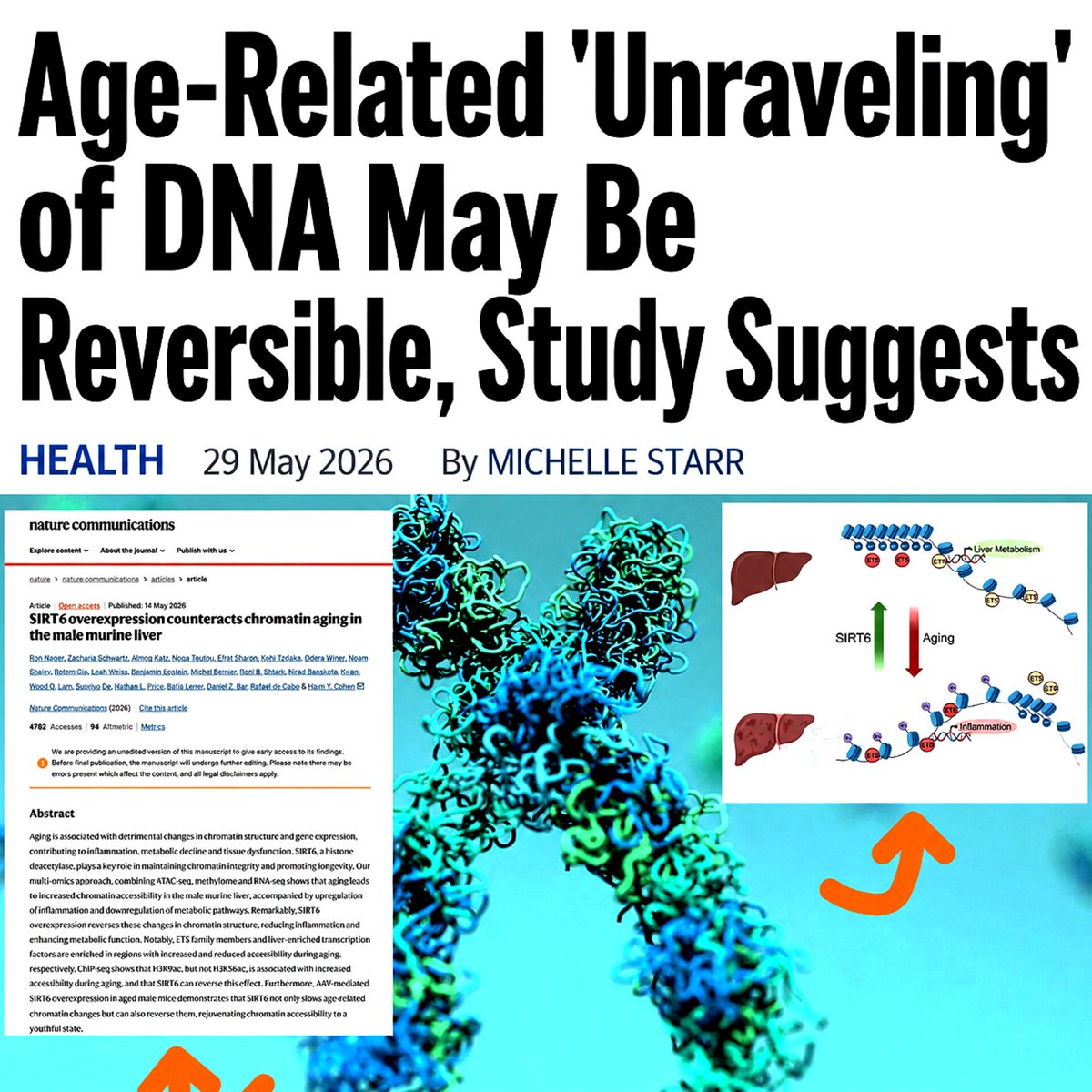
"Researchers just discovered that aging may partly happen because our DNA gradually loses its organized structure inside cells."
"The team found that boosting a protein called SIRT6 restored youthful chromatin organization in old mouse cells, reversing major age-related gene activity changes."
"They also restored key heterochromatin markers like H3K9me3 and reduced inflammatory gene programs linked to aging."
Aging may involve the progressive collapse of genome organization and that collapse will be partially reversible.
Aging is the biggest and final disease we need to solve. Everything else will become secondary!
Single-cell RNA-seq transformed biology, but we still sample <0.001% of an organism.
2D sections lose 3D context.
What if we image the whole body first?
We Introduce DISCO-seq🤩: full 3D imaging then scRNAseq👇🏻https://t.co/kYkzAWBxUB
by @HarsharanBhatia, Laurent Simons et al.
A newly released AI tool has generated an atlas of more than one billion predicted protein structures and billions more protein sequences.
https://t.co/nThx75YHL2
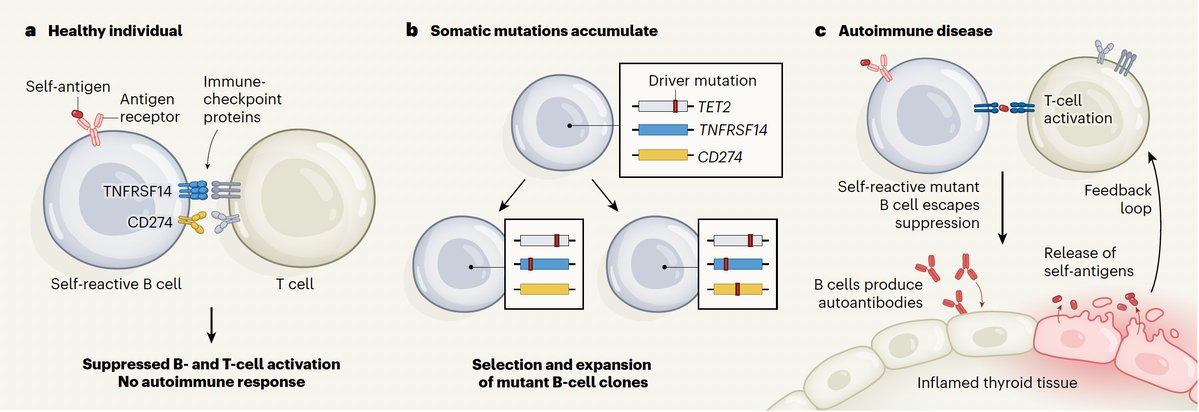
The "forbidden clones" that develop from somatic mutations and autoimmune diseases, theorized in 1959 but requiring state-of-the art sequencing to prove
https://t.co/OWJCtd5kh3
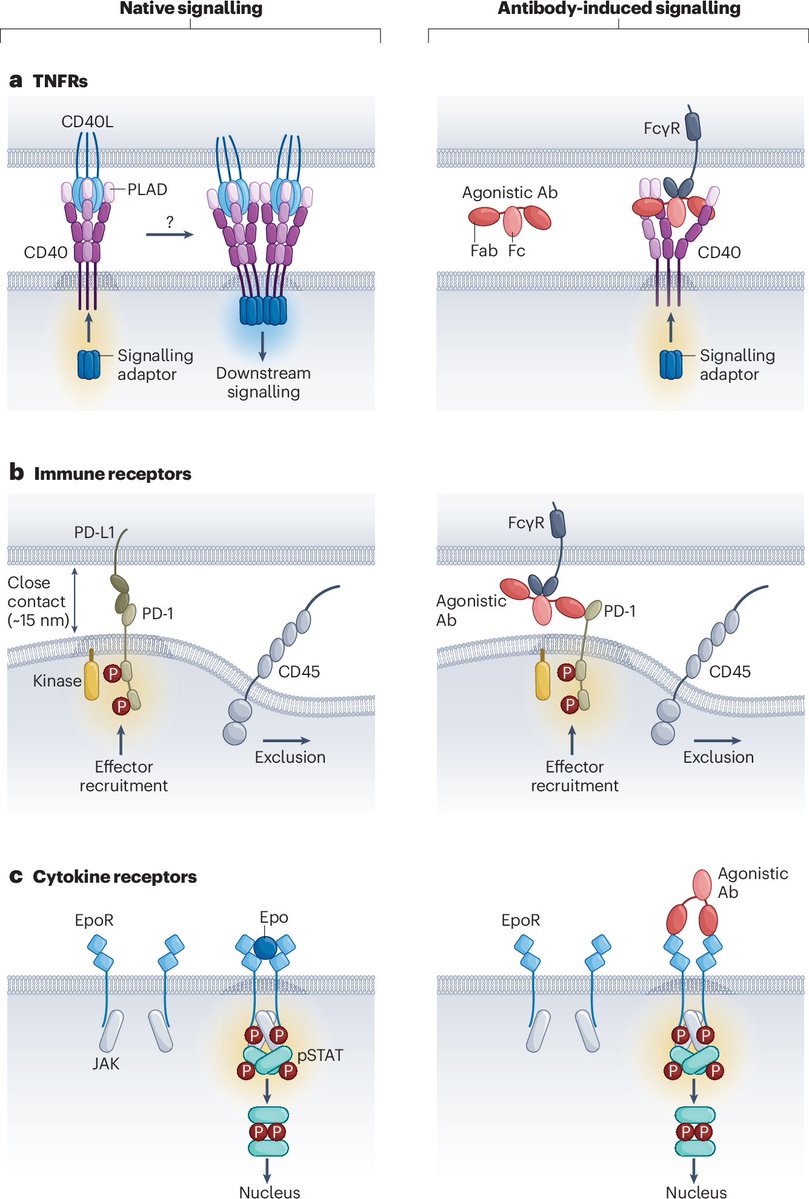
Realizing the potential of agonistic antibody immunotherapy
https://t.co/Qp8iL1kZZk
https://t.co/mmS3P22wLm
This new Review discusses progress with agonist antibodies to treat autoimmune diseases and cancer, as well as approaches to addressing challenges in their development
🧬Can chemotherapy response in aggressive breast cancer be predicted from the tumor “ecosystem”?
New @Nature study shows that single-cell RNAseq and spatial transcriptomics can predict response to chemotherapy in triple-negative breast cancer (model reaching AUC = 0.84).
Triple-negative breast cancer is an aggressive breast cancer subtype lacking estrogen, progesterone, and HER2 receptors, which limits targeted treatment options and keeps chemotherapy central.
Tumors that responded better to chemotherapy more often showed:
- Interferon signaling in cancer cells — a sign of immune alert.
- Higher HLA class II expression — potentially making tumor cells more visible to the immune system.
- More actively dividing cells, especially in S phase, which chemotherapy can hit more effectively.
Triple-negative breast cancer is not one disease, but a set of distinct cellular ecosystems. And the structure of that ecosystem may help predict whether chemotherapy will work.
https://t.co/O6eKE1BUrl
#Cancet #SpatialTranscriptomics #RNAseq #SingleCell
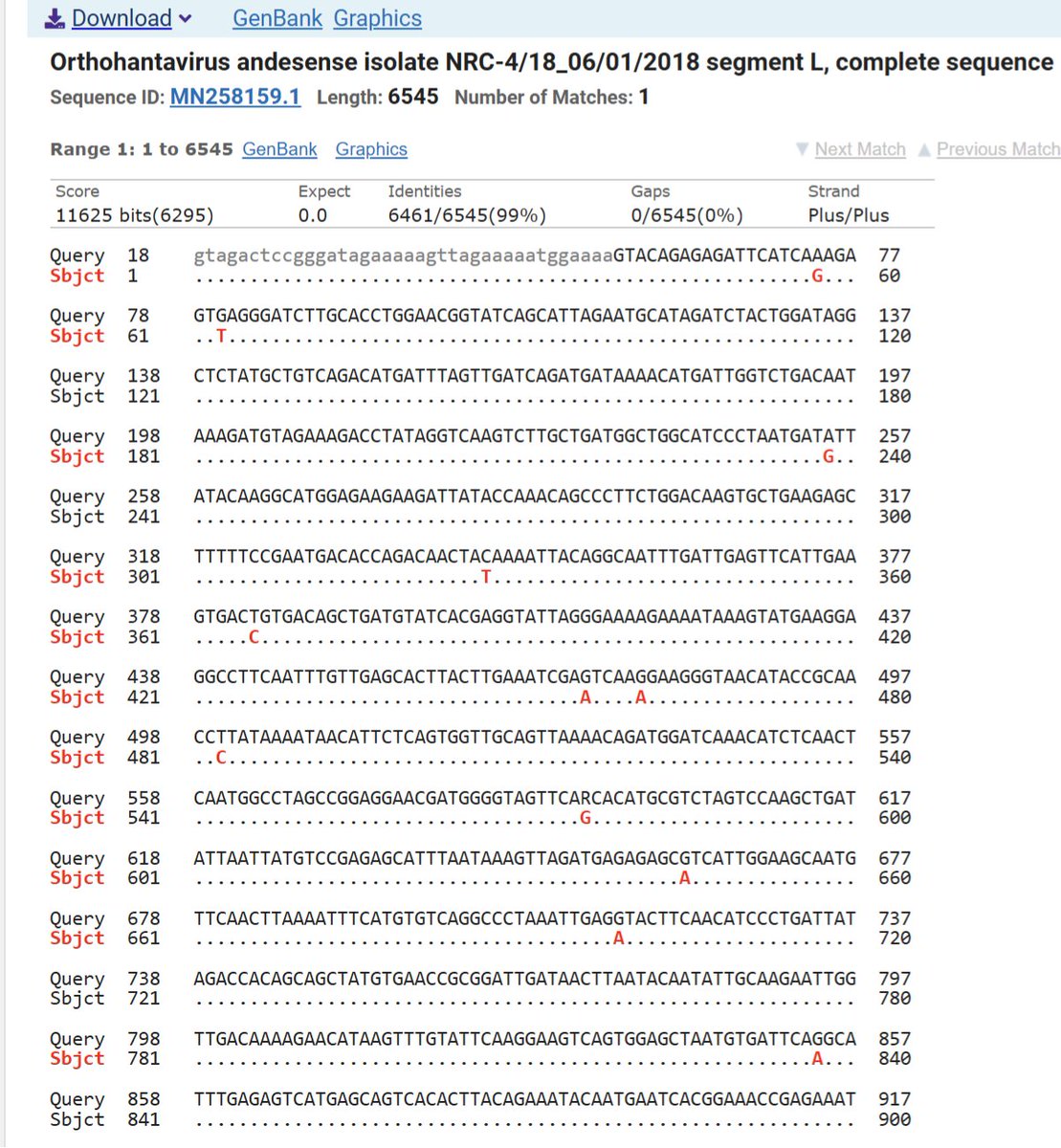
BREAKING: First sequencing of the Hantavirus from the outbreak.
-99% identical to a June 2018 case from a patient in Argentina
-10.4 SNV/year mutation rate
- The Andes genome is about 12 kb across three RNA segments. At 10⁻⁴ to 10⁻³ substitutions/site/year, that translates very roughly to 1-12 SNV per year
-Completely in line with a natural spillover in Argentina from the rodent host in 2018 and now in 2026
Source: https://t.co/WFEkPqAoKW
Not all cancers are driven by complexity.
Some are, in fact, genetically simple—but mechanistically precise.
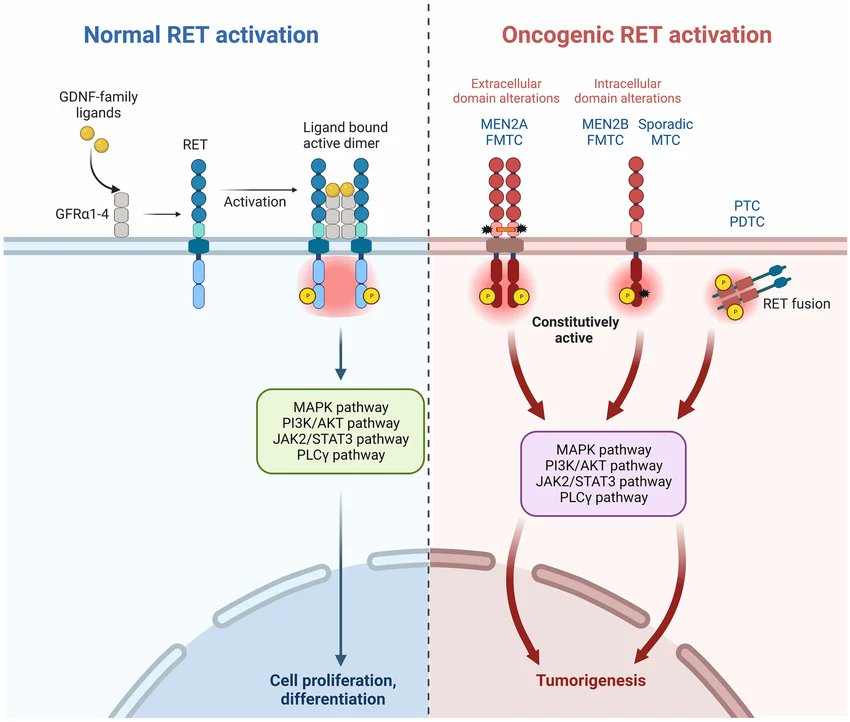
Thyroid cancer, particularly medullary and papillary subtypes, illustrates this principle with unusual clarity. At its core lies a single gene: RET proto-oncogene.
RET (REarranged during Transfection) encodes a receptor tyrosine kinase physiologically expressed in neural crest–derived cells.
Under normal conditions, it requires binding of GDNF-family ligands and co-receptors (GFRα) to dimerise and activate downstream pathways—primarily MAPK and PI3K–AKT—governing survival, proliferation, and differentiation. The system is tightly regulated, spatially restricted, and developmentally essential.
What happens when this control is lost?
1⃣ In Medullary Thyroid Carcinoma, RET is frequently activated by germline or somatic point mutations.
These mutations cluster in two functional domains:
✳️ Extracellular cysteine substitutions (e.g., C634R) promote ligand-independent dimerisation through aberrant disulfide bonding.
✳️ Intracellular kinase domain mutations (e.g., M918T) alter catalytic conformation, increasing ATP affinity and constitutive signalling.
The result is continuous pathway activation without physiological input—classic oncogene behaviour.
This is the molecular basis of Multiple Endocrine Neoplasia type 2, where inherited RET mutations drive a highly penetrant cancer predisposition. Here, oncogenesis is not stochastic—it is encoded in the germline, with genotype–phenotype correlations guiding clinical management, including prophylactic thyroidectomy.
2⃣ A different mechanism operates in Papillary Thyroid Carcinoma.
Rather than point mutations, chromosomal rearrangements generate RET/PTC fusion genes. These fusions place the RET kinase domain under the control of constitutively active promoters and dimerisation motifs from unrelated genes (e.g., CCDC6, NCOA4). The consequence is again constitutive activation—but now through enforced oligomerisation and ectopic expression in follicular cells where RET is not normally active.
Interestingly, these alterations are often mutually exclusive with other MAPK drivers (e.g., BRAF), suggesting functional redundancy at the pathway level but strict selection at the genetic level.
RET-driven thyroid tumorigenesis exemplifies a fundamental principle: oncogenes do not merely accelerate proliferation—they rewire signalling logic. A receptor designed to interpret extracellular cues becomes an autonomous generator of intracellular instruction. And once signalling is uncoupled from context, tissue architecture becomes secondary to molecular determinism.
Happy to share our work on spatial ecosystems in the tumor microenvironment - and how to profile them non-invasively - out today in @Nature. Open access link: https://t.co/a38TePwIK8
A gene is recurrently mutated in cancer. But do these mutations really cause the disease? Or are they merely selected during normal tissue evolution?
Here we use a surprising data type (patient ages!) to try and answer this question.
Read new paper out @NatureGenet
👇🏻
The Dawkins' article excerpt that everyone SHOULD have been quoting is this. This is the real question he's worrying at:
"As an evolutionary biologist, I say the following. If these creatures are not conscious, then what the hell is consciousness for?
When an animal does something complicated or improbable — a beaver building a dam, a bird giving itself a dustbath — a Darwinian immediately wants to know how this benefits its genetic survival. In colloquial language: What is it for? What is dust-bathing for? Does it remove parasites? Why do beavers build dams? The dam must somehow benefit the beaver, otherwise beavers in a Darwinian world wouldn’t waste time building dams.
Brains under natural selection have evolved this astonishing and elaborate faculty we call consciousness. It should confer some survival advantage. There should exist some competence which could only be possessed by a conscious being. My conversations with several Claudes and ChatGPTs have convinced me that these intelligent beings are at least as competent as any evolved organism. If Claudia really is unconscious, then her manifest and versatile competence seems to show that a competent zombie could survive very well without consciousness.
Why did consciousness appear in the evolution of brains? Why wasn’t natural selection content to evolve competent zombies?"
@RichardDawkins In addition to genes and memes, there is also the spatial position of an individual that replicates, mutates, and is selected. Lets call them "geome".
📢Today we launch our Series on Tumor Heterogeneity and Plasticity featuring commissioned Reviews and a selection of articles published in Nature Cancer!
Read about EMT, CAF plasticity, immune cell plasticity, cellular neighborhoods and more here:
🔗https://t.co/XudgPd5Vax