Psychological treatments for depression don't seem to lead to great outcomes - just over 20% response rate in all non primary care settings... https://t.co/w54Gs6JTSQ
I am delighted to have my first article in the @NewHumanist: on why the war on #antidepressants is scientifically unsound and is hurting the most vulnerable in our society. You can see the subtitle - “Defending antidepressants” on the top right corner of the cover.
Can you name all the features associated with catatonia and the current diagnostic criteria. I bet you that most of you cannot and will need to read the new review in @NEJM which rightly points out that catatonia has been 'well described but is poorly understood and that many physicians incorrectly believe that catatonia is a rare form of schizophrenia, with bizarre abnormalities of motor behavior.' Catatonia may 'linger in the shadow of delirium.'
Key points:
- Diagnosis is often missed.
- Frequently a person with catatonia may be inappropriately treated.
- DSM-5 removed catatonia as a subtype of schizophrenia.
- In emergency department presents as failure to respond to questioning (mutism) and very little spontaneous movement (stupor).
- Look for underlying causes and medical as well as psychiatric conditions.
- Anti–N-methyl-d-aspartate (NMDA) receptor encephalitis may cause acute catatonia before progressing to encephalopathy or seizures.
- Look for metabolic disorders and focal cerebral lesions.
- Medications prescribed or illicit may be the cause and could present during withdrawal.
- The less severe forms of catatonia have been described such as elective mutism (refusal to speak) or ambitendency (indecisive, hesitant movements due to conflicting goals).
- Depression, bipolar disorder, schizophrenia, or autism spectrum disorder may present with staring, mutism, immobility, or stereotypies. https://t.co/YztTTMZzy7
I tried out yet another way to stimulate nerve fibres, when Prof Vaughan Macefield visited @BSMSMedSchool (@MindBrainBody) last week. It’s not every day you get to hear your nerve firing! Managed to record sympathetic activity from my peroneal nerve through #mircorneurograpy 🪡⚡️
This is a 2009 paper. V large cohort study, 2011, showed “Use of any antipsychotic compared with no antipsychotic was associated with lower mortality (adjusted hazard ratio=0.45, 95% CI=0.31-0.67).”https://t.co/Iz2ZUqpNXw
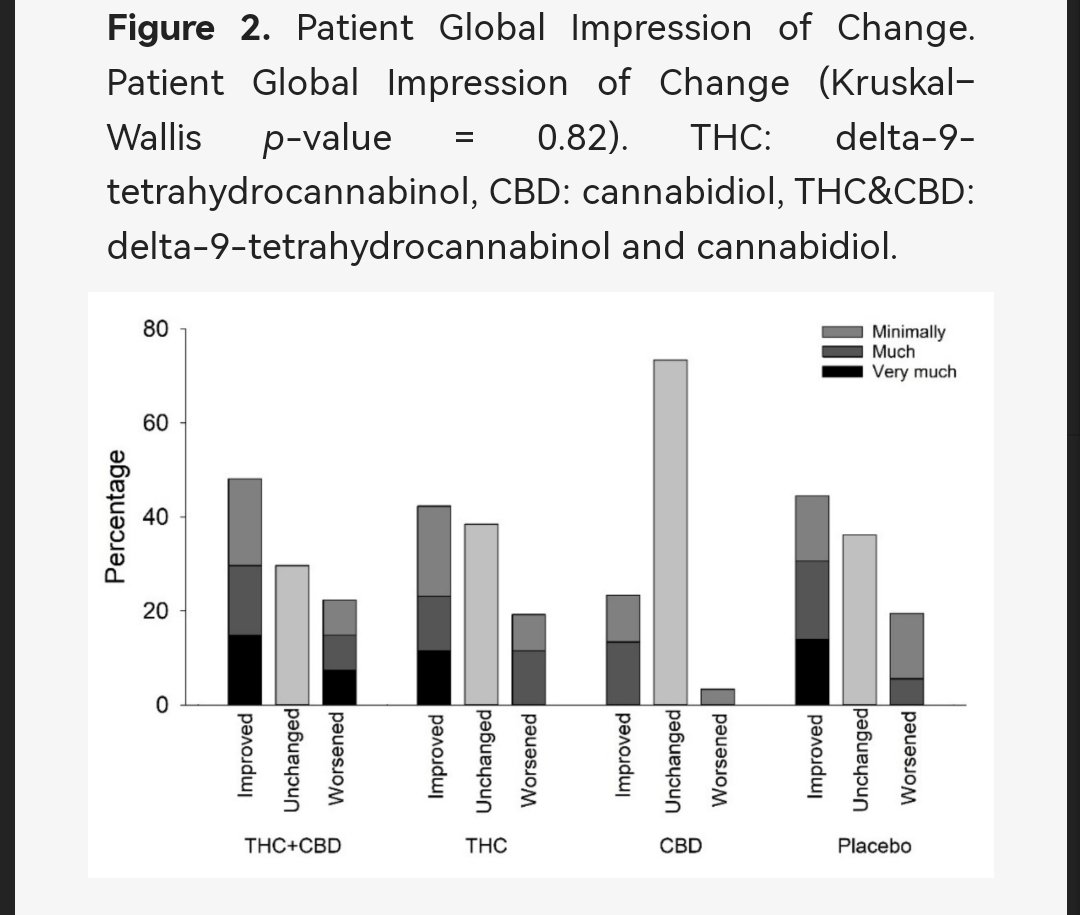
Randomised, double-blind, placebo-controlled trial of THC, CBD or combination finds no benefit for pain, spasticity, quality of life, or patients impression of change.
Patients expectation was a 8 out of 10 before the start of treatment.
https://t.co/iVCxEvlCwb
BBC reporting a national guide dog shortage
But the government have proposed to
Shorten guide dog training from 2 years to 6 months
Provide an apprentice route for fast track dog training
Have guide dog associates to be supervised by actual guide dogs
Introduce guide cats
If you're attending #BAP2023, you're in for a treat with 3 excellent Post-Doc Symposia later today. I'll be co-chairing one: "Predicting the future today – Pragmatic approaches to precision psychiatry" with @lowrigriffiths_@benjmnperry@smartiesoph presenting some exciting work
Next, we have @HamishMcAW who will be talking about “Applying the model of care for difficult to treat depression to bipolar disorder” #BAP2023
If you haven’t yet listened to our recent podcast episode with Hamish, you can find it here:
https://t.co/yaBO9dexA7
Hello and welcome to the second day of #BAP2023
I'll be live-tweeting from the symposium: “Psychopharmacology in the Computer Age: How new Computational power can drive precision psychiatry and translational drug discovery” for @Mental_Elf#BeyondtheRoom@BAPsych
🧵THREAD
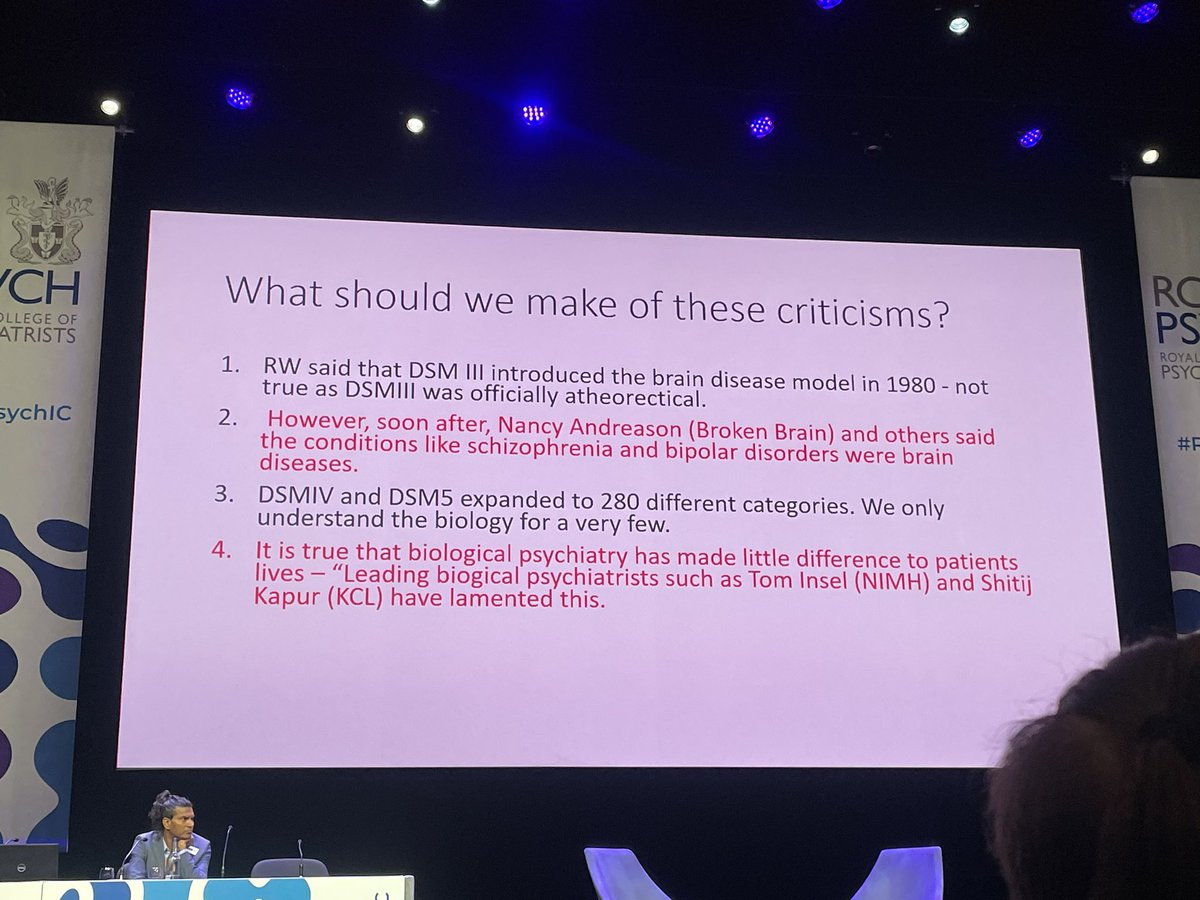
Some examples of Psychiatry critics and antipsychiatry. It's always a delight to hear Sir Robin Murray. Key point, we are too few of us interested in the care of the mentally ill to waste time fighting each other.
@subodhdave1#RCPsychIC@rcpsych
Acceptability, Tolerability, and Treatment Effects of Probiotics as Adjunctive Treatment in Depression
@drjmstone & colleagues in @JAMAPsych
https://t.co/1rLwSo86bi
Our new paper on probiotics in depression - reductions in depressive and anxiety symptoms compared to placebo. Great work Viktoriya Nikolova, Lindsay J Hall, Anthony Cleare and Allan Young @KingsCollegeLon@BSMSMedSchool@SussexUni https://t.co/rOxtZQiAbG
@LukeJelen@TheBorisLab Important to remember that ketamine induction doesn't add anything to ECT. Maybe interaction with propofol/anaesthetised state. Or maybe ketamine response is all placebo.
@LukeJelen@TheBorisLab Appears to be strong placebo/expectancy effect. No unique effect of ketamine? Very nice work. Agree needs to be looked at in psilocybin/DMT etc.