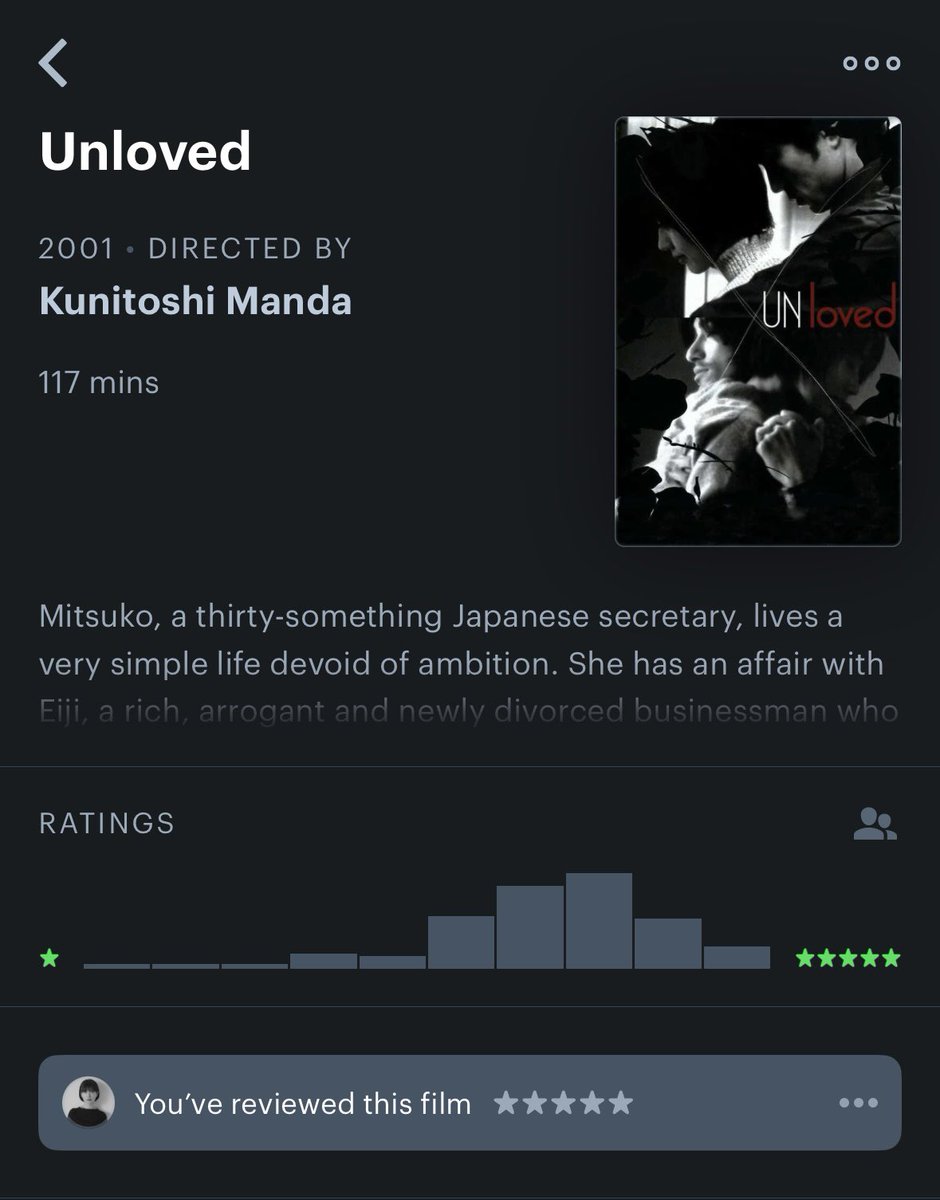
@VatsalThakkarMD@BrighamWomens Actually, no.
This paper is secondary analysis of the VITAL study.
- The original study found NO effect
- This one looks only on people with specific BMI range
- The CI is very wide, and barely clears 1.0
- No multiple comparison correction
This is a uncertain result.
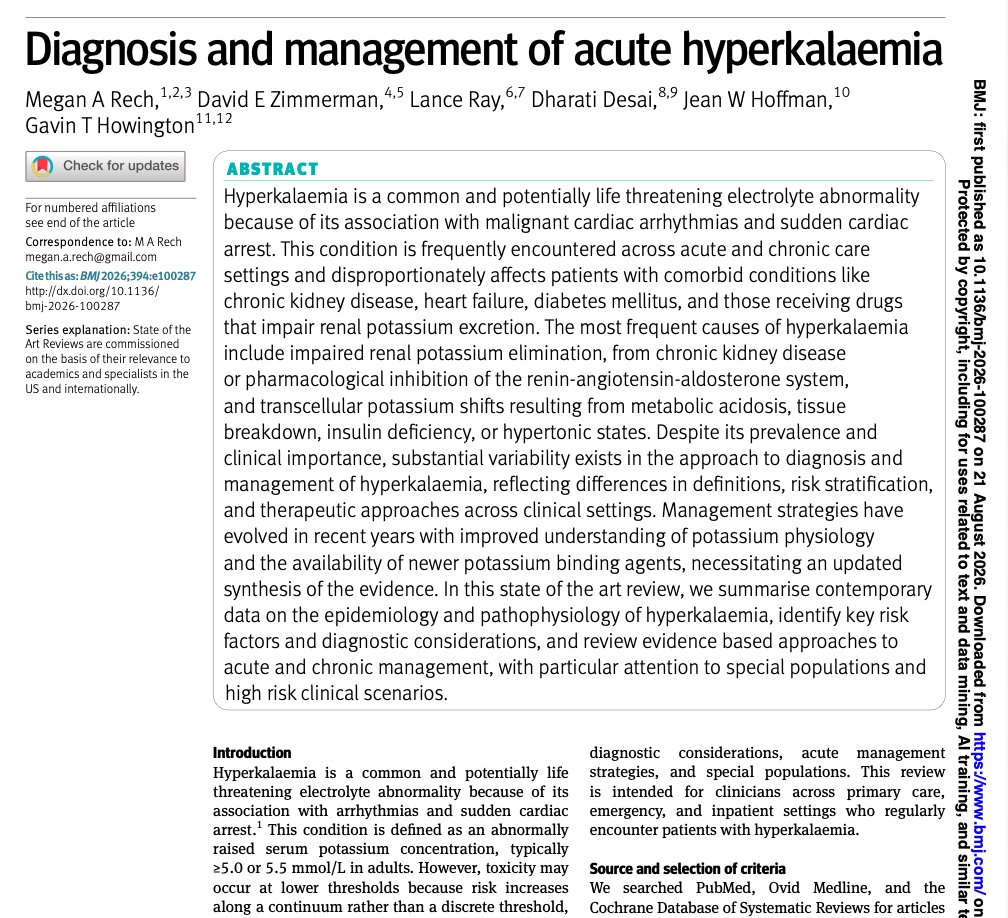
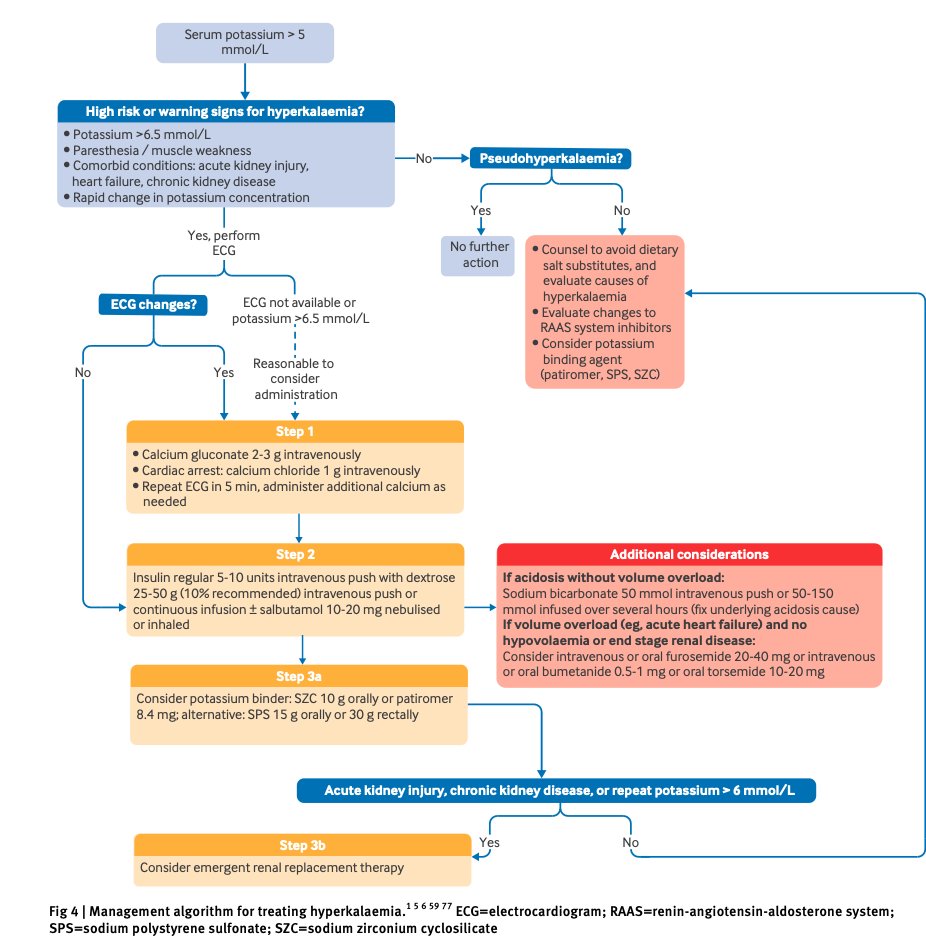
Nueva revisión de hiperkalemia aguda (BMJ 2026). Lo que cambió, y que probablemente sigas haciendo:
🔴 Dextrosa al 10%, no al 50%. La glucosada hipertónica puede EMPEORAR la hiperkalemia.
🔴 Insulina 5 U (o 0.1 U/kg, máximo 10 U). Misma caída de potasio que con 10 U, con casi la mitad de hipoglucemias (OR 0.55).
🔴 1 g de gluconato de calcio no sirve. 97% necesitó tres dosis de 1 g y una sola dosis no funcionó en NINGUNO. Dosis: 1-3 g.
🔴 El calcio no "estabiliza la membrana". Restaura la conducción por canales de calcio. Traducción práctica: sirve cuando hay QRS ancho, no en la onda T picuda aislada.
🔴 Bicarbonato: no se recomienda de rutina.
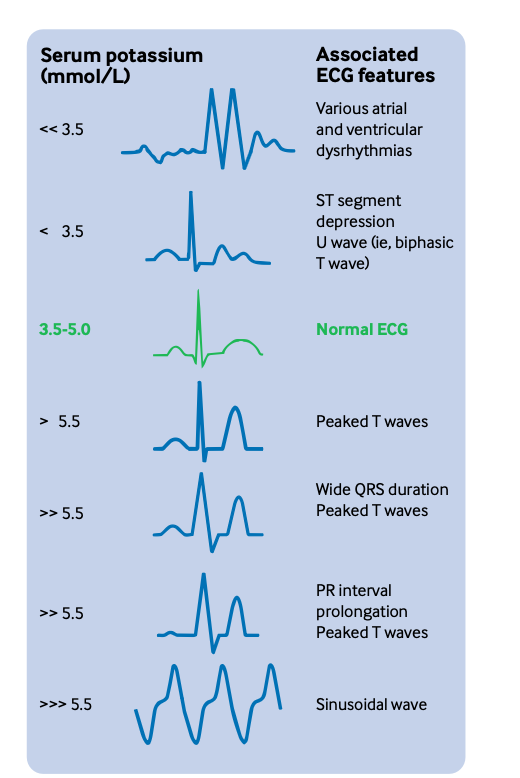
🔴 La onda T picuda aparece en menos del 25% de los pacientes con K de 5.5-7.0. Un ECG normal NO descarta hiperkalemia.
🔴 Reevalúa el potasio a los 60 min y otra vez a las 2-4 horas. El rebote es frecuente
El tema ya está re-escrito y actualizado en Memodi y Accio. Completo en el canal (https://t.co/3O93s10lns).
@1909Beat44584@admkuznetsov45 Krn PKI pake prinsip "Tiga Sama, Empat Jangan, Empat Harus" sbg panduan ketat buat kader2nya yang Turba. Krn sejak komunis ada di Indonesia tahun 1914-1965, cuma era 1960an PKI bener2 menikmati stabilitas. Sisanya mrk hidup dlm masa2 represi. Itulah yg dijadiin pelajaran.
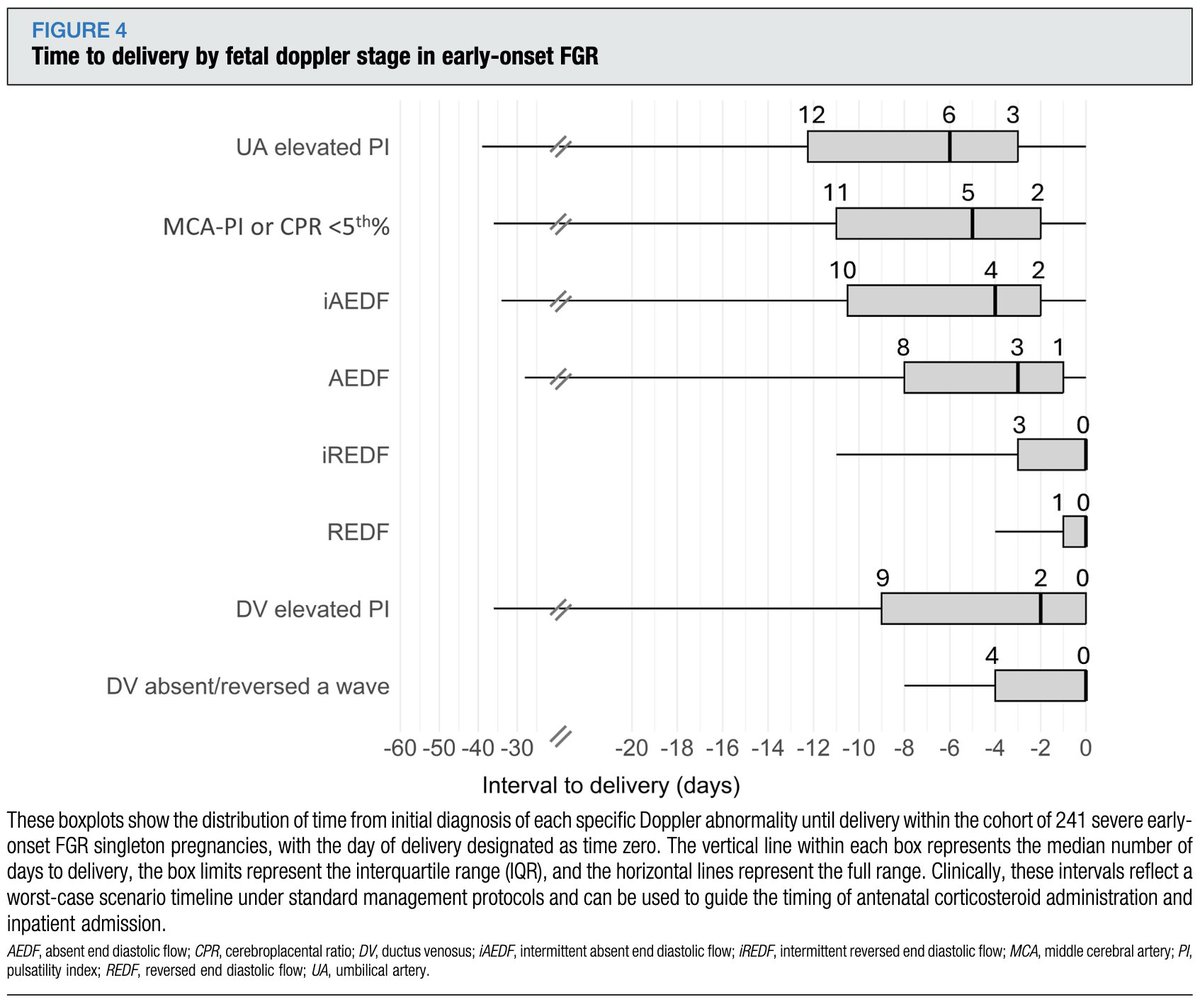
Umbilical artery Doppler deterioration, time to delivery, and risk of fetal death in early-onset severe fetal growth restriction progressing to absent or reversed end-diastolic flow https://t.co/0cr3HufPUQ
Ten million people have watched an MIT professor accidentally destroy the executive coaching industry.
He filmed the lecture once in January 2018 and died eighteen months later.
Executive coaches charge fifteen thousand dollars a session to teach a third of what he covered in one hour for free.
His name was Patrick Winston. He ran the MIT Artificial Intelligence Laboratory from 1972 to 1997 and wrote the AI textbook every computer science major in the world read for thirty years.
Every January for four decades, he gave a lecture called "How to Speak."
His entire framework fits on a napkin.
Do not read. Be in the image. Keep images simple. Eliminate clutter. Start with an empathetic connection. End with a punch line the audience can repeat over dinner. Never open with a joke. Never end with "thank you."
That last rule alone has probably cost the executive coaching industry a hundred million dollars.
"Your success in life will be determined largely by your ability to speak, your ability to write, and the quality of your ideas. In that order."
That is the actual opening line of the lecture. Winston believed it strongly enough to spend fifty years teaching computer scientists how to talk.
Founders spend $80,000 on an MBA and then hire a communications coach to teach them the same material Winston filmed once for free. Engineers write brilliant code and lose promotions to teammates who watched this lecture on the train.
The lecture is free on MIT OpenCourseWare. The textbook is free on his page.
Winston died in 2019. Almost none of the ten million viewers have actually implemented the four rules on the napkin.
The napkin is free. The willingness to actually use it in your next meeting is the entire edge.
Japan is the canary. Nobody is listening.
For thirty years Japan ran the largest monetary experiment in human history. Zero rates. Yield curve control. A central bank that ended up owning roughly half its own government bond market. The theory was that a sovereign borrowing in its own currency faces no real constraint. For three decades the theory held, and every trader who bet against it got carried out on a stretcher. They called it the widowmaker.
The widowmaker is collecting now.
Debt above 200% of GDP. The 10 year JGB touched 2.91% last week, the highest in thirty years. The policy rate sits at 1%, a level last seen in 1995. Debt servicing in the fiscal 2026 budget hit 31.3 trillion yen, roughly a quarter of the entire national budget, and the Ministry of Finance now assumes a 3% bond rate, the highest assumption since 1997. Social security and interest payments together consume close to 60% of all government spending.
Six of every ten yen Tokyo spends now goes to promises made in the past. The remaining four have to cover defense, education, infrastructure, and everything else a modern state is supposed to do.
The yen sits at 163, a 40 year low. Japan burned roughly 11.7 trillion yen defending it and bought a few weeks of relief. This is the trap they built for themselves. Hike enough to defend the currency and the interest bill detonates. Hold rates to protect the fiscal position and the currency keeps bleeding out. Japan imports 90% of its energy and 60% of its calories, so every tick of depreciation lands directly on the grocery bill.
Now the part almost nobody models correctly. Hyperinflation is a distraction. Four percent for fifteen years cuts purchasing power roughly in half, and it arrives so slowly that no single year ever registers as a crisis. There are no wheelbarrow photographs from a 4% decade. There is a retiree in 2041 who did everything right and is poor anyway.
The Japanese saver pays for this twice. Thirty years of zero rates already moved wealth quietly out of household balance sheets and into the state's. Now the debt those zero rates financed gets inflated away in real terms while consumption taxes climb and benefits get quietly trimmed. A bond issued at 0.2% rolls at 3%, and the gap comes out of somebody's standard of living. Extraction, spread thin enough that nobody can point to the day it happened.
Now look west.
US publicly held debt is at 99% of GDP, the highest since 1946, and the CBO baseline puts it at 120% by 2036. Net interest runs from about 1 trillion this year to 2.1 trillion by 2036. The number that should keep you up: the primary deficit, excluding interest, actually declines over that window, from 2.6% of GDP to 2.1%. The entire deterioration is interest compounding on itself. CBO's own baseline has the average rate on the debt crossing above the growth rate around 2031, the threshold where the arithmetic stops correcting itself and starts feeding itself.
The 30 year is at its highest since 2007. The Fed just held with three members dissenting in favor of a hike. And Japan, sitting on 1.19 trillion of Treasuries as the largest foreign holder, sold nearly 30 billion in the first quarter alone. When domestic bonds pay 2.8% with no currency risk attached, Japanese insurers have no reason to own American paper. The most reliable marginal bidder in the world is packing up and going home.
Central planning dies slowly. It ends as a grinding transfer from everyone who saved to everyone who borrowed, administered by people who will call it stability the entire time it is happening.
Japan is fifteen years ahead of us on this road. Everything happening to them is a broadcast from our own future, running in real time, with the sound turned off.
I like how in Michelle Yeoh’s recollection she ended up in action movies in part because her Cantonese fluency was poor and the dialogue would be less demanding.
Her memories of her D&B Films days (along with comments from Chin Kar-lok, Yuen Woo-ping, and others) below: