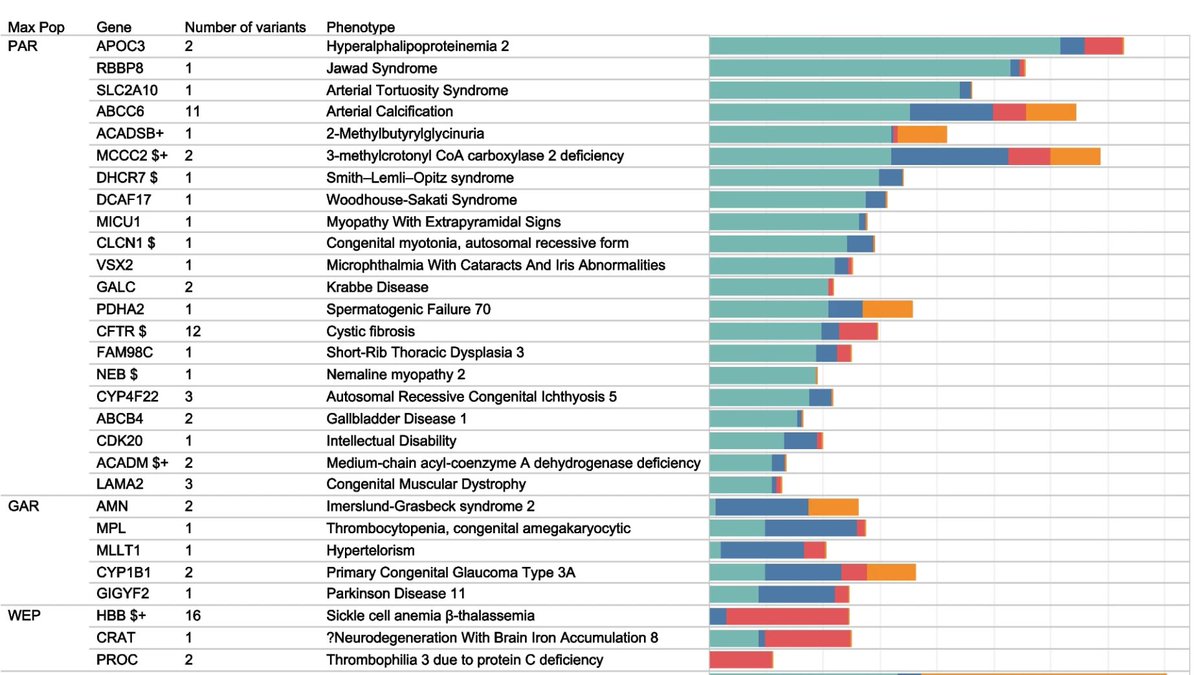
1/5 Although it was published a couple of weeks ago, let me highlight some of the main findings from our latest paper on the burden of Mendelian diseases in the first release of data from the #QatarGenome Program.
https://t.co/bCXH2WlhY5
@JFGariepy@elonmusk Do you even know/understand what does this plot mean? I doubt that
For those who don’t know, PCA by definition focuses on genetic variations that are shared which represent a tiny fraction of the total DNA sequence, approx. 1 or 2%.
You shared 50% of your DNA with your child.
5/5 For cumulative gene carrier frequency, we find considerable variation between the Qatari subpopulations, and some of these high-burden genes match diseases of the tier-3 list of ACMG secondary finding genes or those of the newborn screening program in Qatar.
1/5 Although it was published a couple of weeks ago, let me highlight some of the main findings from our latest paper on the burden of Mendelian diseases in the first release of data from the #QatarGenome Program.
https://t.co/bCXH2WlhY5
4/5 The gap of non-European ancestries in genomics is shown in the discrepancy of AF between the Qataris and public databases.
Many common alleles (AF >3%) are either:
- Founder alleles with pathogenic effects
- Common variants with no effect, these are P/LP variants in ClinVar
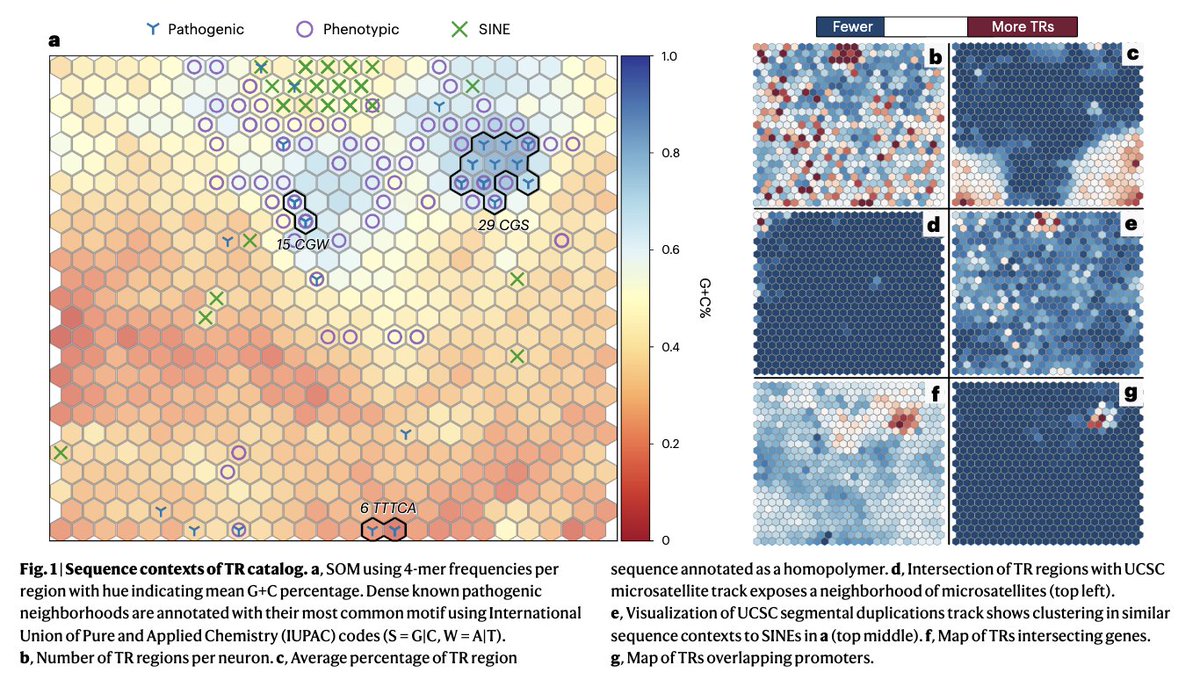
Tandem repeat @GenomeInABottle benchmark @NatureBiotech out today: https://t.co/7vAt2MRgzC . Characterization of 1.7 million TR + benchmark variants + new method to overcome var. representation issues! Great work lead by Adam E. @BCM_HGSC & great collab. from so many! (1/4)
Our study on rare genetic diseases in a diverse Middle Eastern cohort from Qatar has been published in the prestigious Genome Medicine journal.
The study analyzed over 6,000 whole genomes and corresponding health data from Qatar. It provides key insights into the distribution of risk for genetic diseases, which will help with public health planning for the country's population and the wider region.
Click here for more on the study: https://t.co/MfS8VhMSys
Full text of the study: https://t.co/aCIjGdJYq3
@kfakhro | @QatarGenome | @Qatar_Biobank | @HMC_Qatar
نُشرت دراسة أجراها سدرة للطب حول الأمراض الوراثية النادرة لدى مجموعة واسعة ومتنوعة من سكان الشرق الأوسط بدولة قطر، في مجلة جينوم ميديسين المرموقة.
تقدم الدراسة، التي تحمل عنوان "عبء الأمراض المندلية في بنك حيوي شرق أوسطي"، رؤىً مهمة حول توزيع مخاطر الأمراض الوراثية في دولة قطر، الأمر الذي سيساعد في تخطيط الصحة العامة لسكان البلاد وسكان المنطقة ككل.
حللت الدراسة أكثر من ٦٠٠٠ جينوم كامل وبيانات صحية ذات صلة من دولة قطر.
اضغط هنا لمزيد من المعلومات حول الدراسة: https://t.co/FArUCkGDvZ
الدراسة كاملة: https://t.co/aCIjGdJYq3
@kfakhro | @younesmokrab | @QatarGenome | @Qatar_Biobank | @HMC_Qatar
New research by @younesmokrab, @kfahro and colleagues @SidraMedicine provides novel insights into the burden of Mendelian Disorders in the Qatar Genome Program cohort. This study underlines the need for investigations into biobanks from globally under-represented ancestries.
@anshulkundaje I am not sure if you know Arabic or you are accepting information because it is coming to you from a reliable source as you think. What is being said here doesn’t prove anything as they said is “They are talking it is from our side”. The reference to the word “They” is not clear.
@KhalidJamal149 الدراسة بها عدة اشكاليات، ابتداءا من تعريف السلوك الجنسي المثلى الذى تضمن نسبة كبيرة (حوالى ٦٠٪) من السلوك العارض، قد يكون غير مقصود، الى جودة المصادر الاولية التى اعتمدت عليها الدراسة.
لا شك لدى أن مثل هذه الدراسات يتم التساهل معها فى عملية النشر لأسباب ايديولوجية.