@DrNickDalmon@Dr_XYZ@wesstreeting New uniform was hideous, poorly sized, appalling quality, most unprofessional and a huge drain on local resources for alterations & process management at a time when most trusts are failing at most clinical metrics. Another suspicious procurement decision! Follow the 💷 trail!
What happens when you remove the hospital as the boundary?
Advanced, targeted interventions & diagnostics can be delivered in the field enhancing cardiac arrest care
Reframing resuscitation as precision critical care @cliffreid@PrecareSyd@SydneyHEMS
https://t.co/wGXuWN64mz
@IM_Crit_@chungk1031 Baffled by such numbers, if remotely accurate, they reflect system failures at multiple tiers from prep and workflows through to personnel competence thresholds.
@irenep671 Poor operational workflows, inefficiency and absence of financial incentive. In the NHS, staff are paid regardless of their productivity and accountability is variable.
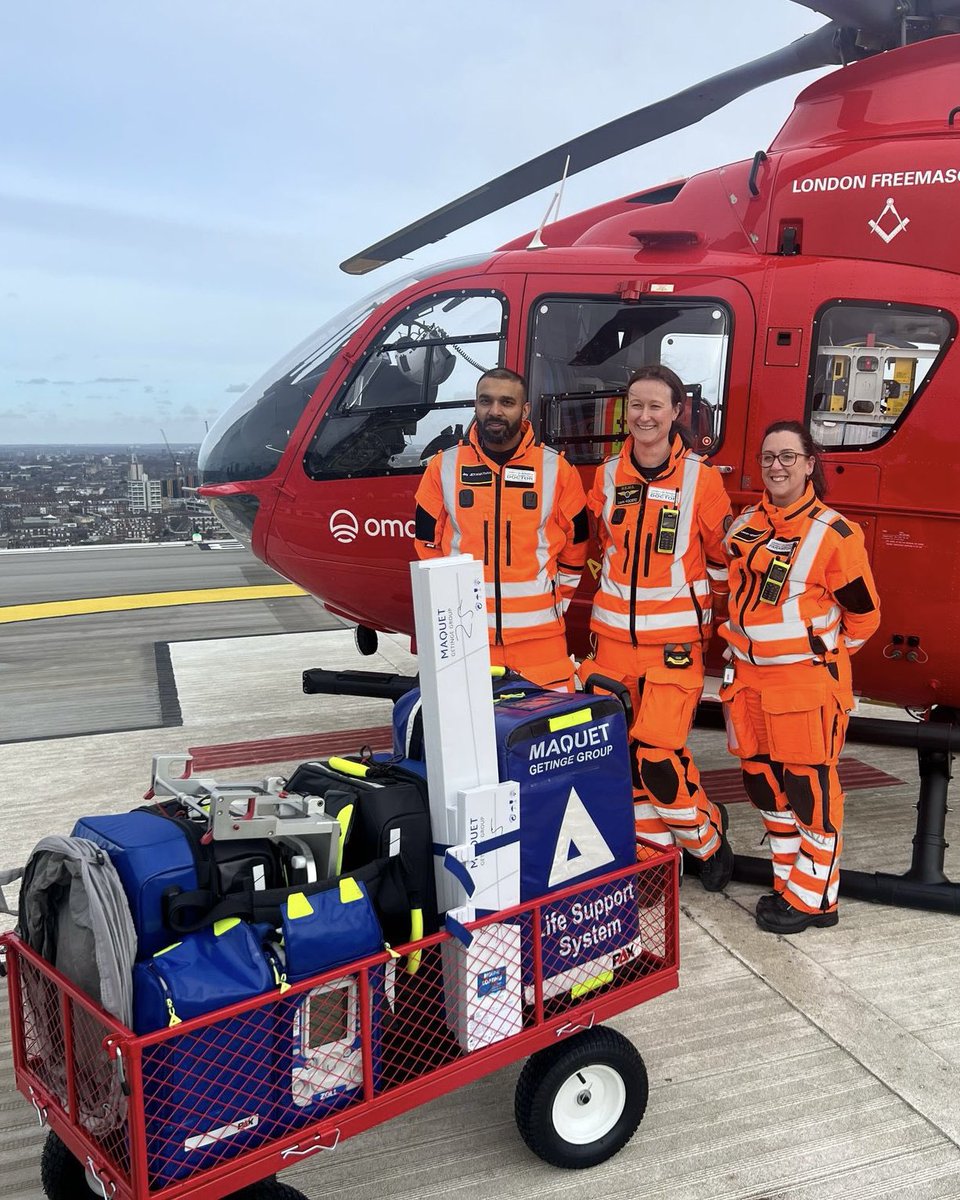
Tough to operate with success in current #NHS environment, yet, ACCESS London do it 24/7 all year round. Thousands of patients conveyed on complex life support and given access to lifesaving procedures! Proud you @ACCESS_London1 Team https://t.co/0FdVnDZRaF…
🚑 3 years of ACCESS London
Supporting critical care transfers across London and beyond
📷 130,000+ km travelled
📷 Supported by over 500 healthcare professionals
#CriticalCare#NHS
🤓🫀We keep asking: “What’s the cardiac output?”
But maybe the better question is:
“How efficiently is the heart working?”
In septic shock, we often focus on:
Preload
Cardiac output
MAP
But we forget something fundamental:
👉 The heart doesn’t work alone.
👉 It works against the arterial system.
1. The missing concept: Ventriculo–arterial coupling (LVAC)
LVAC = interaction between:
Ees → contractility
Ea → arterial load
👉 Expressed as Ea / Ees
This ratio reflects:
How efficiently the heart converts energy into forward flow
2. What is “normal”?
LVAC ≈ 0.5 → optimal efficiency
LVAC ≈ 1 → maximal stroke work
LVAC > 1 → uncoupling (inefficient system)
But here’s the twist:
👉 In septic shock, LVAC is often >1
👉 Not just due to vasodilation—but also myocardial dysfunction
3. Why this matters clinically
Two patients can have:
Same MAP
Same CO
But completely different physiology:
✔ One → efficient coupling
❌ One → energy wasted, poor flow generation
4. The key insight
Septic shock is NOT just:
❌ “low preload”
❌ “vasodilation”
It is:
👉 A mismatch between heart and arterial system
5. Therapy changes the balance
Fluids → may improve coupling (↓ LVAC)
Norepinephrine → can improve OR worsen coupling
Inotropes → target Ees
Important:
👉 Increasing MAP ≠ improving flow
👉 Increasing pressure can worsen afterload
6. The most interesting part
From the data:
LVAC >1 can predict response to norepinephrine
But improving LVAC ≠ guaranteed tissue perfusion and outcomes follow a U-shaped curve
👉 Both too high AND too low LVAC can be harmful
7. The limitation we must respect
Even if you “optimize” LVAC:
👉 Microcirculation may still be impaired
👉 Lactate may still rise
👉 Shock may persist
Because: Macro ≠ micro
🤓Final message
We need to move from:
❌ “Fix the blood pressure”
To:
✅ “Optimize the interaction between heart and vessels”
LVAC doesn’t replace hemodynamics.
It completes it.
📃Reference
Caicedo Ruiz JD et al. Journal of Critical Care, 2026. https://t.co/1ZNMHqwBl4
A macro-sim across entire system, over 60 staff participated incl. multpl sites of @NHSBartsHealth & high complexity transfer by @ACCESS_London1 Crit Care Retrieval Team in collaboration with @Ldn_Ambulance testing processes, individual and collective skills - This is readiness
🚨 ACCESS Mega Sim Day 🚨
High-fidelity, high-pressure, real-world simulation in action today with the ACCESS team. This isn’t routine ICU — it’s ICU in motion.
👏 Huge well done to everyone undertaking the sim today — pushing boundaries!
@Asiritrauma1@ThinkingCC@icmteaching I’ve given up on SSC guidelines many years ago! In an era of increasing appreciation of diversity of phenotypes and readily available PoC imaging / haemodynamics diagnostics, the harm of 30 ml/kg “for all” simply can’t be justified in most settings.
@BBCNews@nikkijfox@NHSuk / clinician obligations stop at point of discharge letter / summary of clinical care. Employers should employ/contract an OH service for all else. Unless (failing) #NHS stops trying to be everything for everyone, current failing trajectory shall continue!
@Heccles94 Our economy is in worst state for decades and our GDP per capita plateaued for 10yrs, public sector incl #NHS failing miserably yet someone is offended benefits’ recipients should be asked to do some work to contribute to society! The UK really is broken! #gotowork
@MaddiWulfeckMD PAC too far in and likely has caused a pulmonary artery injury or similar and the pericardial appearance suggests a pericardial collection. Echo required prior to any further interference with line.
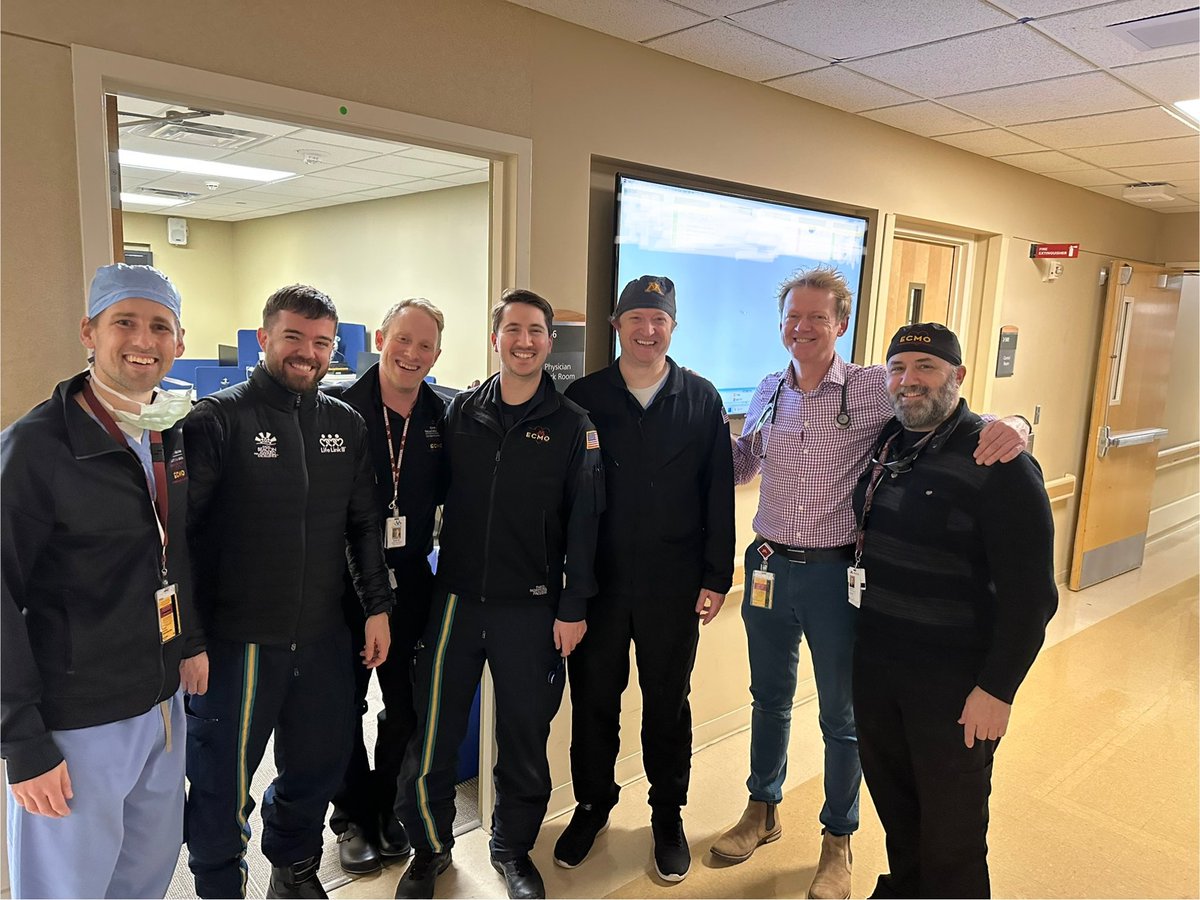
Today marked an important step forward in US resuscitation science!
The Center for Resuscitation Medicine’s MMRC completed the first Helicopter EMS–facilitated extracorporeal cardiopulmonary resuscitation (ECPR) in the United States!