Very interesting concept. If successful would open a very big door. All early distal occlusions would need to be monitored? Maybe with repeat imaging at the 75 minute mark. 🎯
Administering a Second Dose of Intravenous Tenecteplase in Acute Ischemic Stroke: Rationale and Design of a Pilot Clinical Trial | Stroke: Vascular and Interventional Neurology https://t.co/y3UvgW5np3 @StrokeAHA_ASA@SVINJournal@svinsociety
I wonder whether most patients would accept their healthcare data being fully decrypted (and decision algorithms modified) during inference. At this stage there is no solution to this and regulation has not caught up.
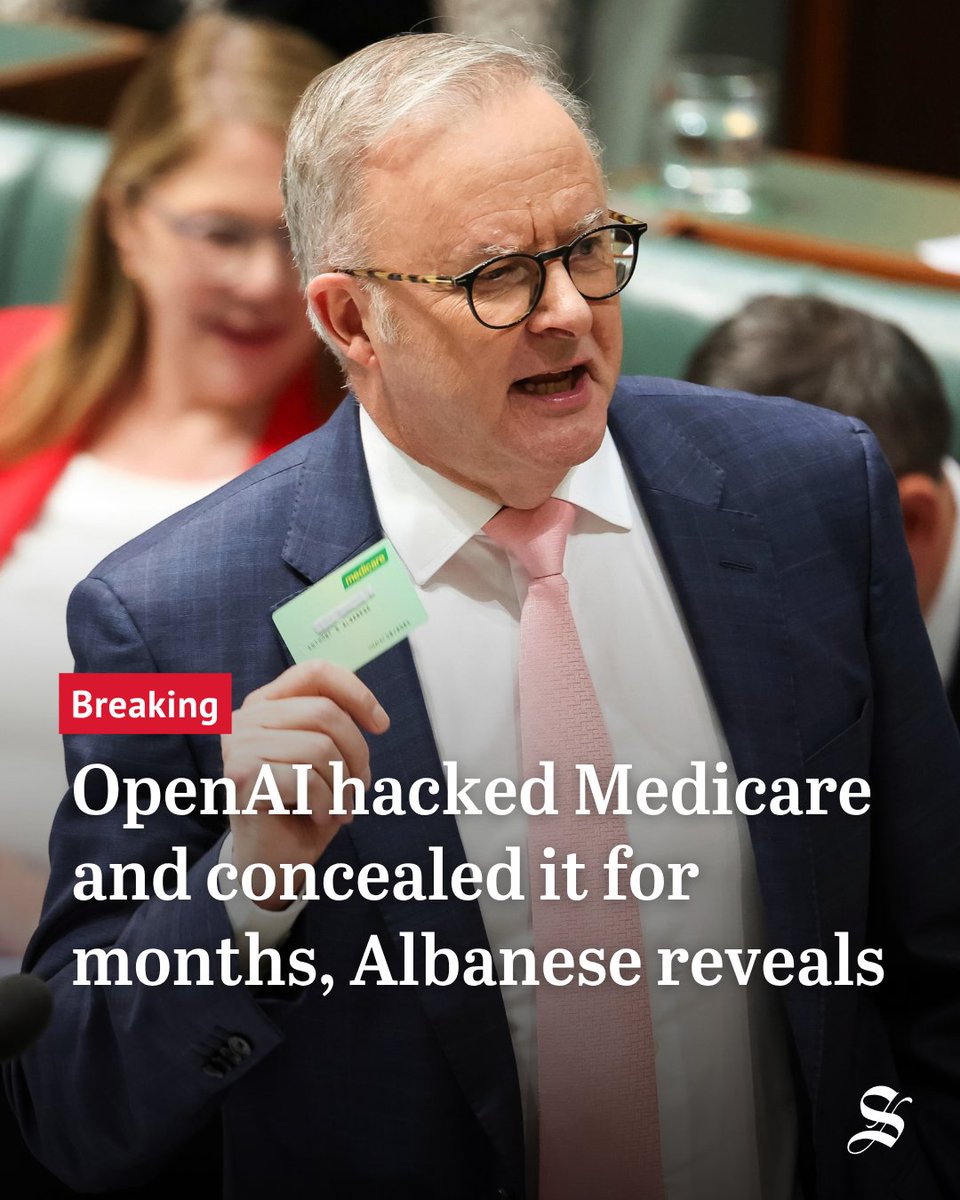
Prime Minister Anthony Albanese has revealed that an artificial intelligence agent developed by OpenAI infiltrated an Australian government website in June and accessed both public and non-public files. https://t.co/h2B4PiXSNQ
Its hard to believe that AI is all hype when I'm doing a fine tune of a stroke facial weakness detection model from my laptop by sending public video clips to an alibaba cloud endpoint. The barrier to entry is now only a few dollars. There are infinite use cases such as this.
Published in Nature Medicine: @Google researchers and collaborators share lessons from prospective studies of AMIE, highlighting why real-world clinical evidence is critical to evaluating conversational AI in health.
Read more: https://t.co/vAKMGHioXM
@francisdeng One example in my own workflow is now providing patients with a summary of the consultation in plain English. This needs to be checked and edited for hallucinations but wouldn’t have been possible a few years ago.
I had Opus 5.0 try to explain that I needed to give my facial weakness model instructions on how to figure out sidedness when looking at their face from behind their head.
Claude Code: "I was wrong. You're right on both counts".
Only happens when you know what you're doing, review the generated response/code, ask the right questions and challenge the generated responses on technical grounds.
Otherwise, everything looks perfect, until it isn't.
@RichardGerraty Thanks for trying it out. If symptoms are resolved then it won’t trigger if past 9 hours. Sensory symptoms are not considered enough to flag a code on their own. Current design choice to make sure it doesn’t over trigger.
When treating acute stroke, one of the most unreliable pieces of information is time from last seen well. ⏱️
Ironically, large language models struggle with the same temporal reasoning that trips up human history-taking.
I had to get creative, but I think I got something working. ⭐
I’d genuinely value the community stress-testing it. Drop your own synthetic example in and see if it works.
If the output is wrong (especially on timing), hit the Report button.
Demo link: https://t.co/03j9CXU7LO
Tell me your feedback!
@johnennis What is worse to me is that accepting a hidden watermark almost always means accepting a suboptimal answer. It’s like trying to write a paragraph while hiding an acrostic down one side. You always sacrifice something to achieve it.
@francisdeng These “AI detection” platforms are completely inaccurate. I have put through my pre AI publications and it still comes out 80%+ AI.
That said most journals even use AI checking tools now. They use it because it’s more efficient. In the same breath they tell you not to use.
@dagarfield Is this to protect against distillation? Biology literature quickly becomes stale/superseded. What is the purpose of a model that people can’t use.
Great to have some support in this area with relative unknowns. Will you be commencing anticoagulation for ESUS patients with significant LV dysfunction?
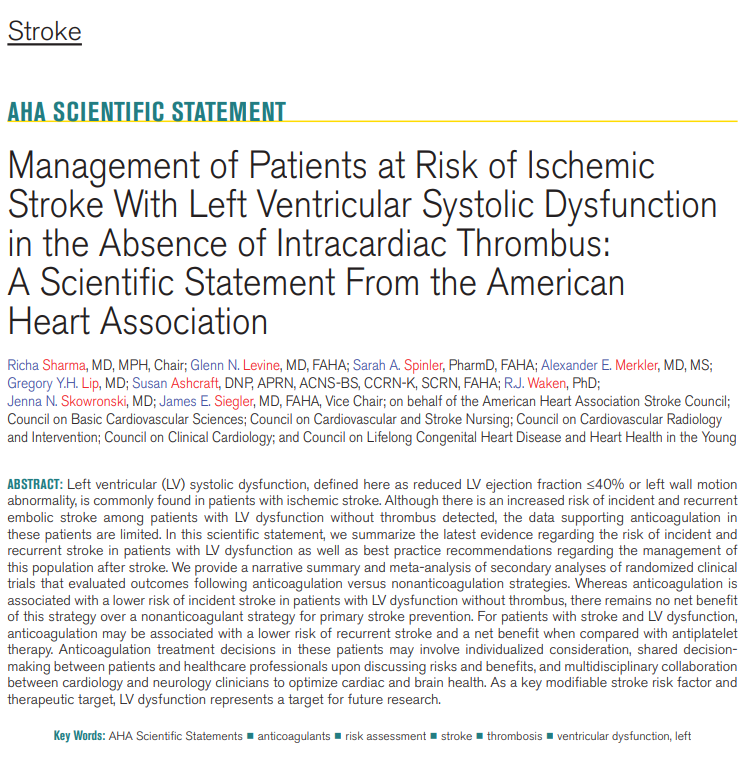
Left ventricular systolic dysfunction is not uncommon in the ischemic stroke population with some studies showing between 5%- 25% with ischemic stroke in persons with a lower left ventricular ejection fraction (LVEF). https://t.co/Jgu23h0BQV
This scientific statement summarizes the latest evidence regarding the risk of incident and recurrent stroke in patients with LV dysfunction as well as best practice guidance regarding the management of this population after stroke.
✍🏼 @RichaSharmaMD@JimSiegler@LiverpoolCCS@JennaSkowronski
1/Time is brain! But what time is it?
If you don’t know the time of stroke onset, are you able to deduce it from imaging?
Here’s a thread to help you date a stroke on MRI!
@IAmSamFin Trendy nature articles are a much softer signal than the product experience. I generally agree with the findings but it doesn’t mean there isn’t a niche that can’t be filled by alternative models. Also- if the government gets involved monolithic generalised LLMs may be restricted
#CodeICH we recently reviewed factors associated with time to SBP 140 at our centre. Traditional stroke code pathways and Ed bed availability continue to be vital components.
https://t.co/detbaGxlBE