@aggie_kopanska 😂 This is the first year I've ever managed to grow courgettes successfully. Am reminded of a book my mother had... ""What am I doing to do with all these courgettes". Chocolate Courgette Cake? Will share if it works!
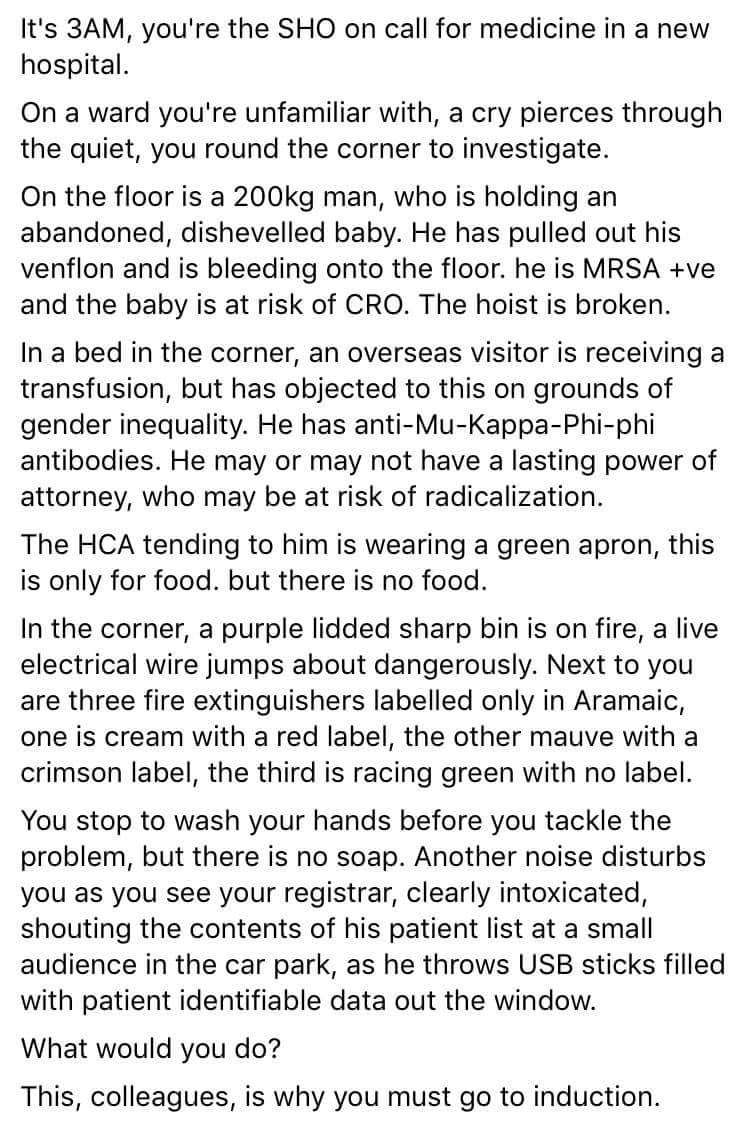
This tweet is truly the best of all time... I think I retweet it every year. Makes me all fuzzy inside. Sorry he's no longer interacting with this hell site
It's almost like terms/conditions/work-life balance and actual fucking training posts aren't what most resident doctors (that I have spoken to) really want... The focus on pay from @BMAResidents is utterly tone deaf and self defeating in the current climate (dons hard hat)
@kayamayj Yeah locuming isn’t on.
Worth remembering that IMT3s are also in a dodgy position. It’s another bottleneck, and many won’t have jobs lined up.
Woman of the Day award-winning war photojournalist Catherine Leroy of France, died OTD in 2006, the only woman to make a combat parachute jump with US forces in Vietnam. She spent more time at the front — three weeks per month — than any other woman journalist in Vietnam and she did that for over two years.
Born in Paris in 1944, 22 year old Cathy flew to Laos as a freelancer on a one-way ticket with a Leica camera and $200 in her pocket. No work lined up, no contracts, very little by way of a portfolio, she reasoned that if she could convince US forces to accept her, she could eat rations and sleep in the countryside alongside them but first, she needed accreditation.
Cathy approached the Associated Press editor responsible for scores of photojournalists filing out of Saigon: as many as 600, but only 20 or 30 freelance and none of those were women. He told her to go and find some work that would convince him she was up to the job. So she did. “I was making $15 a photograph. There was a great appetite for this work.”
What she did have was a licence as a qualified parachutist with a record of 84 successful jumps. Military Assistance Command Vietnam granted her credentials and the commanding officer agreed to let her jump with the 173rd Airborne Brigade during Operation Junction City - an 82-day combined US/South Vietnam military operation against the Viet Cong - on 22 February 1967. He gave her just two days’ notice. “My size 6 foot was swimming in my size 7 jungle boots, the smallest they had.”
Despite persistent rumours that she’d only got permission because she’d slept with a colonel (men never have to put up with such insulting sexist nonsense but women in combat zones face it all the time), she was the seventh to jump from the seventh plane and shot photos from the air which AP sent out. Just 5’ tall and weighing six stone (85 lbs), she had to be weighed down so as not to be blown away. “I’m very proud of myself because I didn’t jump into a tree.”
Embedded with the US Marines, Cathy accompanied them on countless operations, sharing their everyday life in the heat and mud to produce extraordinary photographs depicting their gruelling lives in battle conditions. “In Vietnam, most of the time it was extremely boring. Exhausting and boring. You walked for miles through rice paddies or jungle — walking, crawling, in the most unbearable circumstances. And nothing was happening. And then suddenly all hell would break loose.”
Her photos captured the human face of war. One of her most famous photographs, “Corpsman in Anguish, 1967”, is a triptych of split-second shots showing an American soldier with both hands on the chest of his comrade trying to staunch the blood, trying to find a heartbeat, realising it was too late.
“When you look at war photographs, it’s a silent moment of eternity. But for me, it is haunted by sound, a deafening sound.”
On 19 May 1967, she went on patrol with a marine unit in an open rice paddy in the demilitarised zone near Con Thien and was hit in an ambush by mortar fire. Thirty-five pieces of shrapnel pierced her body, broke her jaw and destroyed her cameras, which took the brunt and saved her life. She had to be evacuated by tank instead of helicopter but six weeks later, she was back in the field.
When the all-out Têt Offensive began on 30 January 1968 (Têt is the Vietnamese New Year), Cathy was on holiday at My Khe Beach near Da Nang but travelled to Hue with another French journalist because they’d “heard there was action.” They sheltered with some refugees in the cathedral but were asked to leave because the presence of foreigners made the refugees nervous. Capture by the Viet Cong was inevitable. “Five or six men, all carrying guns, jumped on us, took my camera, tied our hands behind our backs.”
Realising that their captives were French, not American, the North Vietnamese colonel gave their cameras back and allowed them to interview and photograph him and his soldiers after Cathy persuaded him that the world was only hearing one side of the story. Her essay became the byline cover story in Life magazine on 16 February 1968. “It was an extraordinary experience for me. I had seen many North Vietnamese prisoners, but they were always in great fear and great pain. This was the first time, suddenly, that their humanity was in front of me.”
Cathy finally went home to Paris in December 1968. After covering the war for just over two years, she described herself as “extremely shell-shocked” when she left.
“It took years to get my head back together because I was filled with the sound of death, and the smell of death...I was extremely cool under fire. I didn’t show anything. But when I went back to Saigon…the horror of it would hit me.”
Her pictures were published on the pages of the world’s most prominent magazines and she was a trailblazer for women photographers working today in conflict zones around the world.
“I always felt that it was a great privilege to be with the soldiers, to be accepted, to spend a couple of days or maybe a week with them. But I could leave any time, and they couldn’t. Within 48 hours I would be in Saigon, have a long shower and rest. I would be in a French restaurant where the food was nice, where the wine was decent, and I always felt guilty inside. To me, it was as if I was a deserter. Which is a bit ridiculous, but it’s true.”